Understanding mass Worksheets for Ages 4-8
3 filtered results
-
From - To
Explore our "Understanding Mass Worksheets" designed specifically for children ages 4-8. These engaging worksheets aim to introduce young learners to the fundamental concepts of mass through interactive and visually appealing activities. Children will enjoy practicing measurement skills, differentiating between light and heavy objects, and understanding weight using everyday examples. Each worksheet encourages hands-on learning, making math fun and accessible. Perfect for parents and educators alike, our resources foster curiosity and a solid foundation in basic science and numeracy. Download these worksheets today to help your child build confidence and skill in understanding mass!
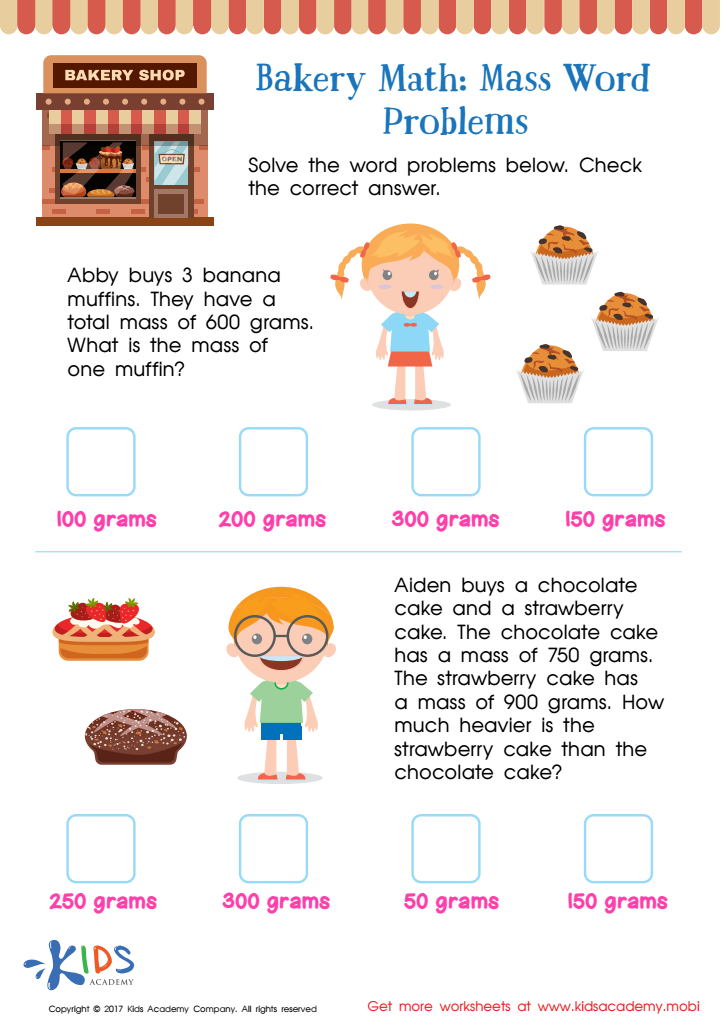
Mass Word Problems Worksheet
 Assign to My Students
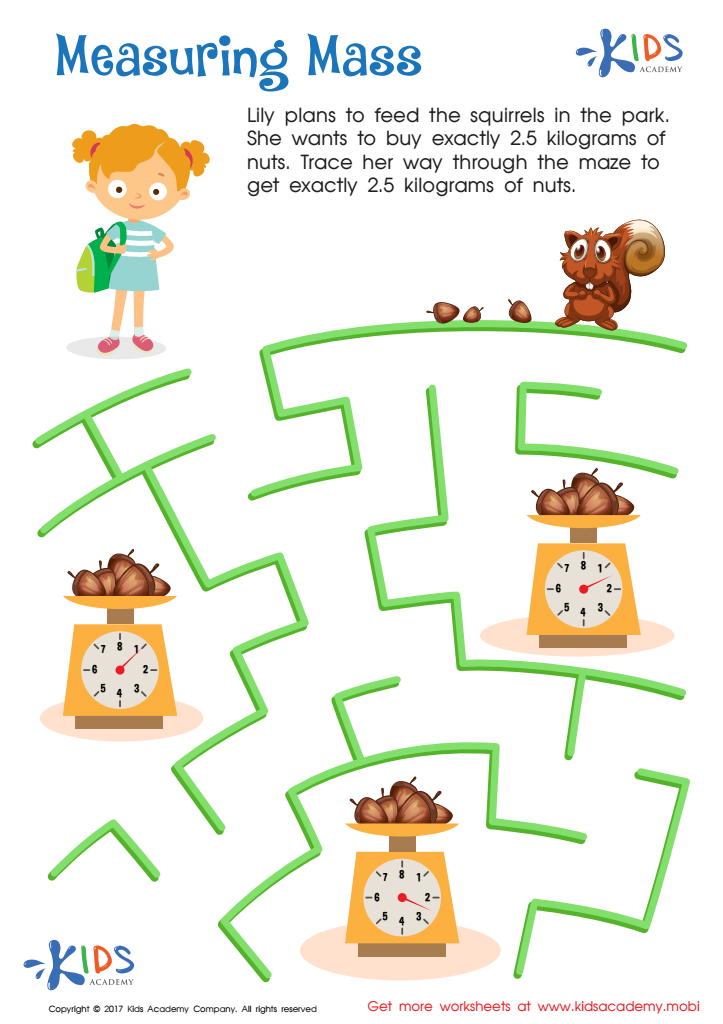
Measuring Mass Worksheet
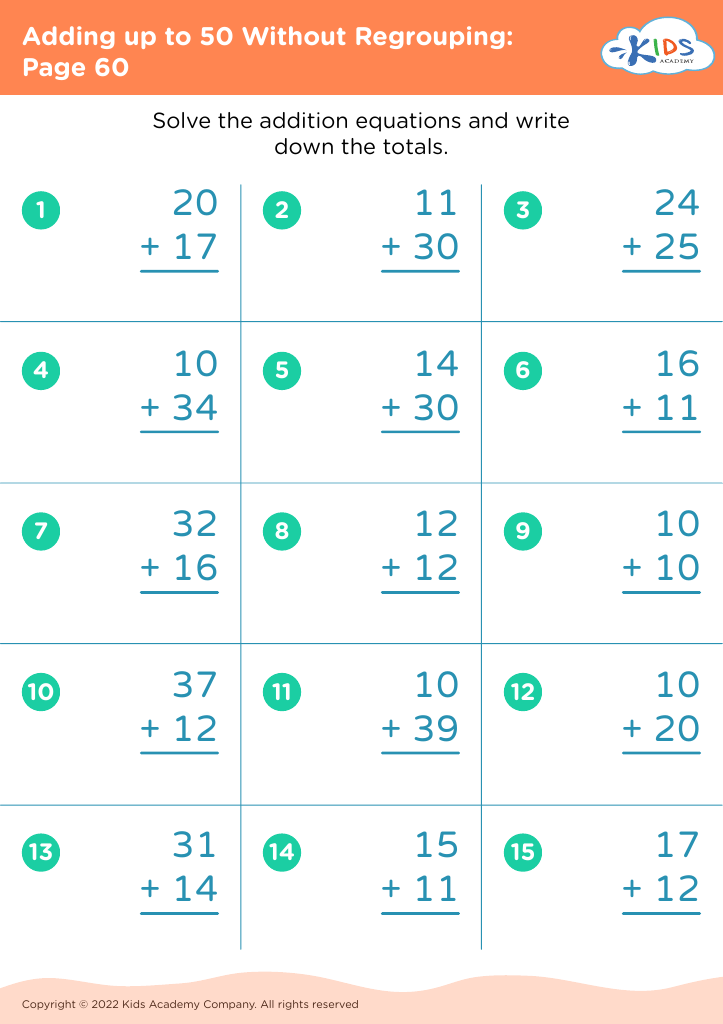








Understanding mass is essential for children aged 4-8 as it lays the groundwork for their mathematical and scientific comprehension. Early exposure to concepts of mass helps children develop critical thinking skills and enhance their ability to make sense of the world around them.
At this age, children are naturally curious and often engage in play that involves weighing and comparing objects. By introducing mass in a hands-on manner—through activities like weighing fruits, comparing the heaviness of toys, or using balance scales—teachers and parents can foster a love for learning while developing mathematical vocabulary and reasoning.
Understanding mass also encourages children to grasp concepts such as density and volume, which are foundational for later scientific understanding. It promotes observational skills, encouraging young learners to ask questions, make predictions, and draw conclusions based on their findings.
Moreover, as society increasingly emphasizes STEM education, a solid grasp of fundamental concepts like mass prepares children for future academic success and cultivates a mindset ready for problem-solving. Overall, nurturing an early understanding of mass enriches children’s cognitive development, instills confidence in their analytical skills, and encourages continual exploration in math and science.








