Understanding money Worksheets for Ages 4-8
6 filtered results
-
From - To
Introduce your little ones to the basics of financial literacy with our "Understanding Money Worksheets for Ages 4-8." These engaging and educational activities help children grasp the concept of money, including recognizing coins and bills, understanding their value, and practicing simple transactions. Designed with colorful illustrations and interactive exercises, these worksheets make learning about money fun and easy. Students will build a strong foundation in math skills and develop a sense of financial responsibility at an early age. Explore our printable resources today and set your child on the path to smart money management!
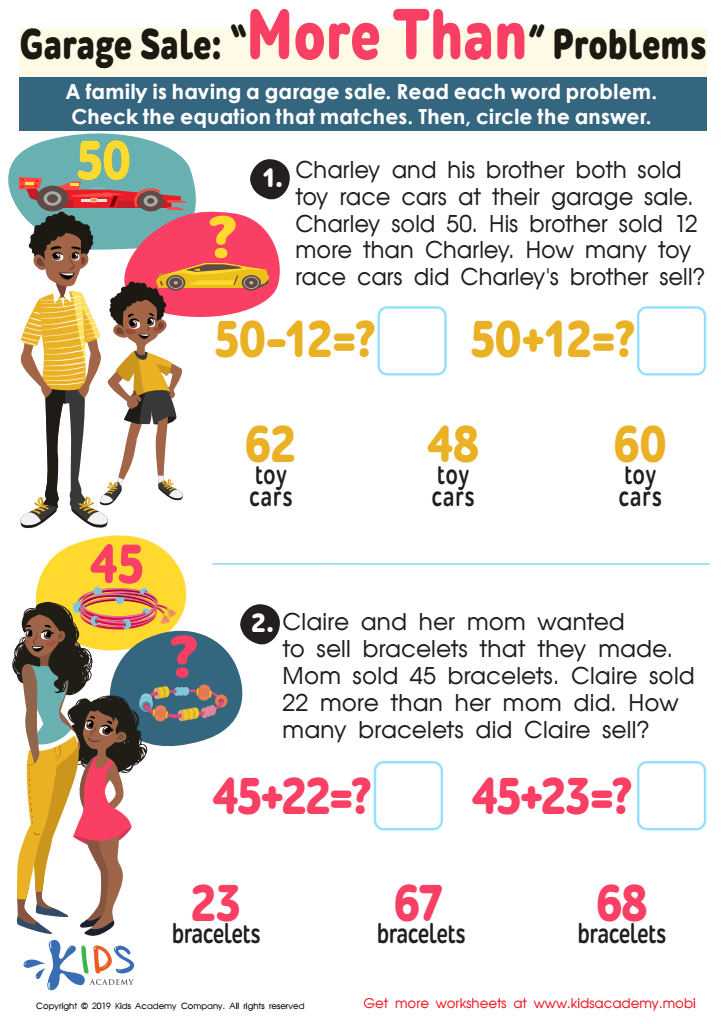
Garage Sale - More yhan Worksheet
 Assign to My Students

Sweet Shop – Counting Coins Worksheet
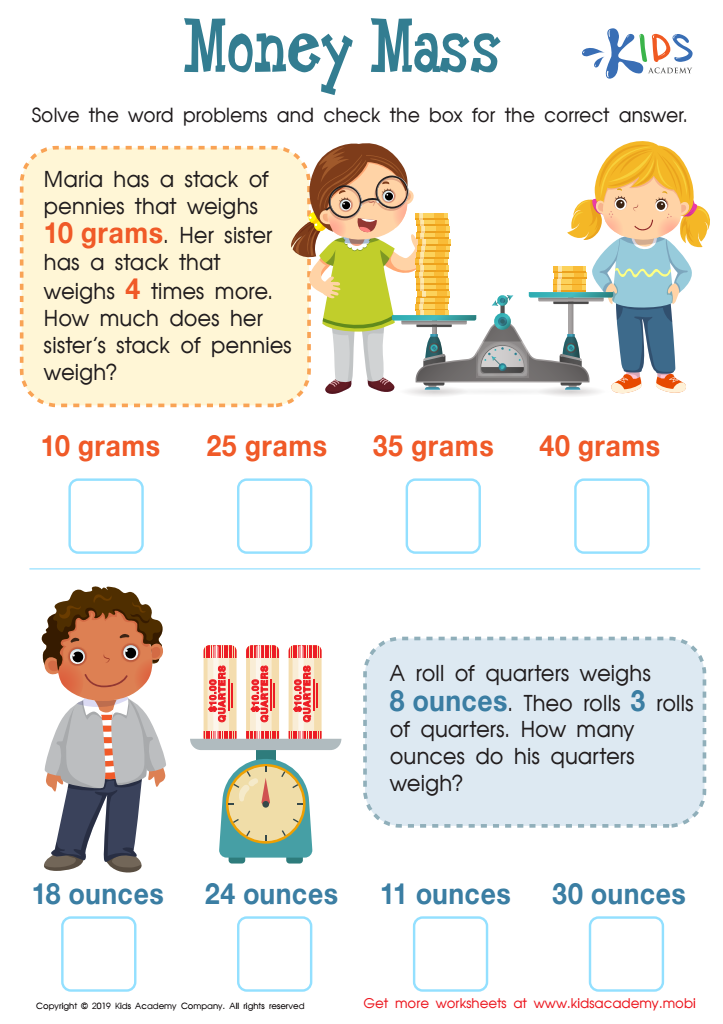
Money Mass Worksheet







Understanding money at a young age is foundational for developing essential life skills. Ages 4 to 8 mark a critical period where children begin to grasp basic numerical concepts and the value of items in their environment. Introducing money management during these formative years helps cultivate financial literacy early on, which can have lifelong benefits.
Parents and teachers should care because early money lessons foster basic arithmetic skills like counting, adding, and subtracting, making abstract math concepts more tangible and relatable. It also sets the stage for responsible money habits, teaching children the fundamental difference between needs and wants and the importance of saving. These habits, once developed young, stick into adulthood, helping to prevent future financial troubles.
Moreover, understanding money nurtures decision-making and prioritization skills. When children decide how to spend a small allowance, they learn to weigh options and deal with consequences, laying the basis for more complex economic choices later on. Collaborating on real-world activities like setting up a lemonade stand or saving pennies in a piggy bank makes learning interactive and enjoyable, fostering teamwork and goal-setting.
Investing in financial education early helps pave the way for responsible, informed, and confident individuals equipped to manage their finances effectively throughout their lives.








