Understanding perspectives Worksheets for Ages 4-8
3 filtered results
-
From - To
Our "Understanding Perspectives Worksheets for Ages 4-8" offer engaging activities designed to help young learners develop empathy and critical thinking skills. These worksheets encourage children to explore different viewpoints through fun exercises that promote awareness of others' feelings and opinions. By completing these activities, kids will enhance their social skills and improve their ability to communicate and collaborate with peers. Perfect for home or classroom use, our resources provide a great opportunity to foster understanding and compassion. Dive into our collection of worksheets today and empower your child to appreciate the diverse perspectives around them!
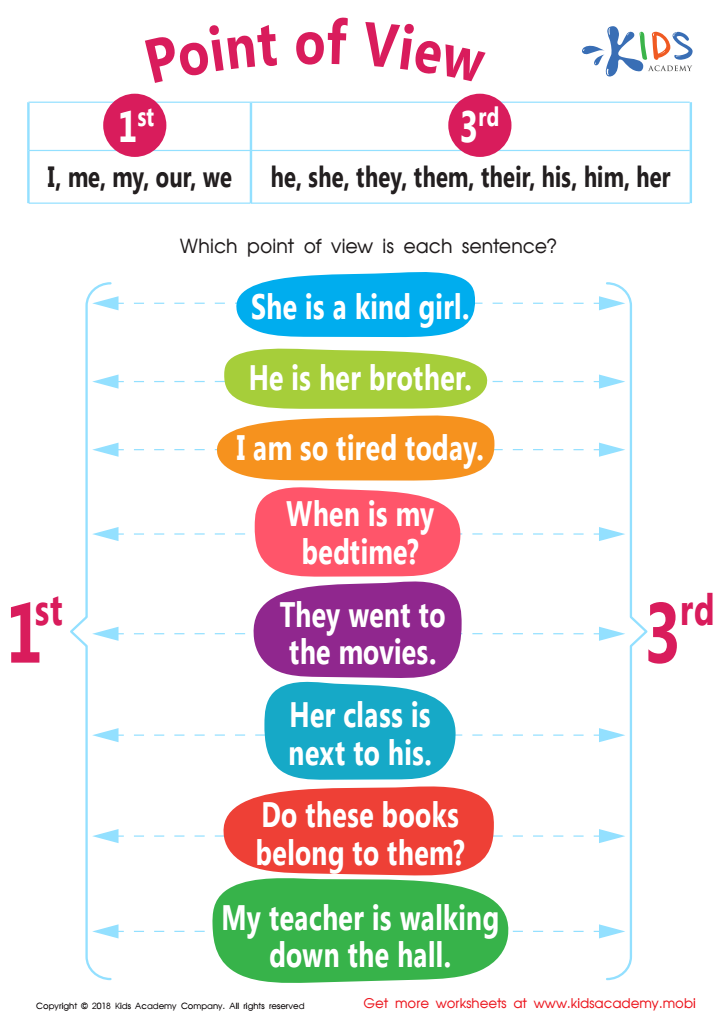
Point of View Worksheet
 Assign to My Students
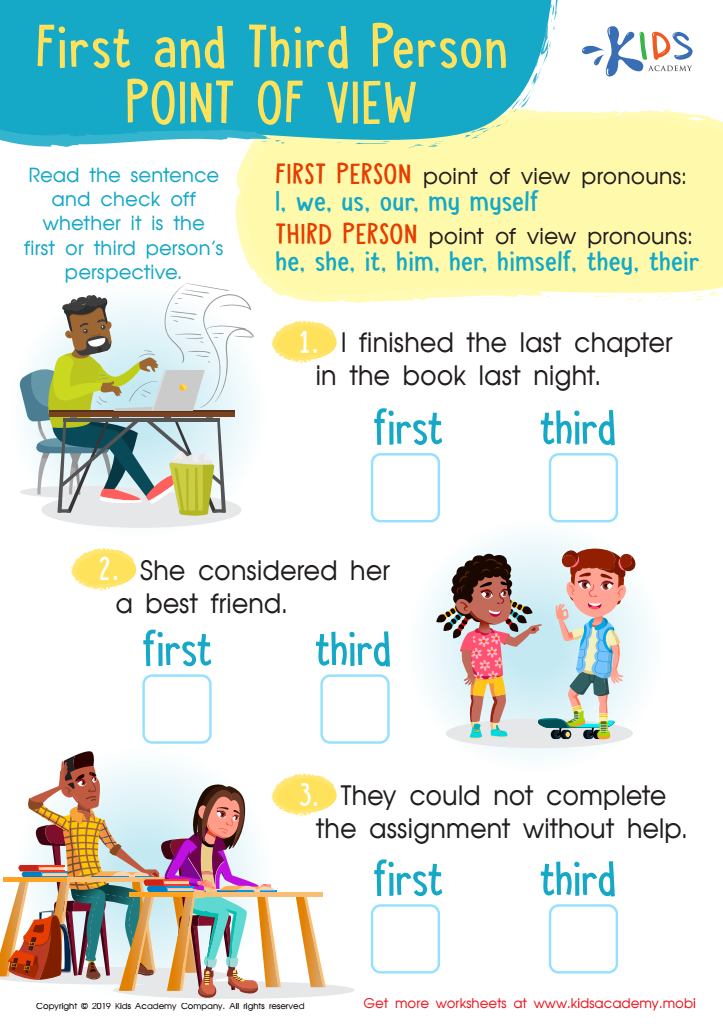
First and Third Person Point of View Worksheet
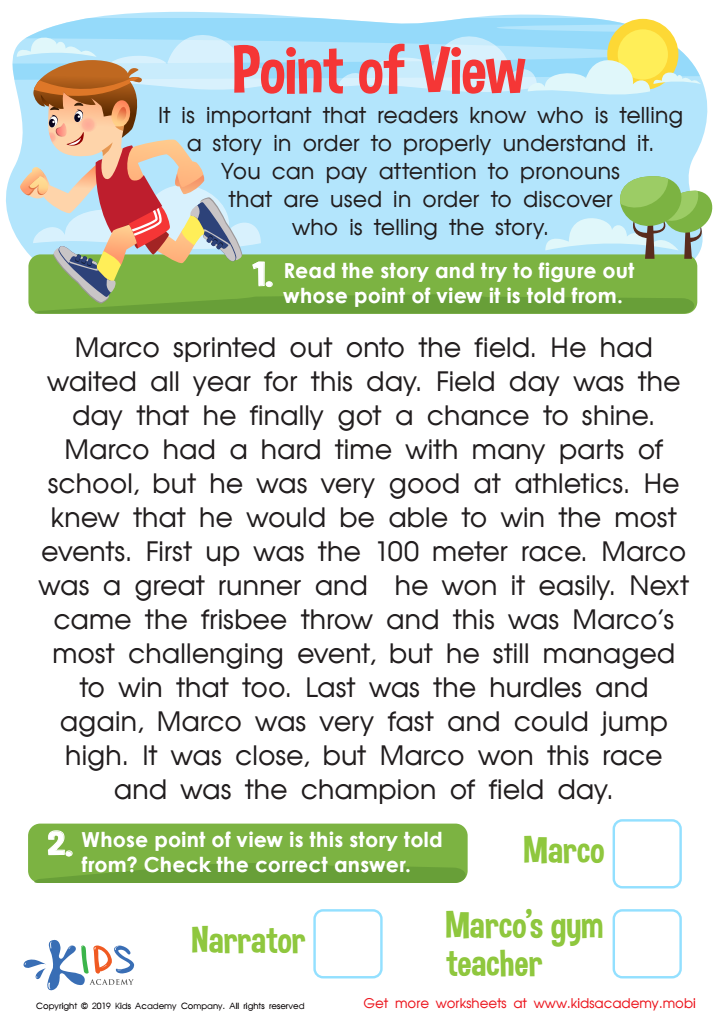
Point of View Worksheet








Understanding perspectives is essential for children aged 4-8, as it promotes empathy, critical thinking, and social skills. During these formative years, children are developing the ability to recognize that people can think and feel differently from themselves. This understanding fosters strong interpersonal relationships and prepares children for collaborative learning environments.
When parents and teachers prioritize perspective-taking, they help children navigate their social landscape more effectively. By learning to consider others' feelings and viewpoints, children are equipped to resolve conflicts, build friendships, and communicate respectfully. This skill is critical in diverse settings, where they will encounter a variety of thoughts, beliefs, and backgrounds.
Moreover, understanding perspectives encourages curiosity and a love for learning. Children who grasp that others may have different interpretations of events are more likely to engage in open discussions and ask questions. This skill enriches their educational experiences and supports cognitive growth.
Finally, fostering perspective-taking aligns with core values such as respect, inclusion, and teamwork, essential for creating harmonious classrooms and communities. Overall, both parents and teachers play a vital role in helping young children develop this key competence, shaping compassionate and understanding future adults.








