Understanding timelines Worksheets for Ages 4-8
7 filtered results
-
From - To
Empower your child's learning journey with our "Understanding Timelines Worksheets for Ages 4-8" at Kids Academy. These engaging and educational worksheets are designed to introduce young learners to the concept of time sequencing using visual aids and age-appropriate activities. By helping children grasp past, present, and future events, these resources develop essential critical thinking and organizational skills. Ideal for both classroom and home use, our worksheets make learning fun and interactive, ensuring that children are not only informed but also enthusiastic about exploring timelines. Foster a love of history and time management with Kids Academy today!
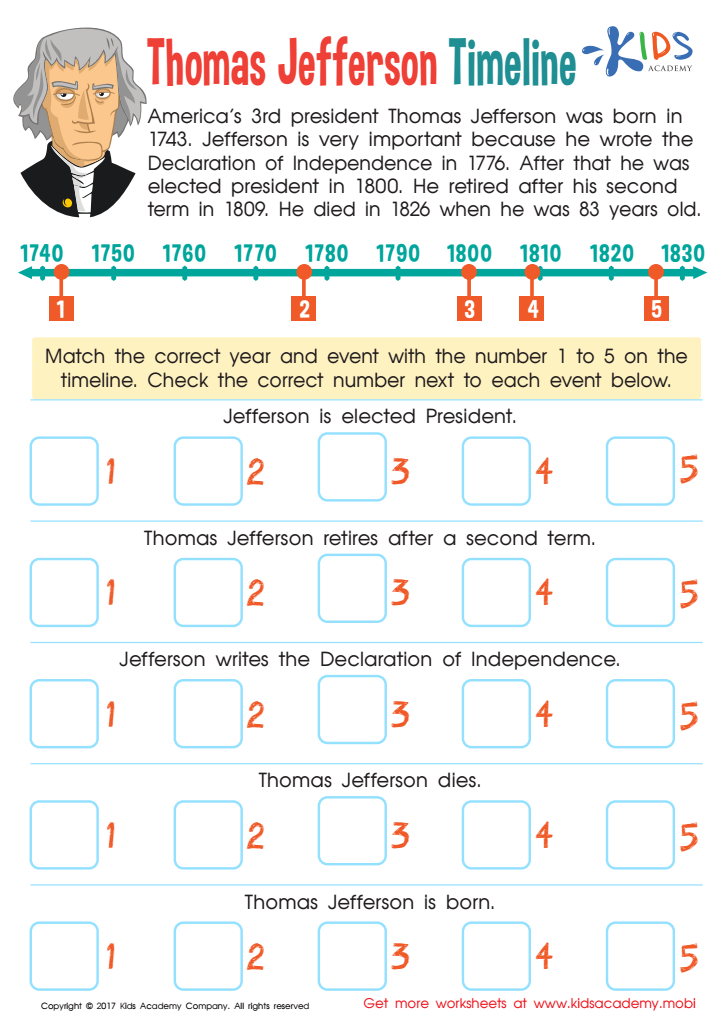
Thomas Jefferson Timeline Worksheet
 Assign to My Students
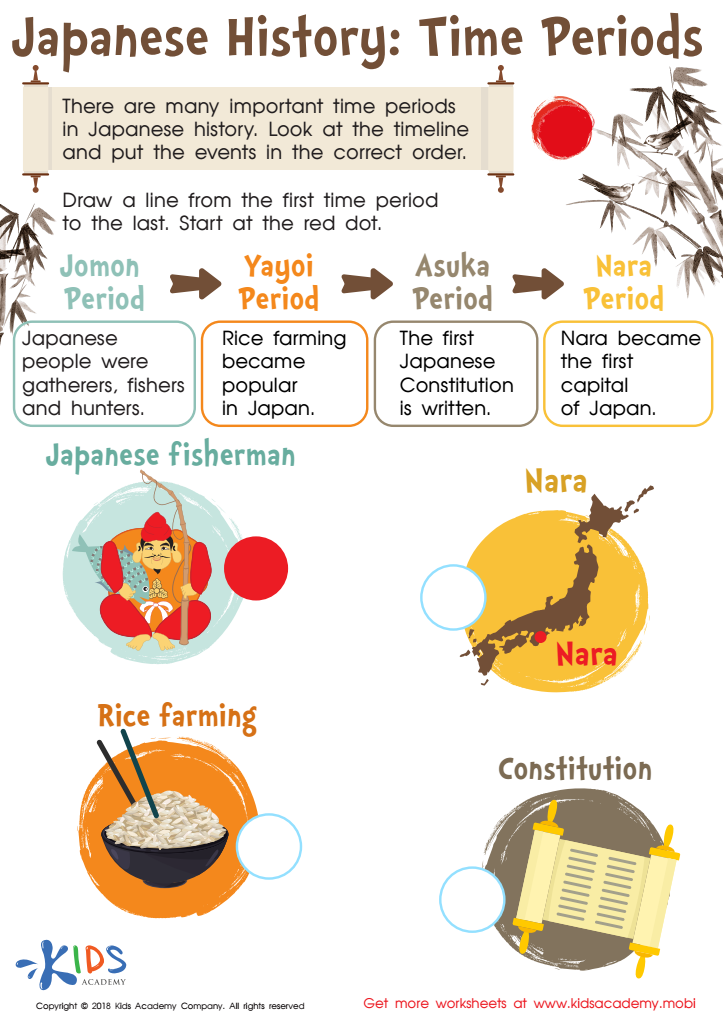
Japanese History: Time Periods Worksheet
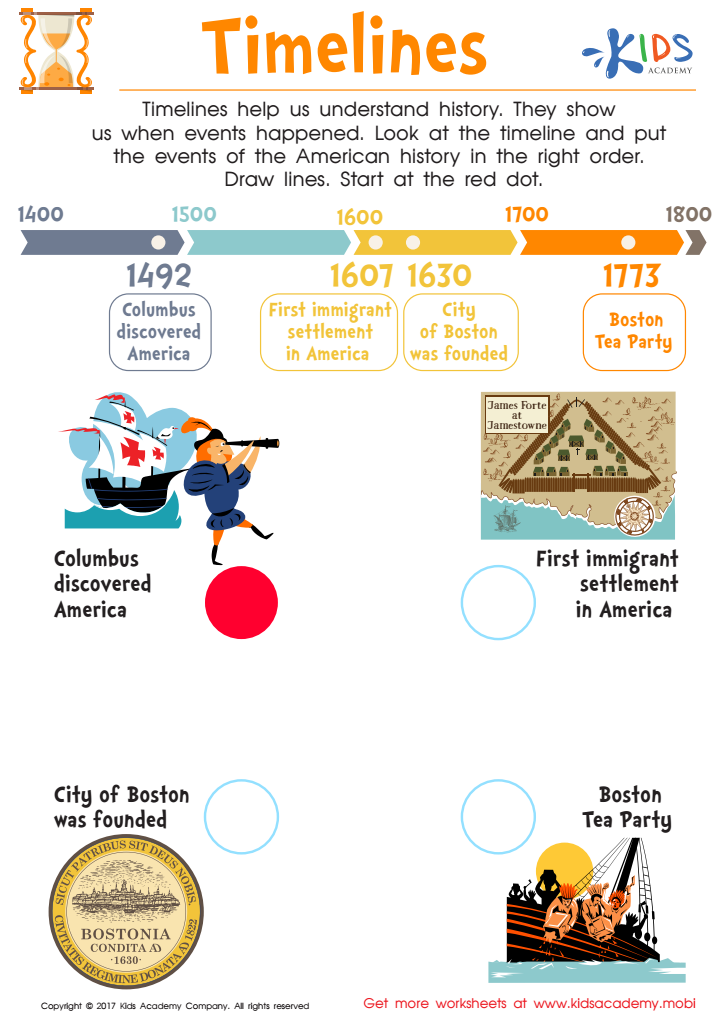
American History Timeline Worksheet
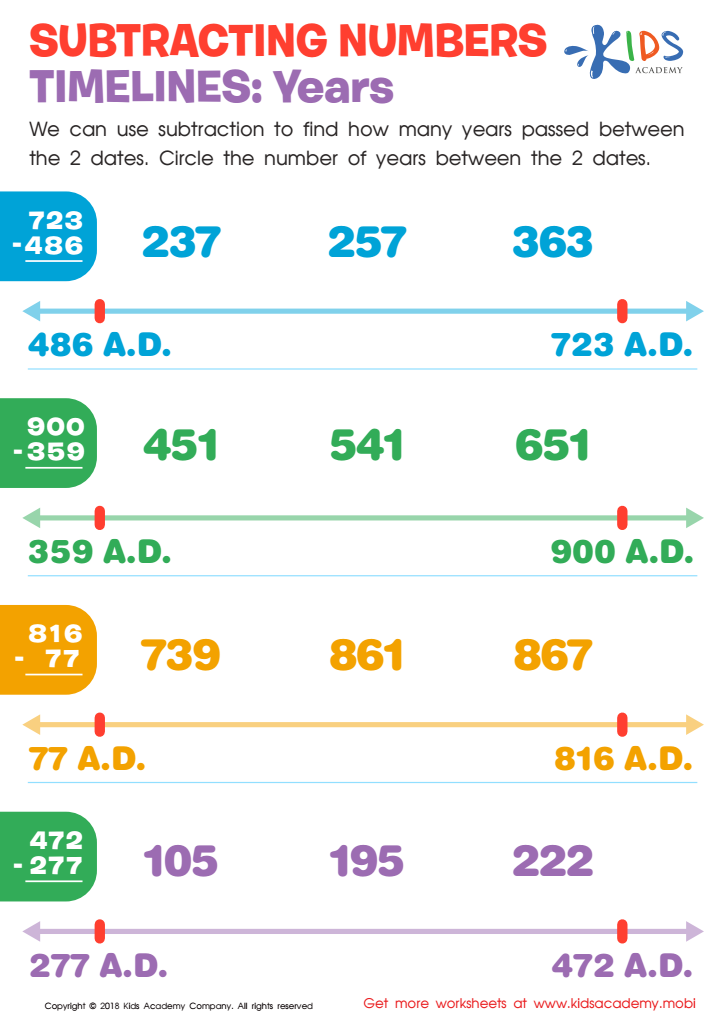
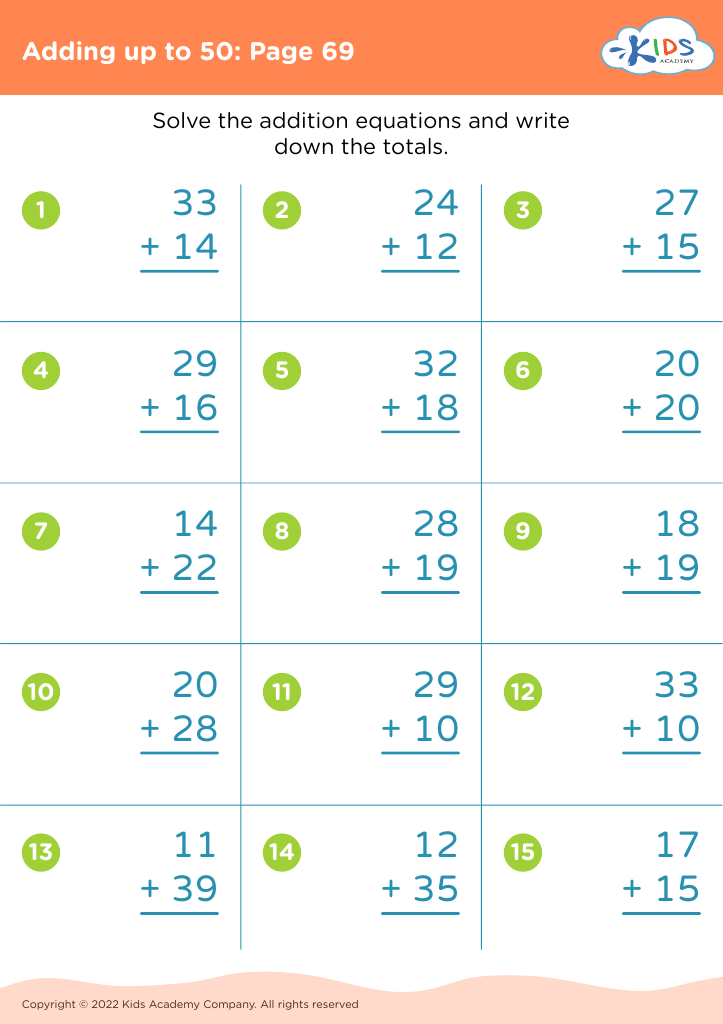
Subtracting Numbers Timelines: Years Worksheet
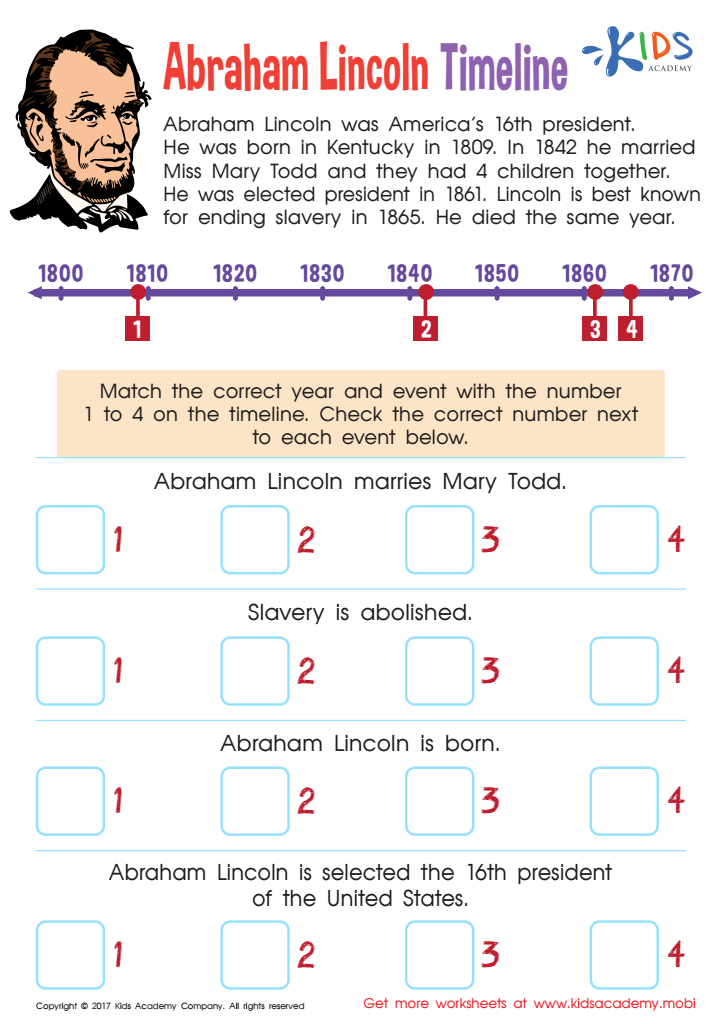
Abraham Lincoln Timeline Worksheet
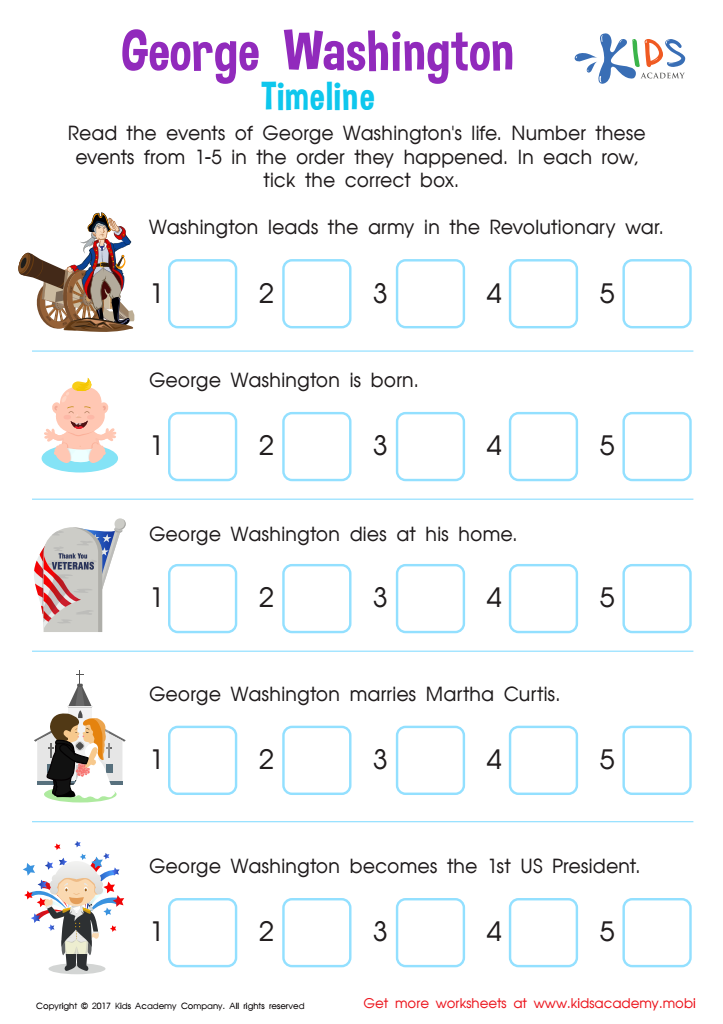
George Washington Timeline Worksheet






.jpg)

Understanding timelines is crucial for young children, and both parents and teachers should recognize its importance. For children aged 4-8, the concept of time can be abstract and challenging to grasp. Timelines provide a concrete visual representation that helps simplify this abstract concept, allowing young minds to better understand sequences, cause and effect, and the passage of time.
For parents, helping children understand timelines can enhance daily routines and make transitions smoother. It aids in setting expectations, whether it’s the process of getting ready in the morning, the sequence of events in a story, or even understanding days of the week and months of the year. Timelines can make these concepts tangible, leading to more structured and predictable environments.
Teachers, on the other hand, can use timelines in educational settings to support learning across various subjects, such as history, reading comprehension, and science. When children see events laid out sequentially, they develop better organizational skills and can easily recall information. It fosters their ability to think logically and understand the world around them.
Understanding timelines equips young children with the tools they need to navigate an increasingly complex world, fostering essential cognitive and organizational skills. Therefore, parents and teachers should prioritize teaching this concept to young learners to set a strong foundation for future learning.








