Understanding times tables Worksheets for Ages 4-8
6 filtered results
-
From - To
Welcome to our "Understanding Times Tables Worksheets" page designed for children ages 4-8! Our engaging and interactive worksheets aim to help young learners grasp multiplication concepts in a fun and supportive environment. These resources are tailored to cater to different learning styles, making it easier for kids to visualize and comprehend times tables. Each worksheet includes colorful illustrations and step-by-step exercises that encourage practice and mastery of essential math skills. By using these worksheets, children can build a strong foundation in mathematics, boost their confidence, and enjoy the process of learning multiplication. Start your journey to multiplication mastery today!
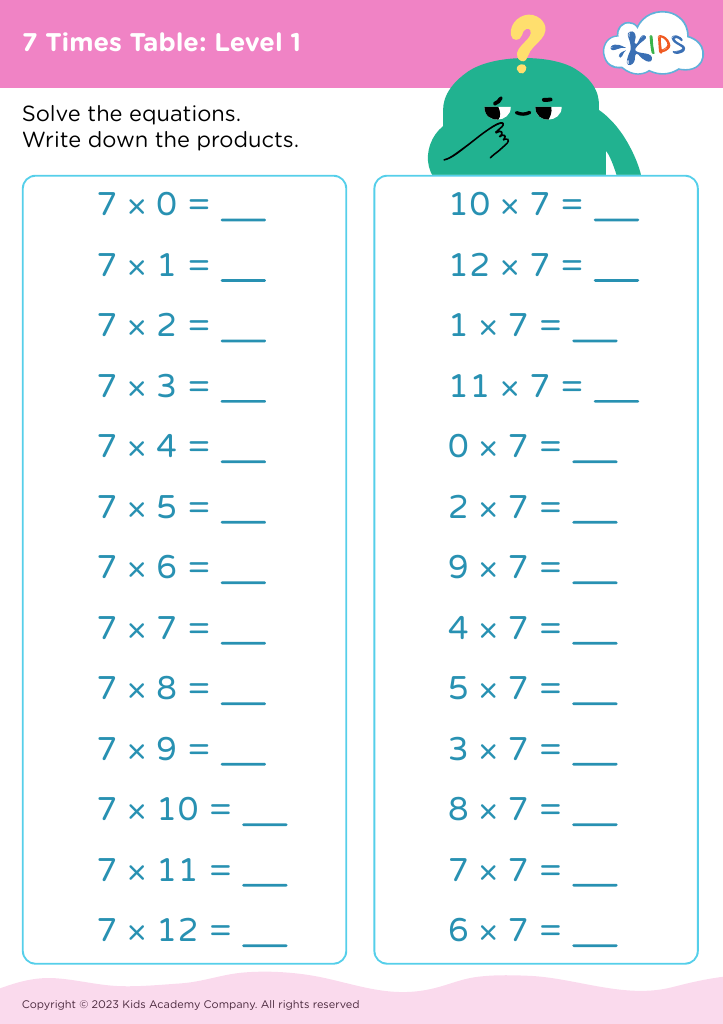
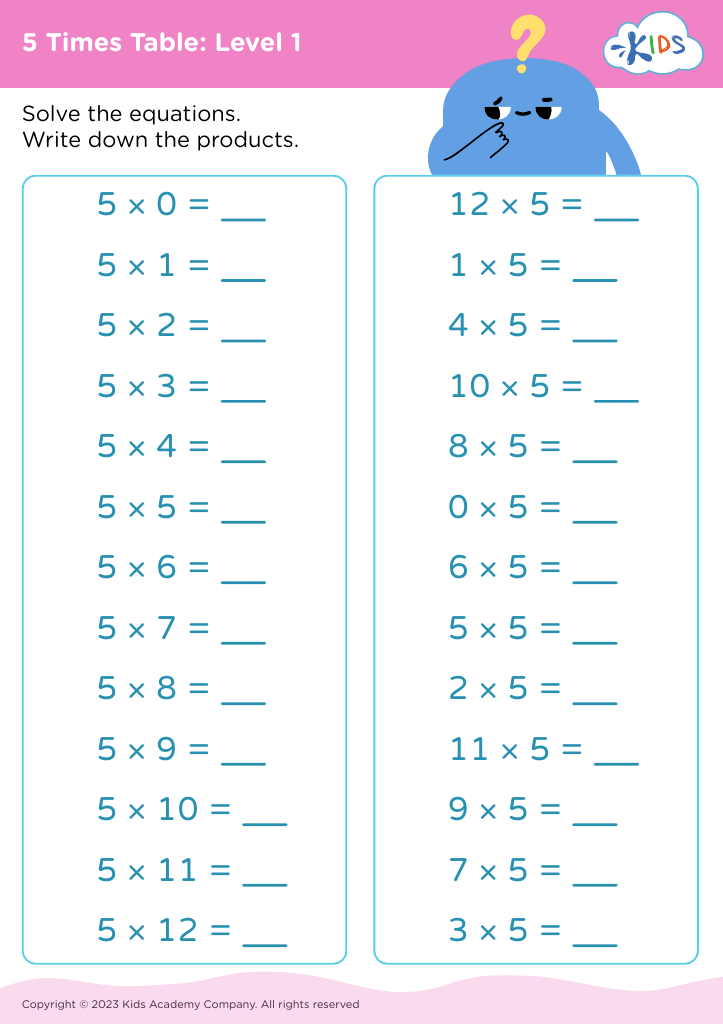
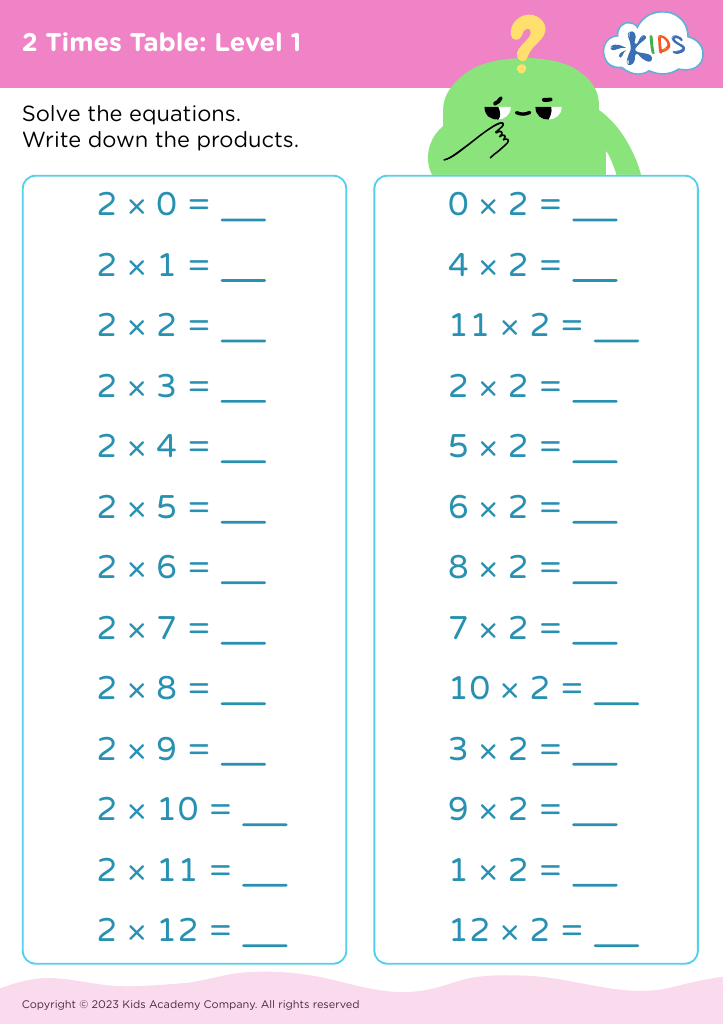
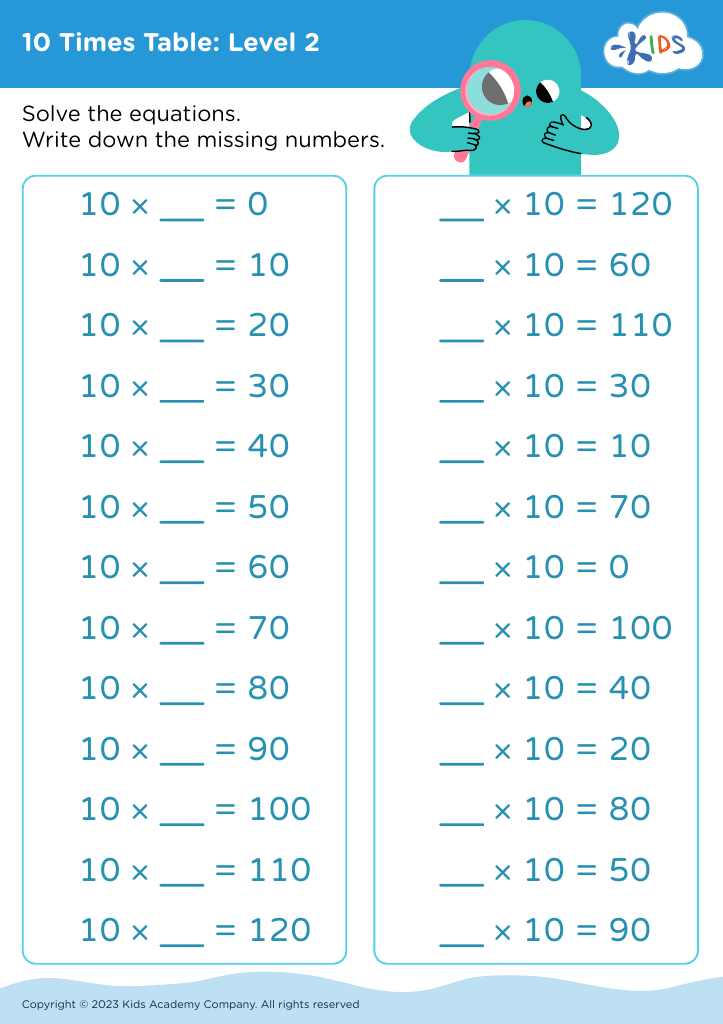
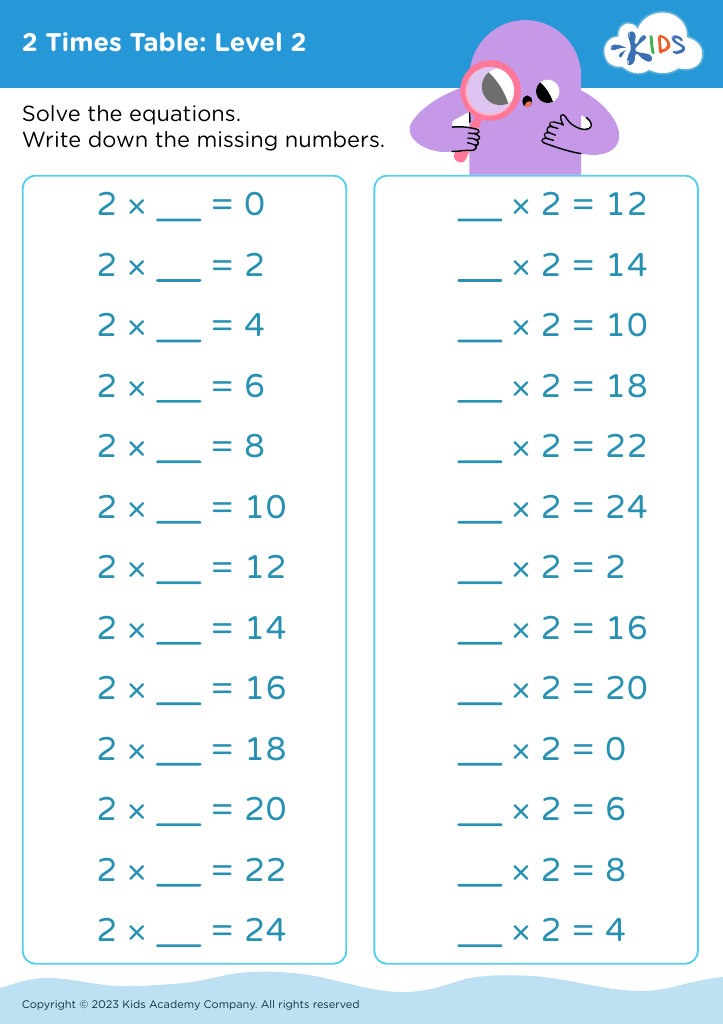
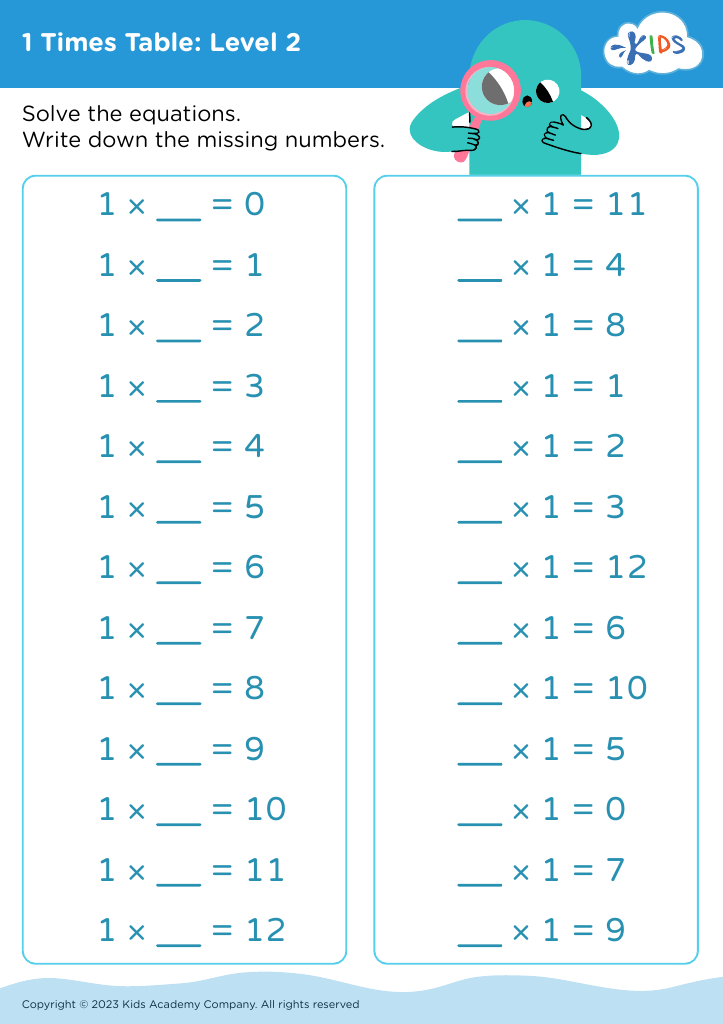








Understanding times tables is crucial for children aged 4-8 as it lays the foundation for their future mathematics skills. At this tender age, children are developing their number sense and exploring mathematical concepts. Grasping multiplication tables enhances their understanding of basic arithmetic operations, encouraging confidence in problem-solving abilities.
Learning times tables helps children recognize patterns and relationships between numbers, fostering critical thinking skills. It serves as a stepping stone to more complex math concepts, such as division, fractions, and algebra. Additionally, mastery of multiplication tables allows for quicker mental calculations, which is essential in everyday situations, including budgeting and time management.
For parents and teachers, supporting children in their understanding of times tables increases academic motivation and engagement. Frequent practice can be turned into fun activities, involving games, songs, or interactive tools, making the learning process enjoyable.
Moreover, early proficiency in multiplication can reduce math anxiety and build a more positive attitude toward the subject, contributing to long-term academic success. By showing interest and providing support, parents and teachers can empower children to embrace math with enthusiasm, ensuring they develop strong foundational skills that will benefit them for years to come.








