Basic Addition Skills Adding in the Forest Worksheets for Ages 4-8 - Page 3
55 filtered results
-
From - To
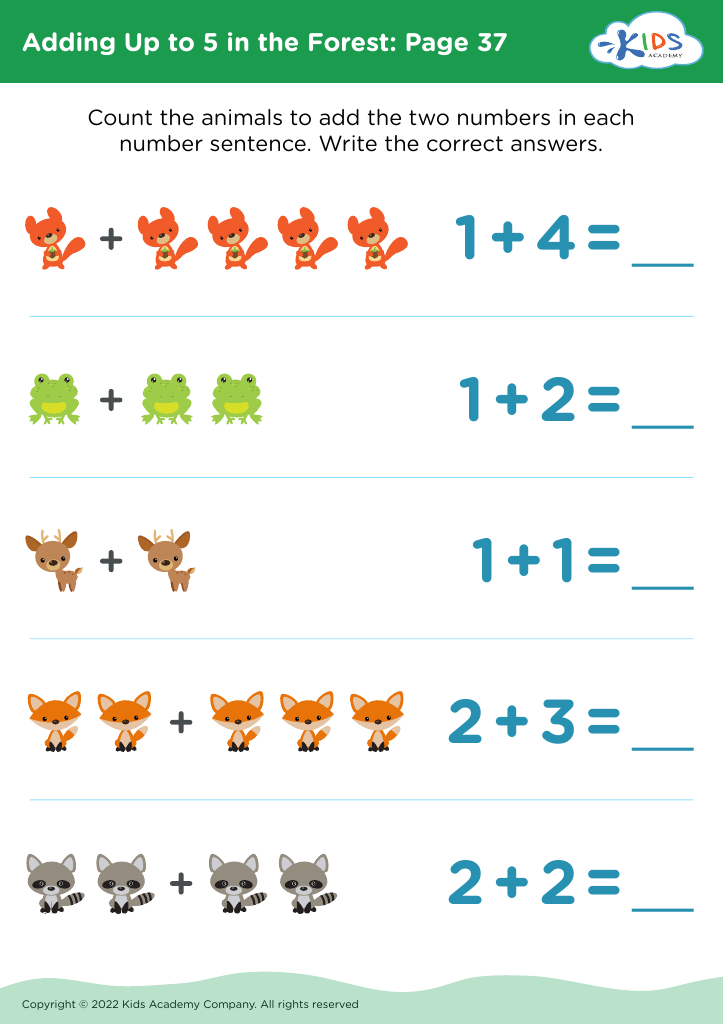
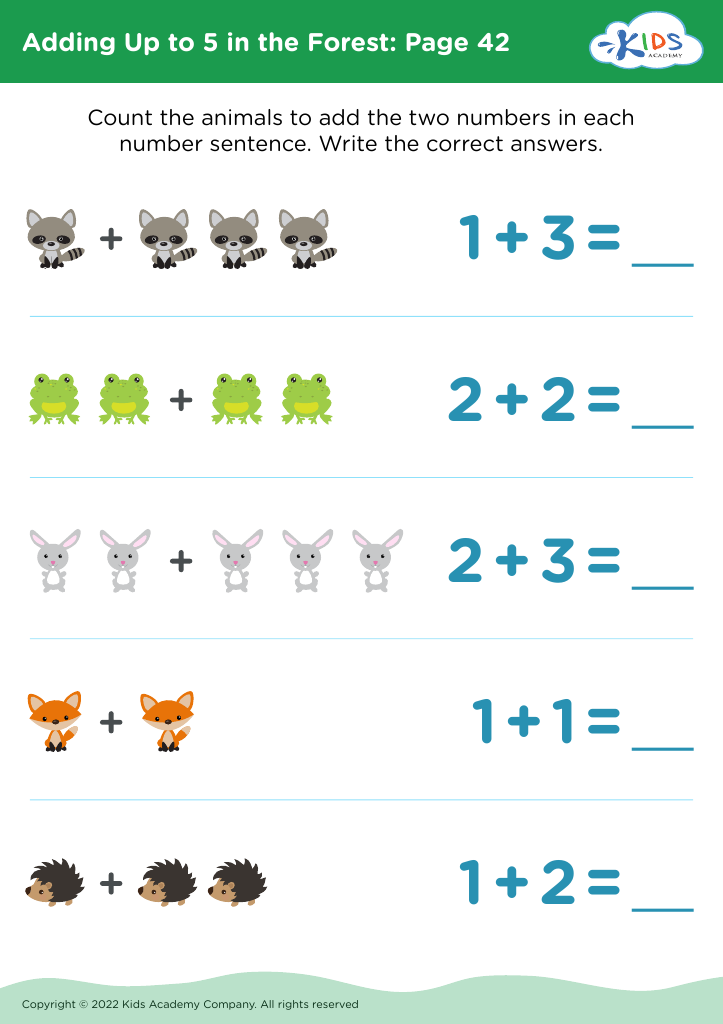
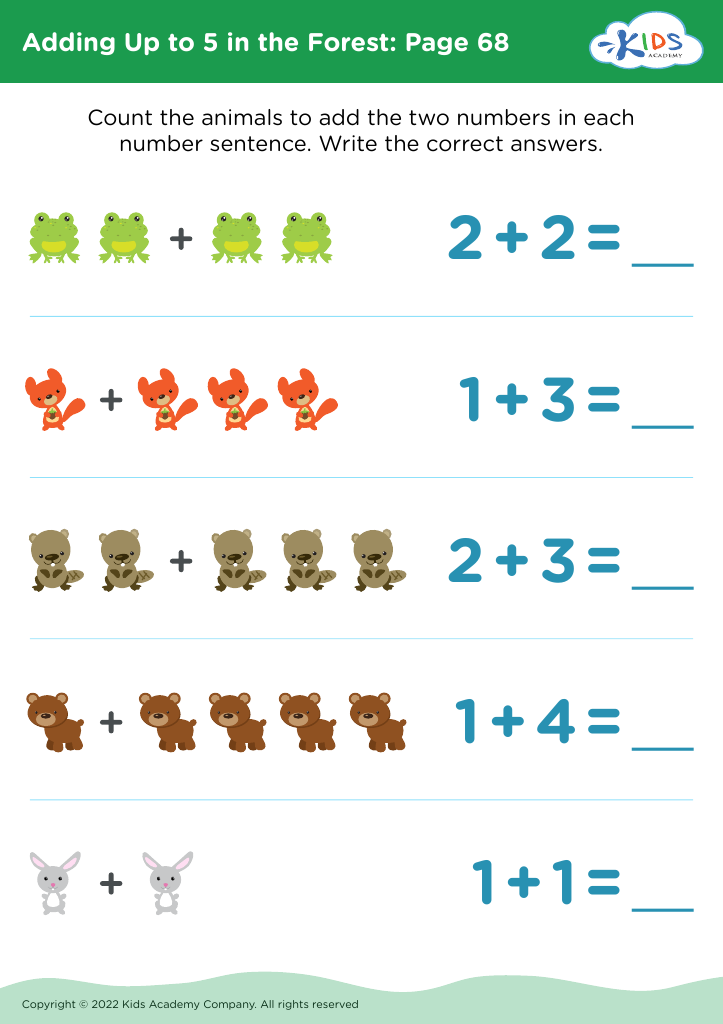
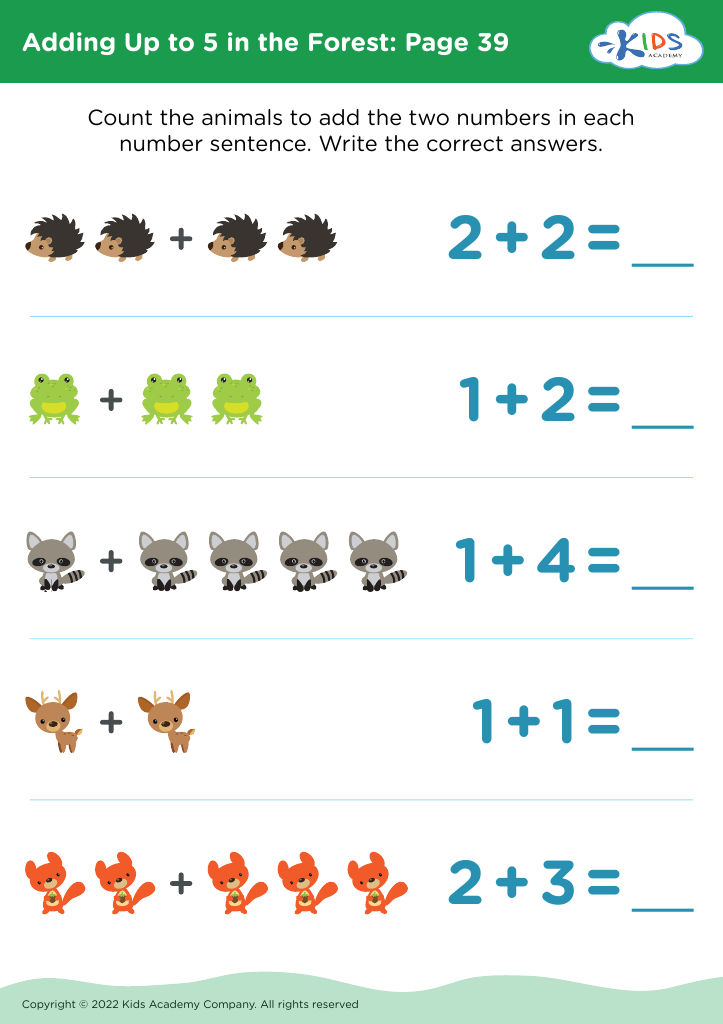
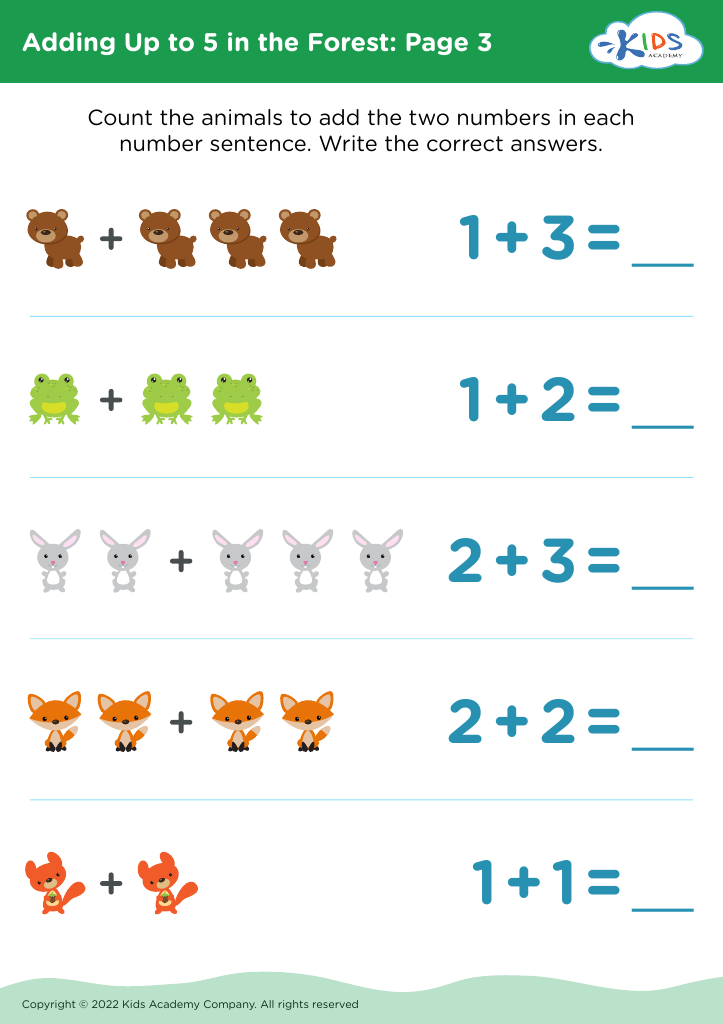
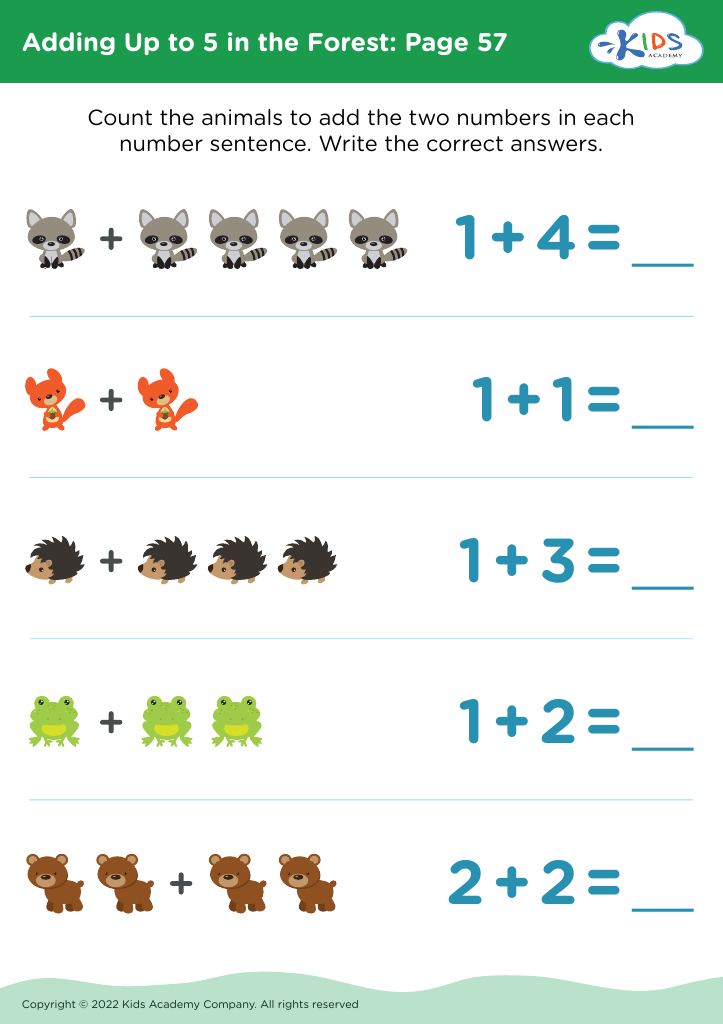
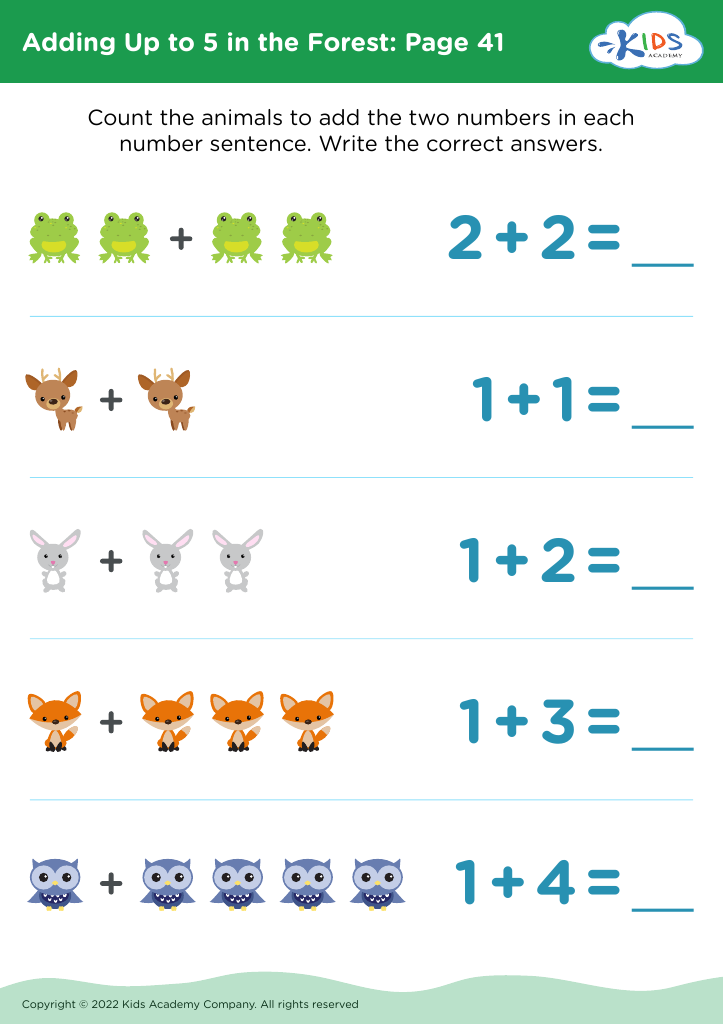




Basic addition skills are foundational for children's mathematical understanding and cognitive development. For children aged 4-8, incorporating engaging contexts, such as "Adding in the Forest," creates memorable and meaningful learning experiences. This approach combines natural settings with interactive activities, promoting both academic growth and appreciation for nature.
Parents and teachers should prioritize these skills because early mathematical concepts are strongly linked to later success in math-related subjects. When children learn to add in fun and imaginative ways, they develop a positive attitude toward math, which encourages lifelong learning and critical thinking.
Moreover, integrating themes like nature allows children to relate math to the real world, enhancing their engagement and comprehension. As they count leaves, animals, or forest elements, they're not only practicing addition but also fostering creativity and curiosity.
Furthermore, these skills support other essential areas, including problem-solving, decision-making, and social skills through collaborative play. By ensuring that children acquire a solid foundation in addition, parents and teachers can empower them to tackle more complex mathematical concepts with confidence as they progress in their education. Overall, teaching basic addition skills is vital for holistic development, setting children up for success both in school and beyond.