Problem Solving Adding in the Forest Worksheets for Ages 4-8
3 filtered results
-
From - To
Discover fun and engaging "Problem Solving Adding in the Forest Worksheets" designed for children ages 4-8! These worksheets blend mathematical concepts with captivating forest-themed illustrations, making learning an enjoyable adventure. Young learners will enhance their addition skills while tackling relatable, real-world problems inspired by nature. Each worksheet encourages critical thinking and fosters a love for math as kids count, solve, and explore the forest world. Ideal for home or classroom use, our worksheets support early math development and encourage students to think independently. Start your child's journey to becoming a confident problem solver in math today!
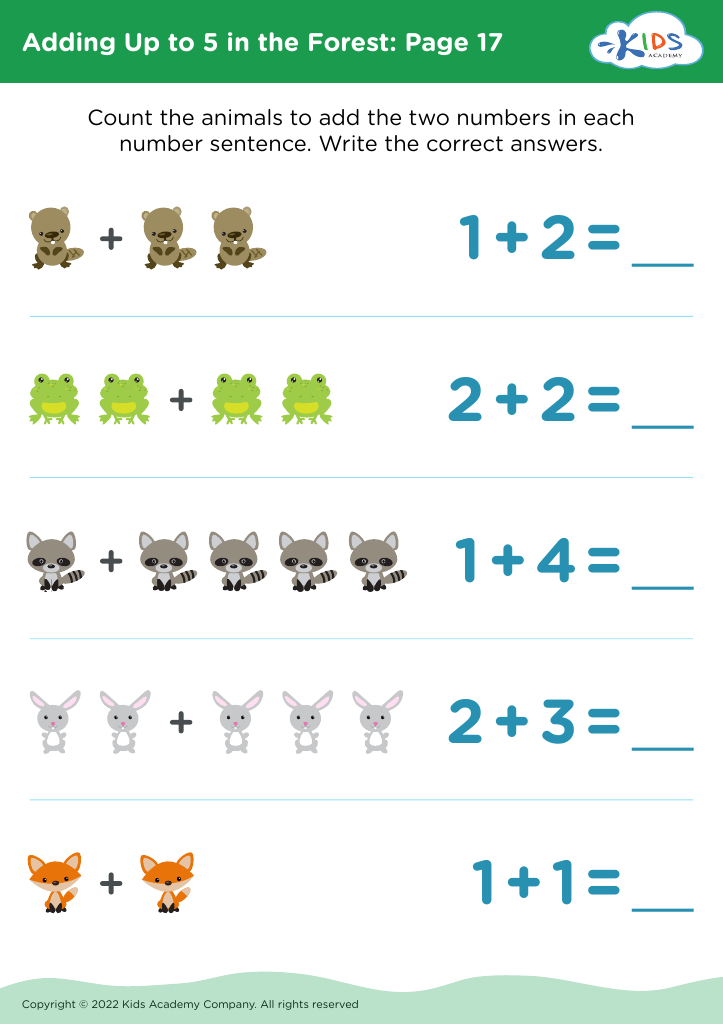
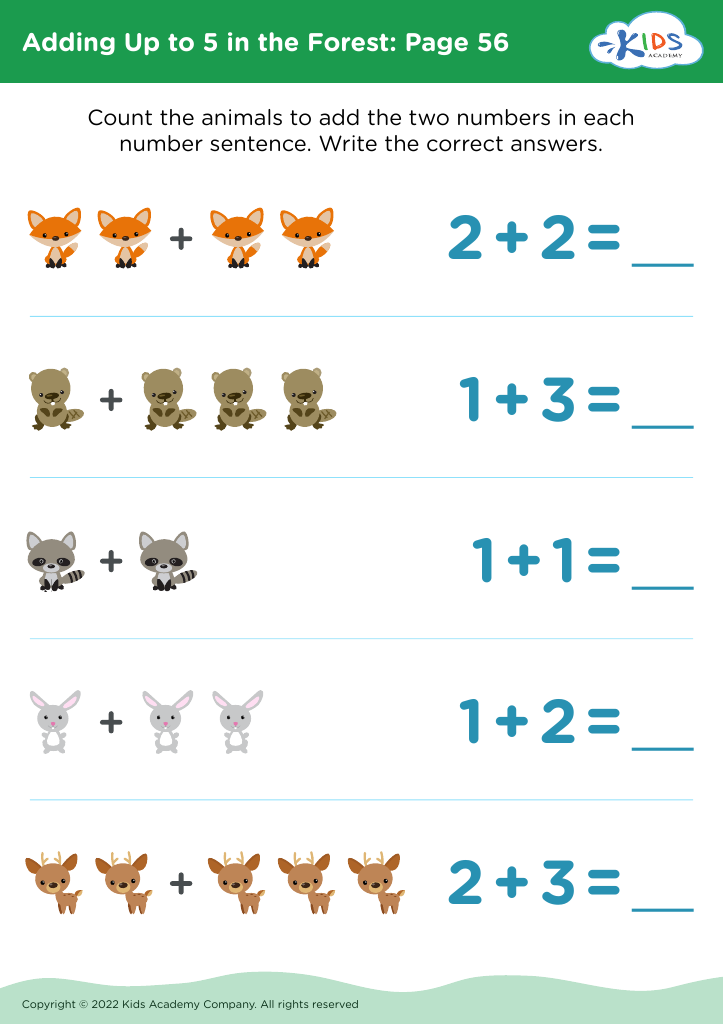
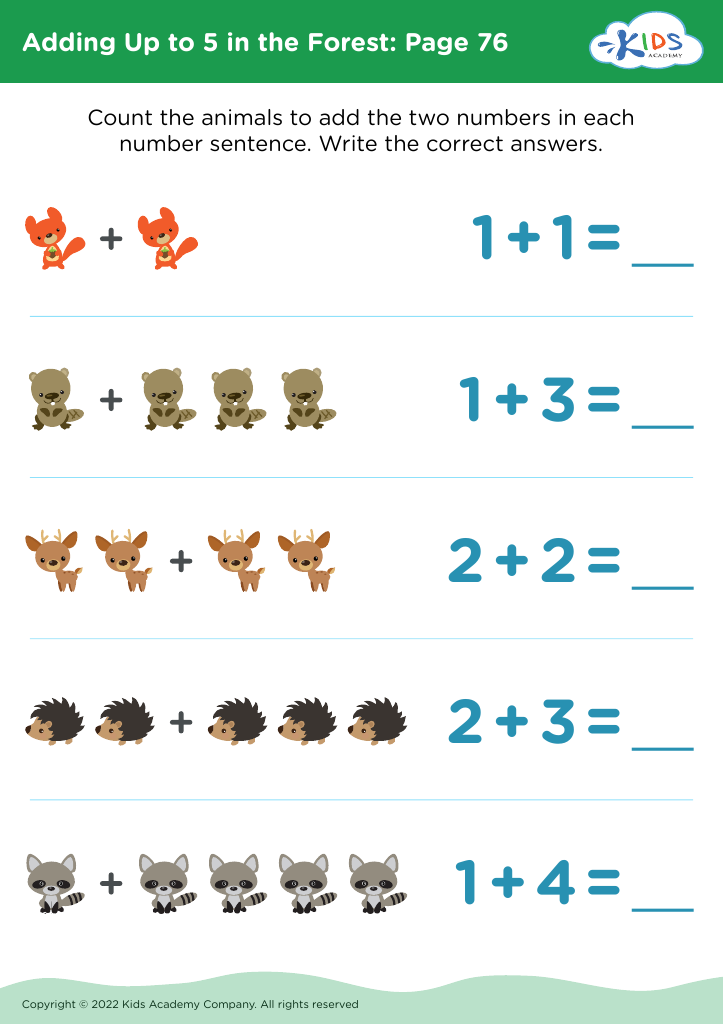



Parents and teachers should care about "Problem Solving Adding in the Forest" for ages 4-8 because it fosters critical thinking and cognitive skills essential for early childhood development. At this age, children are naturally curious and eager to explore their surroundings. Engaging them in problem-solving activities related to practical scenarios, such as adding elements found in a forest, can enhance their ability to reason, adapt, and interpret real-world situations mathematically.
Moreover, incorporating themes like nature and forests promotes a connection between mathematics and the environment, making learning relatable and fun. This method encourages collaboration and communication among peers, as they tackle problems together, fostering teamwork and social skills. Additionally, interactive and hands-on experiences can inspire a love for learning, motivating children to explore math outside formal settings, which lays the foundation for lifelong learning.
By integrating problem-solving and outdoor exploration, we also encourage physical activity and a love for nature, which are essential for holistic development. Ultimately, such activities prepare young learners for future academic challenges while nurturing their creativity and critical thinking – valuable skills that extend beyond the classroom.