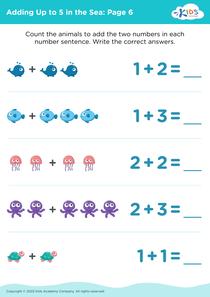
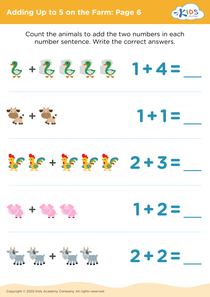
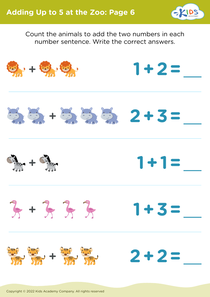
Understanding Quantities Adding in the Forest Worksheets for Ages 4-8
6 filtered results
-
From - To
Discover the joys of learning with our "Understanding Quantities Adding in the Forest Worksheets" designed specifically for children aged 4-8! These engaging and colorful worksheets introduce young learners to the fundamental concepts of quantity and addition in a fun, forest-themed setting. Through interactive exercises, children will identify and count objects, enhancing their counting skills and understanding of numbers. Perfect for homeschooling or supplemental practice, our worksheets promote early mathematical skills while encouraging a love for nature. Spark your child's curiosity and boost their confidence in math with our easy-to-use resources tailored for young minds! Explore the magic of addition today!
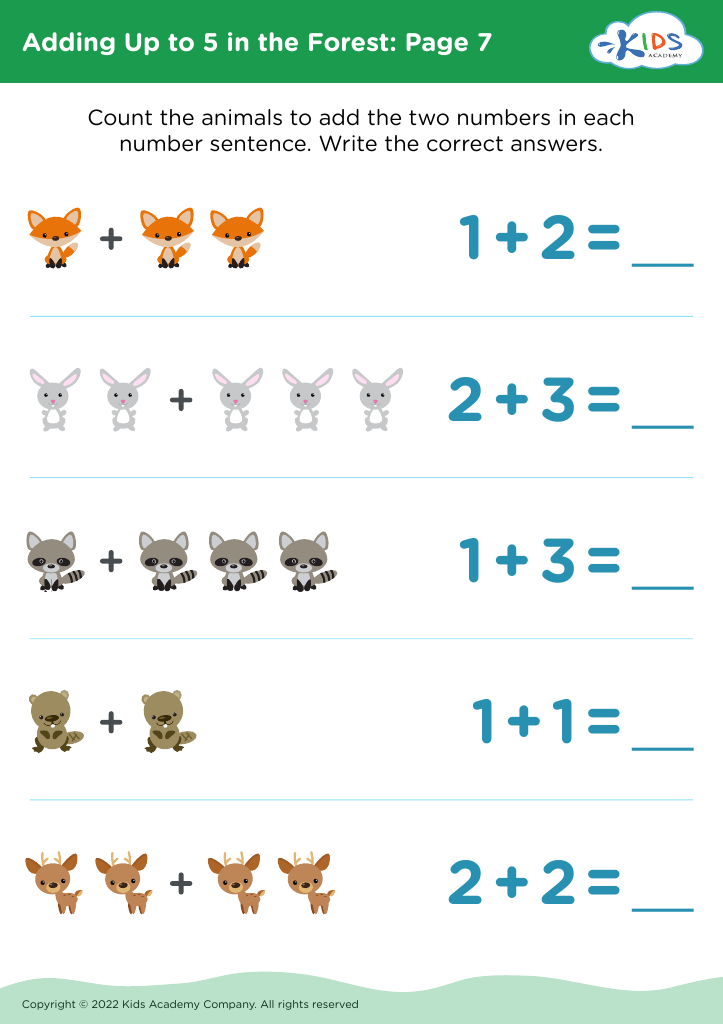
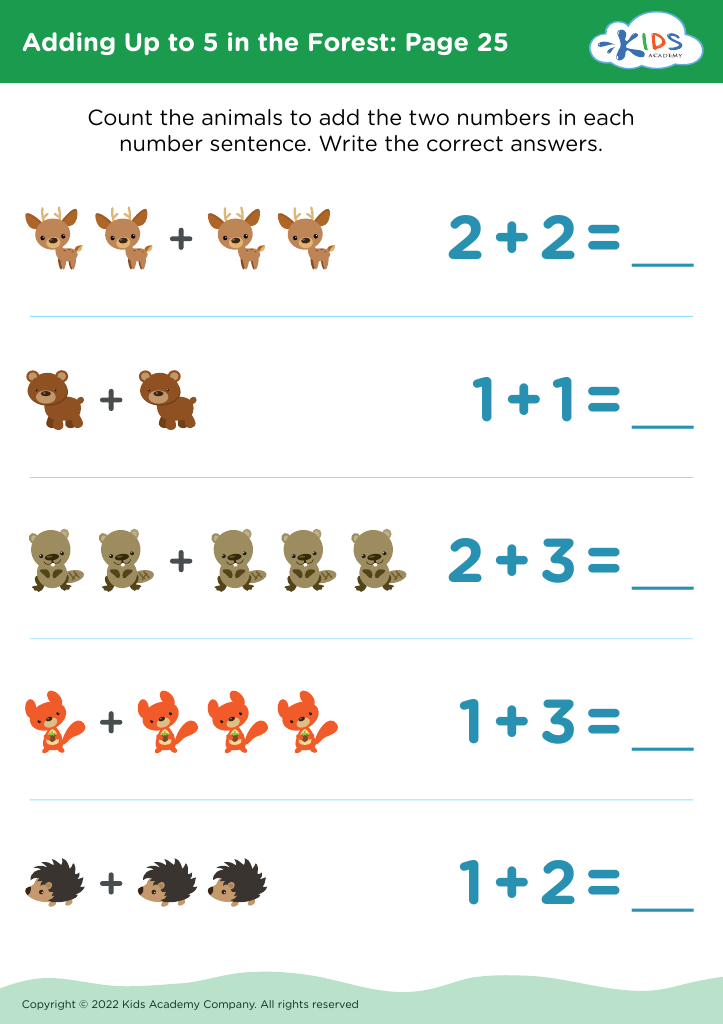
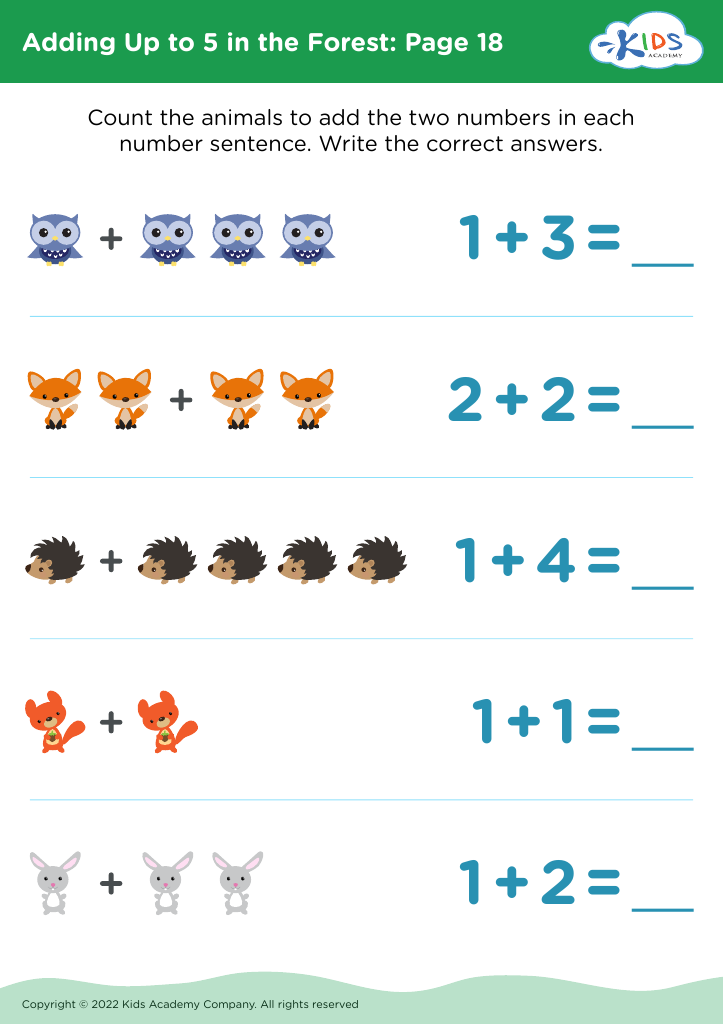
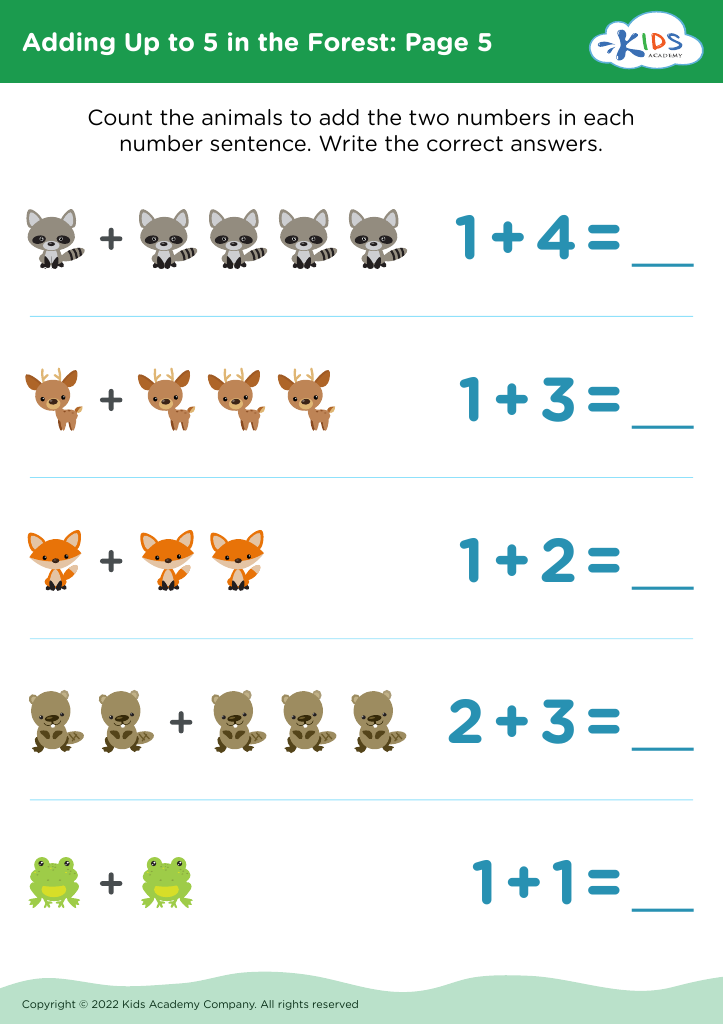
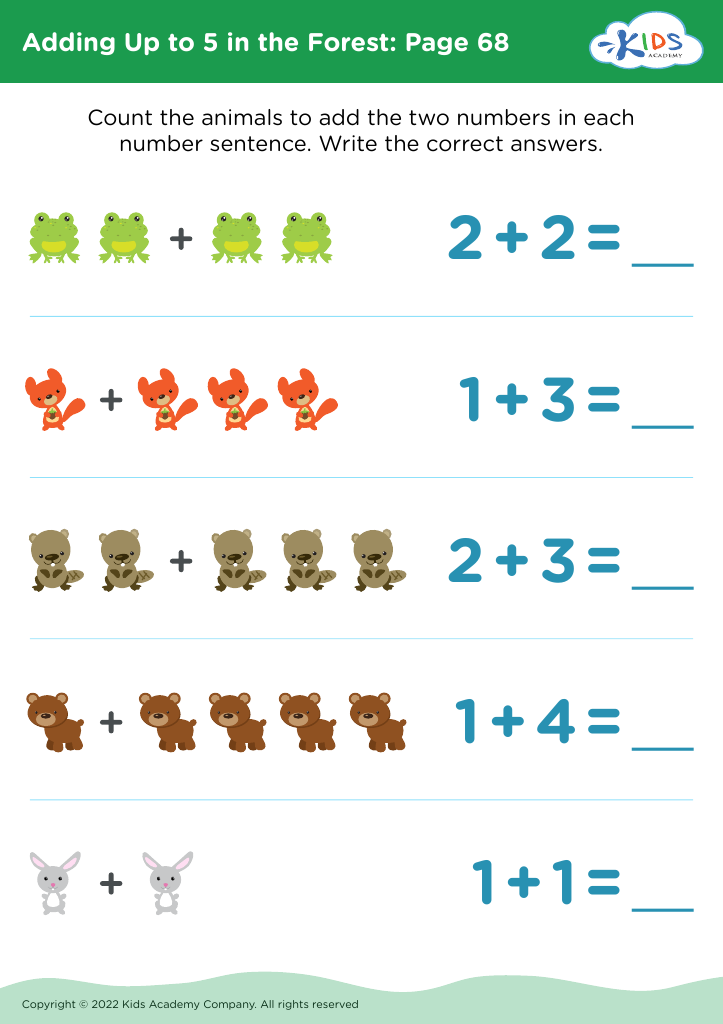
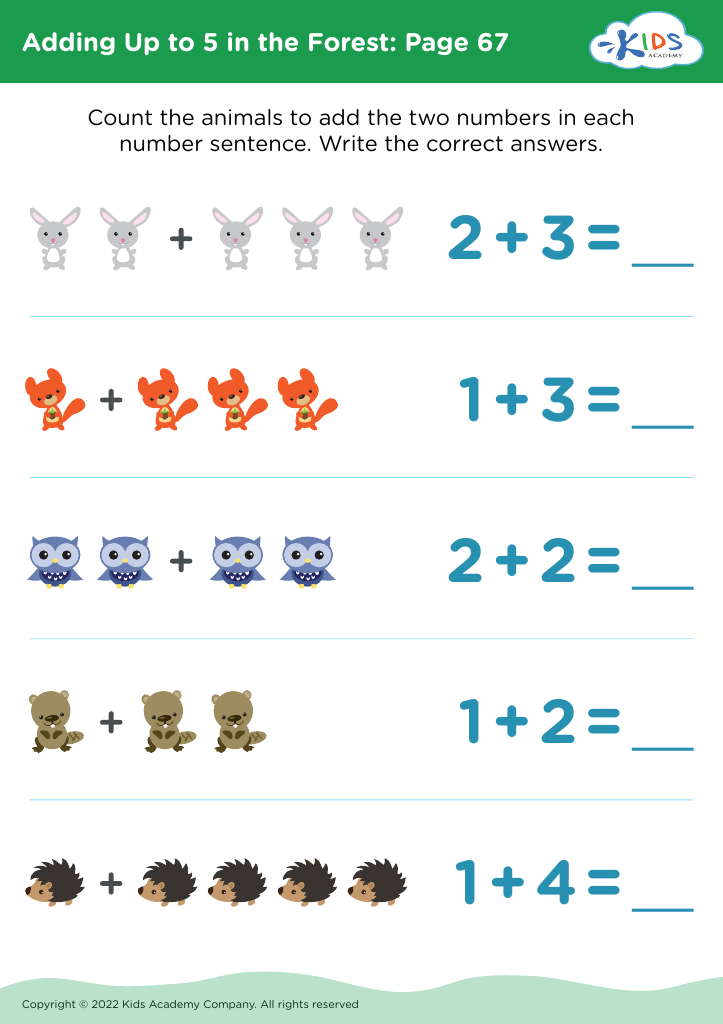



Understanding Quantities and the concept of adding through activities like "Adding in the Forest" is essential for parents and teachers of young learners aged 4-8. This age is a critical period for developing foundational math skills, and engaging activities can foster a positive attitude toward learning. By incorporating real-world concepts, such as counting natural objects in a forest setting, children can relate mathematical ideas to their environment, enhancing their comprehension and retention.
Activities involving quantities also promote cognitive skills essential for problem-solving and logical reasoning. They encourage children to explore, experiment, and engage with numbers hands-on, making learning dynamic and interactive. Parents and teachers should be aware that at this age, children thrive on exploration and play, and using nature as a backdrop allows for meaningful and enjoyable learning experiences.
Furthermore, when educators and parents emphasize understanding quantities and basic addition in contextual settings, it helps build a strong mathematical foundation that will benefit children's futures. Early math skills are not just about learning numbers; they form the basis for critical thinking and analytical abilities necessary in both academic and everyday situations. By focusing on such engaging methods, parents and teachers can nurture a love for math that lasts a lifetime.