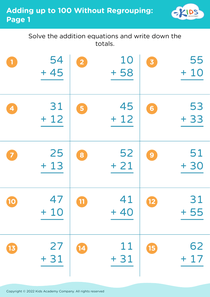
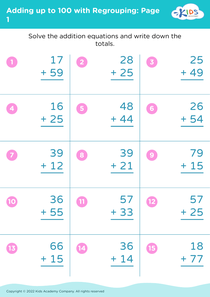
Color Identification Adding up to 100 Misc Worksheets for Ages 4-8
4 filtered results
-
From - To
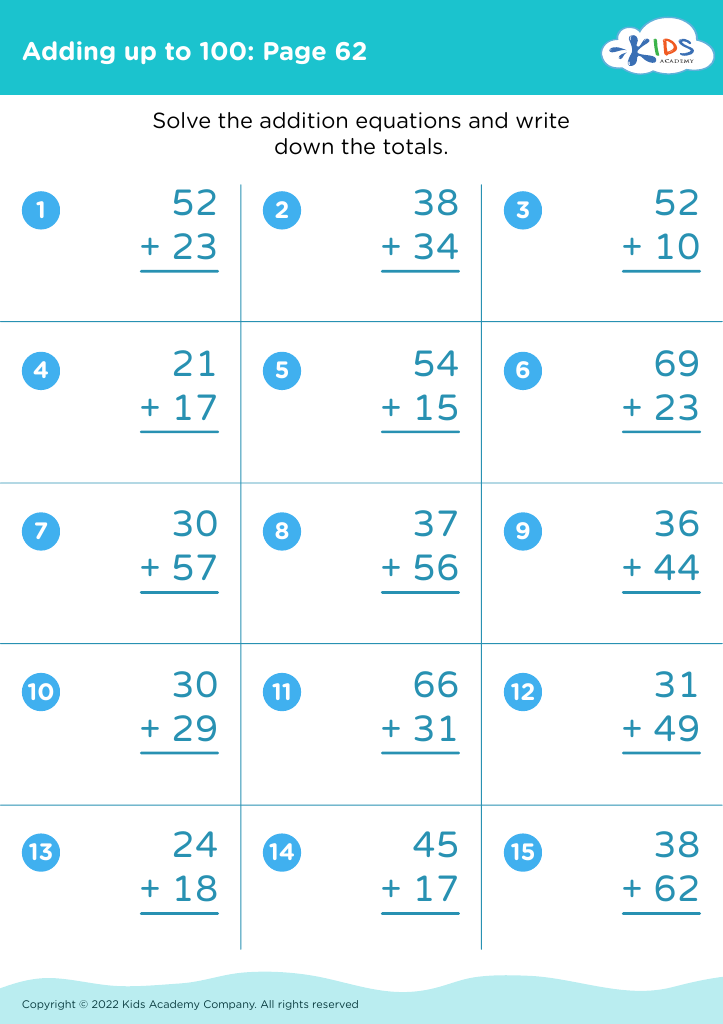
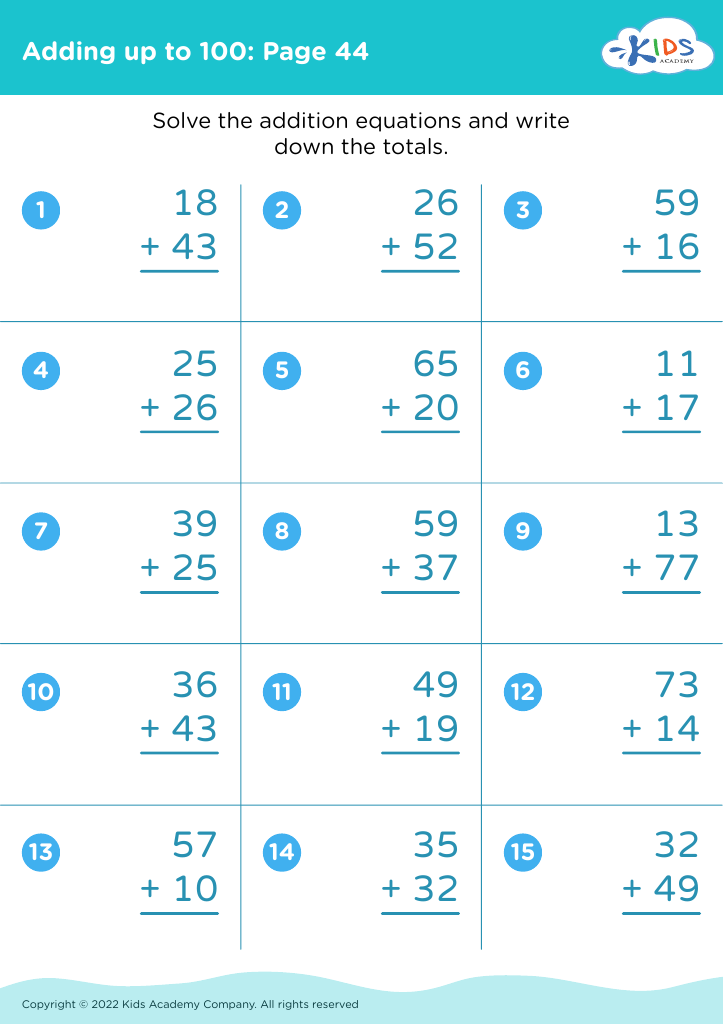
Explore our collection of exciting Color Identification Adding up to 100 Misc Worksheets, designed for ages 4-8! Each worksheet fuses bright colors and interactive math problems that make learning fun. Children will sharpen their color recognition while mastering addition up to 100. Perfect for early grade students, these engaging activities enhance cognitive development and problem-solving skills. Our worksheets are a wonderful resource for both parents and teachers striving to make math captivating and memorable. Unveil the magic of colorful math with our accessible, print-ready sheets, and transform everyday learning into an adventure!
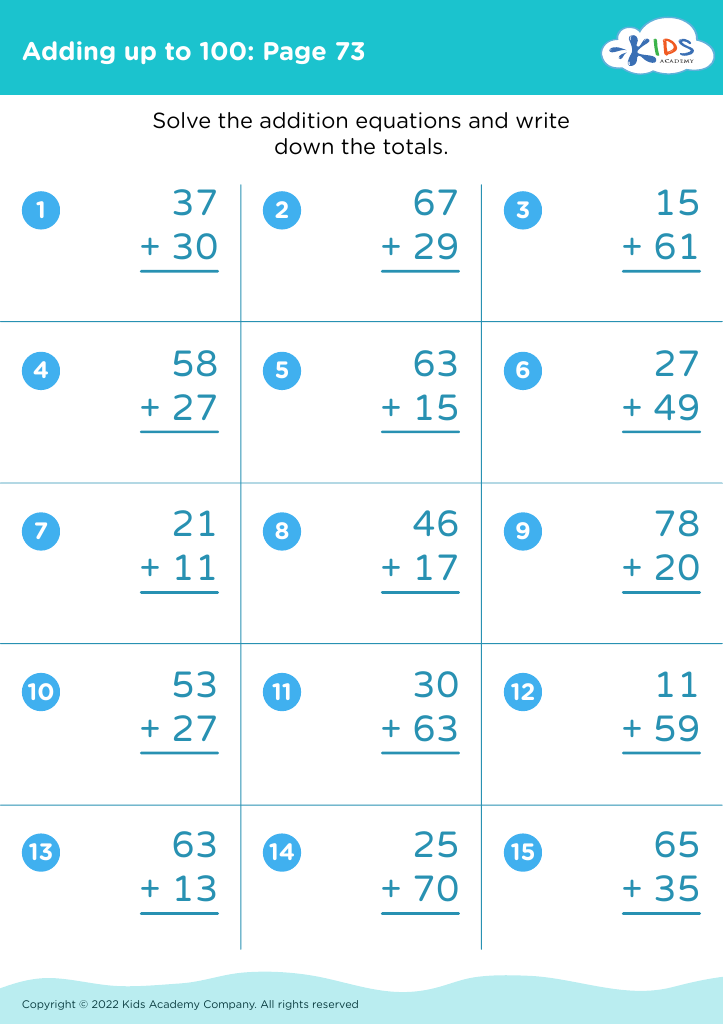
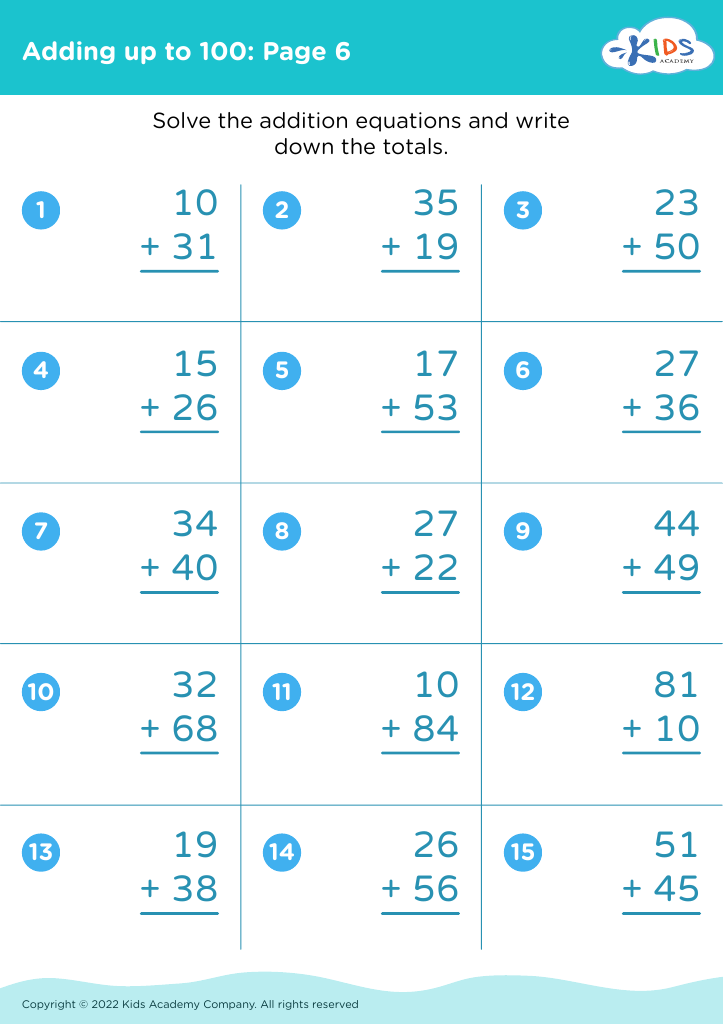


Color identification and fundamental arithmetic skills, such as adding up to 100, are essential cognitive and developmental milestones for children aged 4-8. Integrating these skills not only aids in early academic achievement but also fosters critical thinking and problem-solving abilities which are pivotal for future learning.
Understanding colors is one of the first stages of cognitive development. Recognizing and naming various colors boost vocabulary and enhance communication skills. Additionally, the ability to differentiate colors, and groups according to shaded objects, strengthens a child’s observational skills and attention to detail.
Arithmetic skills, particularly understanding addition up to 100, lay the groundwork for more complex math concepts. This numerical knowledge promotes logical thinking and builds a strong mathematical foundation crucial for more advanced studies in later years. Working with numbers also encourages cognitive skills such as memory, pattern recognition, and sequencing.
When educators and parents support these skills through interactive activities and educational games, they create a fun and motivating environment for learning. Increased engagement not only bolsters academic development but also instills a love for learning, setting children up for lifelong educational success.
Therefore, focusing on color identification and basic arithmetic within this age group is instrumental in fostering a well-rounded, confident, and capable young learner.