Counting practice Adding up to 100 Misc Worksheets for Ages 4-8
4 filtered results
-
From - To
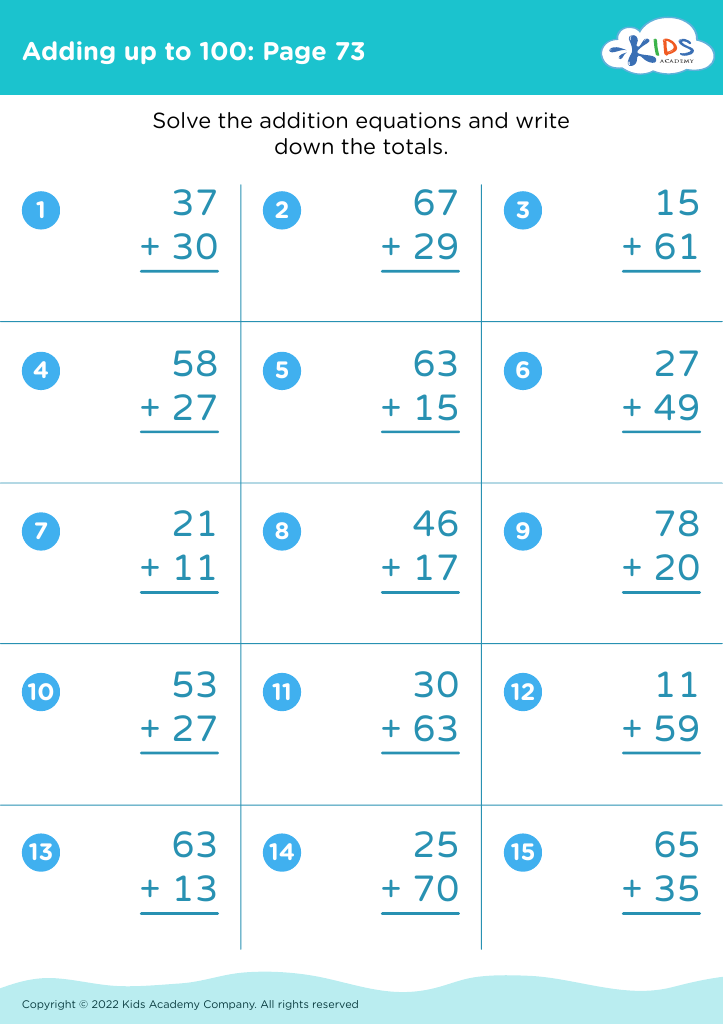
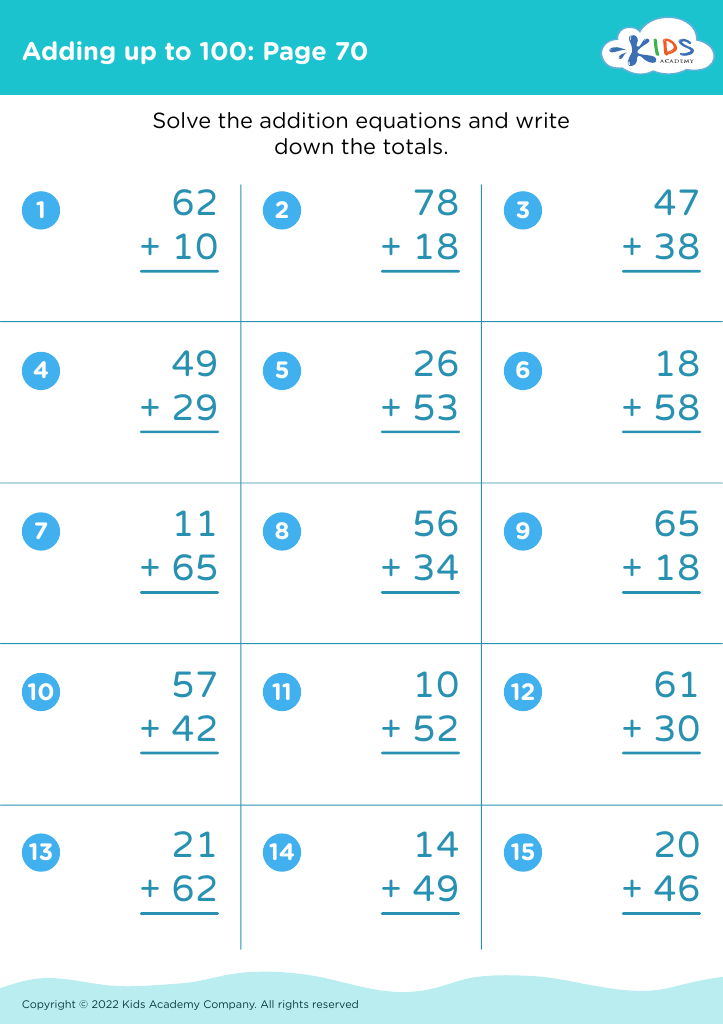
Enhance your child's counting skills with our diverse selection of Counting Practice Adding Up to 100 Misc Worksheets, tailored for ages 4-8. Each engaging and educational worksheet is designed to help young learners build confidence in addition up to 100, while having fun. Perfect for classroom or at-home practice, these worksheets feature a variety of exercises that make learning enjoyable. Watch your little one develop crucial math skills, boost problem-solving abilities, and gain a strong foundational understanding of numbers, laying the groundwork for future academic success. Discover our valuable resources today and support your child’s mathematical journey!
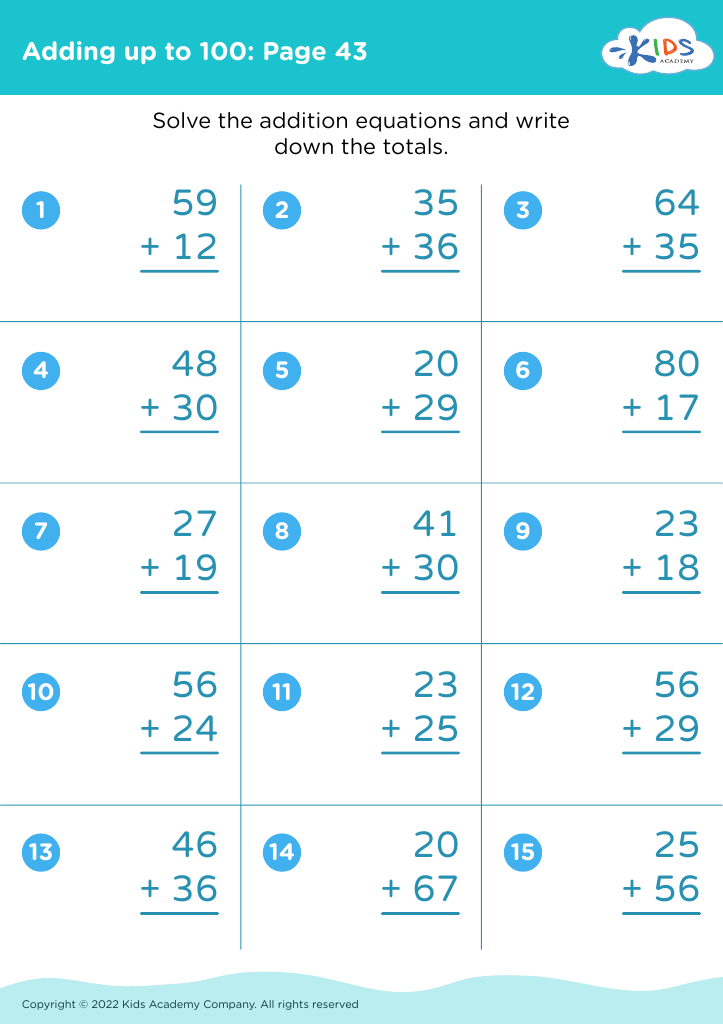
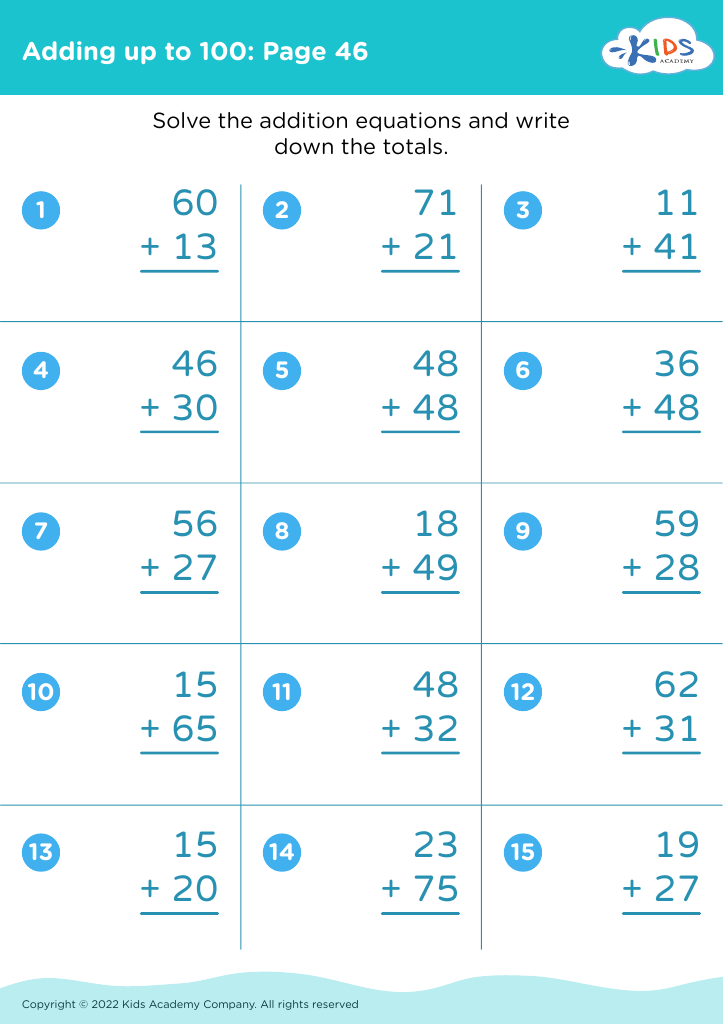


Counting practice, especially adding up to 100, is a crucial foundational skill for children ages 4-8 for several significant reasons. First and foremost, it helps build a solid base for future mathematical concepts. Mastering counting underpins more complex arithmetic operations such as addition, subtraction, multiplication, and division. It fosters number sense, an essential component of early math understanding which enables children to recognize number relationships and place value concepts.
Secondly, counting practice enhances cognitive development. It requires children to think logically and sequentially, strengthening their problem-solving abilities and critical thinking skills. Additionally, such practice can improve fine motor skills when children apply counting using physical objects like blocks or counters.
For parents and teachers, fostering these skills can make learning enjoyable and engaging through interactive counting games, songs, or daily practical applications such as counting groceries. Early counting proficiency also contributes to a child’s confidence in handling numbers, which can translate into a positive attitude towards math as they grow older.
In summary, emphasizing counting practice for young children enriches their academic foundation, promotes cognitive development, and nurtures a lifelong positive relationship with mathematics. Ensuring children grasp these skills early on sets them on a path to future educational success.