Identifying shapes Adding up to 100 Misc Worksheets for Ages 4-8
3 filtered results
-
From - To
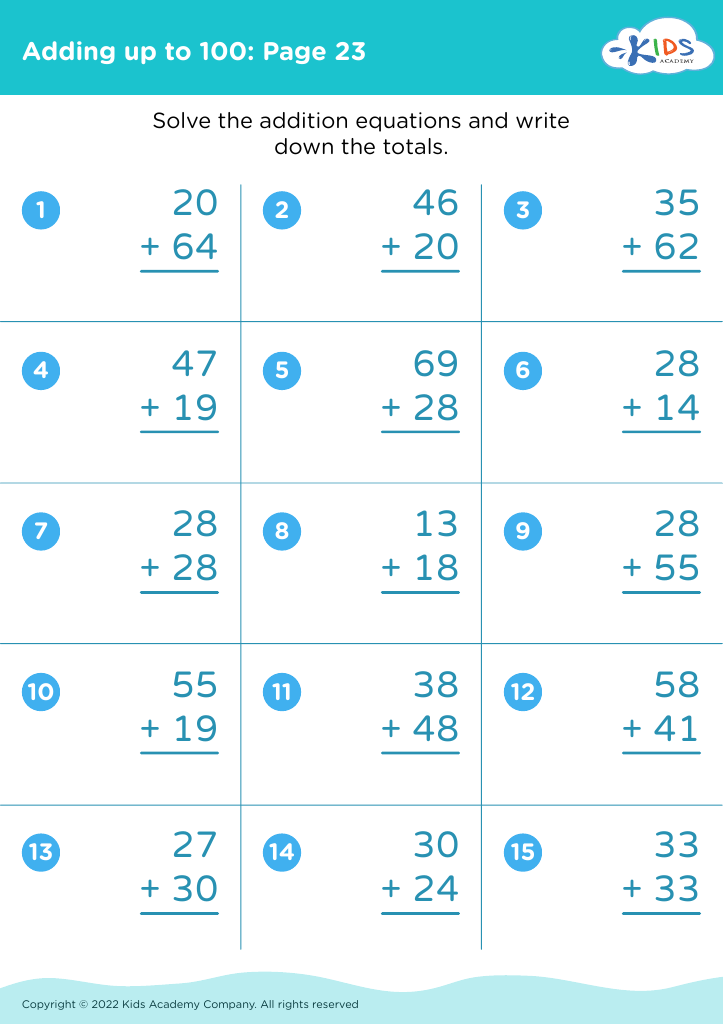
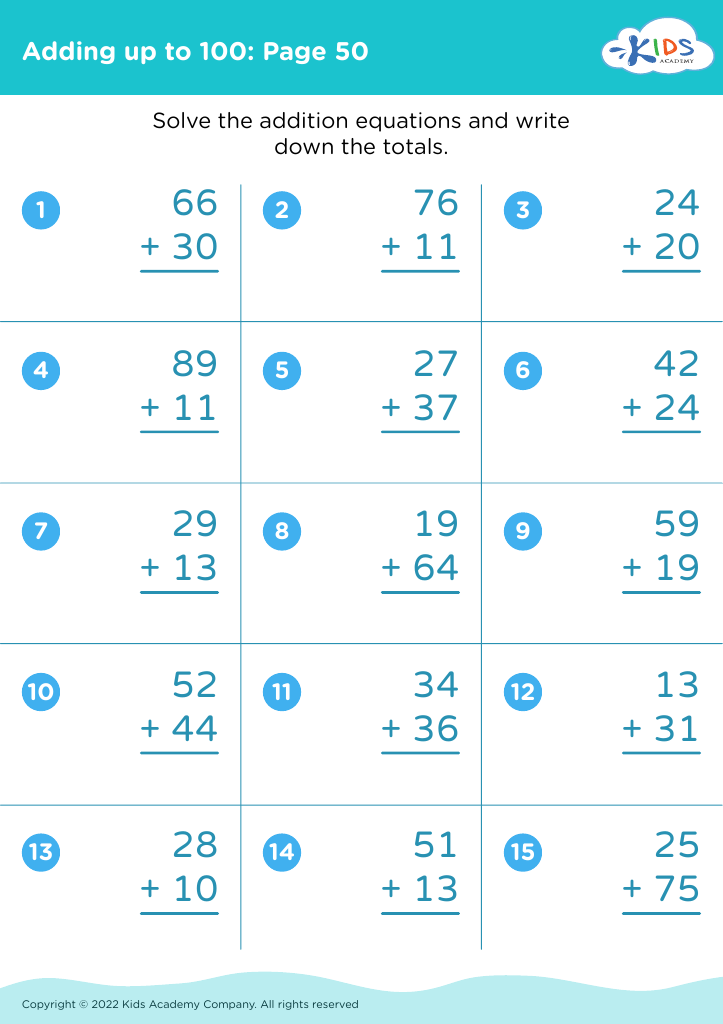
Discover our exciting "Identifying Shapes Adding up to 100 Misc Worksheets" designed for children aged 4-8! These engaging resources combine fundamental math and geometry skills, helping young learners recognize various shapes while mastering addition up to 100. Perfect for preschool and early elementary students, our worksheets are beautifully illustrated to spark curiosity and enhance comprehension. Tailored activities not only make learning fun but also bolster critical thinking and problem-solving abilities. Encourage your child's educational journey with these expertly crafted printables, aligning with core curriculum standards and fostering a love for math in their formative years. Explore and download today!
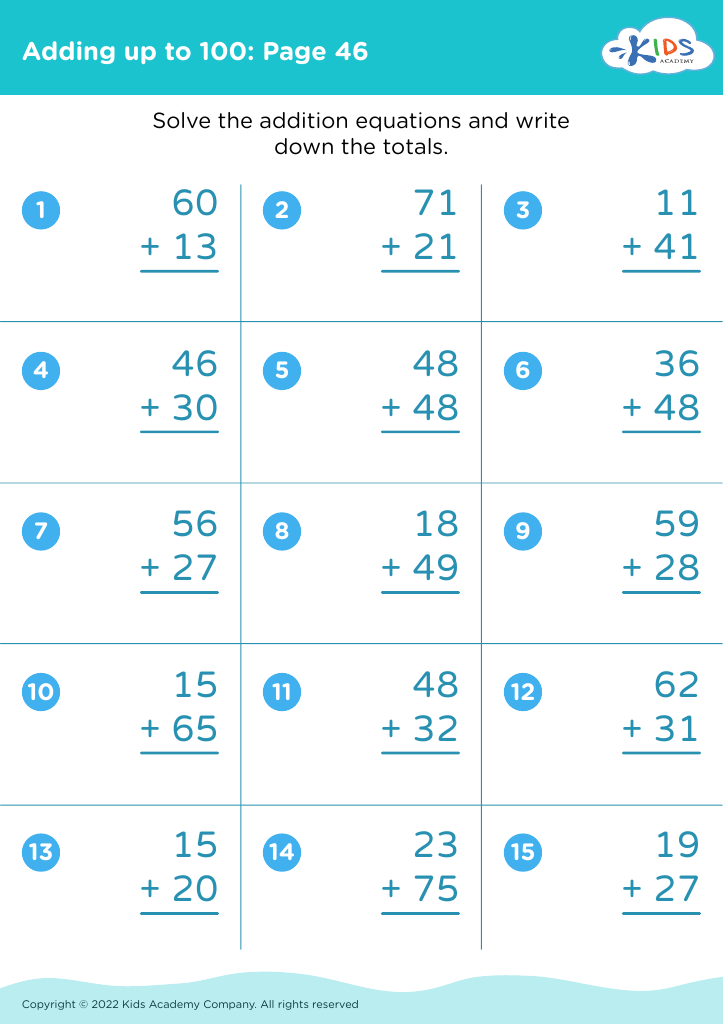


Parents and teachers play vital roles in the early development of children’s cognitive and mathematical skills. Identifying shapes, practicing adding up to 100, and miscellaneous relatable tasks are foundational activities that contribute significantly to a child's academic and personal growth. These activities broaden children's understanding and create stepping stones for more complex concepts.
Identifying shapes helps children recognize patterns and understand the properties of different objects, which enhances their spatial awareness and critical thinking. For example, recognizing shapes in the world around them can strengthen their visual perception and categorization skills, crucial for subjects like geometry.
Adding up to 100 fosters early numeracy skills, instilling a basic understanding of arithmetic and number sense. Children learn to count, comprehend the base-ten system, and develop problem-solving skills. A strong foundation in early math is linked to better performance in later, more advanced mathematical tasks and other STEM areas.
Engagement in miscellaneous tasks that promote experiential learning further aids holistic development. Activities like sorting objects, understanding time, or sequencing events bolster reasoning, language, and fine motor skills. They not only nurture a love for learning but also support cognitive flexibility and adaptability, essential for lifelong learning.
By investing time in these early educational activities, parents and teachers lay a strong foundation for a child’s future academic success and practical life skills.