Understand fractions Adding up to 100 Misc Worksheets for Ages 4-8
3 filtered results
-
From - To
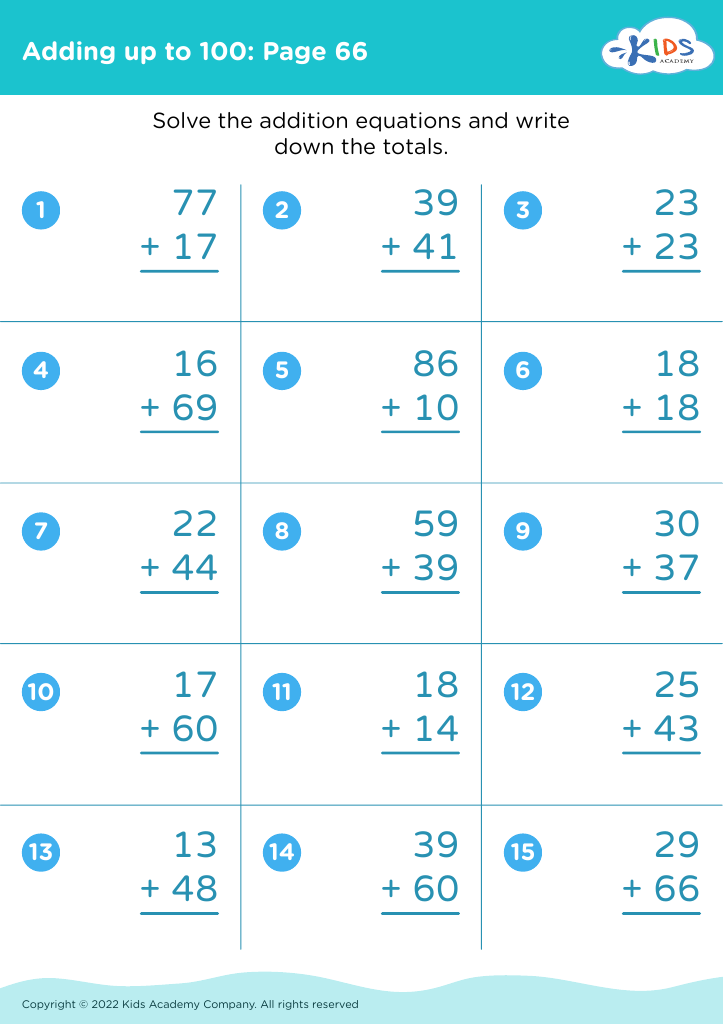
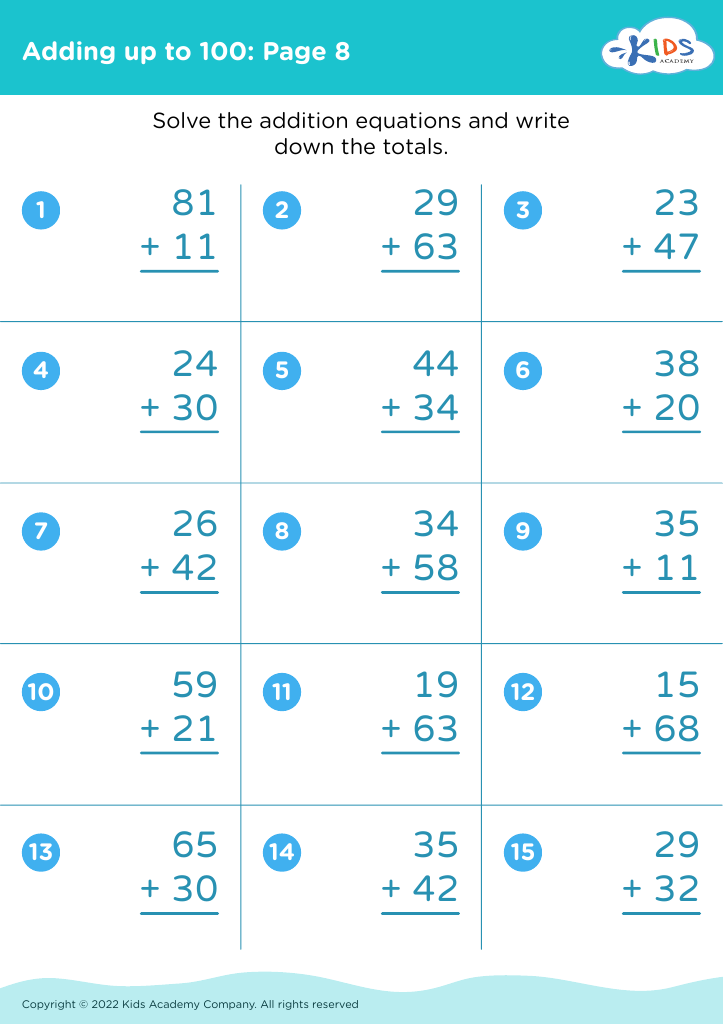
Looking to teach your child fractions in a fun and engaging way? Our "Understand Fractions Adding up to 100" printable worksheets are perfect for kids aged 4-8. Specifically designed for young learners, these worksheets help children grasp the concept of fractions while practicing their addition skills. Your child can explore various exercises that make learning fractions as simple as pie! These well-structured activities encourage kids to understand and add fractions in a visual and hands-on manner. Enhance your child's math skills with these unique, educational worksheets from Kids Academy, ensuring they build a strong math foundation early on!
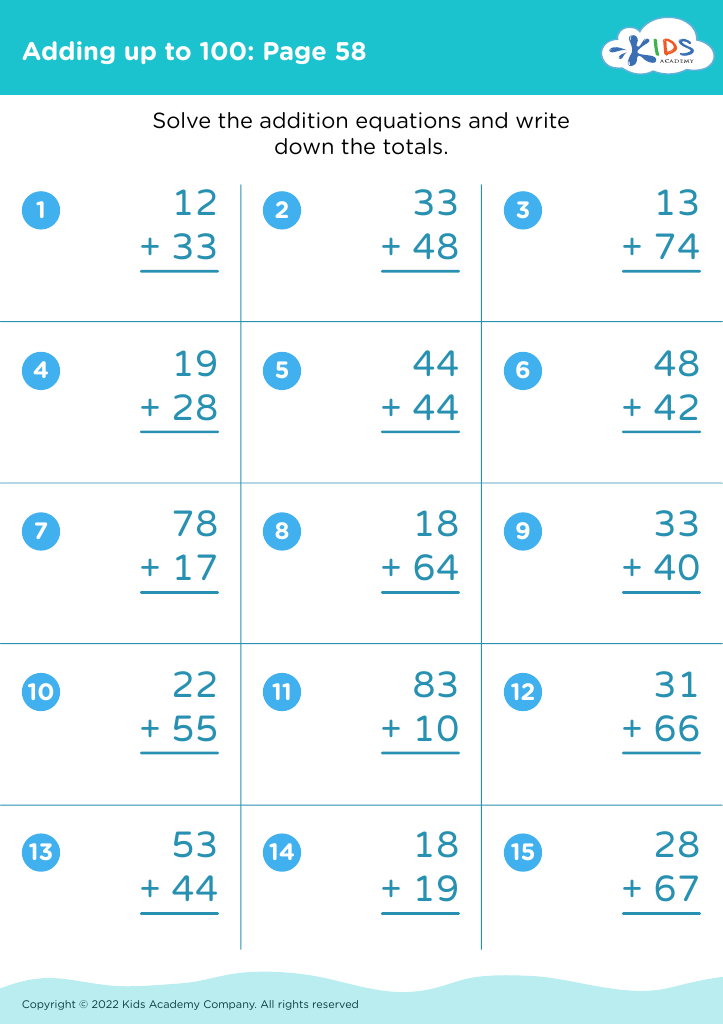


Understanding fractions and simple math concepts like adding up to 100 is extremely important for children aged 4-8 because it lays the foundational groundwork for advanced math skills later in their academic journey. At this formative stage, young minds are like sponges, eager to absorb new information and concepts. By introducing fractions early, parents and teachers help children grasp the idea of parts making up a whole, which is a critical concept not just in math but in everyday life. Additionally, being able to add up to 100 is an essential skill, as it enhances a child's numerical fluency and confidence.
When children understand how to work with fractions and basic addition, they develop problem-solving skills and logical thinking, essential for success in many areas of learning. Moreover, these math skills have real-world applications, such as cooking, shopping, or dividing playground time among friends. Early success in math also builds self-esteem and fosters a positive attitude towards learning.
By nurturing these skills early on, parents and teachers set children on a path of continual learning and curiosity. Addressing these concepts in a fun and engaging way can make math enjoyable and relatable, turning initial learning experiences into a lifetime of mathematical confidence and competence.