Understanding patterns Adding up to 100 Misc Worksheets for Ages 4-8
6 filtered results
-
From - To
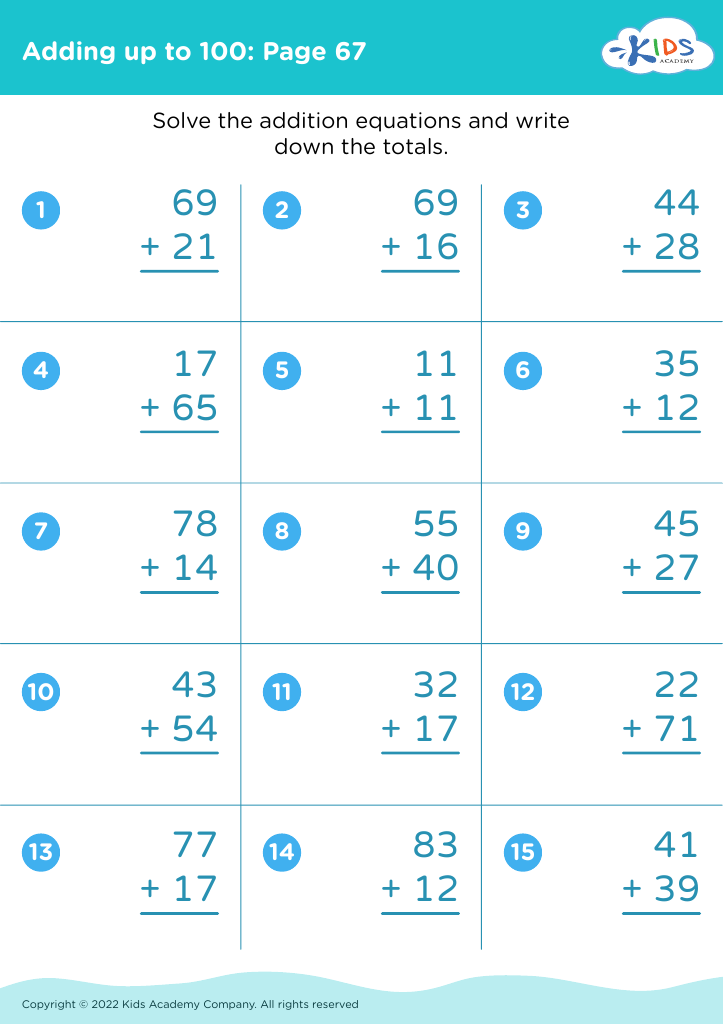
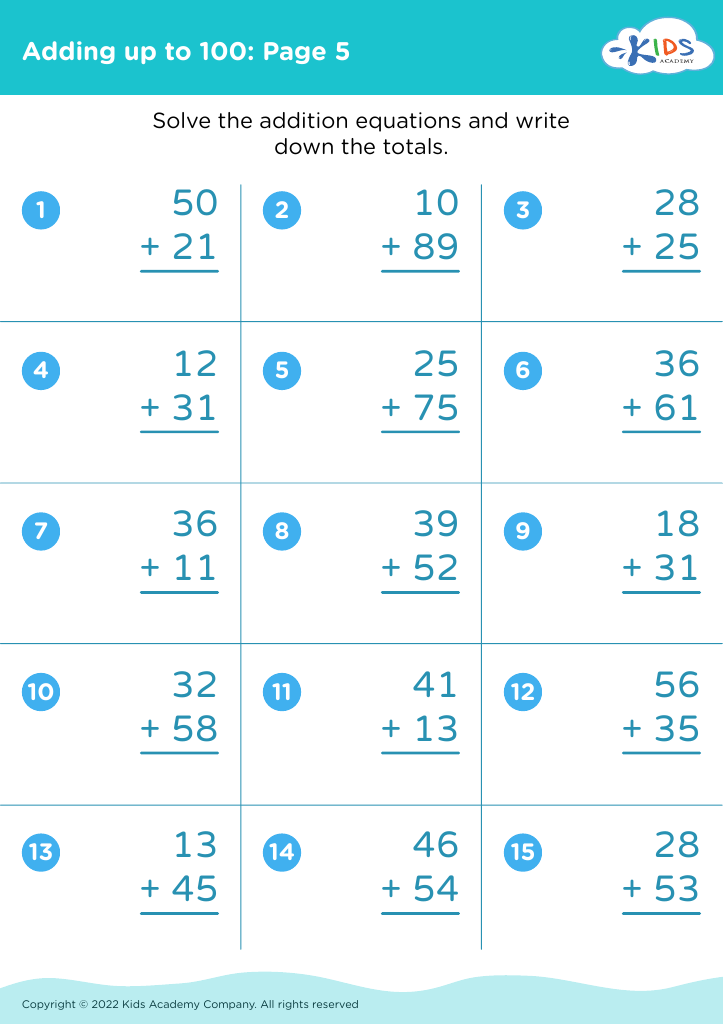
Welcome to our "Understanding Patterns: Adding Up to 100 Misc Worksheets" page, designed for children ages 4-8. This collection of engaging and educational worksheets helps young learners grasp the concept of patterns through fun math activities. By exploring sequences, number relationships, and addition strategies, children develop essential skills while building confidence in their math abilities. Our thoughtfully crafted worksheets encourage creativity and critical thinking, making it easy for parents and teachers to support their children’s learning journey. Join us in cultivating a love for mathematics as children discover the exciting world of patterns while adding up to 100!
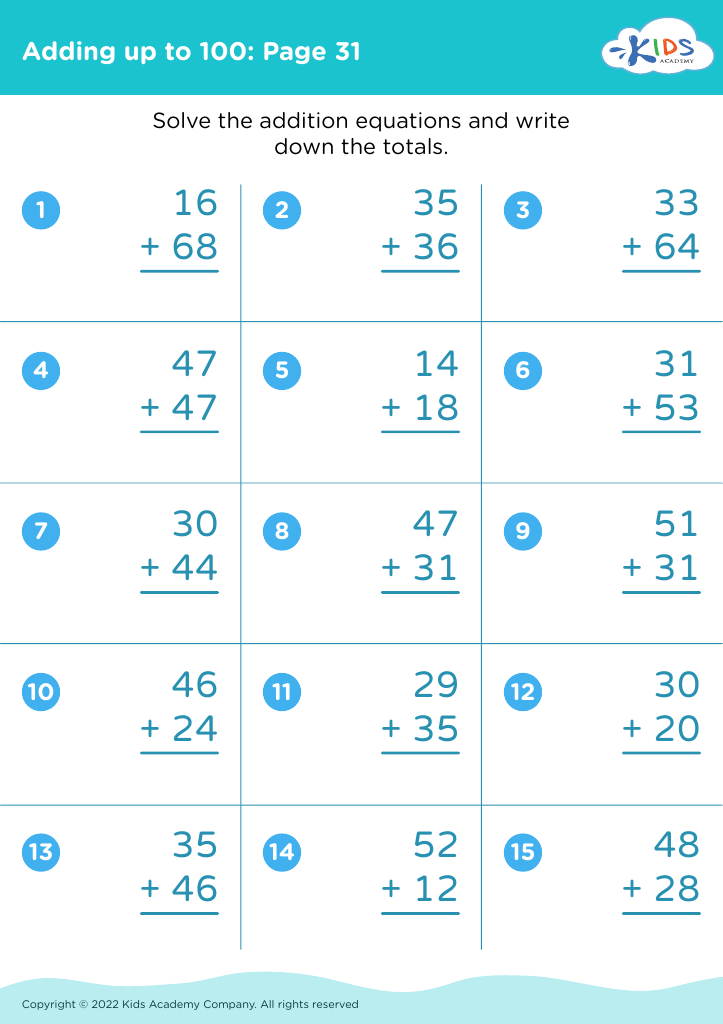
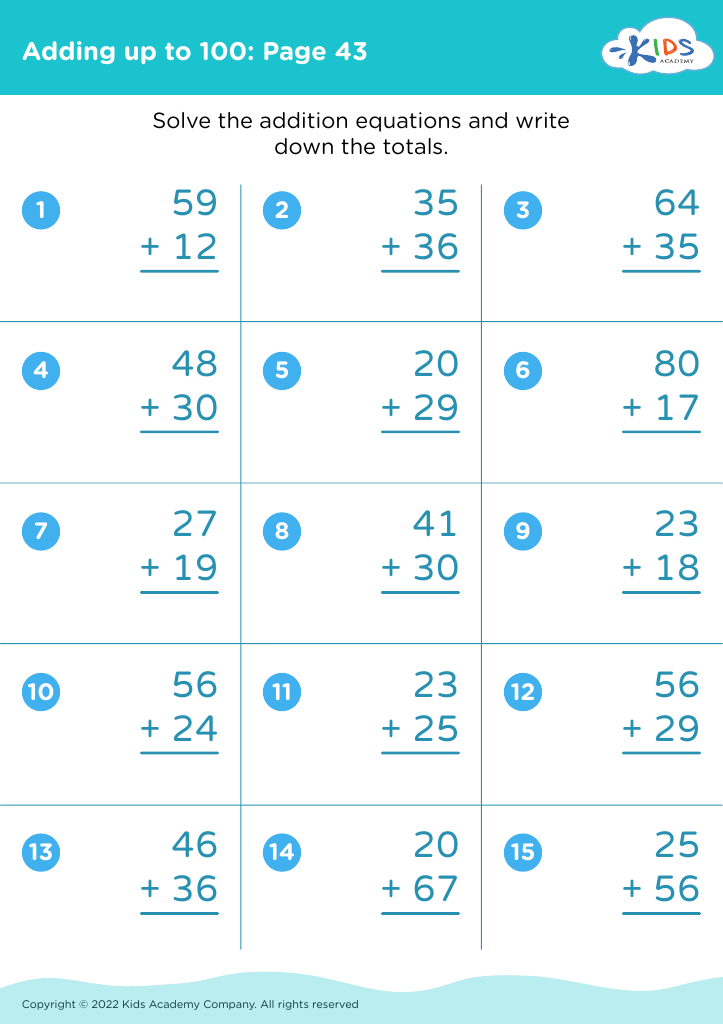
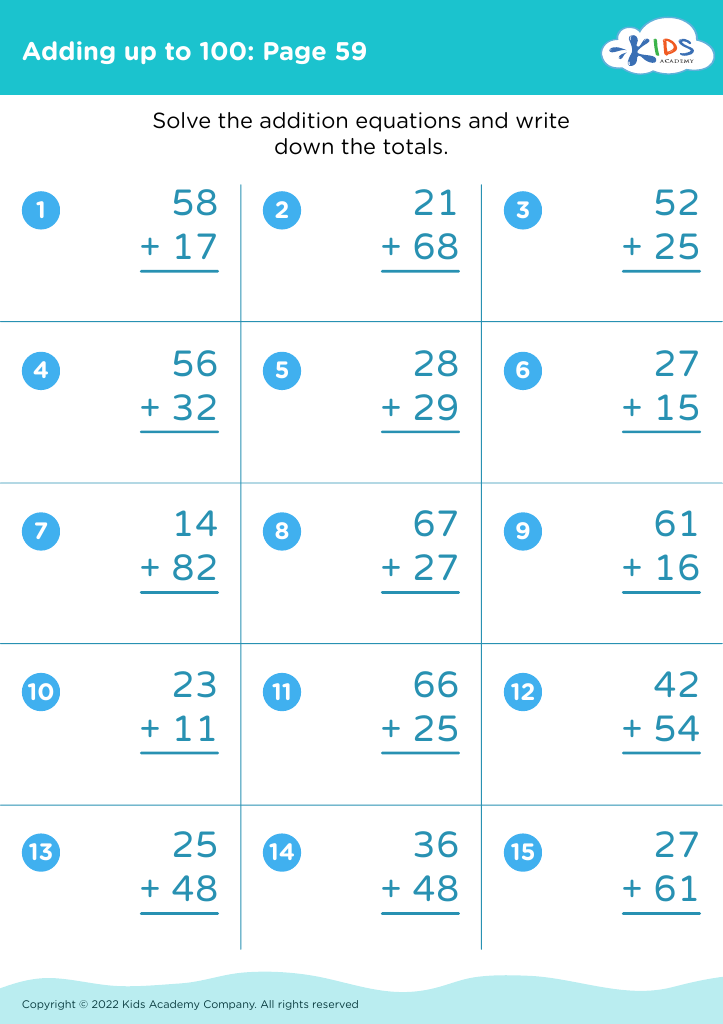
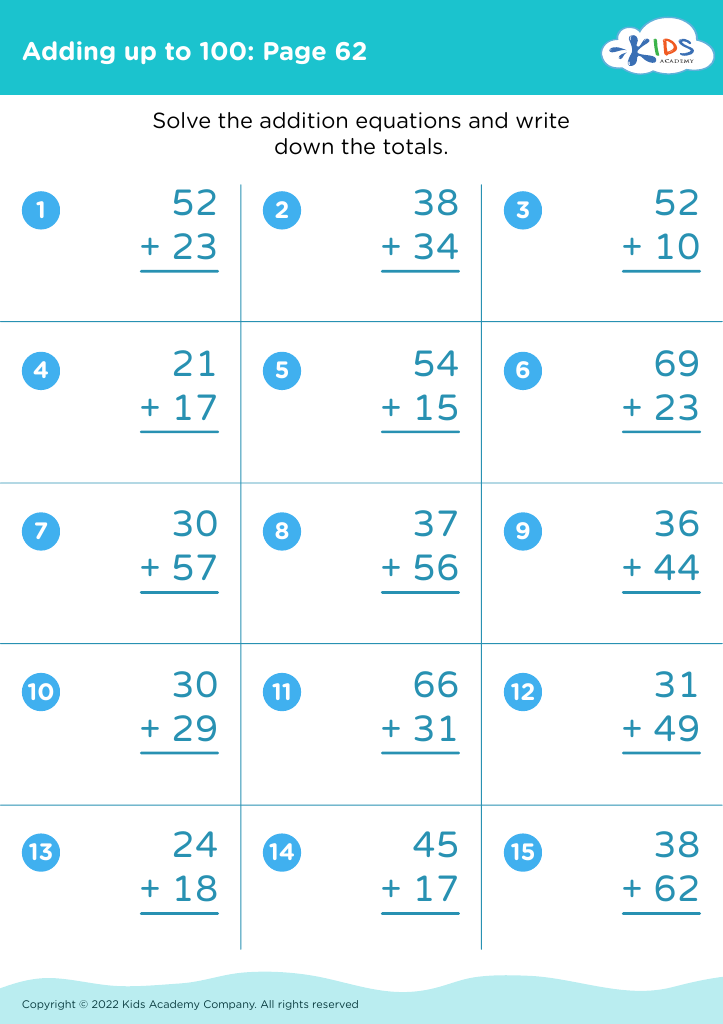


Understanding patterns and the concept of adding up to 100 is crucial for children aged 4-8, as it builds foundational mathematical skills that are essential for future learning. Patterns help children recognize relationships and predict outcomes, fostering critical thinking and problem-solving abilities. By identifying and continuing patterns—whether through shapes, numbers, or colors—they enhance their cognitive development and boost their ability to make connections across different concepts.
Moreover, integrating the idea of adding up to 100 encourages children to practice addition in a fun and engaging way. This crucial competency not only strengthens their number sense but also helps them organize information, recognize quantities, and ultimately prepare for more complex mathematical operations in later grades. Activities that involve counting, simple addition, and visual aids can make this learning process enjoyable and interactive.
Lastly, fostering these skills at an early age builds confidence in kids, encouraging them to approach math with a positive mindset. As they grasp these concepts, they not only become competent in core math skills but also develop a resilient approach to learning universally. Thus, teachers and parents play a vital role in nurturing these foundational skills, paving the way for lifelong numeracy and success in academics.