Understanding Sequences Adding up to 100 Misc Worksheets for Ages 4-8
4 filtered results
-
From - To
Enhance your child's math skills with our "Understanding Sequences Adding up to 100" worksheets, tailored for ages 4-8. Our collection is designed to make learning fun, reinforcing the foundational concepts of sequences and addition. Each worksheet offers engaging activities and exercises that help young learners grasp the concept of number patterns while practicing their addition skills. With a variety of tasks, your child will stay motivated and enjoy their math practice. Perfect for early grade students, these resources foster both confidence and proficiency in their arithmetic abilities. Explore our worksheets today and lay a solid math foundation!
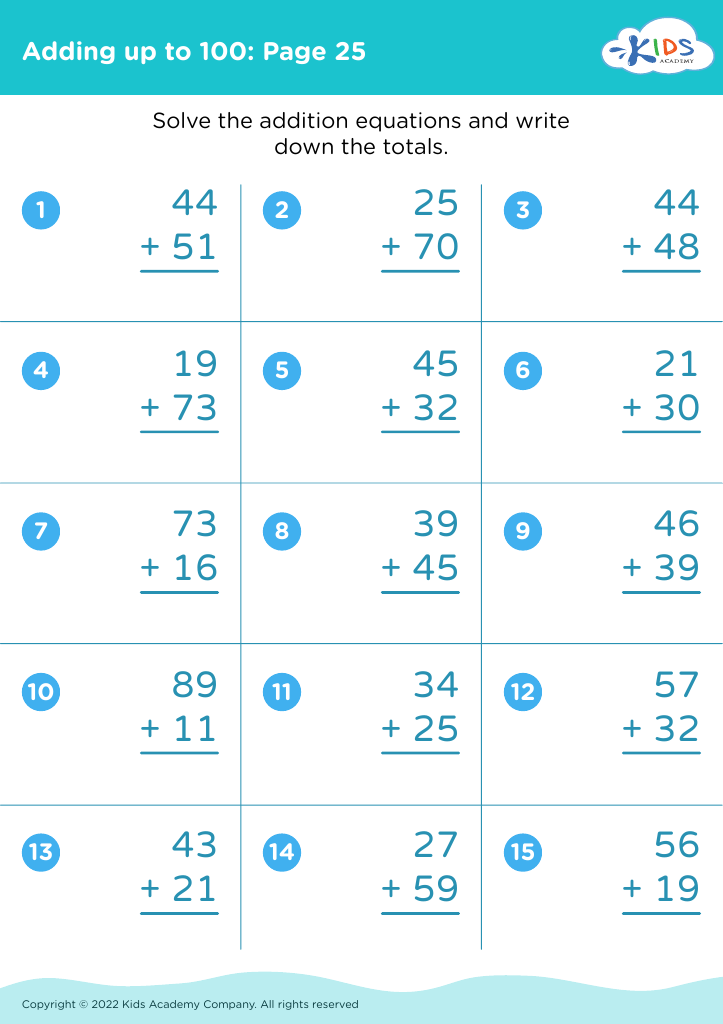
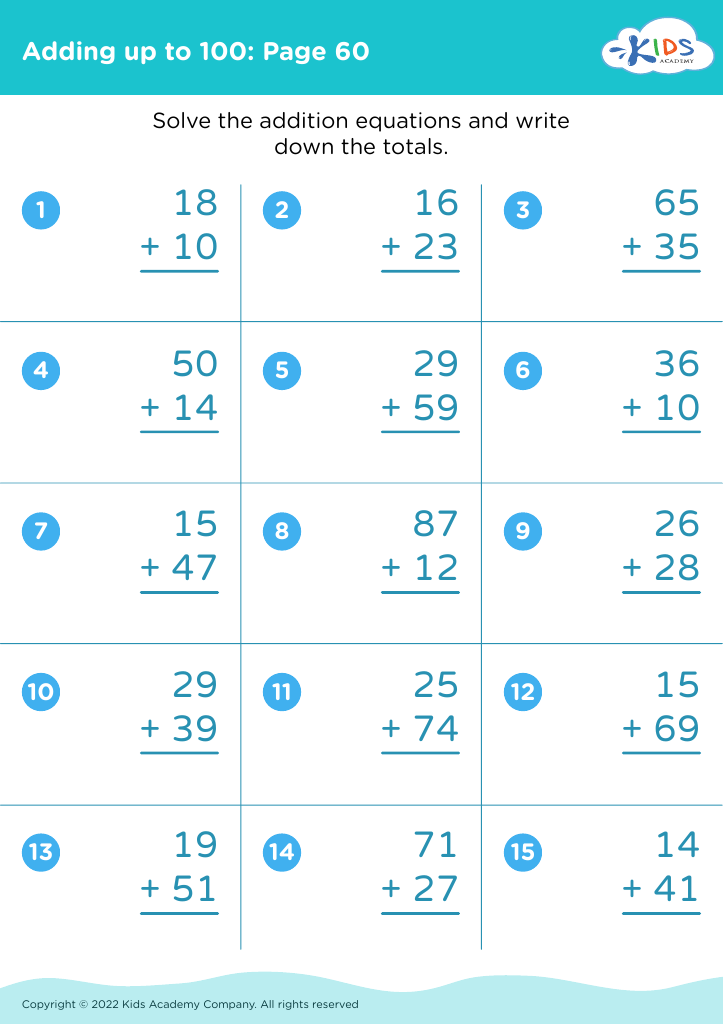
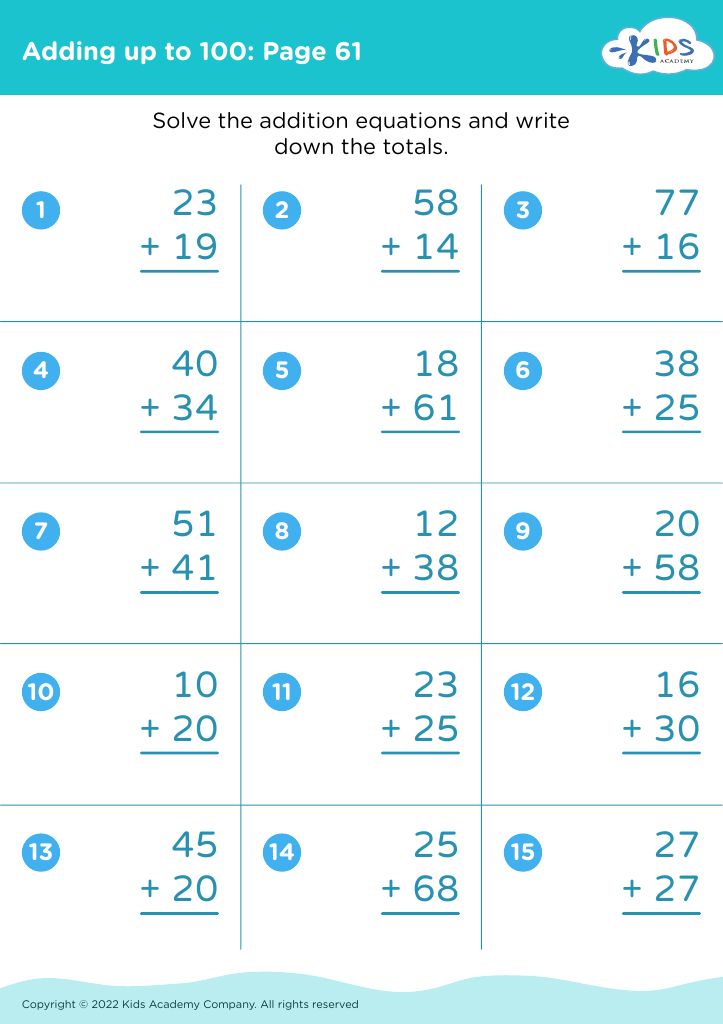
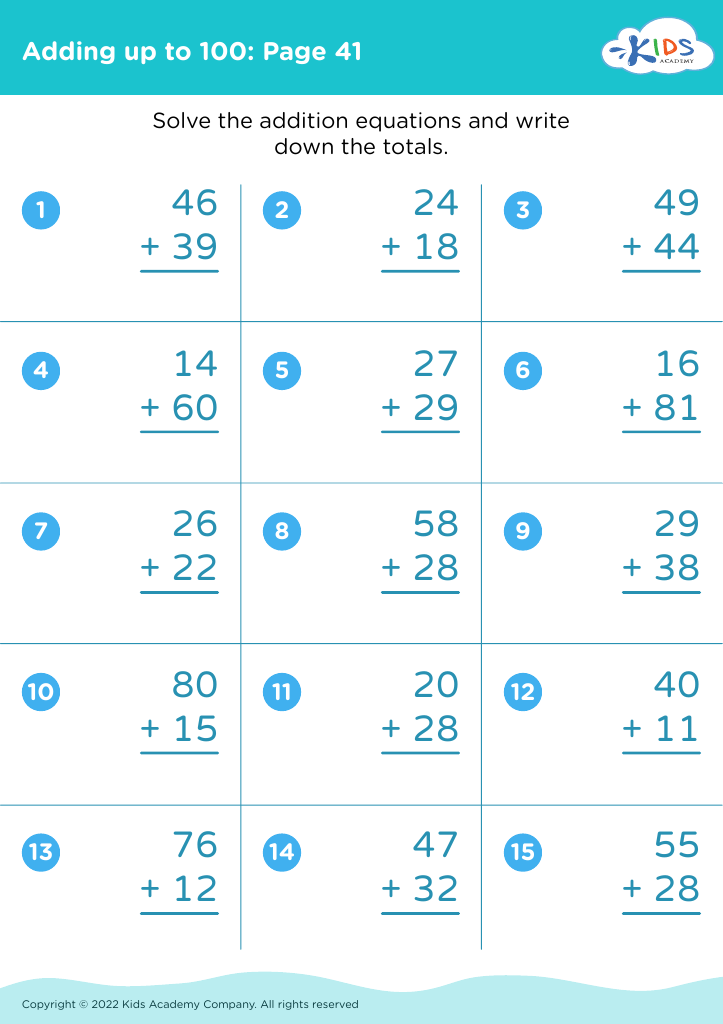


Understanding sequences that add up to 100 can be both fun and educational for children ages 4-8. For young learners, grasping basic numerical concepts and patterns fosters a strong foundation for future mathematical learning. Here's why parents and teachers should care:
-
Numerical Fluency: Simple sequences enhance children's ability to recognize and understand numbers, paving the way for smoother progress into addition, subtraction, and more complex calculations.
-
Pattern Recognition: Recognizing number patterns bolsters children's critical thinking and problem-solving skills, applicable not just in math but in various aspects of learning and everyday life.
-
Engagement: Introducing sequences and patterns in a playful context can make learning enjoyable. Games or activities involving these concepts can keep young minds curious and engaged.
-
Confidence Building: Successfully identifying and creating sequences helps build confidence. Confidence in these early years nurtures a positive attitude toward math, reducing anxiety related to the subject.
-
Foundation for Advanced Concepts: Early exposure to sequences contributes to a greater understanding of sequences in algebra and series in higher mathematics. Children learn to see numbers as parts of a whole, echoing concepts in fractions, statistics, and even coding and algorithms.
By focusing on such sequences, parents and teachers invest in a child's long-term educational success and foster an early love for learning math.