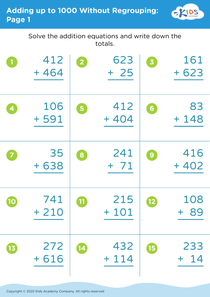
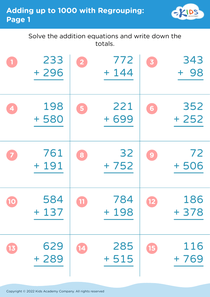
Fraction simplification Adding up to 1000 Misc Worksheets for Ages 4-8
5 filtered results
-
From - To
Unlock the world of fraction simplification and addition with our engaging worksheets designed for children ages 4-8. These printable resources from Kid’s Academy make learning fun and intuitive, encouraging young learners to confidently add up to 1000. Each worksheet is expertly crafted to develop foundational math skills, offering varied exercises that simplify fractions and foster numerical fluency. Ideal for both classroom and home use, these tools support kids in mastering essential math concepts through practical, hands-on practice. Help your child or student excel in math with our comprehensive and age-appropriate learning materials.
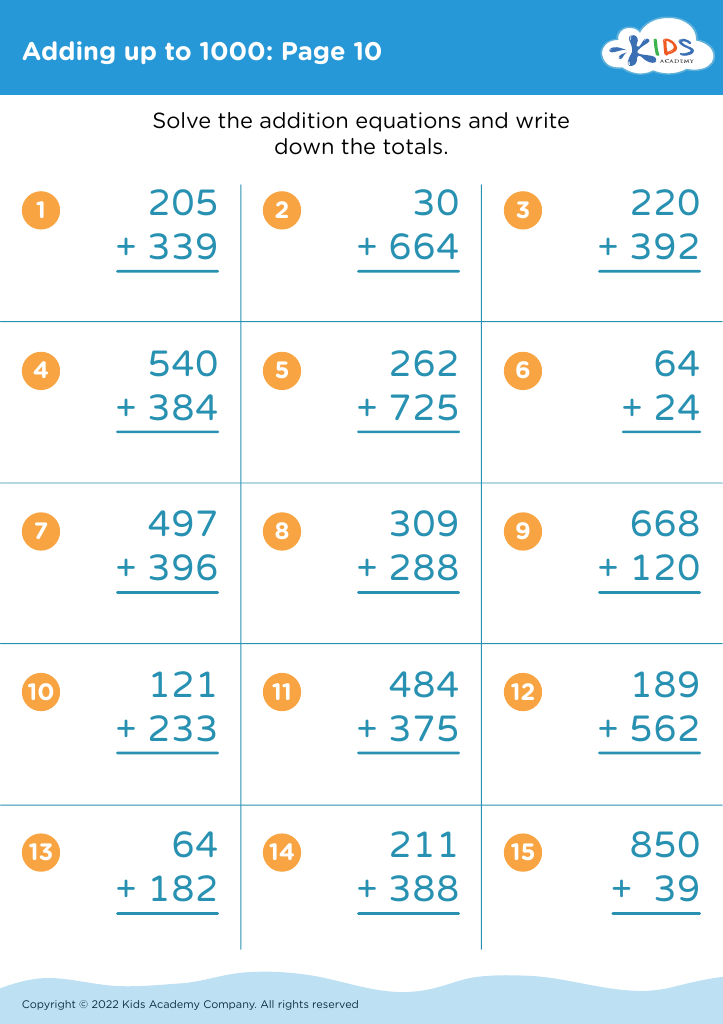
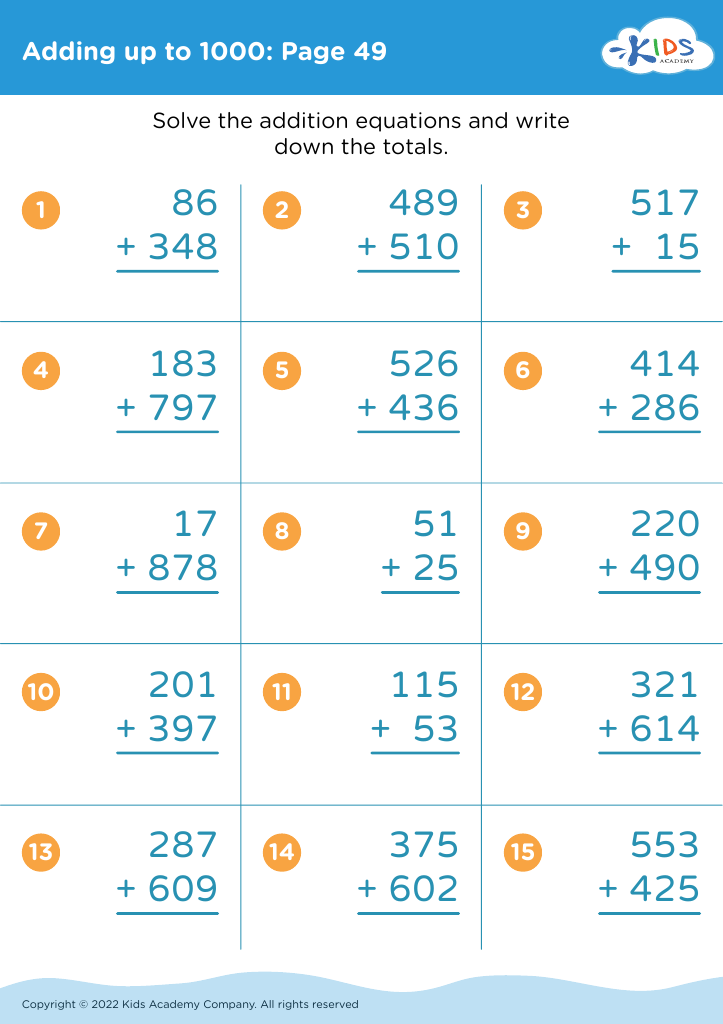
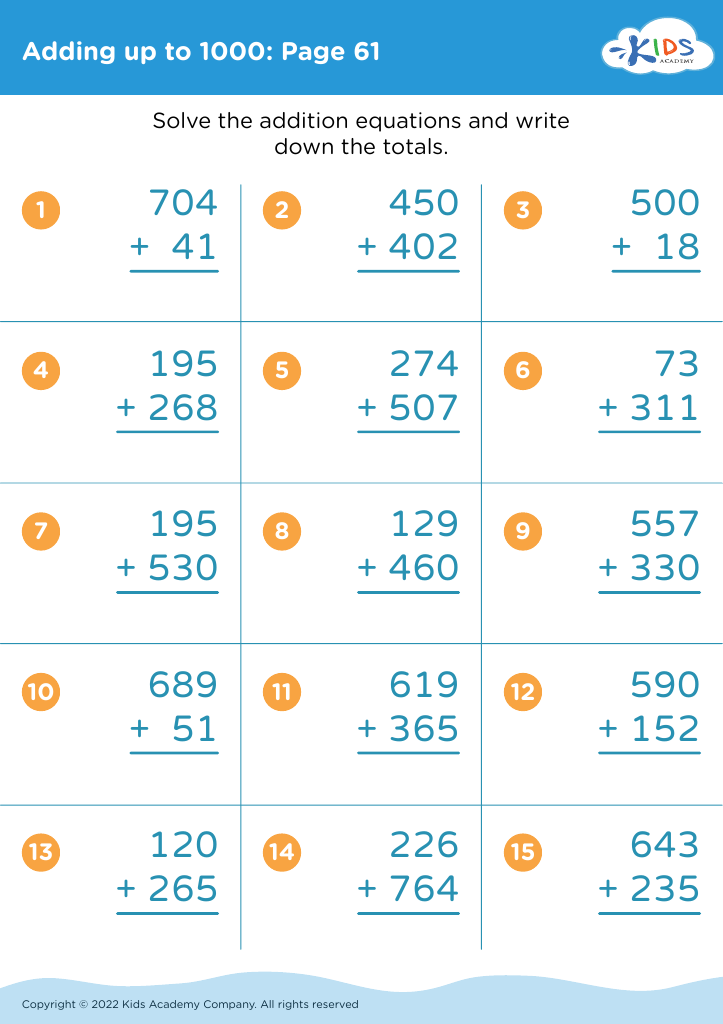
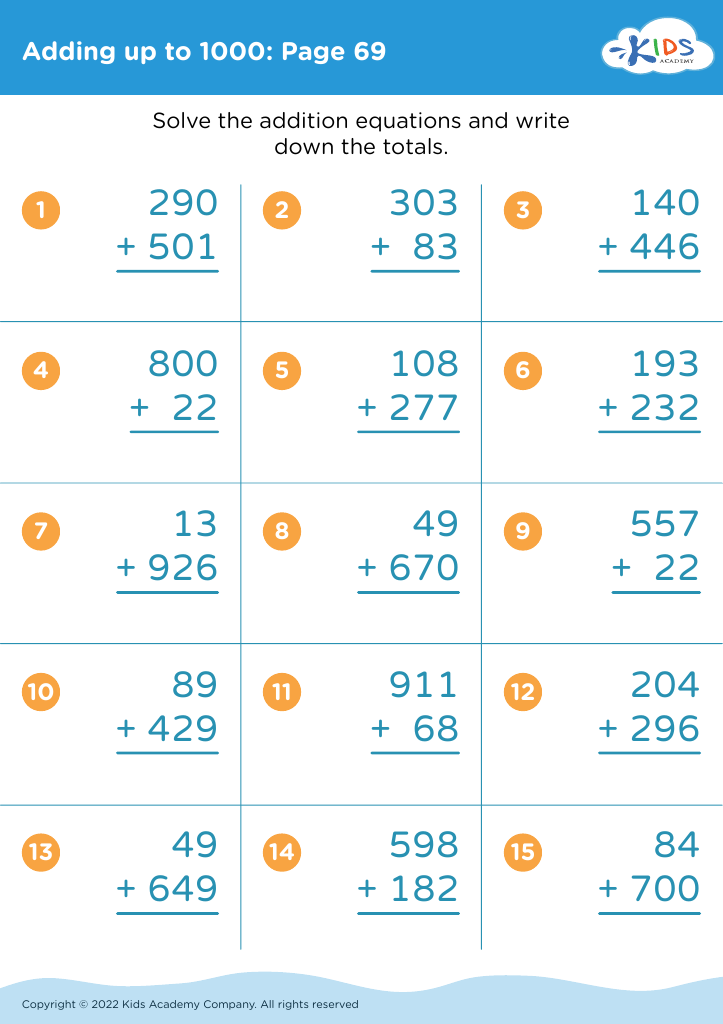
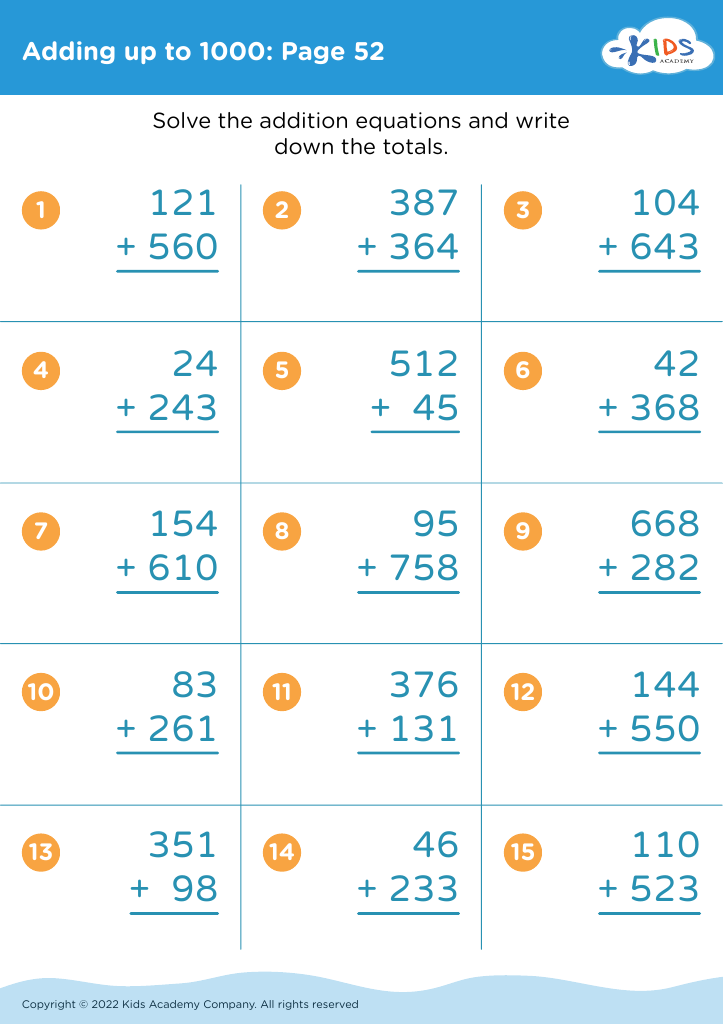


Teaching fraction simplification and laying foundational numeracy skills for children aged 4-8 is crucial for several reasons. At this early stage, children are rapidly developing their cognitive and mathematical abilities. Introducing concepts like fraction simplification builds a strong foundation for more complex mathematical operations they will encounter later. Simplifying fractions, for instance, helps them grasp the idea that numbers can be represented in different ways, fostering flexibility in thinking and problem-solving.
Adding up to 1000, even though it may seem ambitious, introduces young students to the concept of larger numbers incrementally, reinforcing counting, place value, and addition skills. By breaking down larger tasks into smaller, manageable parts, children learn to approach complex problems methodically.
When handled correctly, these mathematical exercises can also boost children's confidence and enjoyment of math. Engaging lessons can tap into their natural curiosity and encourage a love for learning. Instilling these foundational skills early makes future learning experiences smoother and less intimidating.
Finally, introducing such concepts through fun and interactive methods keeps learning enjoyable rather than a chore. Integrating play, everyday examples, and real-world contexts ensures that lessons resonate with children, making math a positive part of their daily lives.