Improve math skills Adding up to 1000 Misc Worksheets for Ages 4-8
3 filtered results
-
From - To
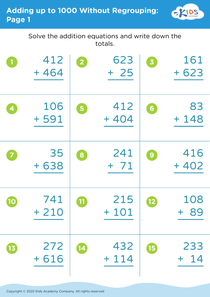
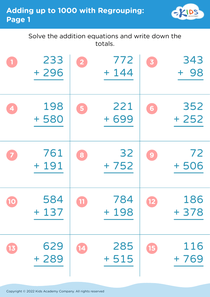
Enhance your child’s math skills with our "Adding up to 1000 Misc Worksheets" designed for ages 4-8! These versatile and engaging worksheets provide a variety of exercises that focus on addition, helping young learners develop a solid mathematical foundation. With stimulating activities that promote critical thinking and problem-solving, your child will gain confidence in their abilities while mastering number concepts. Suitable for home or classroom use, these worksheets cater to different learning styles and can easily accommodate varying skill levels. Make math fun and interactive—download our collection today to support your child's journey toward arithmetic excellence!
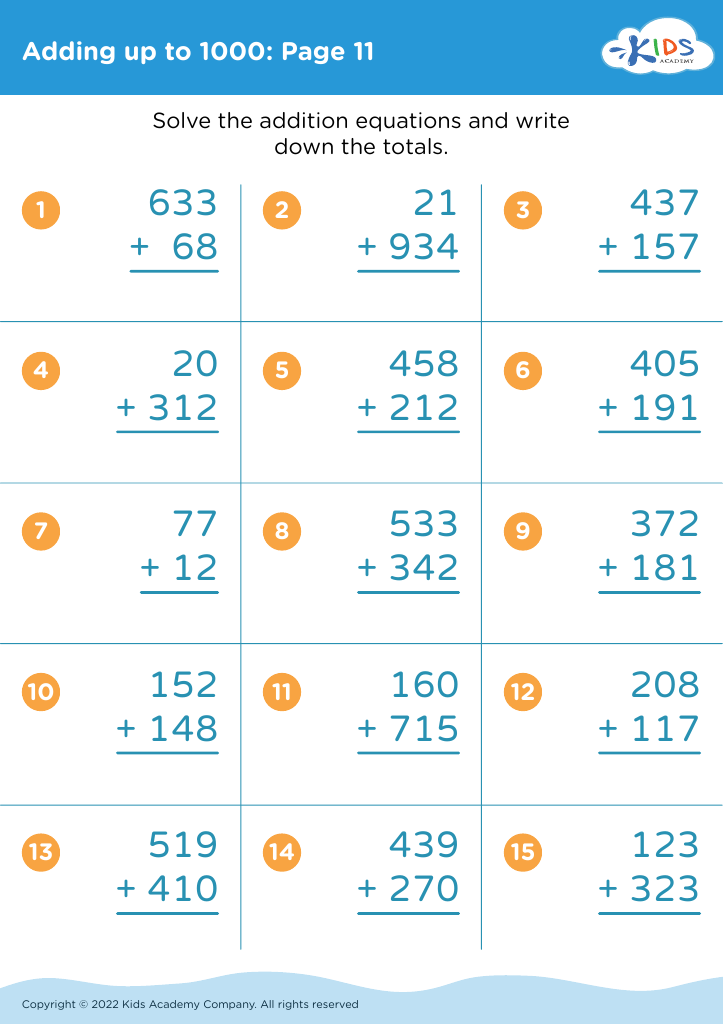
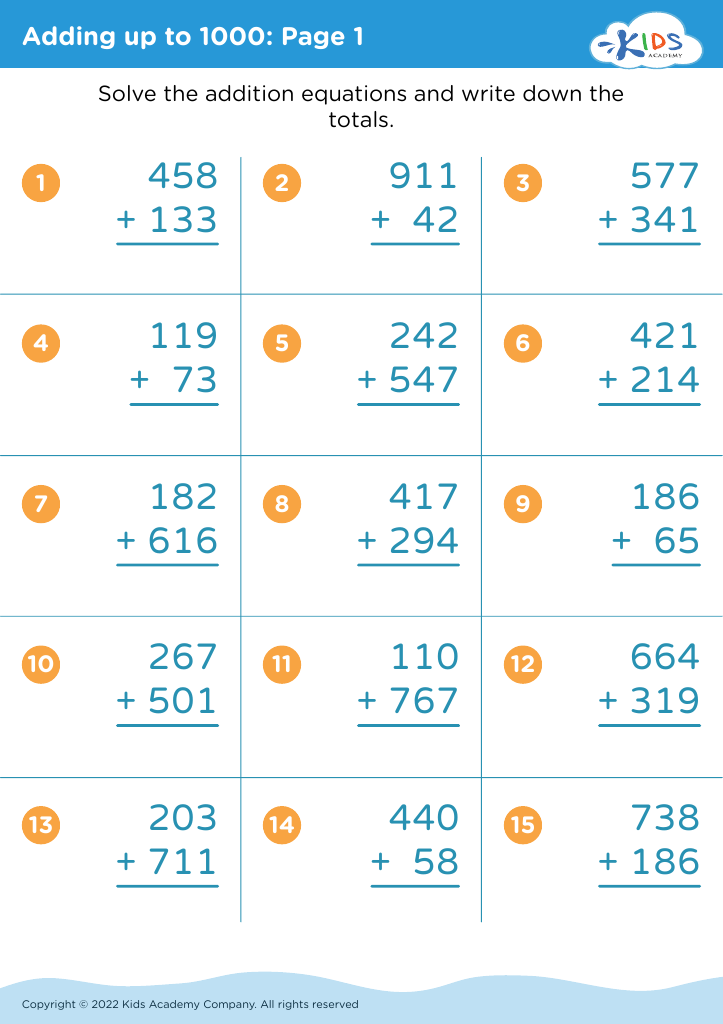
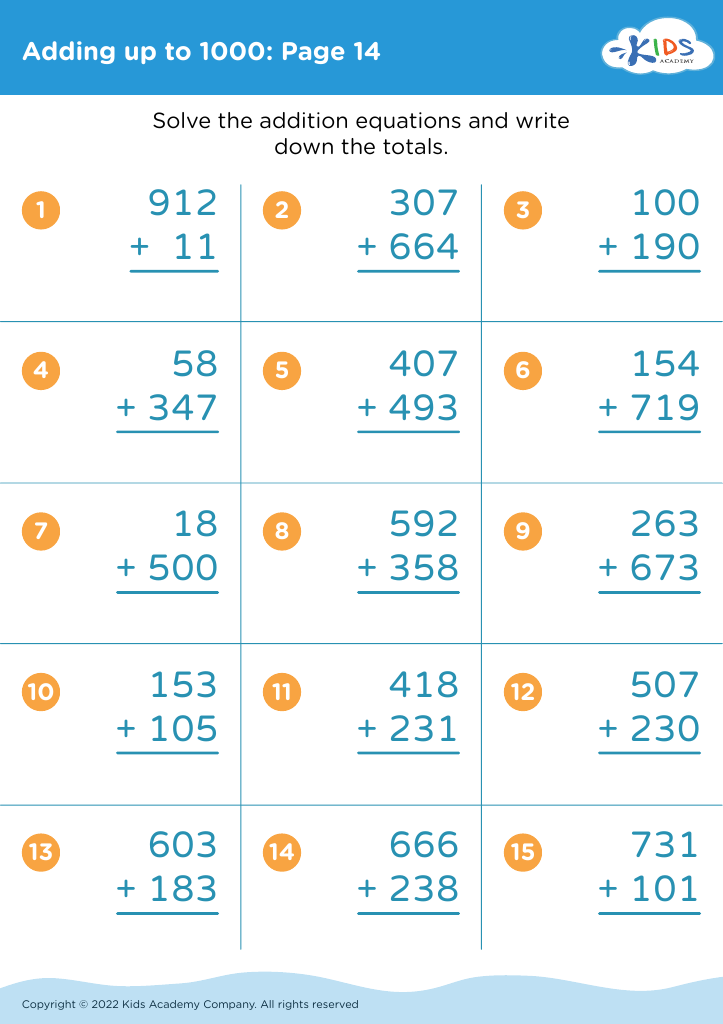


Improving math skills, particularly in concepts such as "Adding Up to 1000", is essential for children aged 4-8 as it lays a vital foundation for their future learning. Early math proficiency not only enhances cognitive development but also boosts problem-solving abilities and critical thinking skills. Mastering addition skills early on helps children understand number sense and the relationship between numbers, which is crucial for more advanced mathematical concepts.
Parents and teachers play a pivotal role in fostering a positive attitude toward math during these formative years. Engaging children with fun activities and relatable examples makes math more approachable and enjoyable, which encourages a lifelong enthusiasm for learning. Proficiency in math can lead to better academic performance across various subjects, helping children to succeed in school and develop confidence in their abilities.
Furthermore, a strong grasp of basic math skills is essential for everyday life tasks, such as budgeting, cooking, and understanding time. By focusing on adding up to 1000, educators and parents can ensure that children not only excel academically but also cultivate essential life skills. Prioritizing math development is crucial for nurturing well-rounded, capable individuals prepared to navigate the complexities of the world around them.