Problem-Solving Skills Adding up to 1000 Misc Worksheets for Ages 4-8
14 filtered results
-
From - To
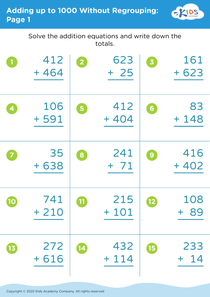
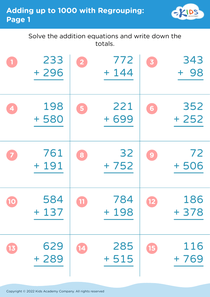
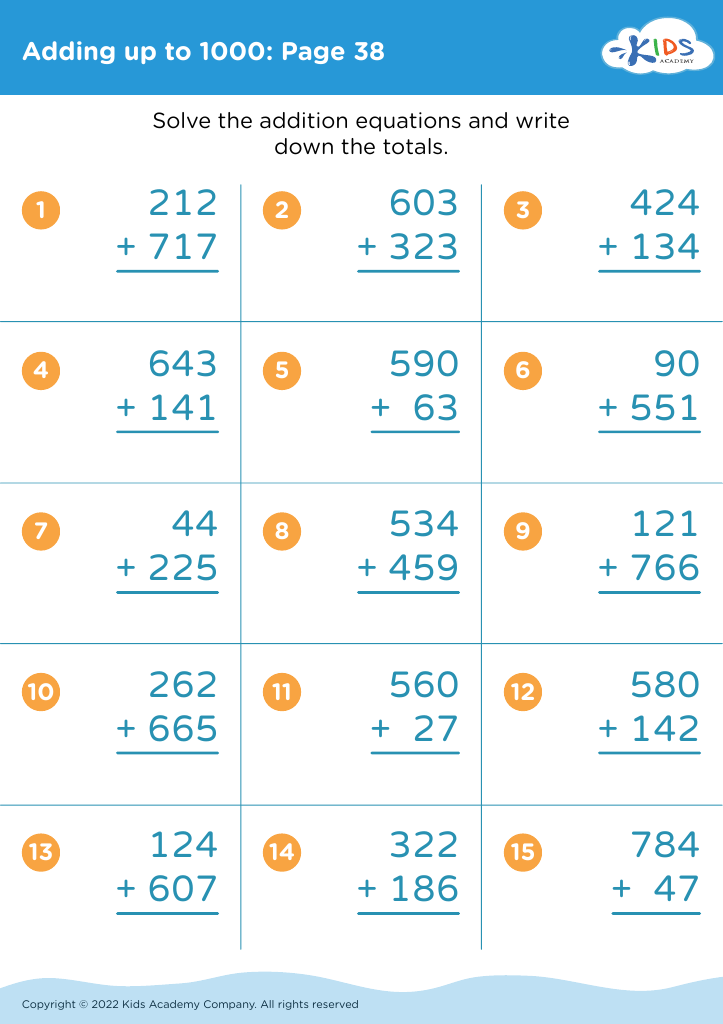
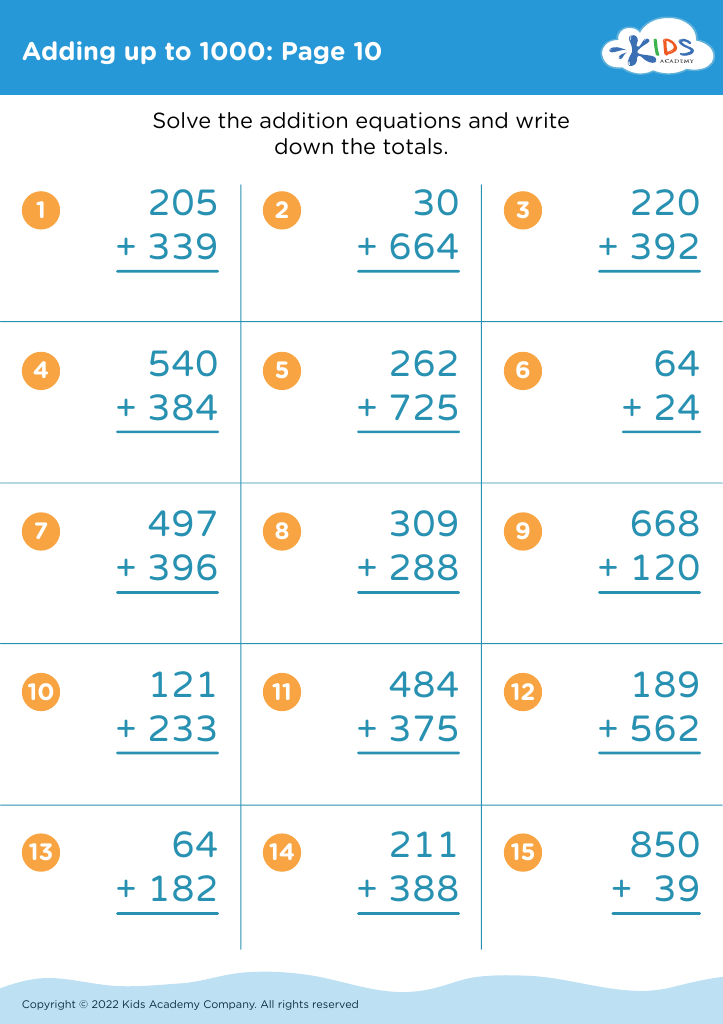
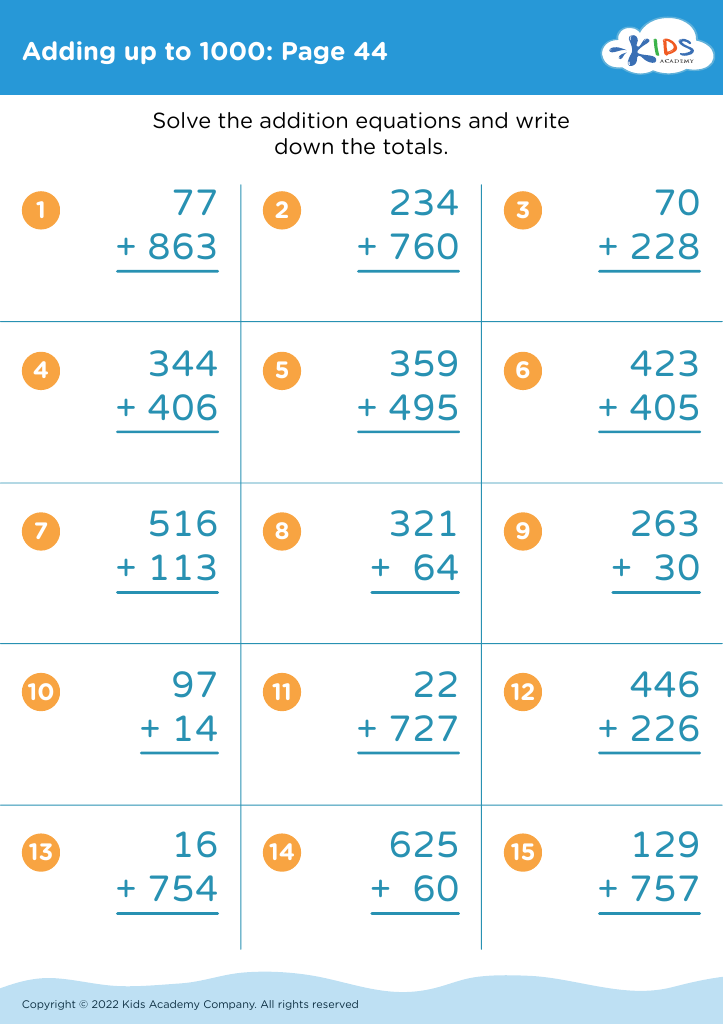
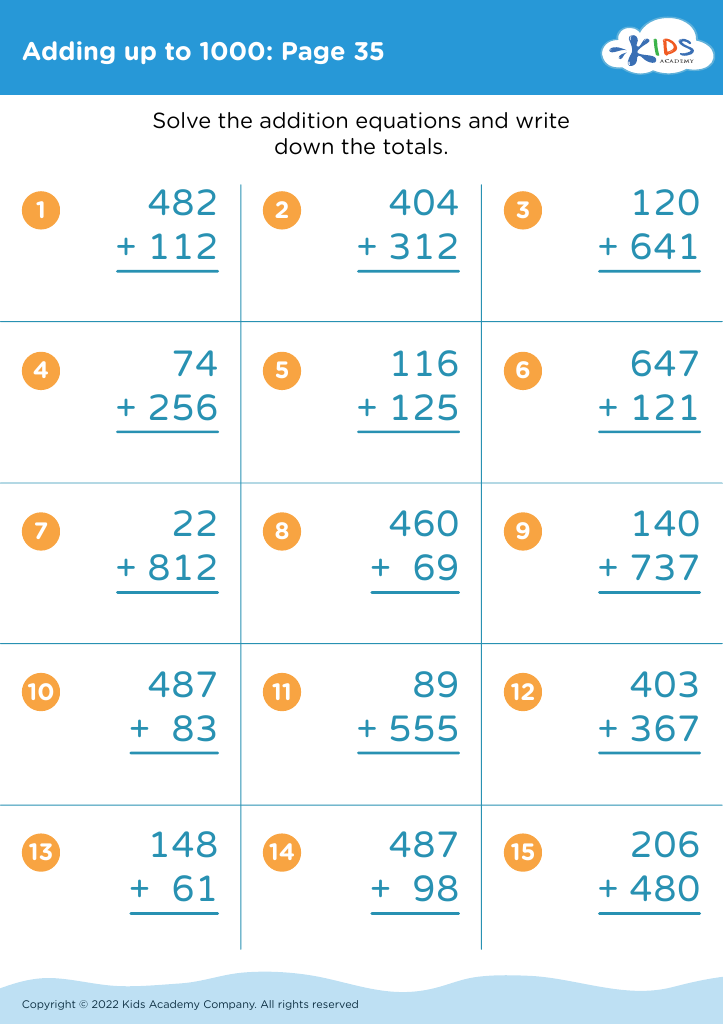
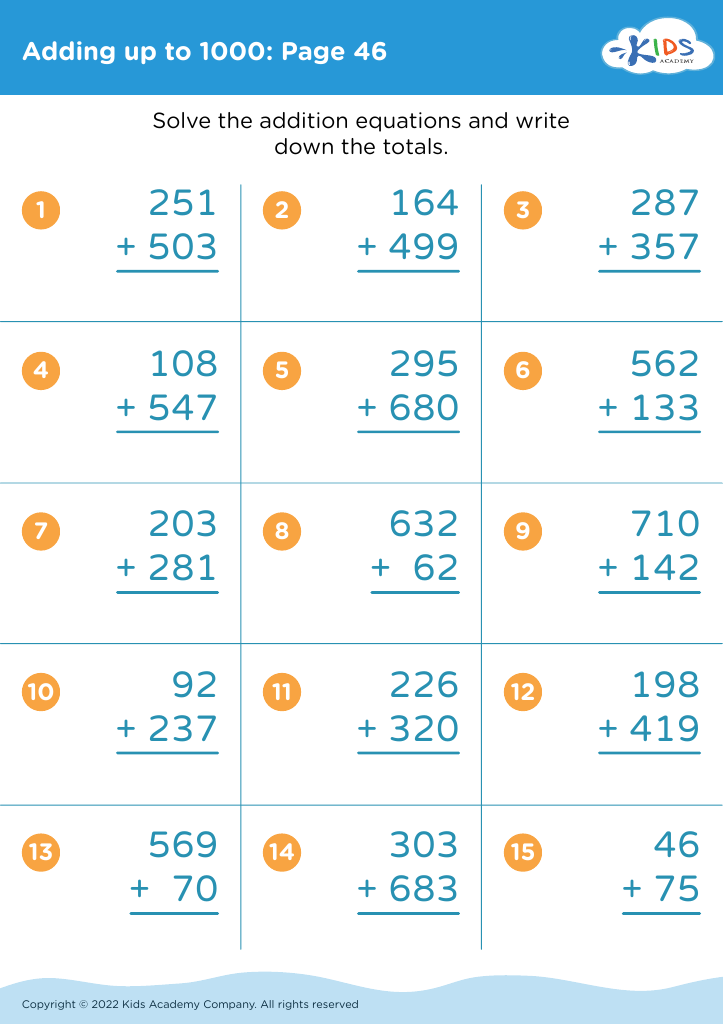
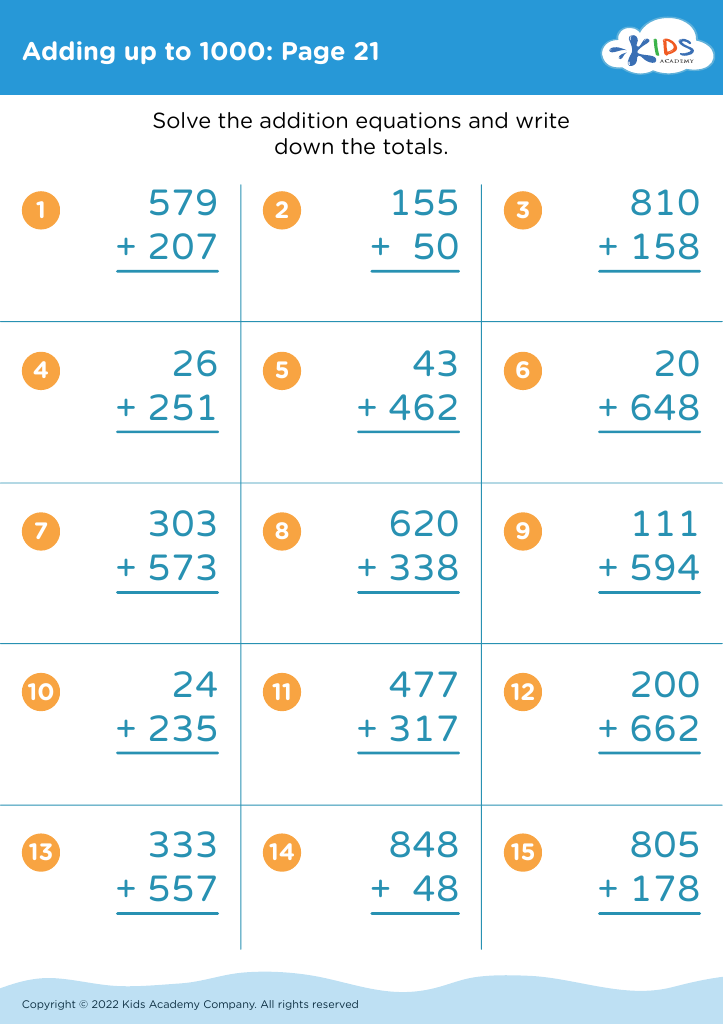
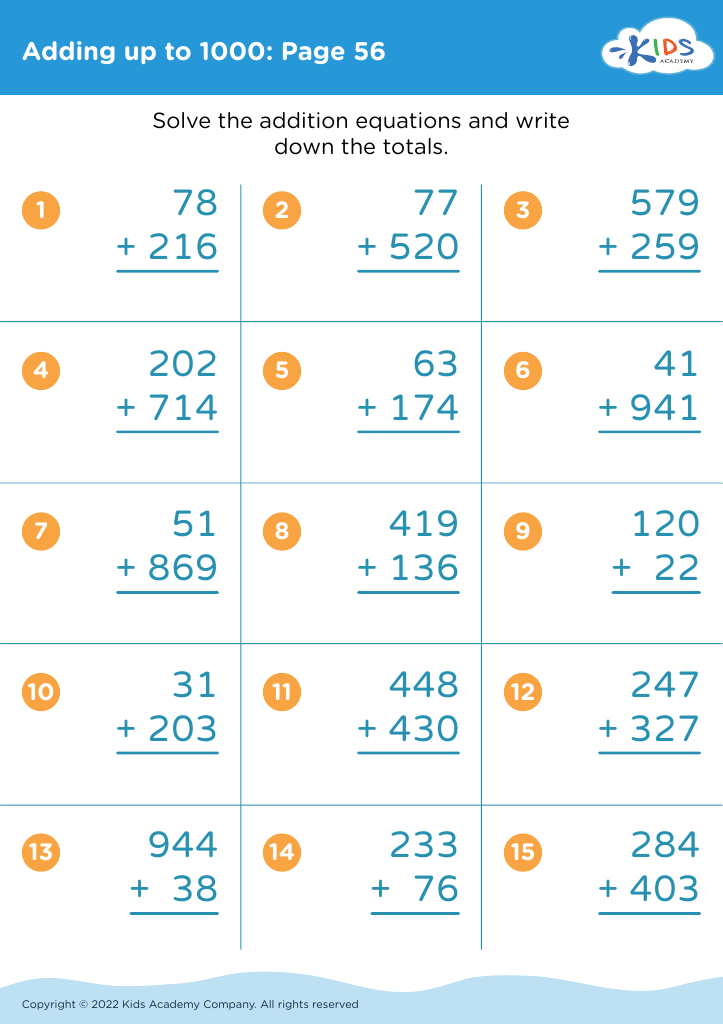
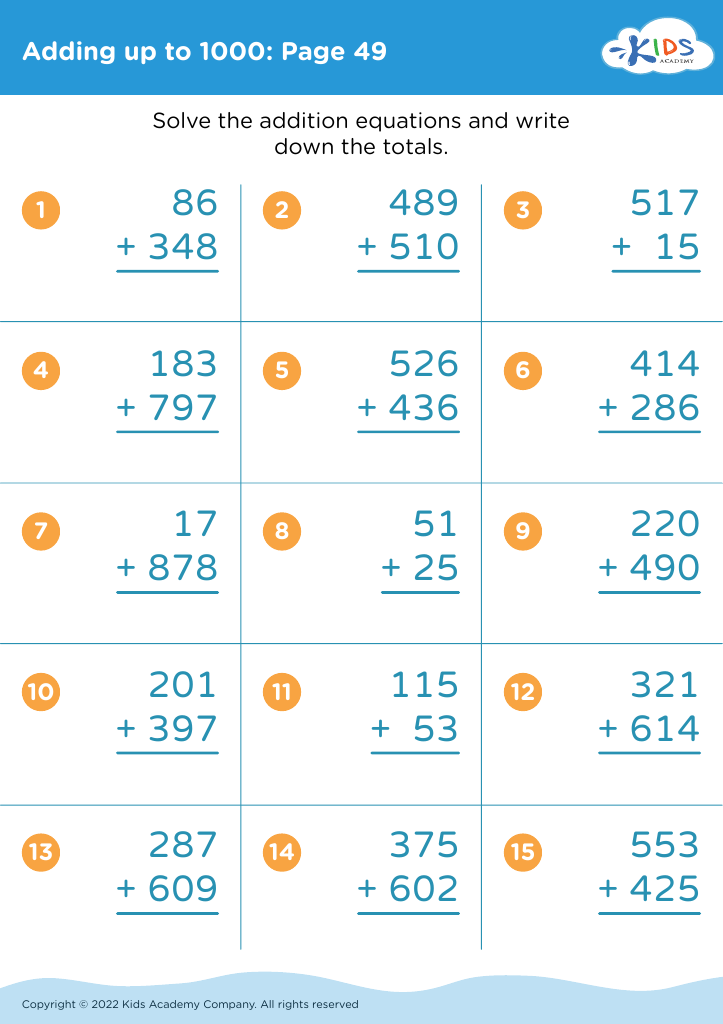
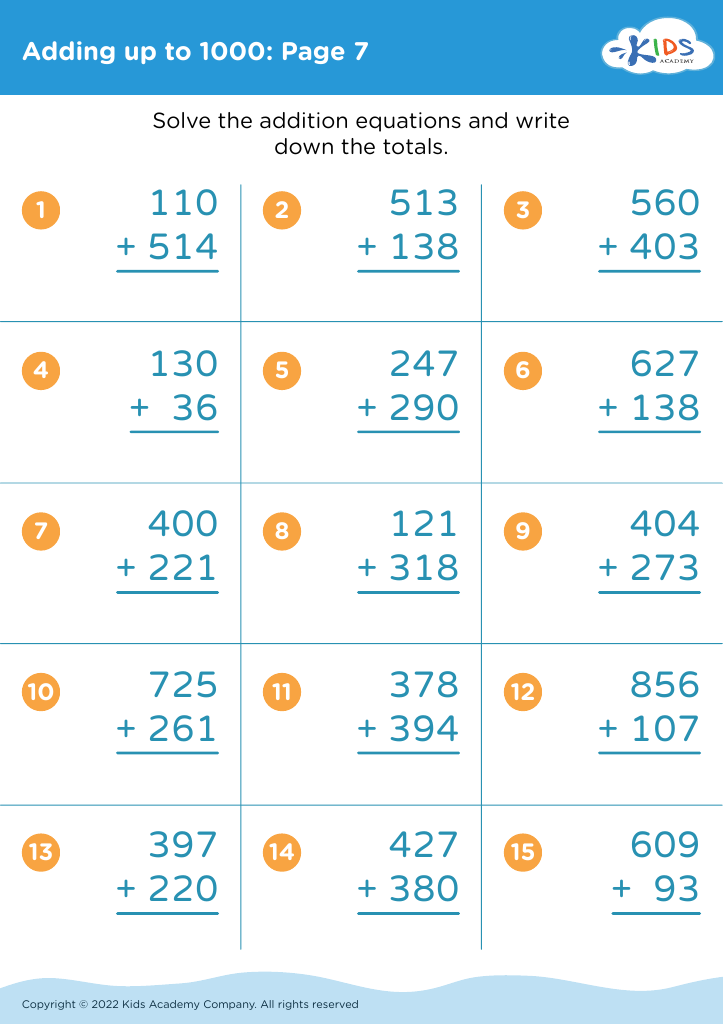
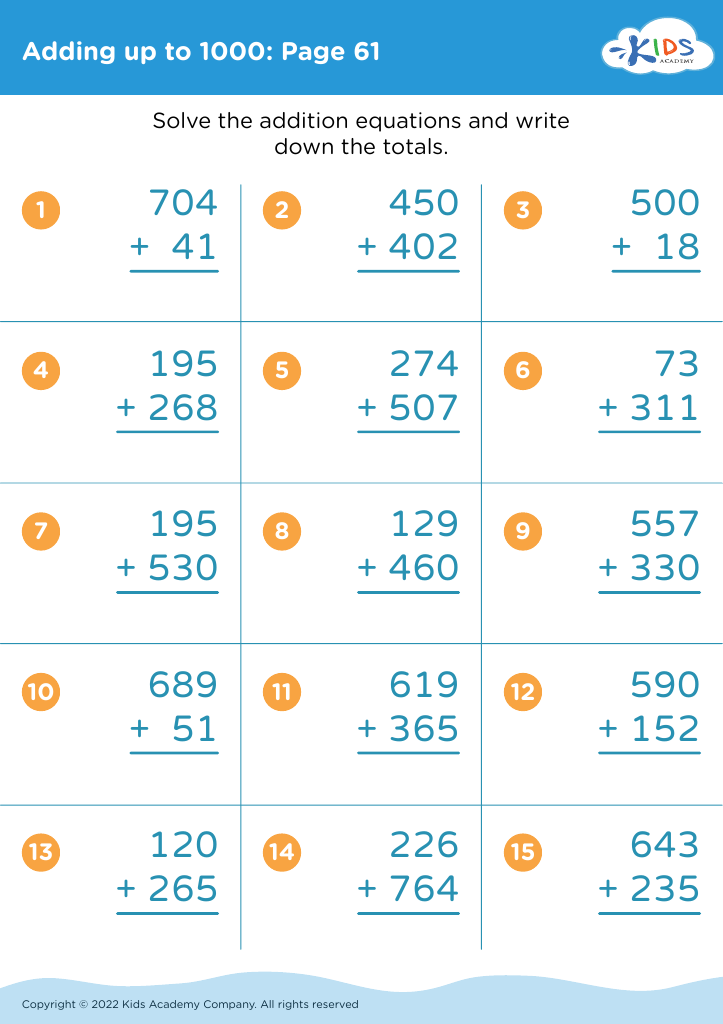
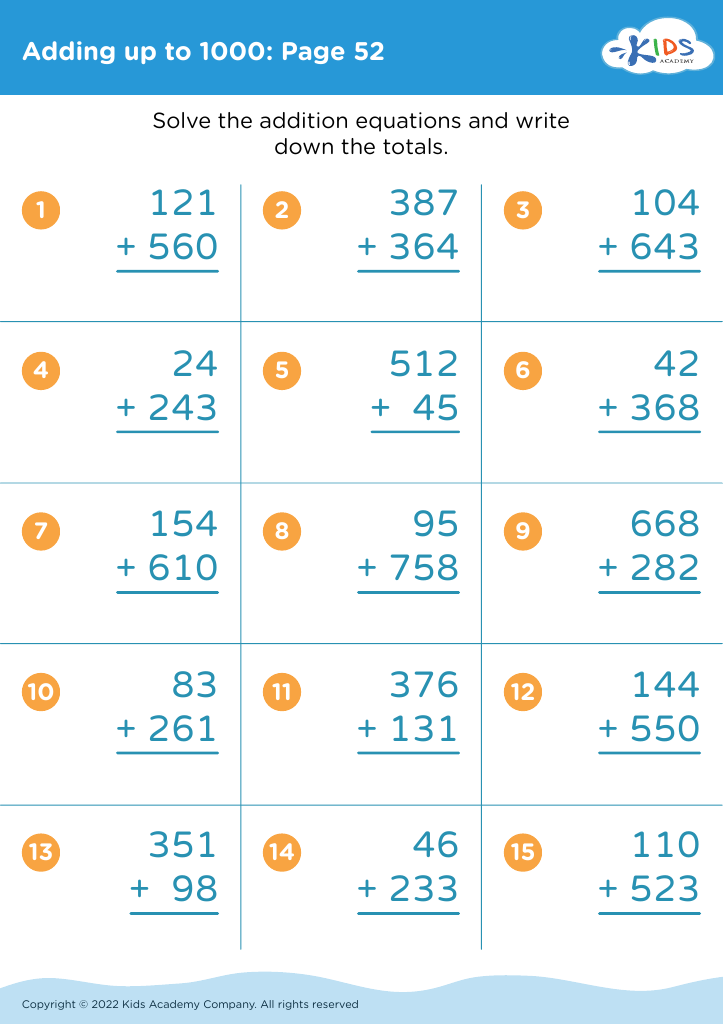
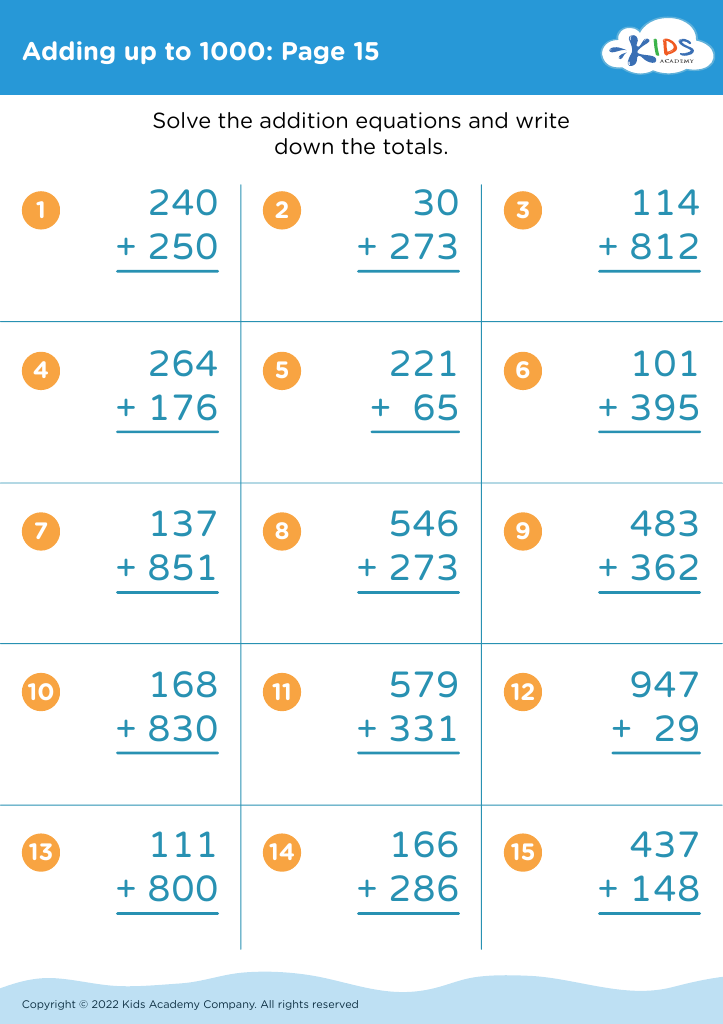
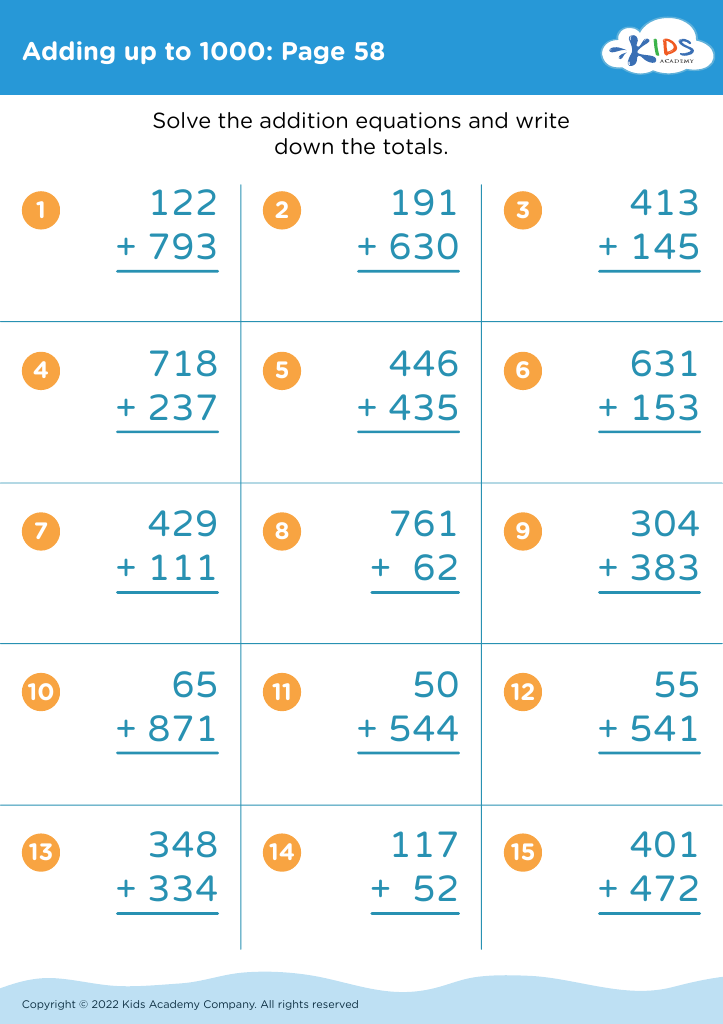
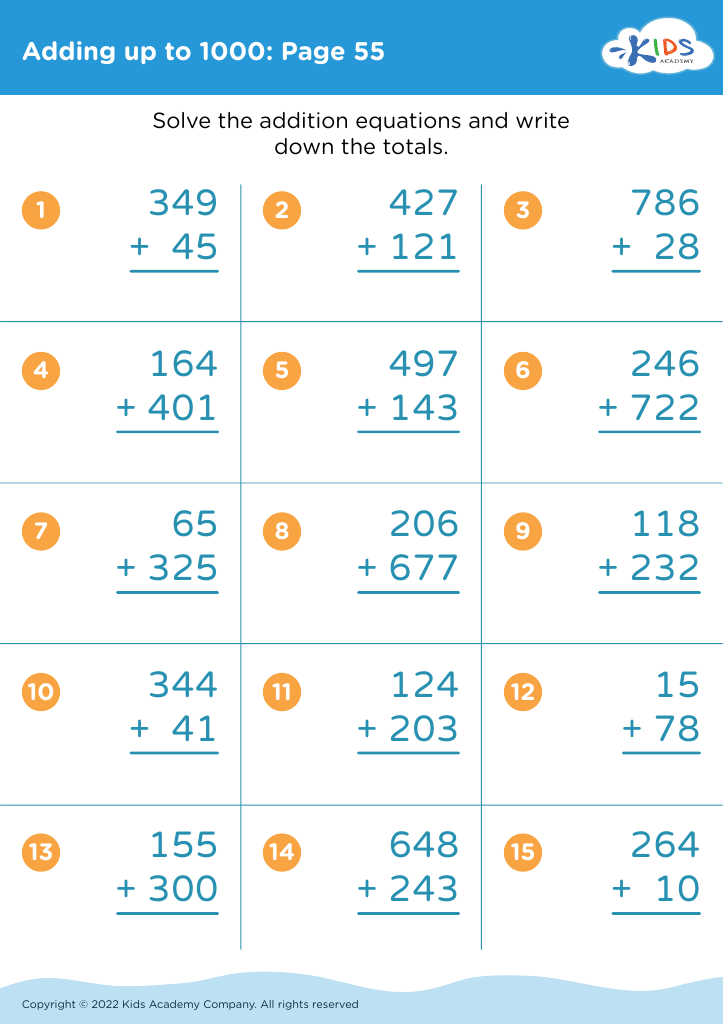
Enhance your child's problem-solving skills with our engaging "Adding Up to 1000 Misc Worksheets," tailored for ages 4-8. This comprehensive collection features 1000 worksheets designed to make math fun and accessible while fostering critical thinking. Kids will explore various mathematical concepts through colorful and interactive exercises, encouraging them to tackle challenges with confidence. Each worksheet is crafted to promote logical reasoning and creative problem-solving, helping young learners build a strong mathematical foundation. Perfect for home or classroom use, these worksheets will ignite a love for learning while strengthening essential skills. Start your child's math journey today!


Problem-solving skills are crucial for children aged 4-8 as they lay the foundation for critical thinking, resilience, and creativity. Parents and teachers should care about these skills because they empower kids to navigate challenges and develop independence. At this age, children are naturally curious and eager to explore, making it an ideal time to nurture their problem-solving abilities.
Engaging in problem-solving activities helps children to break down complex situations into manageable parts and encourages a growth mindset. They learn to evaluate different options, consider consequences, and arrive at solutions, which are essential skills for future academic success and everyday life. Moreover, these skills promote collaboration and communication as children often work together to solve problems, fostering social skills and emotional intelligence.
Moreover, enhancing problem-solving skills contributes significantly to STEM (Science, Technology, Engineering, and Math) development, preparing students for a tech-driven future. Introducing fun, age-appropriate challenges can make learning enjoyable and effective, sparking an enduring interest in tackling real-world problems. Ultimately, when parents and teachers prioritize problem-solving, they are equipping children with the tools they need to thrive, paving the way for their confidence and success in school and beyond.