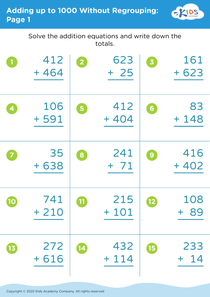
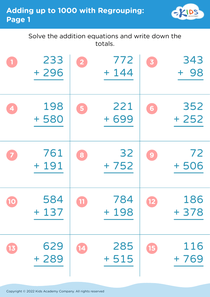
Understanding fractions Adding up to 1000 Misc Worksheets for Ages 4-8
13 filtered results
-
From - To
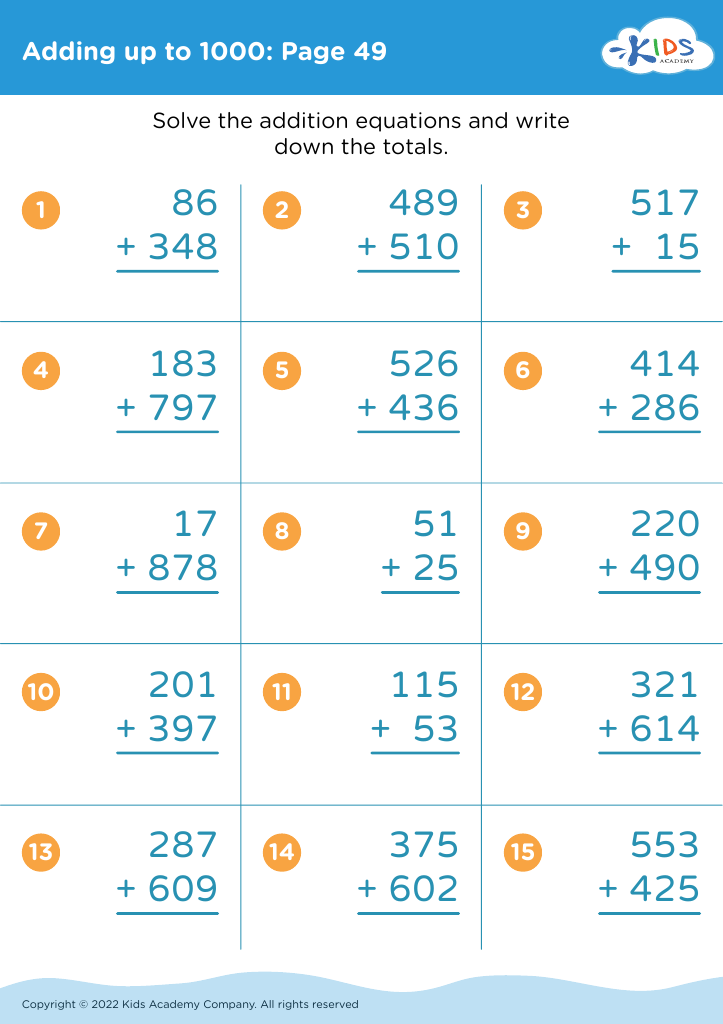
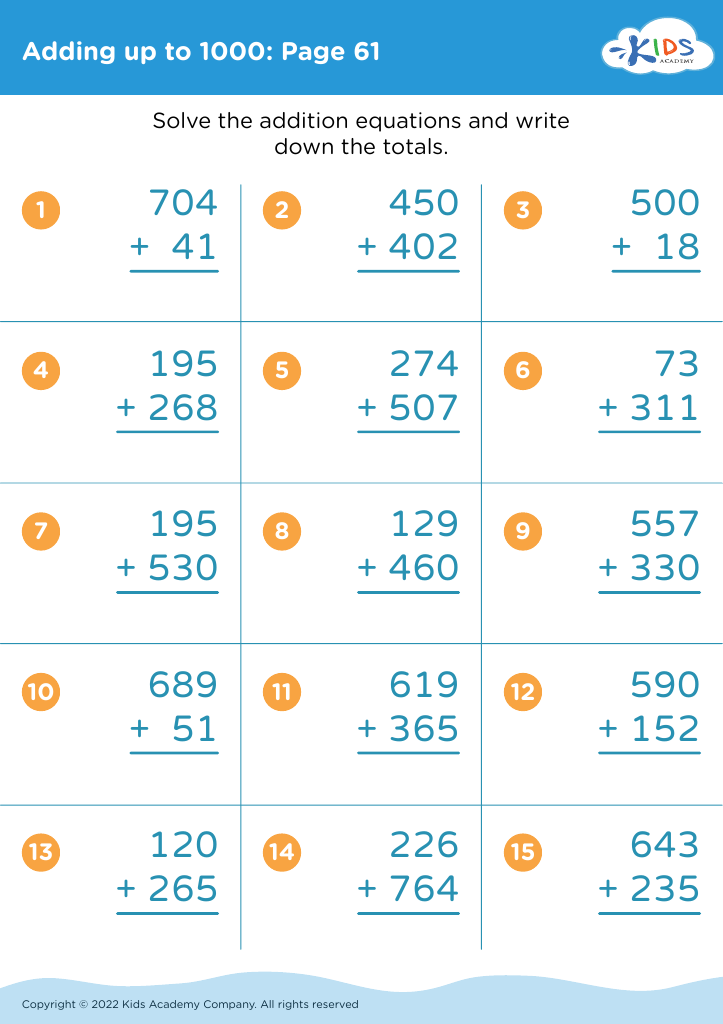
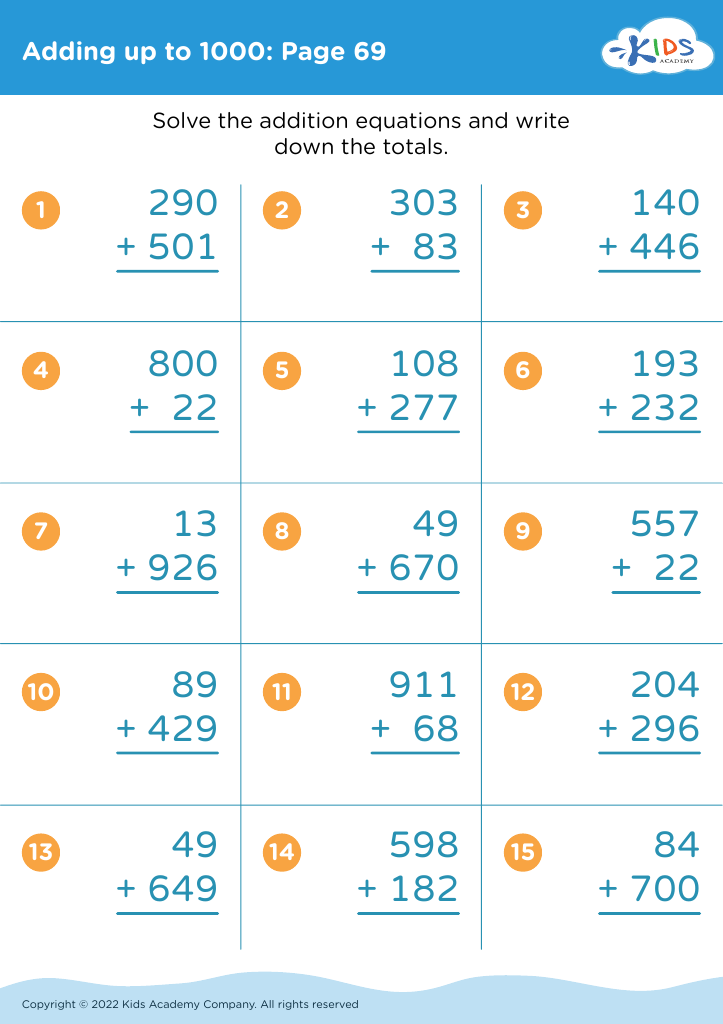
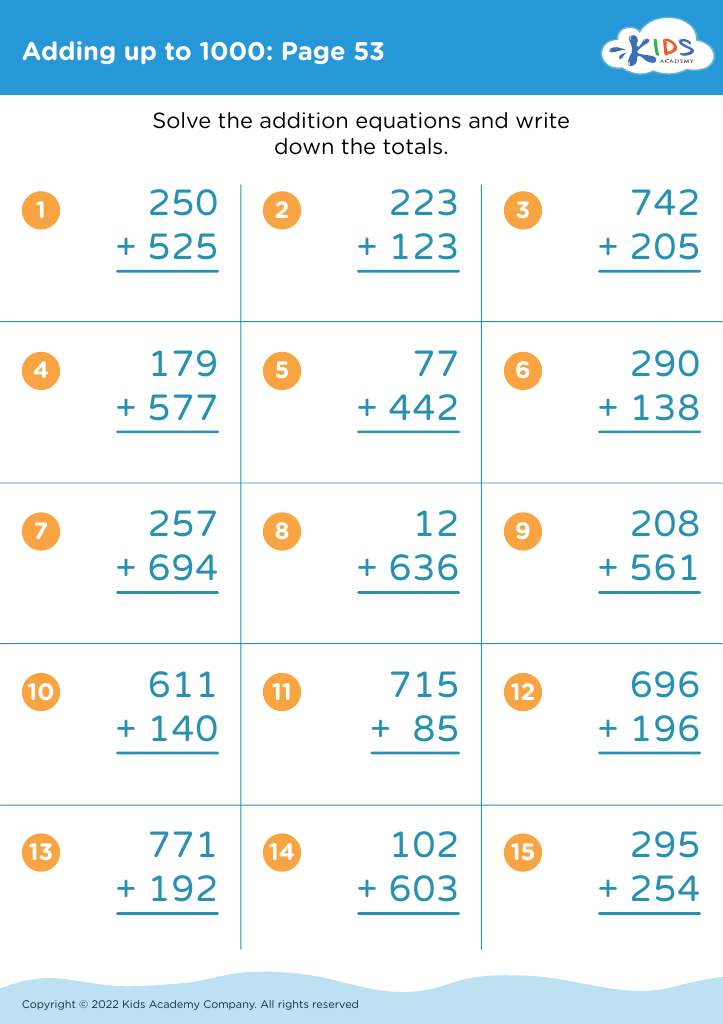
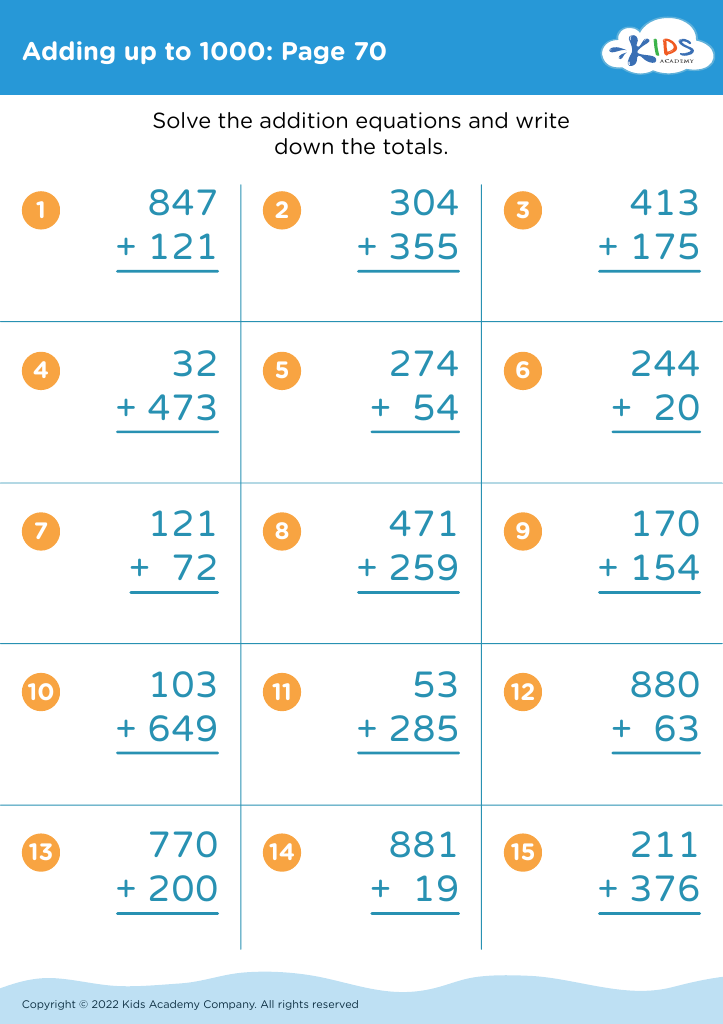
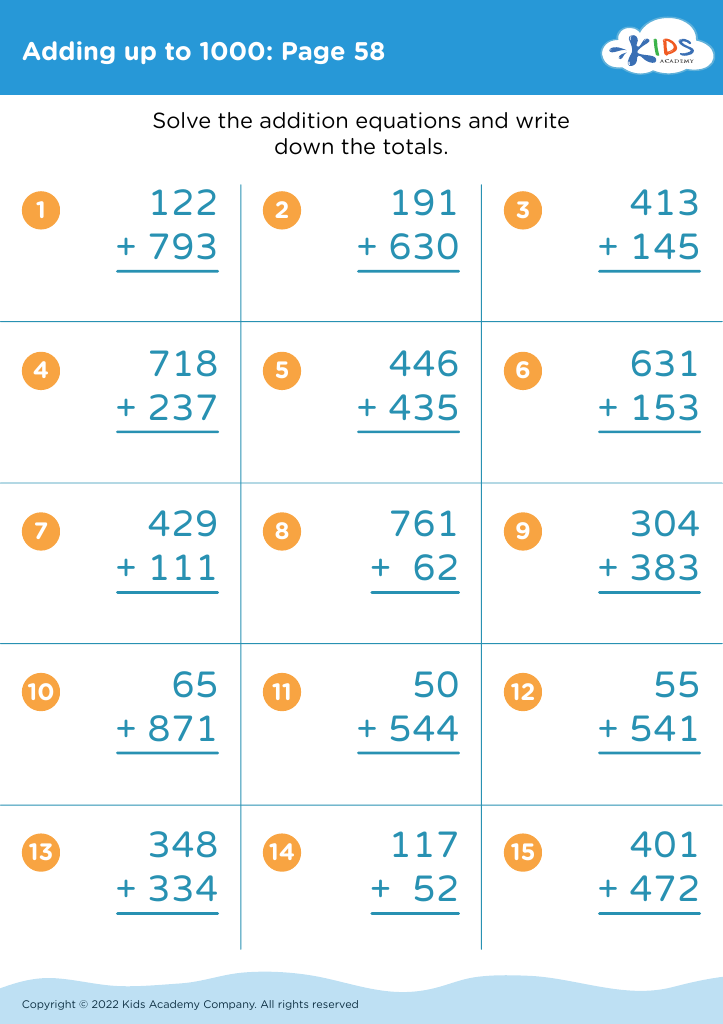
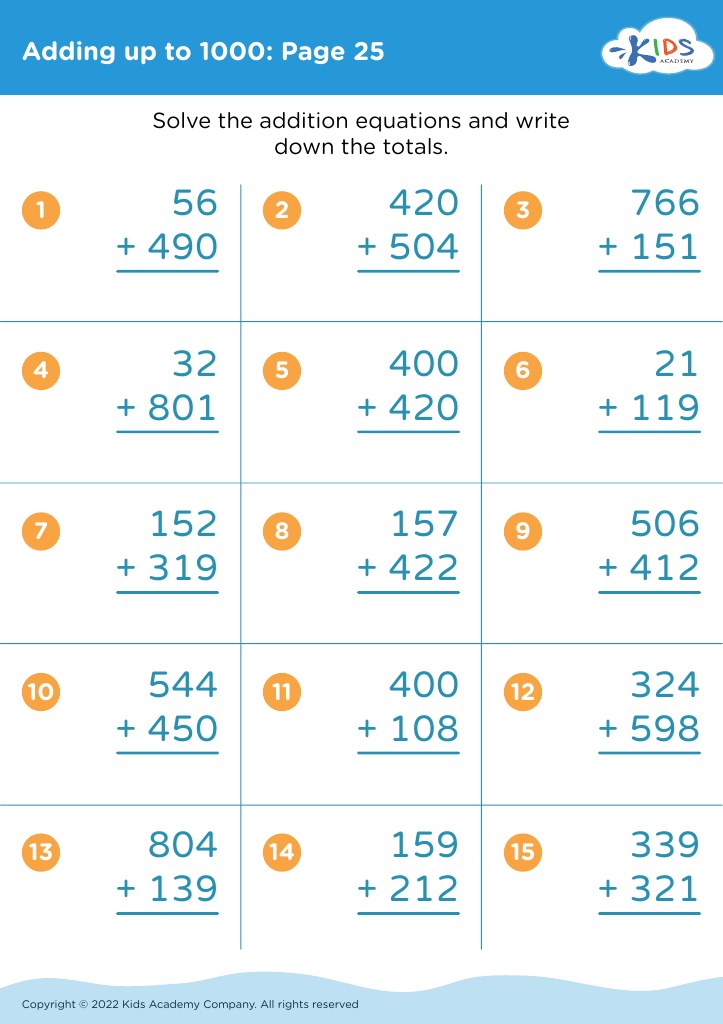
Explore our engaging "Understanding Fractions: Adding Up to 1000" worksheet collection, designed specifically for ages 4-8. These interactive and visually appealing worksheets provide a fun way for young learners to grasp the concept of fractions while developing their counting skills up to 1000. Through a variety of activities, children will practice identifying, comparing, and adding fractions, fostering a solid foundation in math. Each worksheet encourages critical thinking and problem-solving, making math learning enjoyable and effective. Perfect for home or classroom use, these resources will help your child build confidence and skills in understanding fractions while reaching new math milestones!
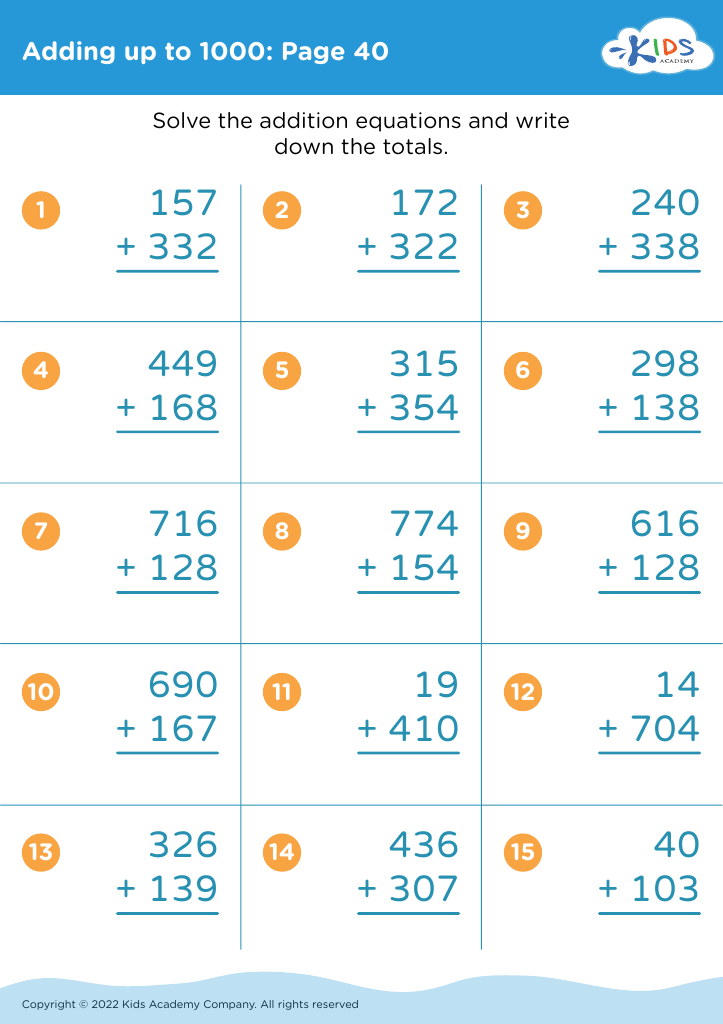
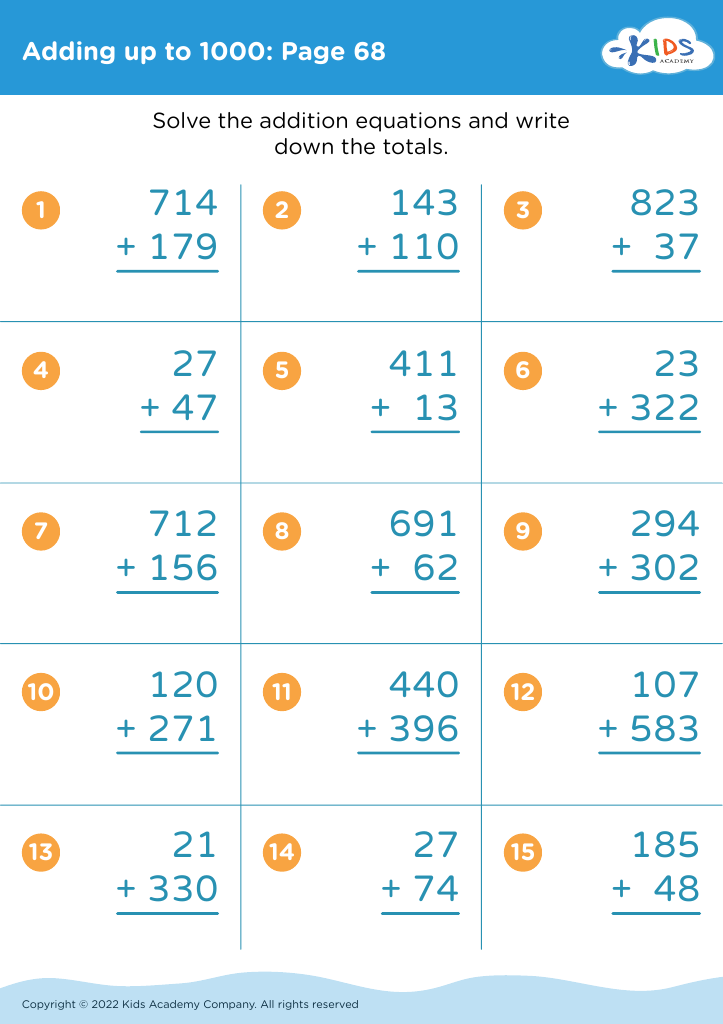
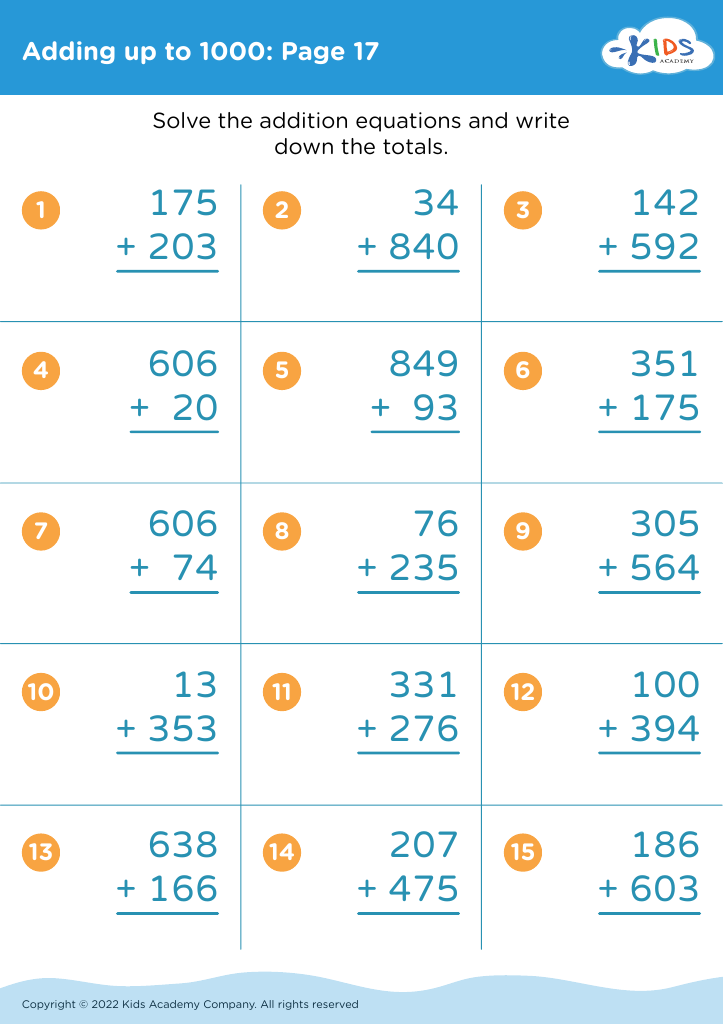
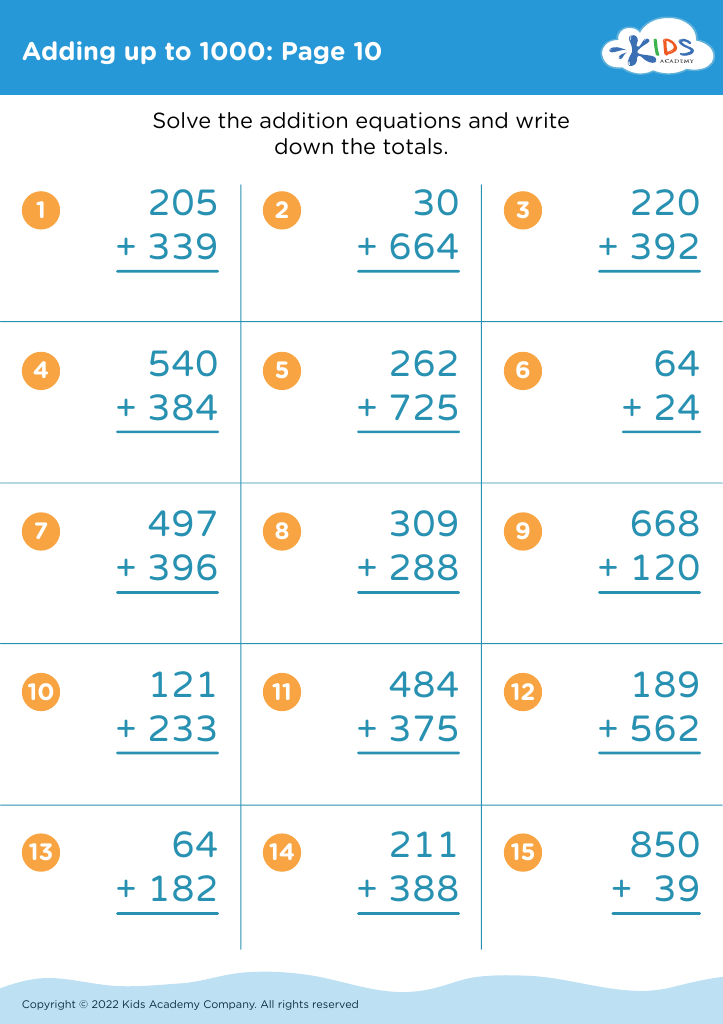
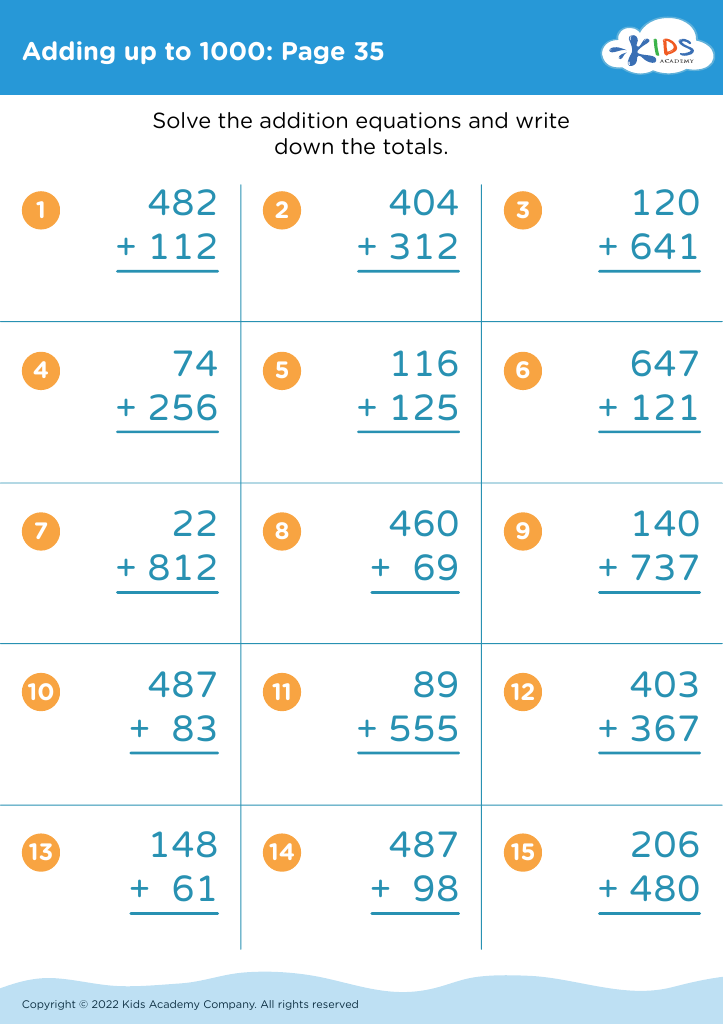
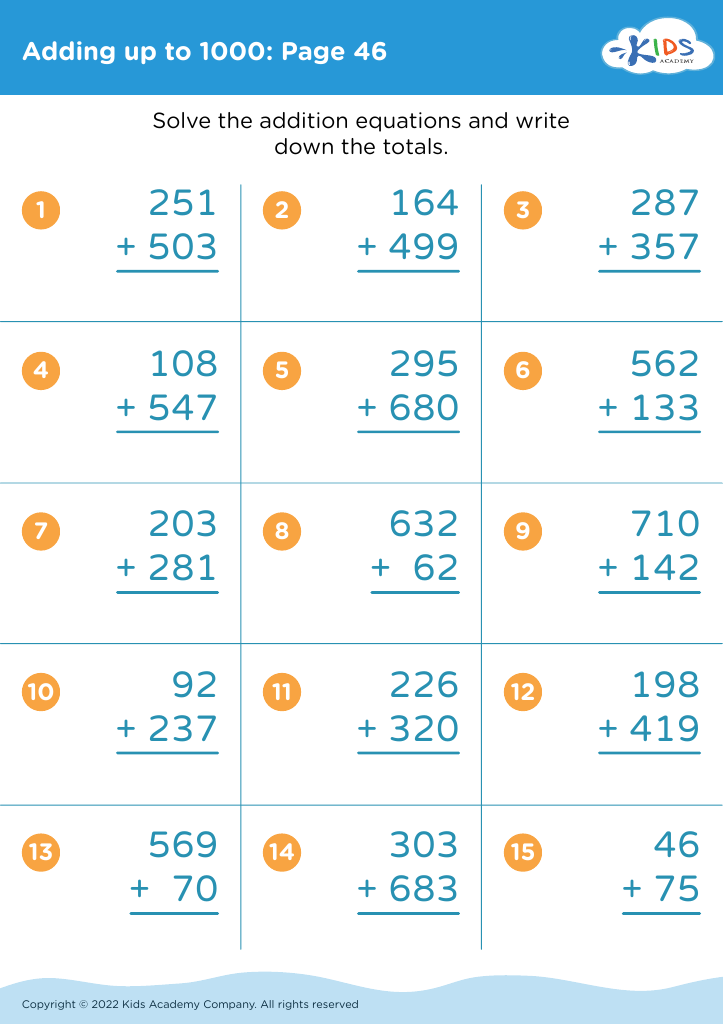


Understanding fractions is foundational for young learners, particularly for ages 4-8, as it sets the stage for future mathematical learning. At this age, children are developing critical thinking skills and the ability to see relationships between numbers. Fractions introduce them to the concept of parts of a whole, laying the groundwork for more complex mathematical concepts like addition, subtraction, and eventually, division.
When educators and parents focus on understanding fractions, they help children grasp the practical applications of mathematics in everyday life. By exploring how quantities combine to create a whole—such as pie slices or measuring ingredients in cooking—children begin to appreciate the relevance of math.
Moreover, when discussing "adding up to 1000," children learn to group and partition numbers, enhancing their number sense. This concept supports their ability to manipulate numbers and understand larger operations as they progress academically.
Fostering these skills early on promotes confidence, problem-solving abilities, and critical reasoning. Teachers and parents play an essential role in creating engaging learning experiences that make these concepts fun and relatable, ensuring children build a strong mathematical foundation for future learning and life skills.