Color Identification Adding up to 1000 with Regrouping Worksheets for Ages 4-8
5 filtered results
-
From - To
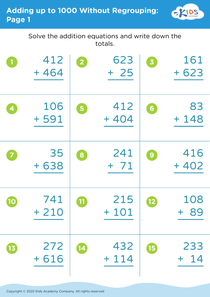
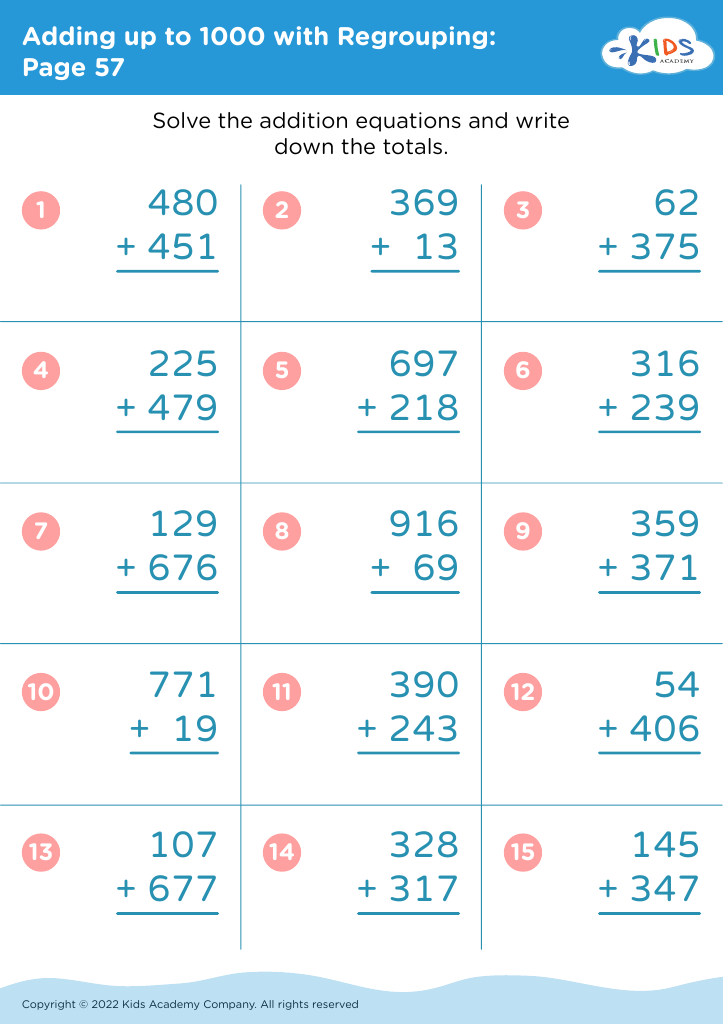
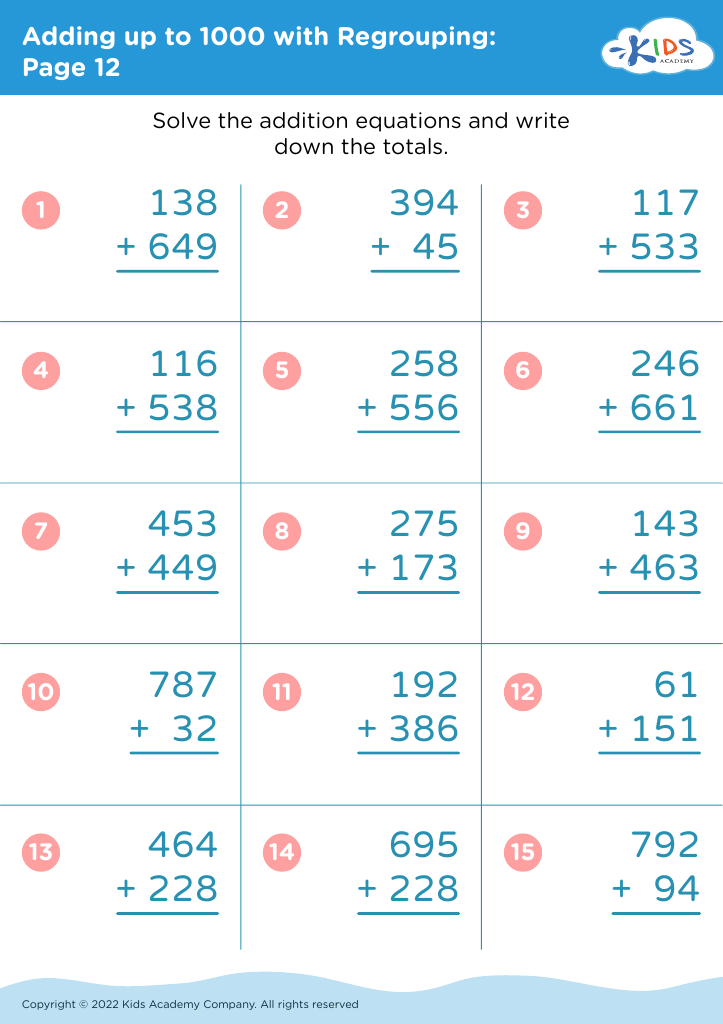
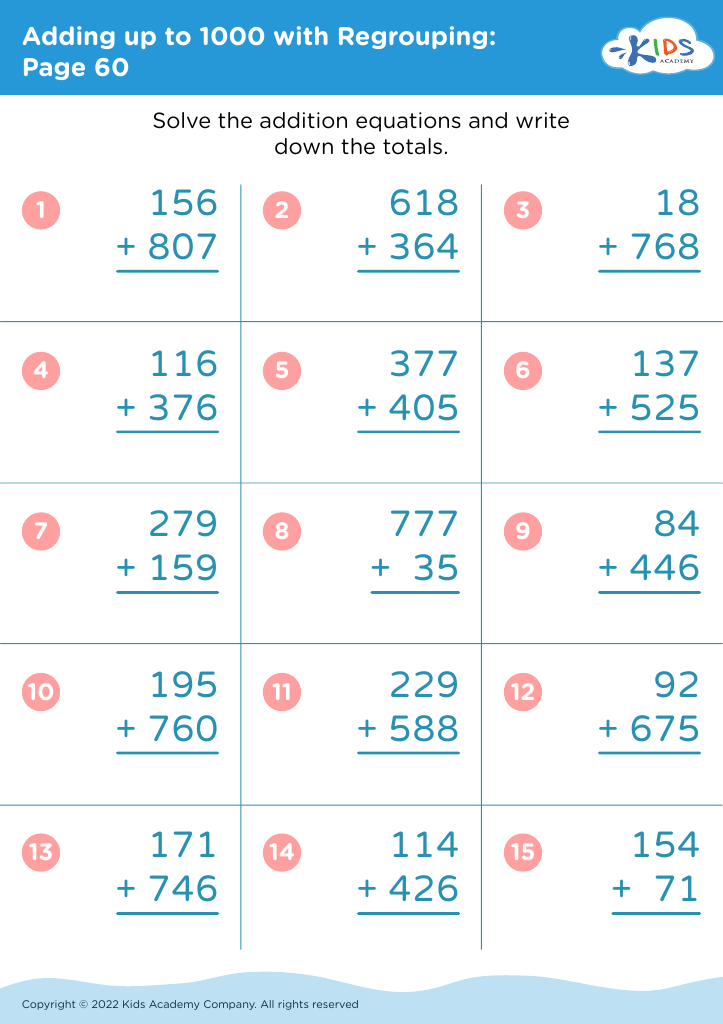
Explore our engaging "Color Identification Adding Up to 1000 with Regrouping Worksheets" designed specifically for children ages 4-8. These interactive worksheets integrate essential math skills as young learners practice addition with regrouping while identifying colors. Each activity fosters color recognition alongside numerical confidence, helping kids grasp basic arithmetic concepts in a fun and visually stimulating way. Ideal for enhancing cognitive development through creative exploration, these worksheets support fine motor skills and critical thinking. Perfect for home or classroom use, our resources ensure an enjoyable learning experience that inspires curiosity and reinforces foundational math skills while embracing the joy of color!
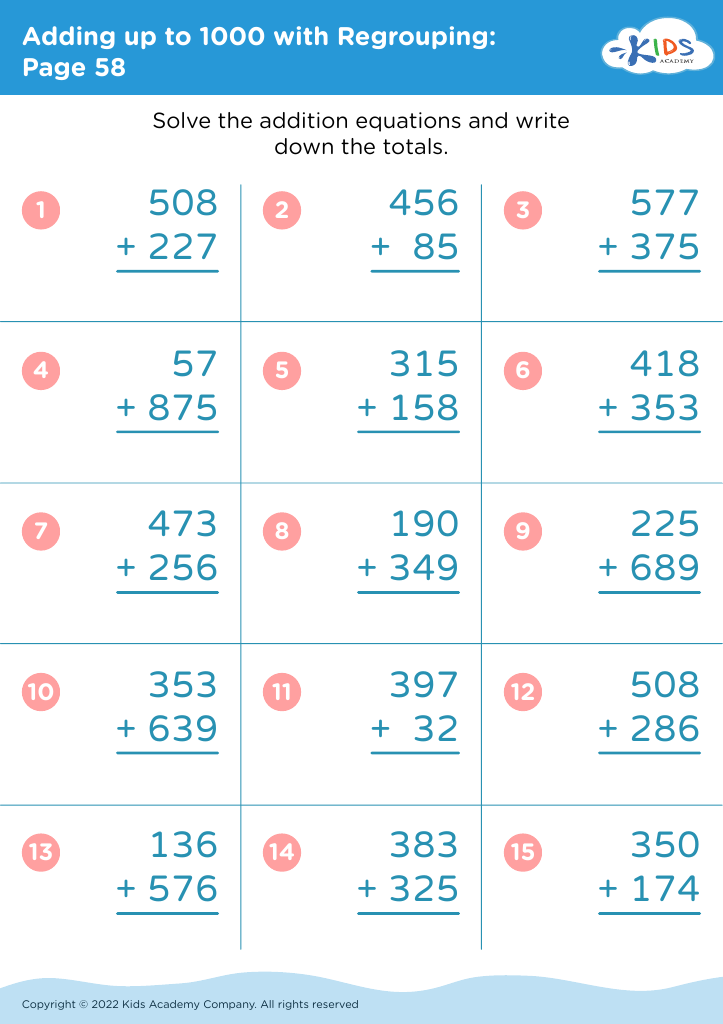
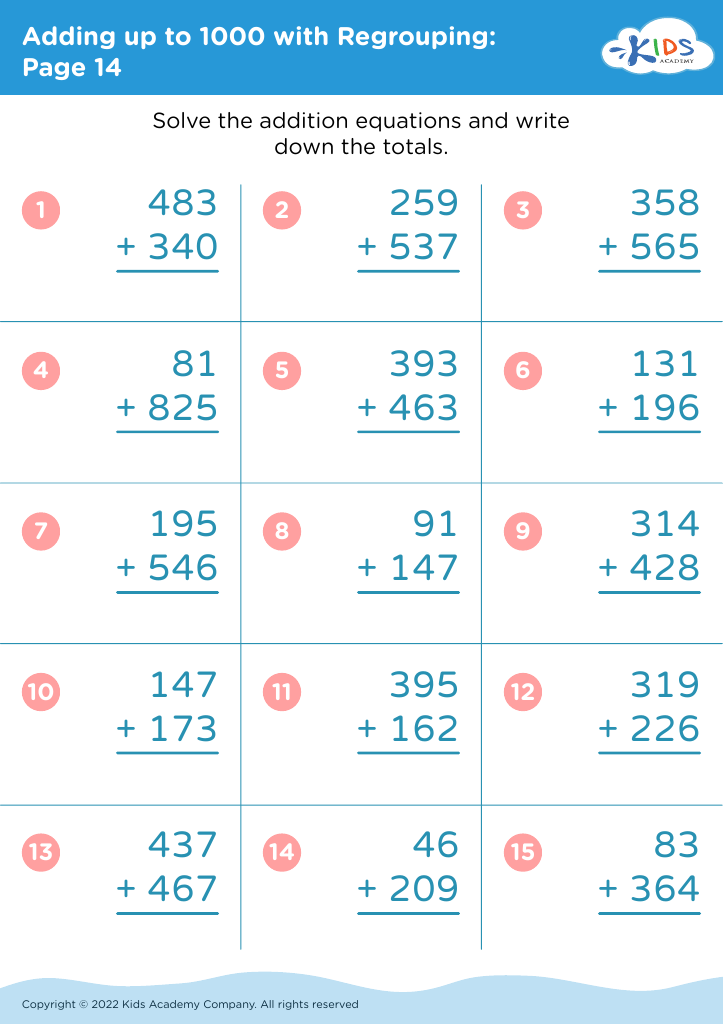


Color identification and the ability to add up to 1000 with regrouping are crucial skills for children aged 4-8, beneficial for both cognitive and emotional development. First, color identification lays the foundation for learning, as it enhances a child's ability to categorize and differentiate between objects, fostering visual discrimination which is vital for reading and math skills. Incorporating colors in lessons can make learning more engaging and memorable, enhancing a child's enthusiasm for education.
On the other hand, adding up to 1000 with regrouping develops critical mathematical abilities. This skill introduces children to more complex arithmetic concepts, encouraging logical thinking and problem-solving. Mastery in this area boosts confidence and lays a strong foundation for future math learning, which is essential given that mathematics is a cumulative subject.
Furthermore, both skills promote engagement between parents and teachers, opening avenues for collaborative learning experiences. Fun activities, like color-coded math games, can enhance classroom instruction while permitting active participation from parents at home. When parents and teachers prioritize these foundational skills, they encourage a holistic approach to learning that supports cognitive, social, and emotional growth, setting the stage for lifelong learning and success.