Fraction comparison Adding up to 1000 with Regrouping Worksheets for Ages 4-8
3 filtered results
-
From - To
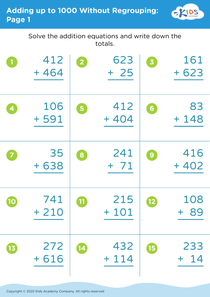
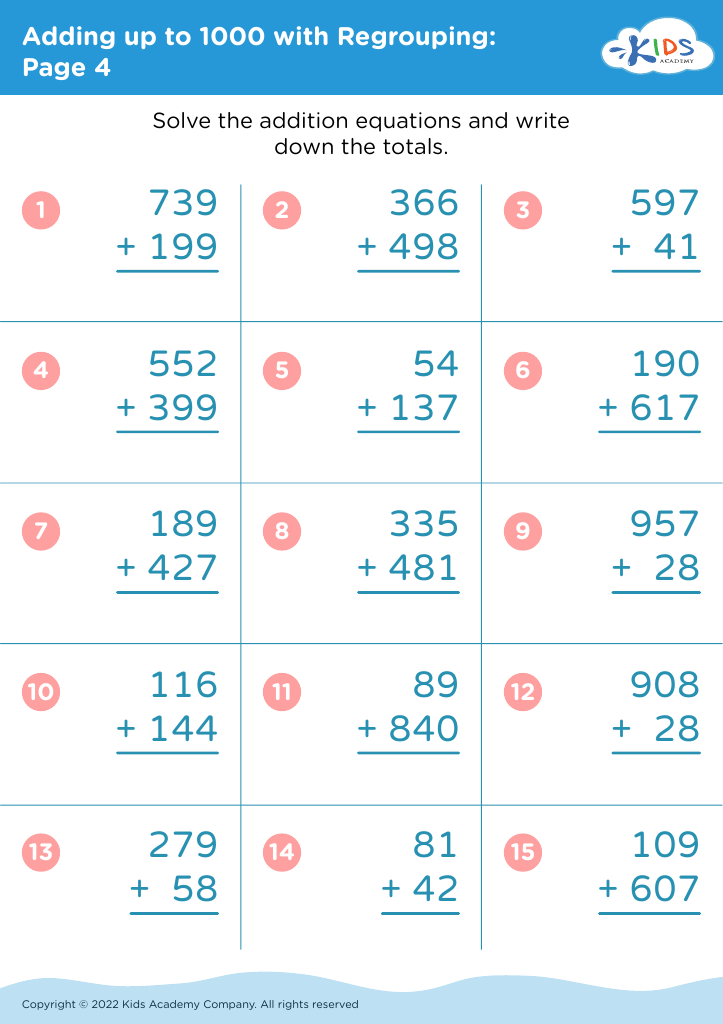
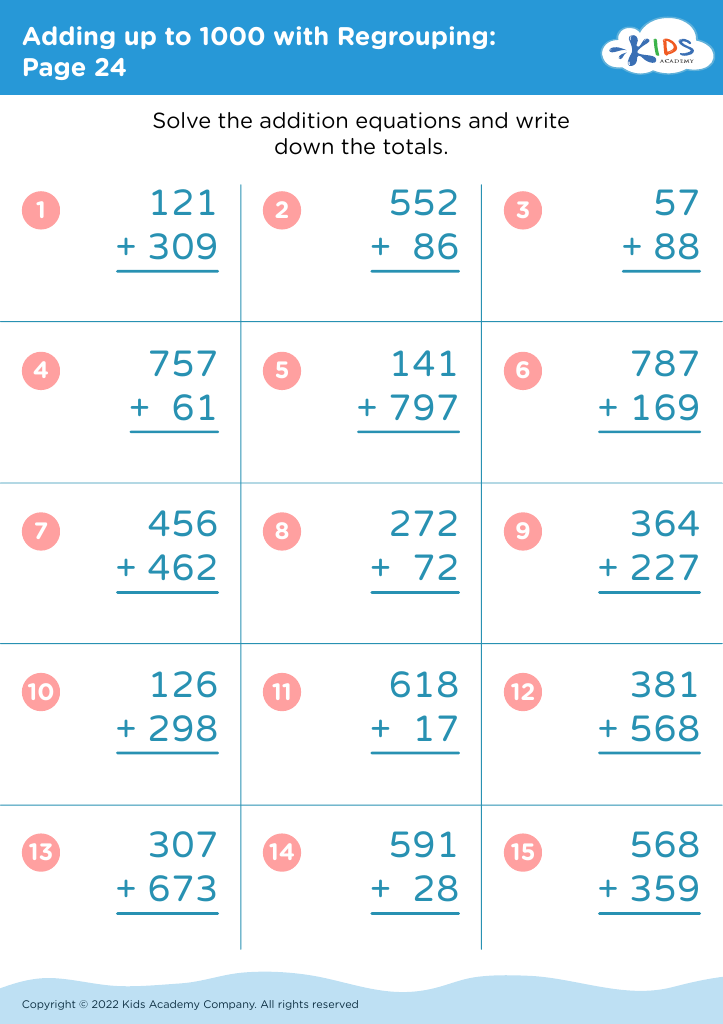
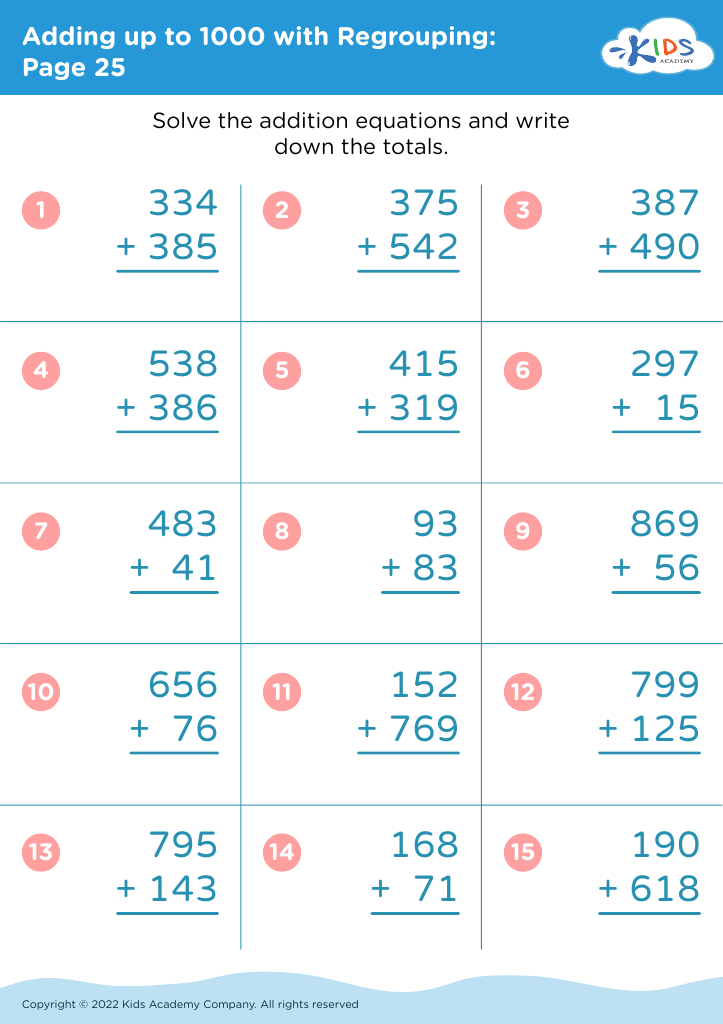
Discover our engaging "Fraction Comparison Adding up to 1000 with Regrouping Worksheets," specially designed for children aged 4-8! These worksheets focus on helping young learners master fraction comparison while reinforcing addition skills that total up to 1000. With vibrant illustrations and interactive exercises, kids will develop critical thinking and problem-solving abilities in a fun and enjoyable way. Our resources also emphasize regrouping techniques, making complex concepts more accessible. Perfect for both classroom and home use, these worksheets encourage independent practice, ensuring your child gains confidence in their math skills. Download yours today and make learning fractions an exciting adventure!


Fraction comparison and addition involving regrouping are foundational skills in early mathematics that play a vital role in children's cognitive development and future academic success. For parents and teachers, understanding these concepts is crucial for several reasons.
First, fractions represent parts of a whole, and learning how to compare them fosters critical thinking and problem-solving abilities in children. At ages 4-8, children are naturally curious and eager to grasp new concepts – engaging them in fraction comparison helps to build a strong number sense and enhances their understanding of proportions.
Second, adding fractions and overcoming regrouping challenges expose children to more complex mathematical operations, laying a groundwork for future mathematics. This ability is integral for higher-level concepts they will encounter in later grades.
Moreover, guiding children through these concepts helps instill confidence in their math skills. Parents and teachers are crucial in providing early support to engender a positive attitude toward mathematics.
Finally, as children thrive in learning environments, they develop perseverance and resilience—traits beneficial both academically and personally. Investing attention and time in teaching fraction comparison and regrouping will yield dividends in children's mathematical journeys and overall cognitive development.