Mathematical reasoning Adding up to 1000 with Regrouping Worksheets for Ages 4-8
3 filtered results
Difficulty Level
Grade
Age
-
From - To
Subject
Activity
Standards
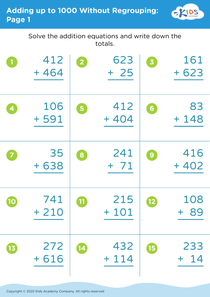
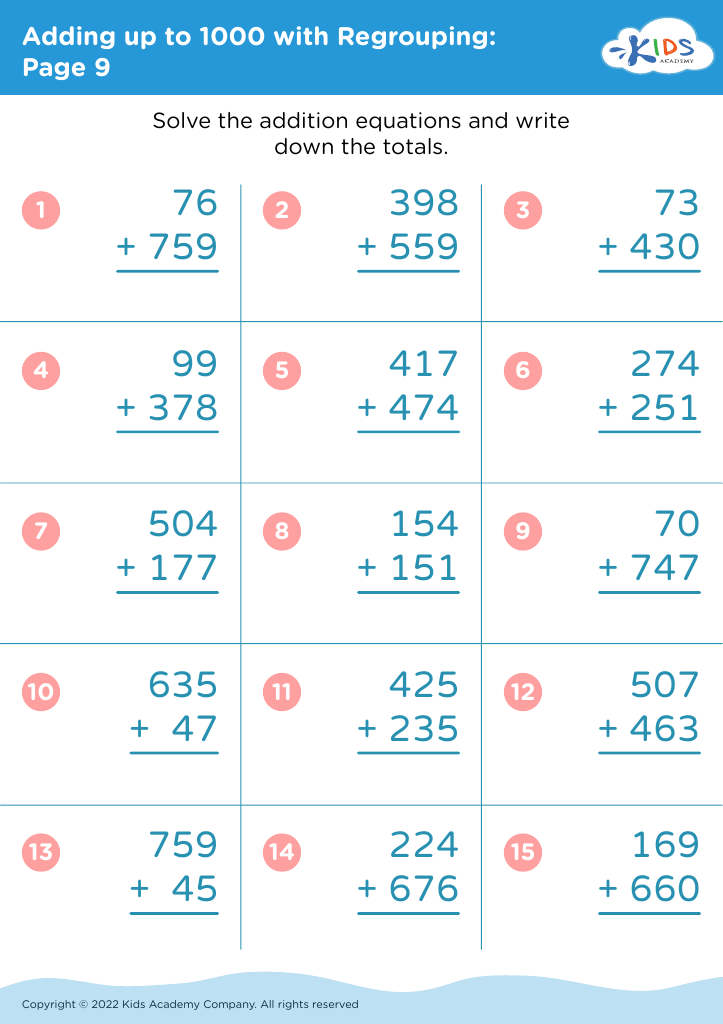
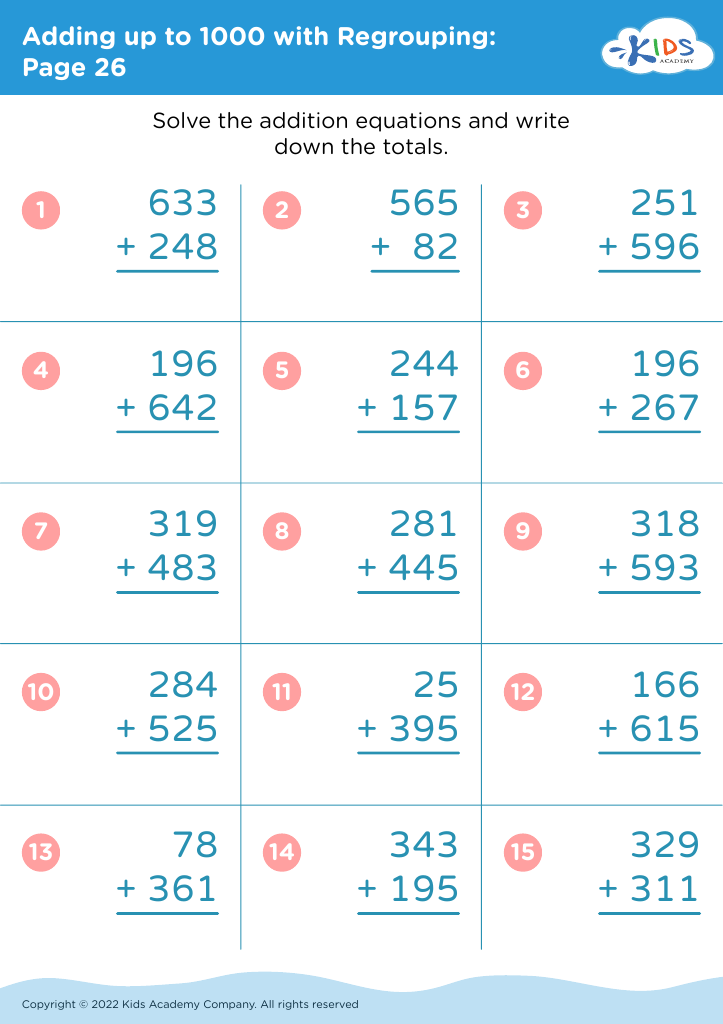
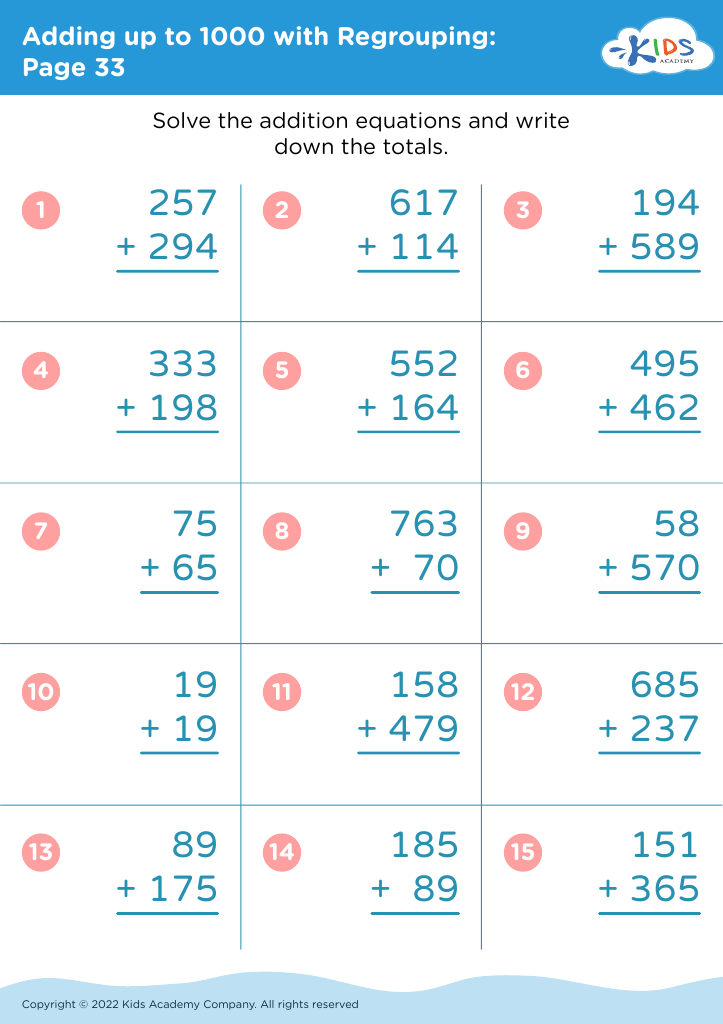
Boost your child's mathematical reasoning with our "Adding Up to 1000 with Regrouping Worksheets" tailored for ages 4-8. These specially designed worksheets promote a clear understanding of number relationships and regrouping concepts through engaging and interactive exercises. Kids will practice addition strategies, build confidence in numerical operations, and enhance their problem-solving skills. Perfect for home or classroom use, these worksheets cater to various learning styles, making math enjoyable and approachable. Foster a strong math foundation in your young learners and watch them excel in their arithmetic capabilities while having fun! Explore our collection today to enrich your students' learning experience.
Favorites
With answer key
Interactive
Join Kids Academy for Free
Who is primarily going to use this learning content?


Mathematical reasoning, particularly adding up to 1000 with regrouping, is a crucial skill for children aged 4-8. Teaching this concept cultivates a foundational understanding of numbers and enhances problem-solving abilities. As children learn to add larger numbers, they develop critical thinking skills that extend beyond mathematics, fostering cognitive development.
Parents and teachers should care about this skill because it promotes early numerical fluency, essential for tackling more complex math in later years. Understanding regrouping – breaking a number down into more manageable parts – helps children visualize operations and enhances their ability to manipulate numbers confidently. This understanding is vital not only for academic success but also for real-life applications, such as budgeting or measuring.
Moreover, engaging children in mathematical reasoning can positively influence their attitudes toward math. Children who feel confident in their math abilities are more likely to enjoy the subject and pursue it further in their education.
In summary, prioritizing mathematical reasoning and skills like adding up to 1000 with regrouping equips children with essential tools for lifelong learning, improves their critical thinking, and builds a positive relationship with math. This investment in their early education lays the groundwork for future success.