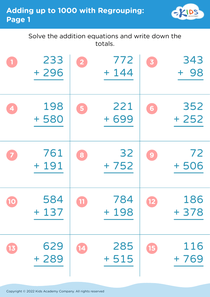
Counting practice Adding up to 1000 Without Regrouping Worksheets for Ages 4-8
4 filtered results
-
From - To
Discover our engaging Counting Practice Adding up to 1000 Without Regrouping Worksheets for Ages 4-8! Perfect for young learners, these worksheets help kids master addition without the complexity of regrouping. By practicing sums up to 1000, children enhance their counting skills and build a strong foundation in math. Each printable worksheet is designed to make learning fun and interactive, ensuring young minds stay captivated while developing essential arithmetic skills. Ideal for classroom or home use, these resources help kids grow their confidence and excel in math. Download now to unlock easy, effective learning for your child!
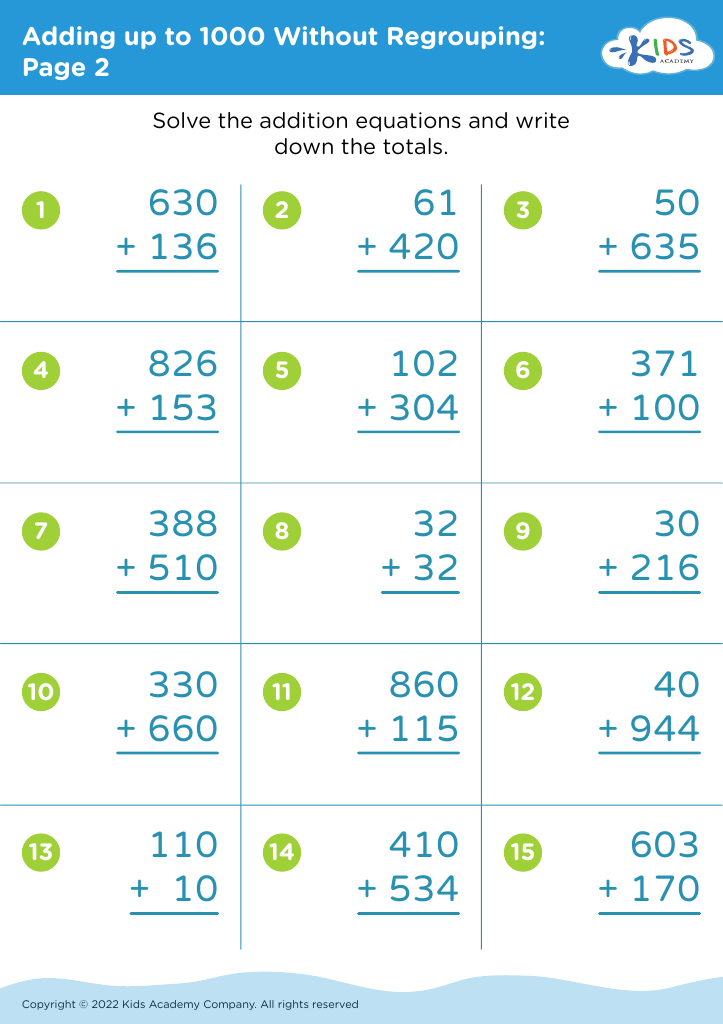
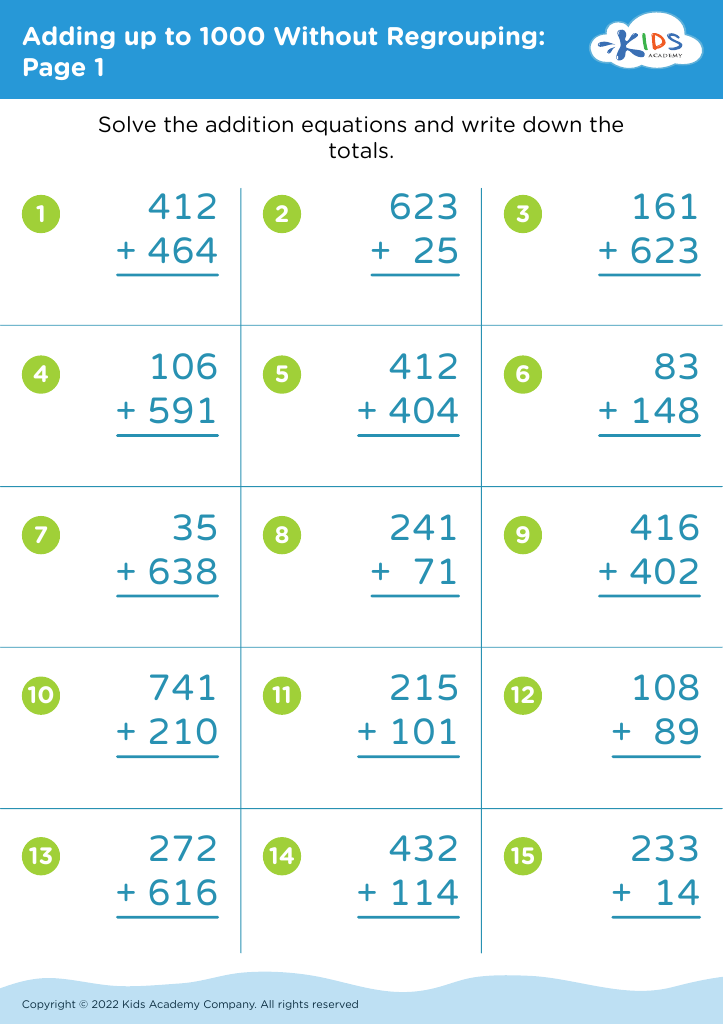
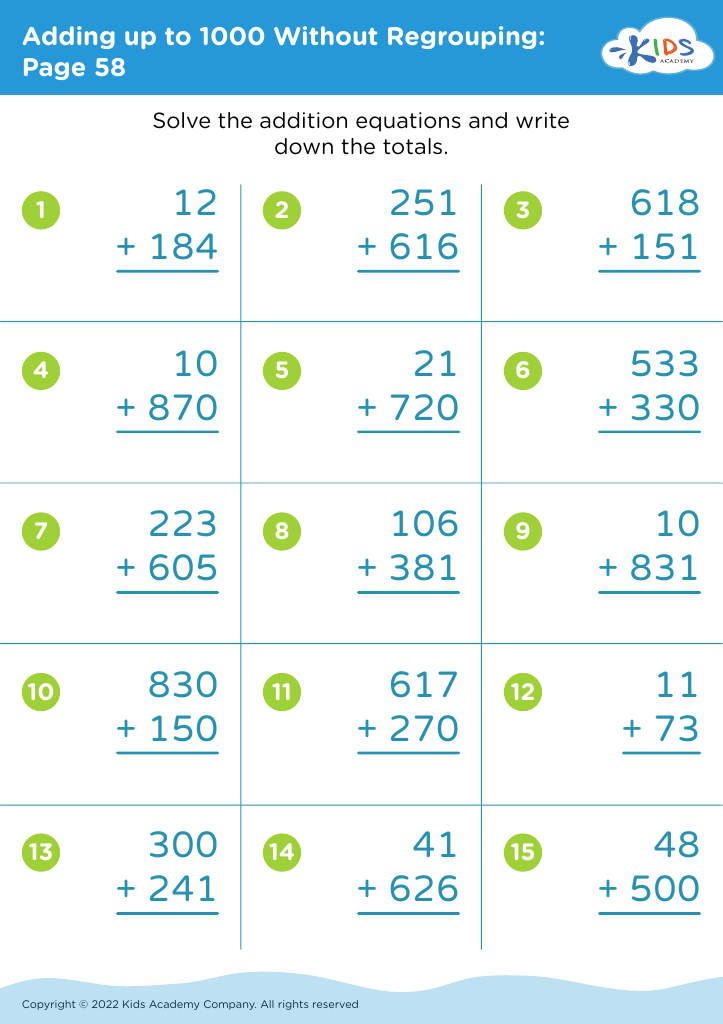
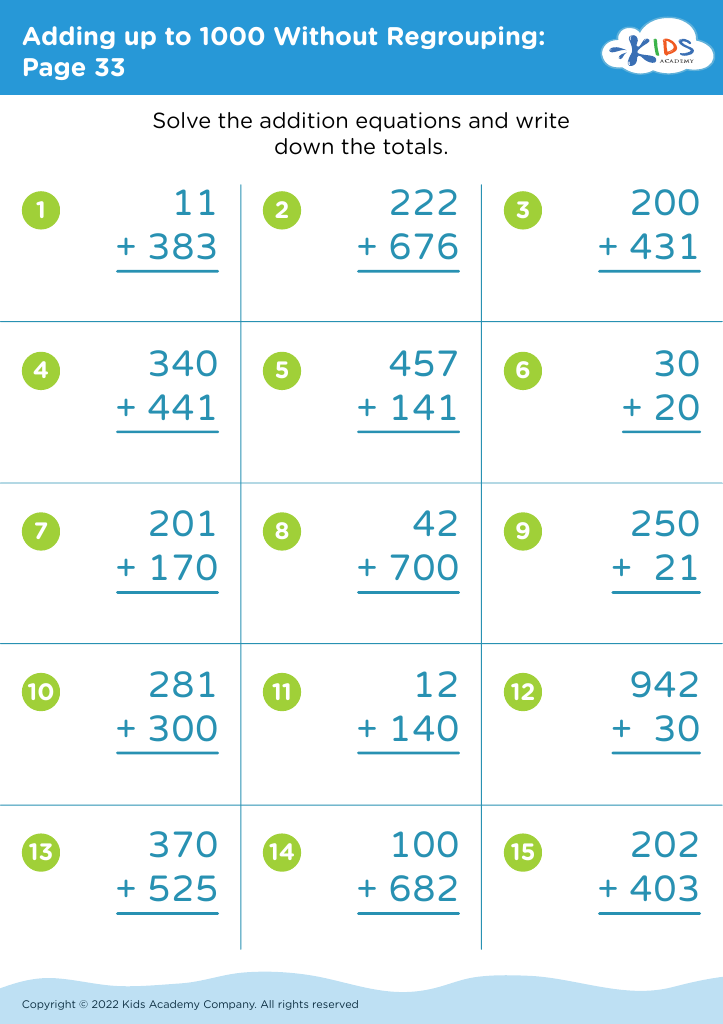


Developing counting skills and the ability to add numbers up to 1000 without regrouping are foundational math concepts that significantly benefit children in the 4-8 age group. This practice not only hones early arithmetic skills but also fosters numerical fluency and mental math capabilities. Engaging young learners in counting and addition exercises enhances their number sense, which is the intuitive understanding of numbers and their relationships.
Mastering these skills early on allows children to approach more complex mathematical concepts with confidence. It aids in the development of problem-solving skills as they learn to break down numbers and understand their sequential order. Additionally, it supports cognitive development by improving working memory, attention to detail, and the ability to follow multi-step instructions.
For parents and teachers, it is crucial to support and reinforce these skills at home and in the classroom through games, activities, and practical applications. This support helps ensure that learning is both enjoyable and effective. By investing time in foundational counting and addition without regrouping, we can provide children with a strong mathematical groundwork that will be beneficial throughout their education and everyday life. The confidence and competence gained can inspire a lifelong interest and proficiency in math.