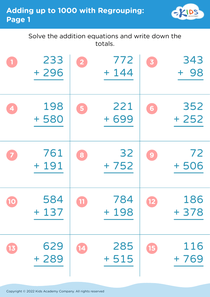
Reading comprehension Adding up to 1000 Without Regrouping Worksheets for Ages 4-8
4 filtered results
-
From - To
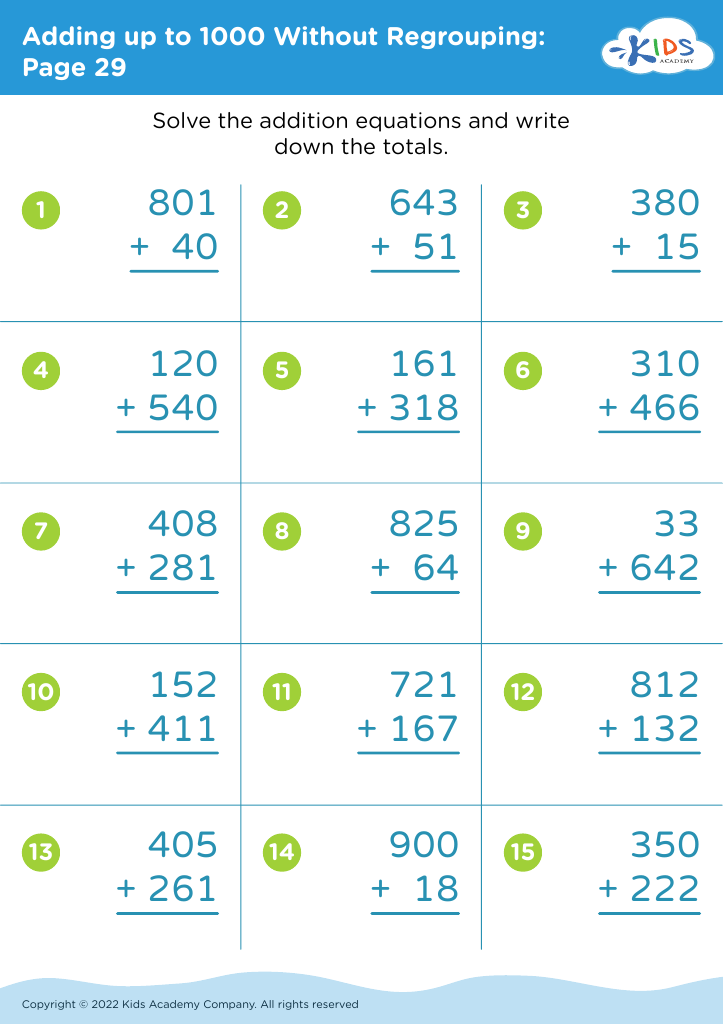
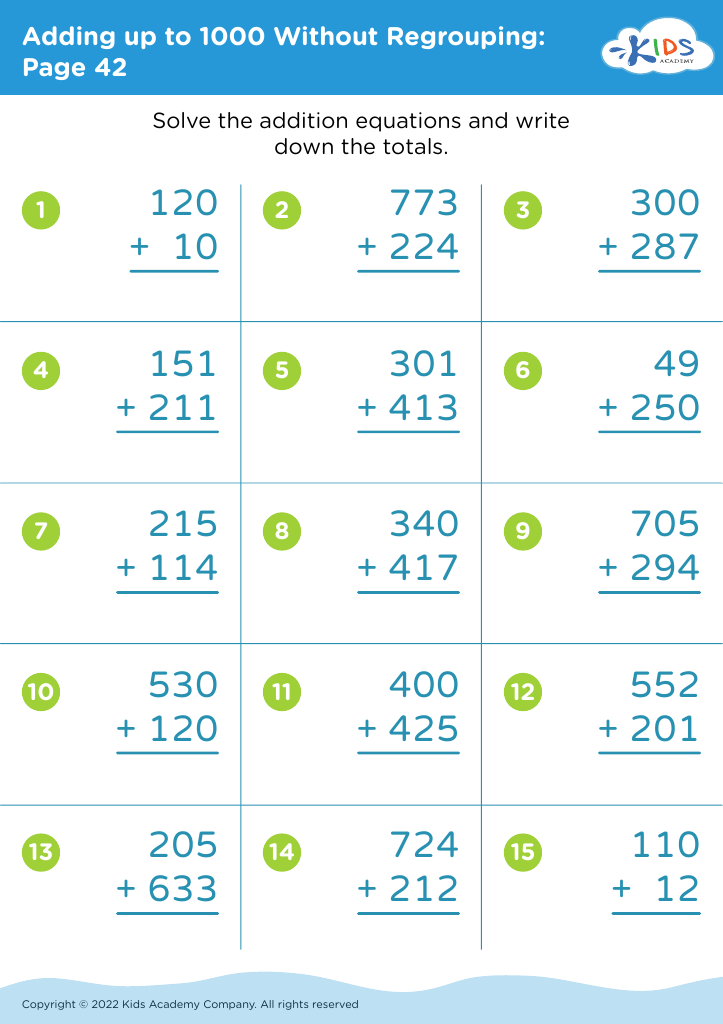
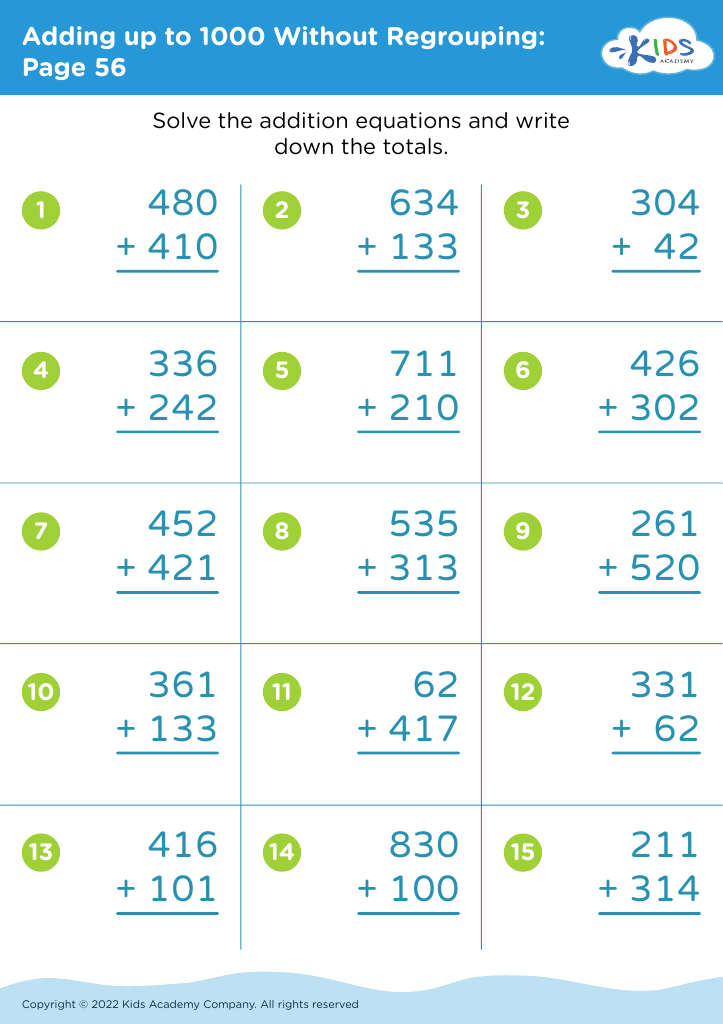
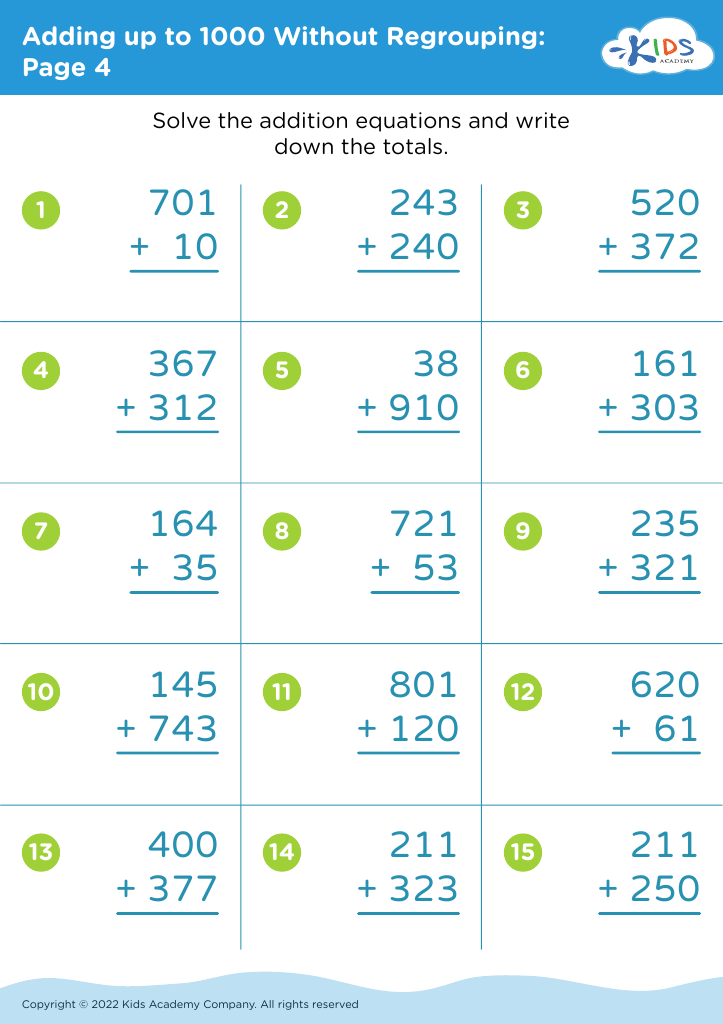
Boost your child's reading comprehension and math skills with our engaging "Adding Up to 1000 Without Regrouping" worksheets, designed specifically for ages 4-8. These printable resources provide a fun and interactive way for young learners to practice their addition skills while enhancing their understanding of mathematical concepts. Each worksheet combines vibrant illustrations and age-appropriate problems that engage learners and nurture critical thinking. Students will develop confidence in their ability to solve addition problems without regrouping, all while reinforcing crucial reading strategies. Perfect for classroom or home use, these worksheets make learning essential math skills enjoyable and accessible!


Reading comprehension and addition skills are foundational for children ages 4-8 and serve as critical building blocks for lifelong learning. Understanding what they read enhances children’s ability to think critically and engage with the world around them. When children grasp the meaning of texts, they develop vocabulary, empathy, and analytical skills, all of which are necessary for academic success. Conversely, a lack of comprehension can lead to difficulties in later schooling and hinder a child’s overall educational journey.
In parallel, mastering the concept of addition without regrouping lays the groundwork for future mathematical understanding. At this age, children are learning to recognize numbers, comprehend quantity, and analyze simple problems. These skills cultivate logical thinking and problem-solving abilities critical for more complex mathematical operations as they progress.
Teachers and parents play an instrumental role in fostering these skills by encouraging reading diverse materials and practicing math interactively. Incorporating fun activities and relatable examples can make learning enjoyable and effective. Prioritizing reading comprehension and math fluency ensures well-rounded development, equipping young learners with the confidence and capability to tackle future challenges in both literacy and numeracy domains. Ultimately, these competencies intertwine to shape a child’s overall academic achievement and personal growth.