Shape Recognition Adding up to 1000 Without Regrouping Worksheets for Ages 4-8
3 filtered results
-
From - To
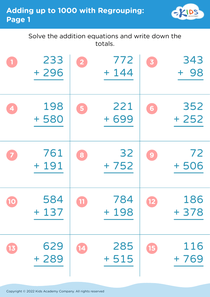
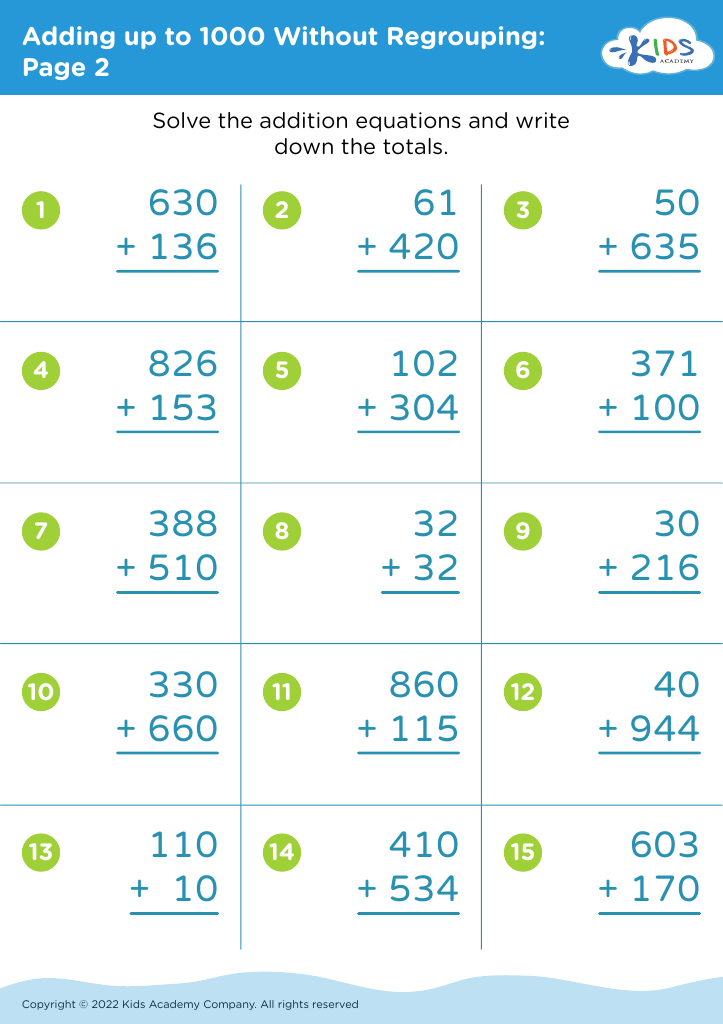
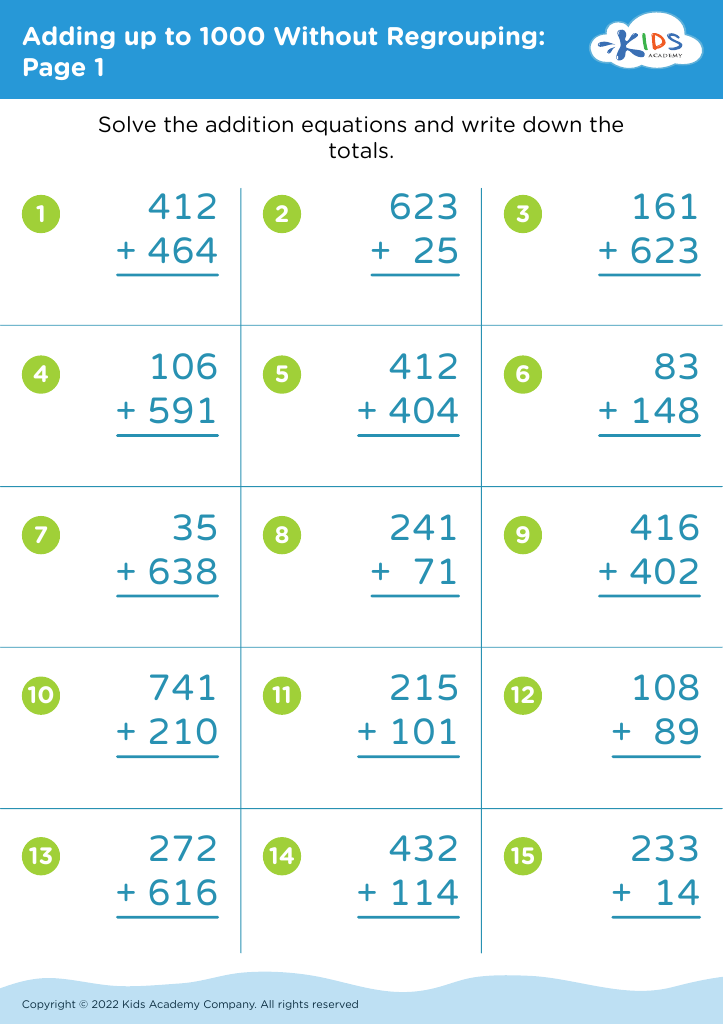
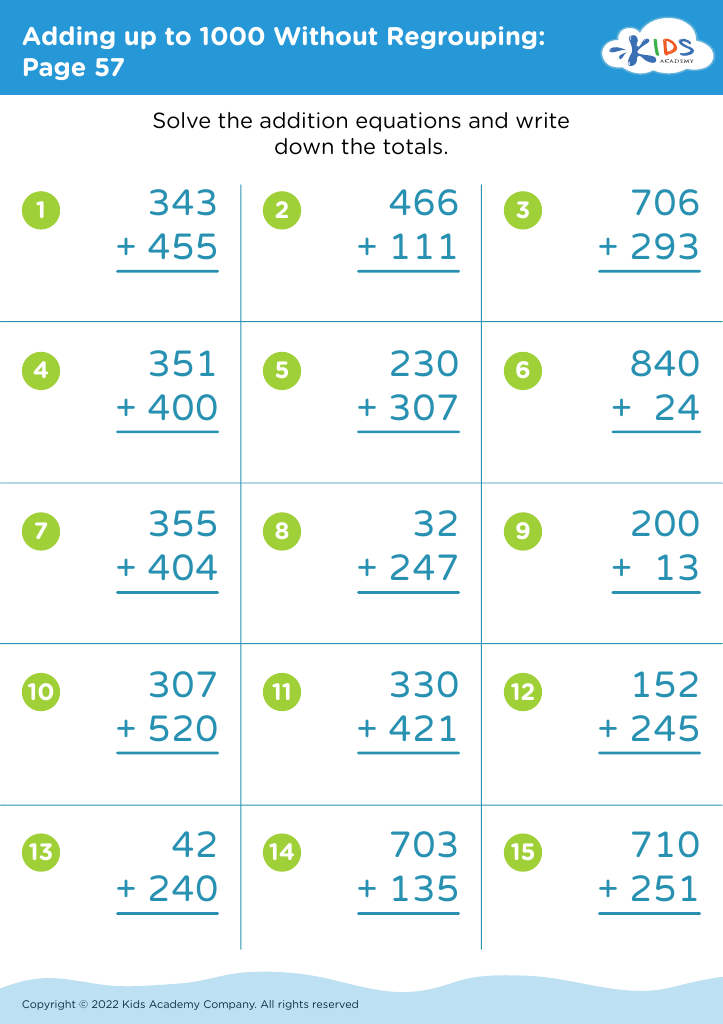
Explore our "Shape Recognition Adding up to 1000 Without Regrouping Worksheets" specially tailored for kids aged 4-8. These engaging worksheets combine fundamental math skills with vibrant shape recognition activities, making learning fun and interactive. Children will practice adding numbers up to 1000 without regrouping, enhancing their arithmetic abilities. Simultaneously, they will improve shape identification and cognitive development, ensuring a robust foundation for future mathematics. Perfect for parents and educators seeking stimulating and supportive educational resources, these worksheets provide an enjoyable pathway to mastering vital early learning skills. Download now and watch your child's confidence and proficiency grow!


Shape recognition and fundamental arithmetic are essential building blocks for cognitive development in children aged 4-8. Engaging young learners in activities that combine these skills can yield numerous benefits, fostering both mathematical understanding and spatial awareness.
Shape recognition helps children identify and distinguish between different geometric forms, fostering their ability to visualize and mentally manipulate objects. These skills are crucial for understanding more complex mathematical and scientific concepts later on. Meanwhile, learning to add up to 1000 without regrouping, although a deep challenge for this age group, reinforces the foundational principles of mathematics, such as number sense and place value. This practice encourages children to become familiar with composing and decomposing numbers, enhancing their problem-solving skills and arithmetic fluency.
When these two areas are integrated, children not only learn to recognize and describe shapes but also apply mathematical operations within a meaningful context. This dual focus can also lead to a greater engagement and enjoyment in learning, as children can see the relevance and application of what they are studying. Supporting the development of these skills will equip children with critical thinking and reasoning abilities, laying a strong foundation for more advanced education. Therefore, parents and teachers should actively seek to foster shape recognition and basic addition without regrouping in early education settings.