Understanding division Adding up to 1000 Without Regrouping Worksheets for Ages 4-8
3 filtered results
-
From - To
Welcome to our "Understanding Division: Adding Up to 1000 Without Regrouping" worksheets designed specifically for children ages 4-8. These engaging and interactive resources introduce young learners to the essential concept of division by using simple, hands-on activities. Our thoughtfully crafted worksheets help reinforce division skills while maintaining a fun and enjoyable learning experience. Children will explore how to break down numbers into equal parts and relate division to addition. Perfect for at-home or classroom use, these worksheets foster critical thinking and promote mathematical confidence. Dive into the world of division with our colorful and easy-to-navigate resources tailored for early learners!
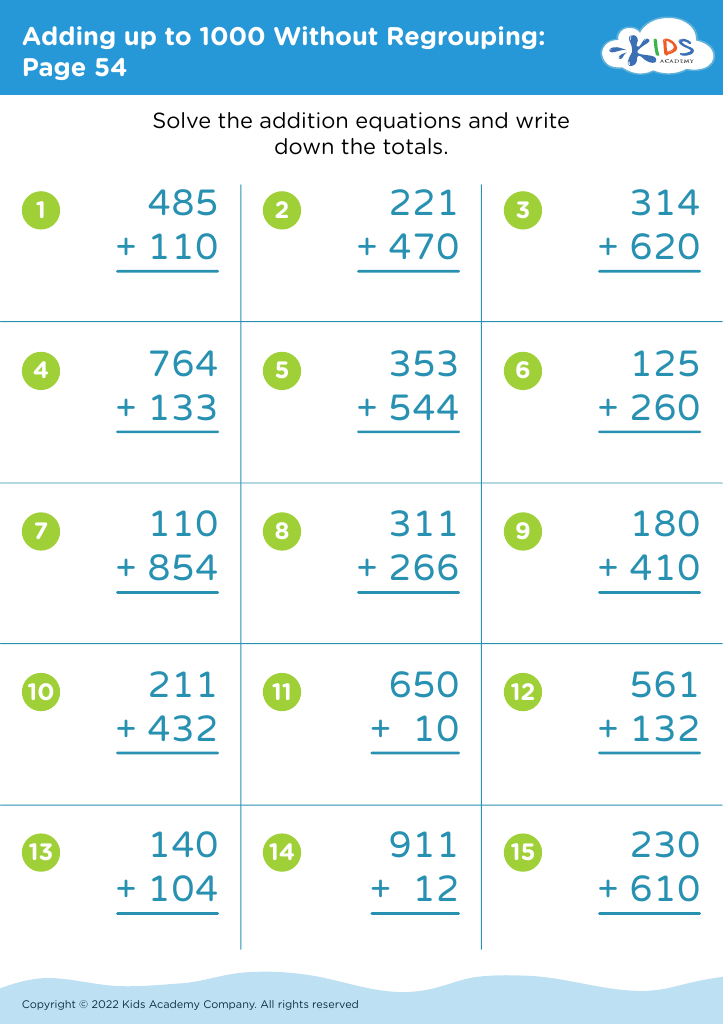
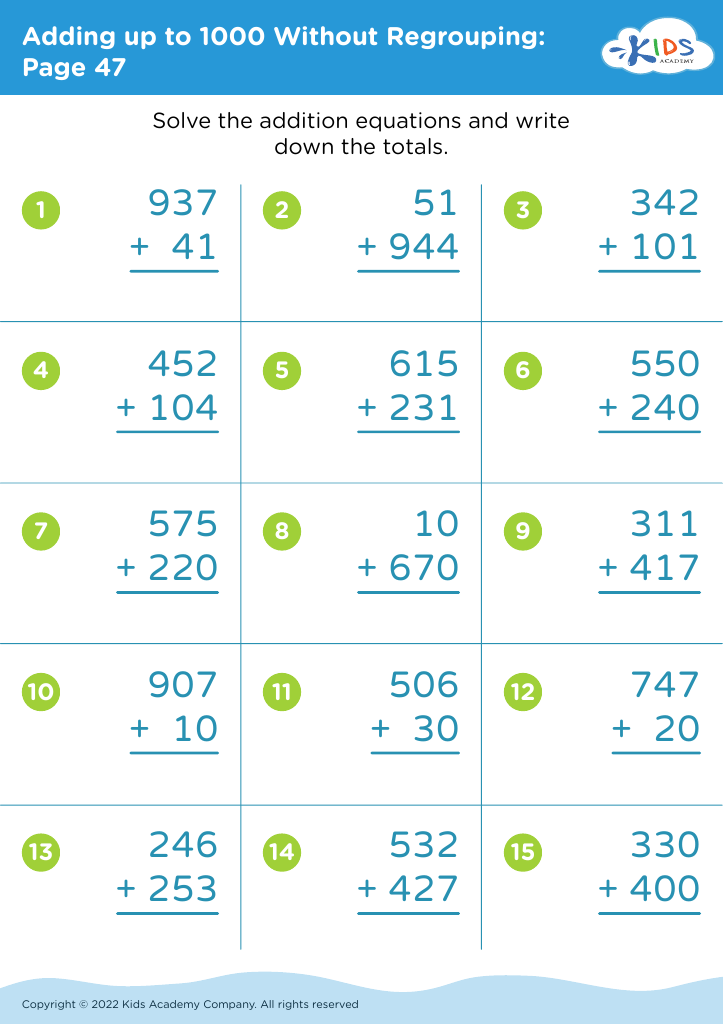
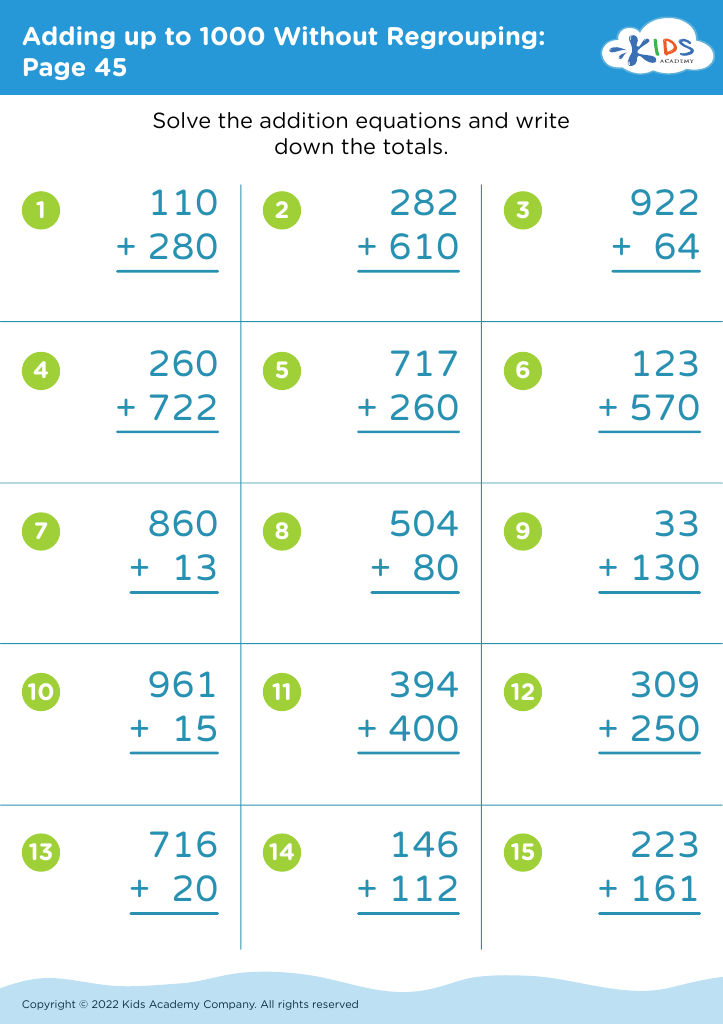


Understanding division and adding up to 1000 without regrouping is crucial for young learners aged 4-8 as it lays the foundation for their mathematical skills. At this developmental stage, children are eager to grasp concepts that extend beyond basic counting. Division introduces them to the idea of sharing and grouping, encouraging problem-solving skills and critical thinking. It helps children understand how numbers relate to each other, which is vital for cognitive development.
Adding up to 1000 without regrouping reinforces their addition skills, boosts their confidence, and fosters number sense. When children can easily add larger numbers without the complexity of regrouping, they build a solid mathematical base, which becomes essential as they encounter more advanced mathematical operations in later grades.
Moreover, proficiency in these areas enables children to tackle real-world problems, enhances their logical reasoning, and supports their ability to work collaboratively. Supporting early learners in mastering these fundamental skills benefits their overall academic performance and instills a positive attitude towards mathematics. Parents and teachers play a significant role in nurturing these skills through engaging activities and positive reinforcement, ultimately paving the way for a lifetime of mathematical understanding and success.