Addition skills Adding up to 1000 Worksheets for Ages 4-8
5 filtered results
-
From - To
Enhance your child’s math proficiency with our engaging Addition Skills Worksheets, designed for ages 4-8! These fun and interactive resources focus on practicing addition skills up to 1000, ensuring a solid foundation in arithmetic. Tailored for young learners, our worksheets employ colorful graphics and age-appropriate challenges to inspire a love for math while building confidence. Each printable is crafted to cater to different learning styles, making it easy for children to grasp and master addition concepts. Perfect for homeschoolers and classroom activities, these worksheets offer an enjoyable way to enrich your child’s math journey. Start their adventure in learning today!
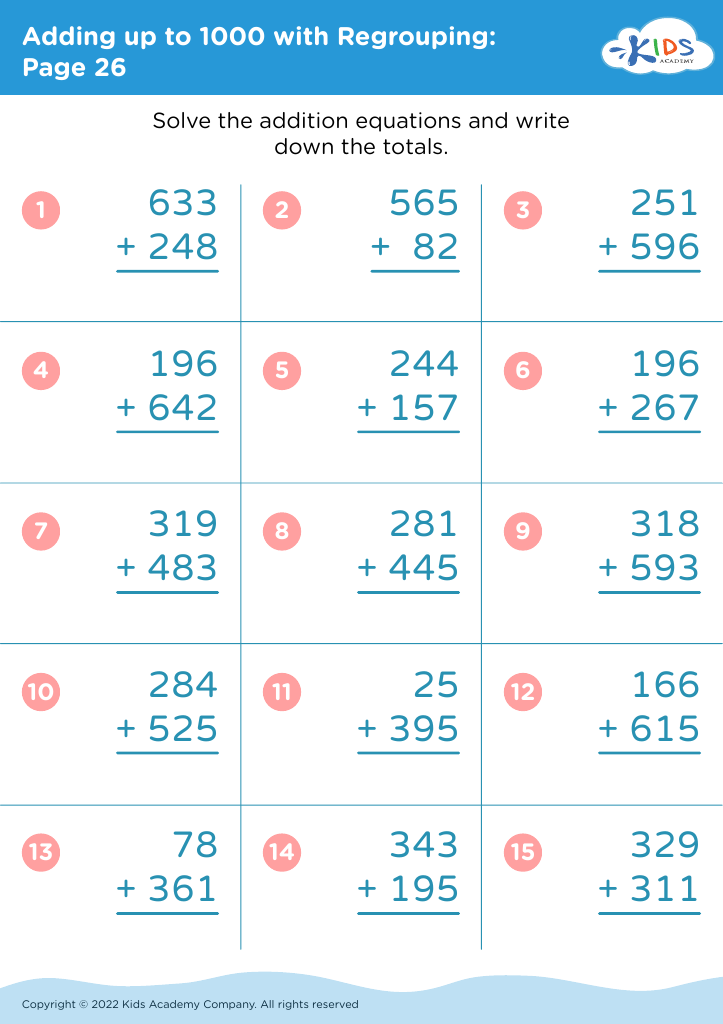
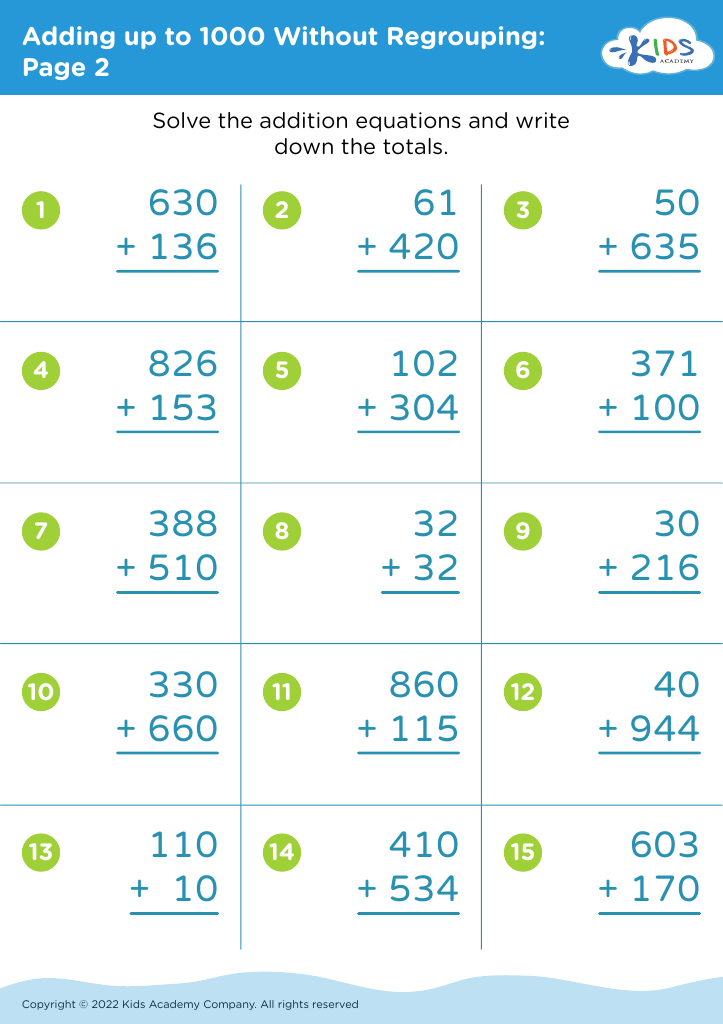
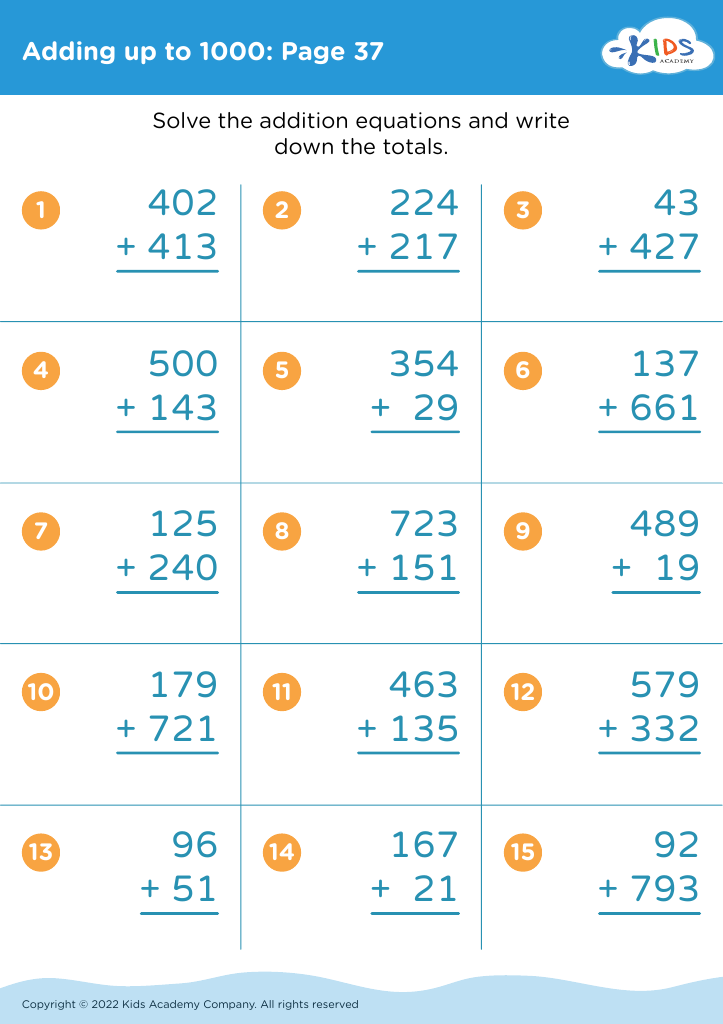
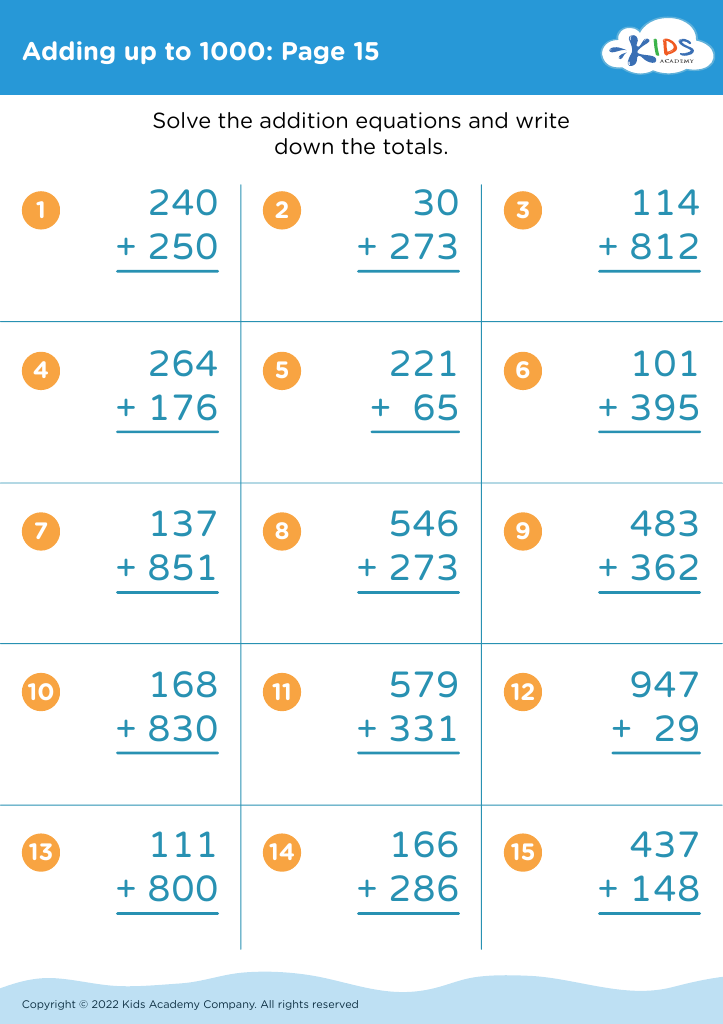
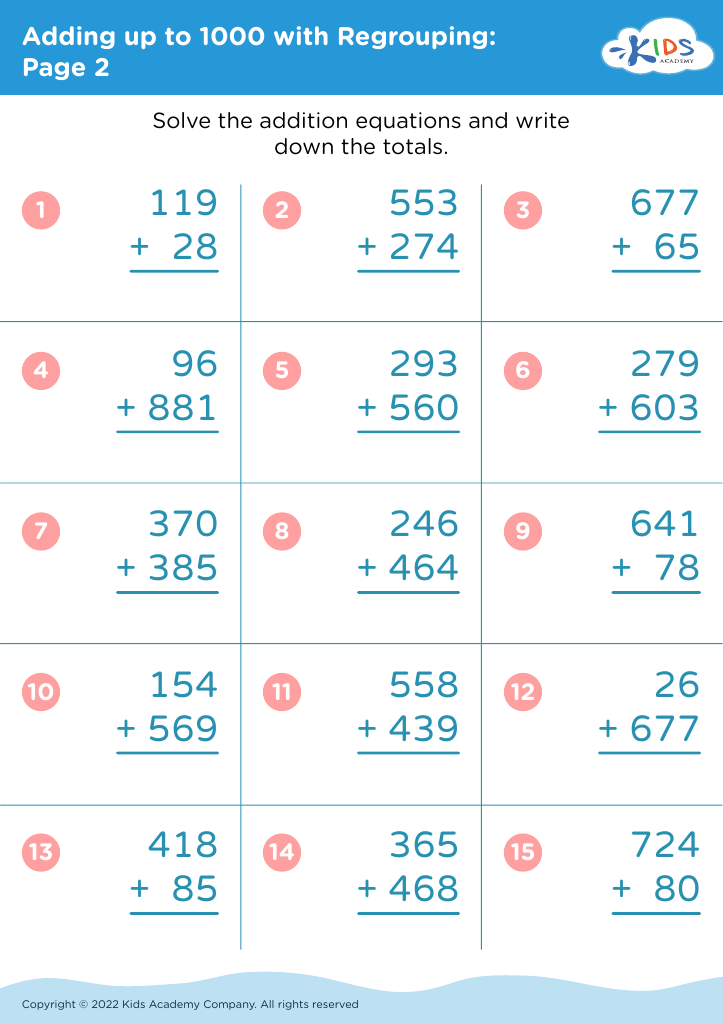



Addition skills, particularly adding up to 1000, are fundamental for children aged 4-8 as they form the building blocks for more advanced mathematical concepts. At this developmental stage, children are still cultivating their number sense, critical thinking, and problem-solving abilities. Mastering addition to 1000 helps children understand arithmetic relationships, enabling them to manipulate numbers with confidence.
Teachers and parents should care about these skills because early mathematical competency is closely linked to later academic achievement. Proficient addition skills encourage logical reasoning, improve cognitive development, and foster a sense of accomplishment. Additionally, learning to add larger numbers helps children grasp concepts such as place value, which serves as a foundation for multiplication and subtraction.
Moreover, these skills extend beyond academia; they prepare children for real-world situations, like managing money, measuring ingredients in cooking, or tallying scores in games. In a world increasingly driven by quantitative reasoning, being adept at addition is vital. By prioritizing addition skills from an early age, teachers and parents can enhance a child’s confidence and eagerness to learn, ultimately helping them thrive in academics and everyday life. Encouraging practice with addition also cultivates positive attitudes toward math, making it a more enjoyable subject overall.








