Filters

16 filtered results

Clear all filters
Favorites
With answer key
Interactive

16 filtered results

Difficulty Level

Grade


Introducing our vibrant and engaging "Comparing Fractions Adding up to 1000 Worksheets" designed specifically for ages 4-8! These captivating worksheets help young learners grasp fundamental math concepts by comparing fractions in a fun and interactive way. With colorful visuals and friendly characters, kids are encouraged to develop critical thinking and problem-solving skills as they explore fractions' various aspects. Perfect for practice at home or in the classroom, these worksheets make learning enjoyable and effective. Start your child's math journey today and watch them build a strong foundation in fractions while having fun! Visit our page to download your free copy.
Check out this FREE Trial Lesson on Adding up to 1000 for age 4-8!

H

Favorites
With answer key
Interactive
  • 4-8
  • Comparing Fractions
  • Adding up to 1000
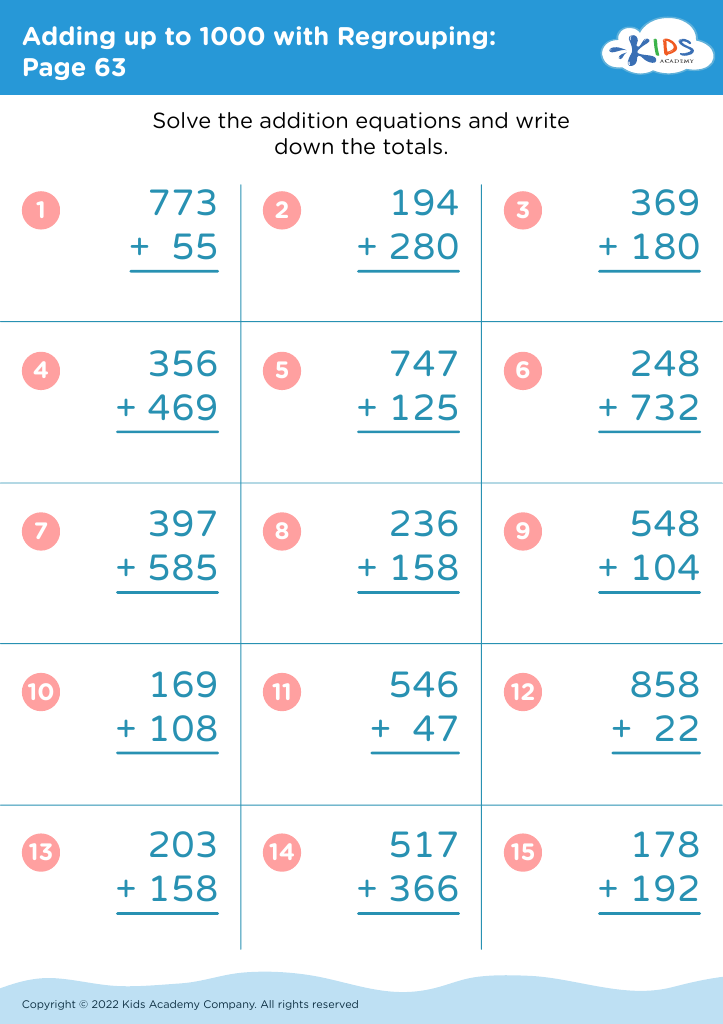
Adding up to 1000 with Regrouping: Page 63
Worksheet
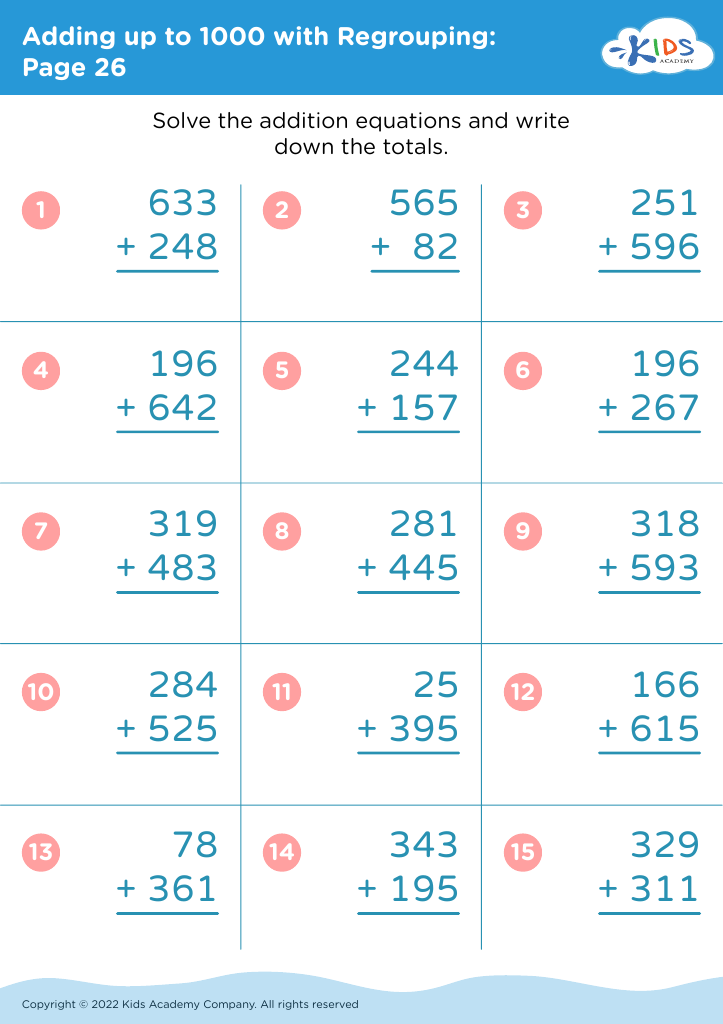
Adding up to 1000 with Regrouping: Page 26
Worksheet
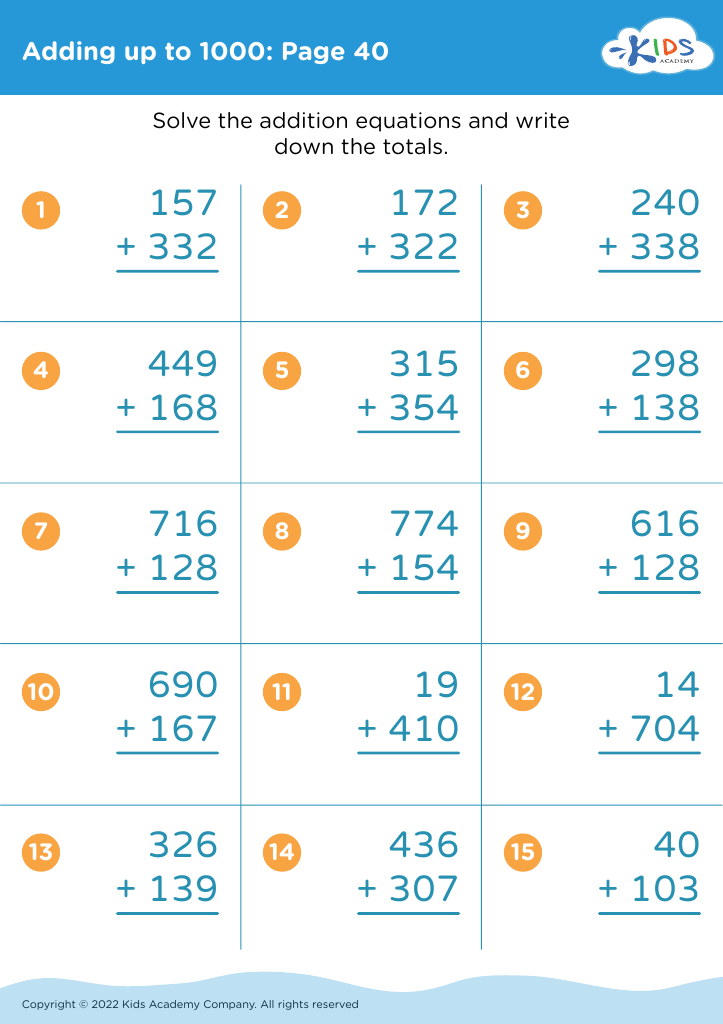
Adding up to 1000: Page 40

Adding up to 1000: Page 40

Adding up to 1000: Page 40
Worksheet
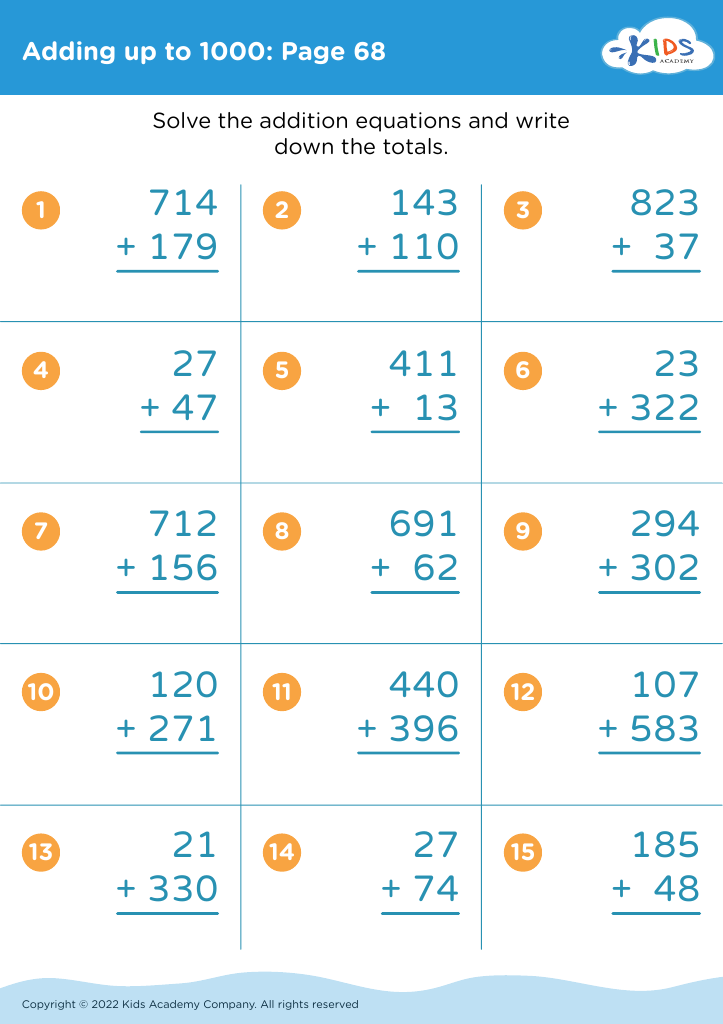
Adding up to 1000: Page 68

Adding up to 1000: Page 68

Adding up to 1000: Page 68
Worksheet
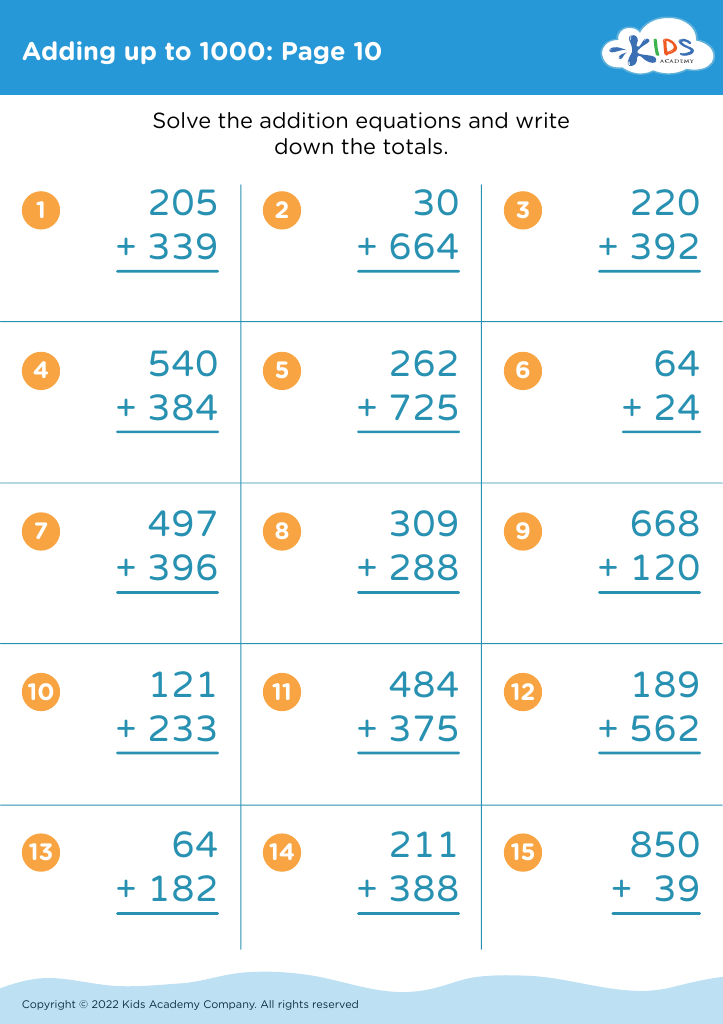
Adding up to 1000: Page 10

Adding up to 1000: Page 10

Adding up to 1000: Page 10
Worksheet
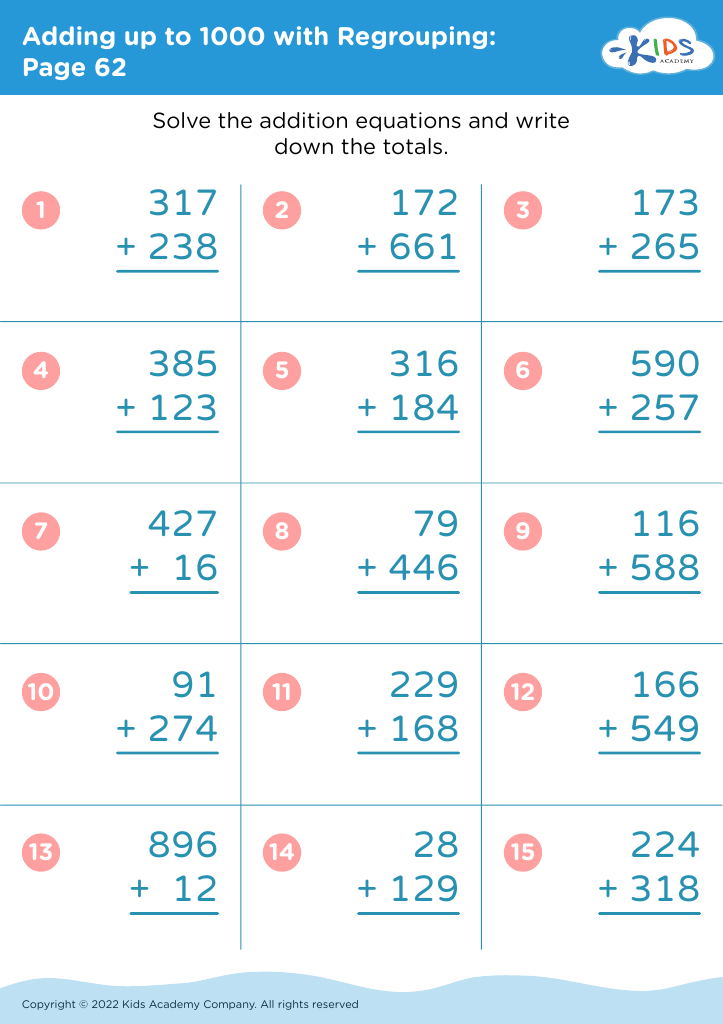
Adding up to 1000 with Regrouping: Page 62
Worksheet
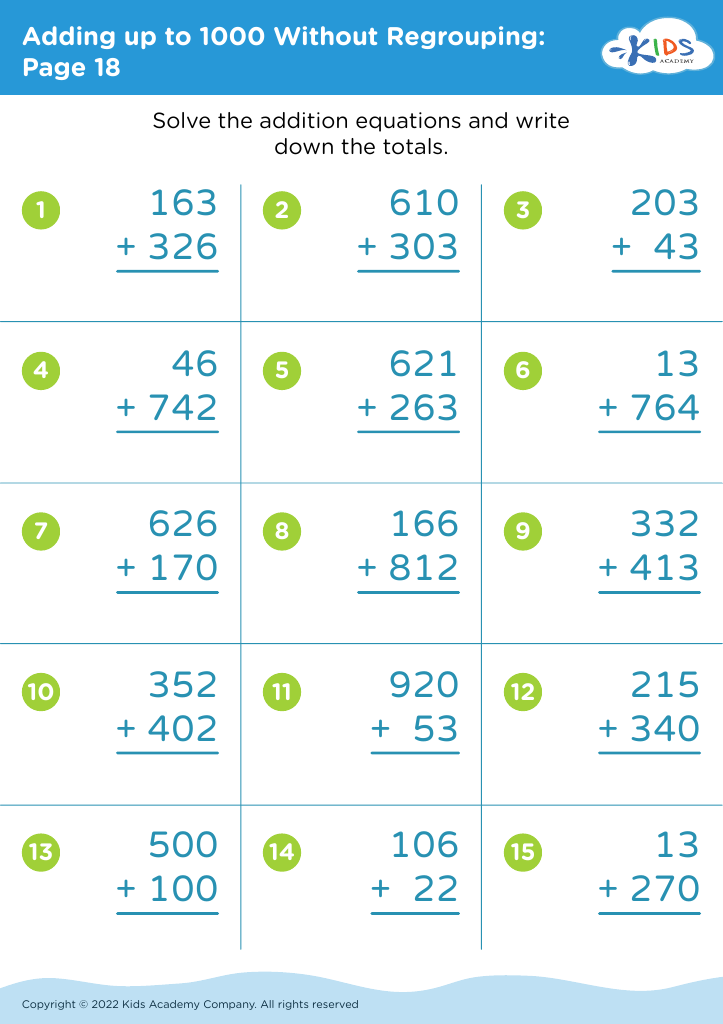
Adding up to 1000 Without Regrouping: Page 18
Worksheet
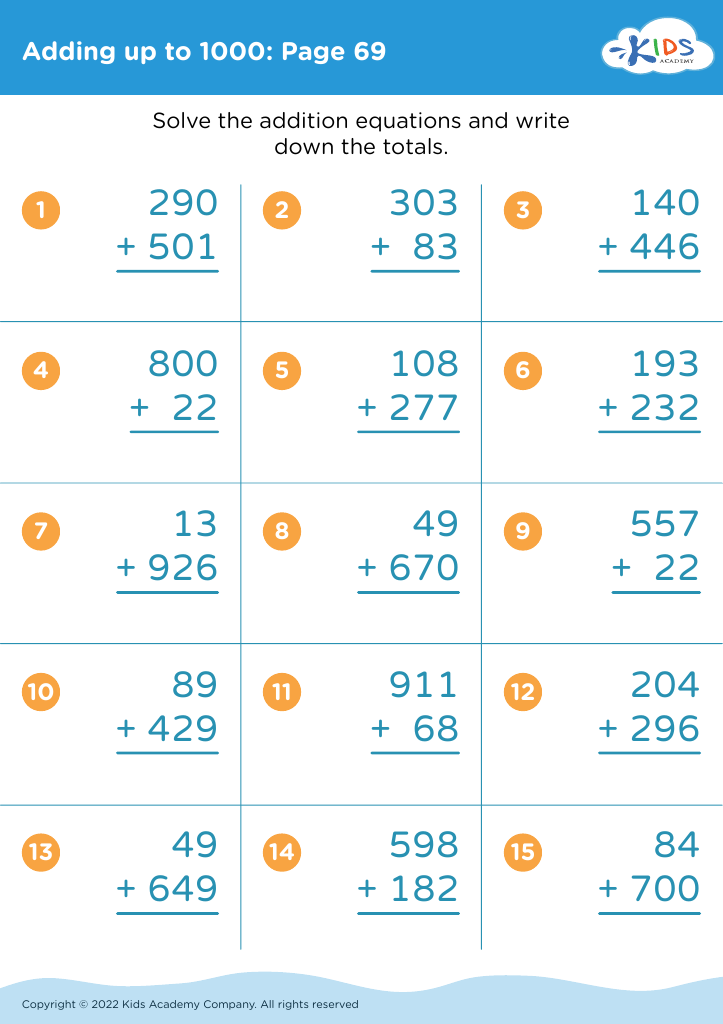
Adding up to 1000: Page 69

Adding up to 1000: Page 69

Adding up to 1000: Page 69
Worksheet
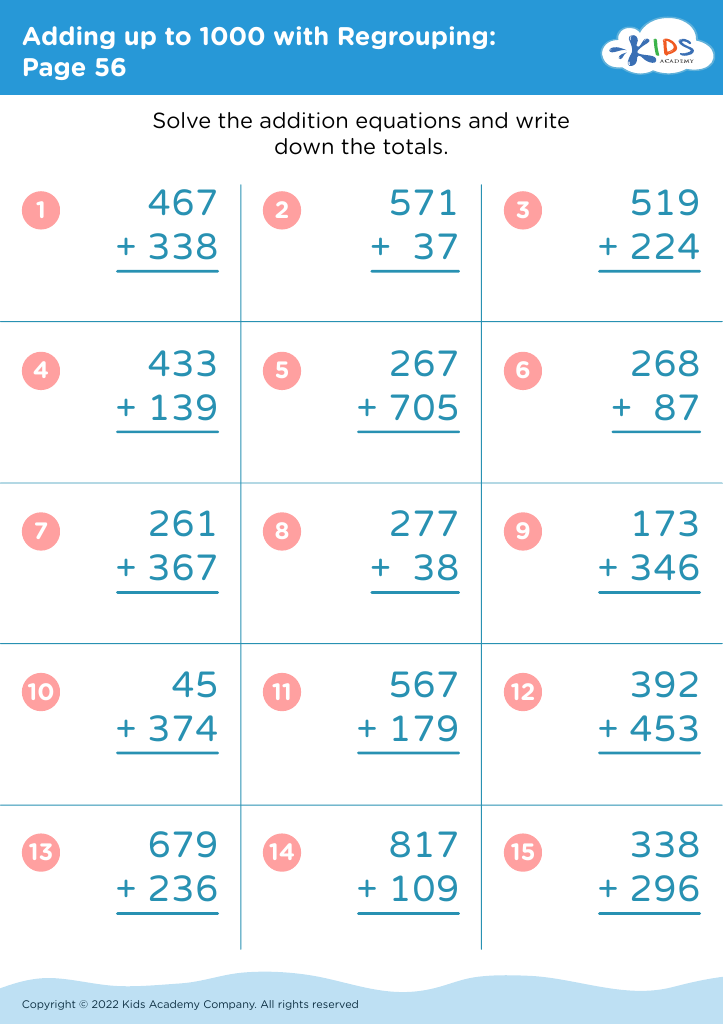
Adding up to 1000 with Regrouping: Page 56
Worksheet
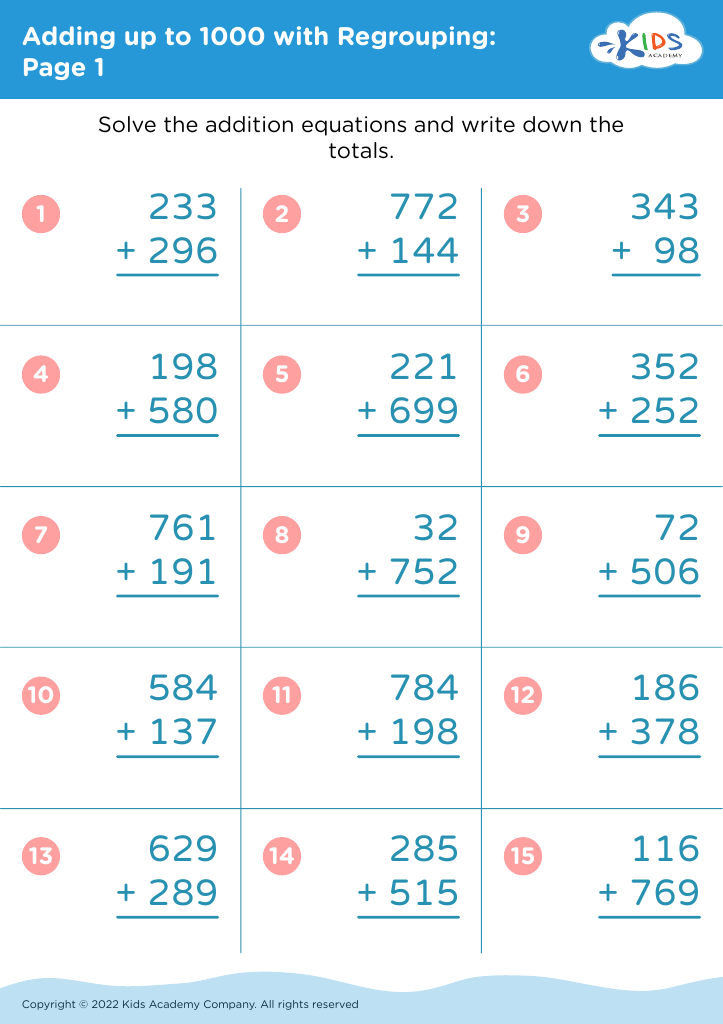
Adding up to 1000 with Regrouping: Page 1
Worksheet
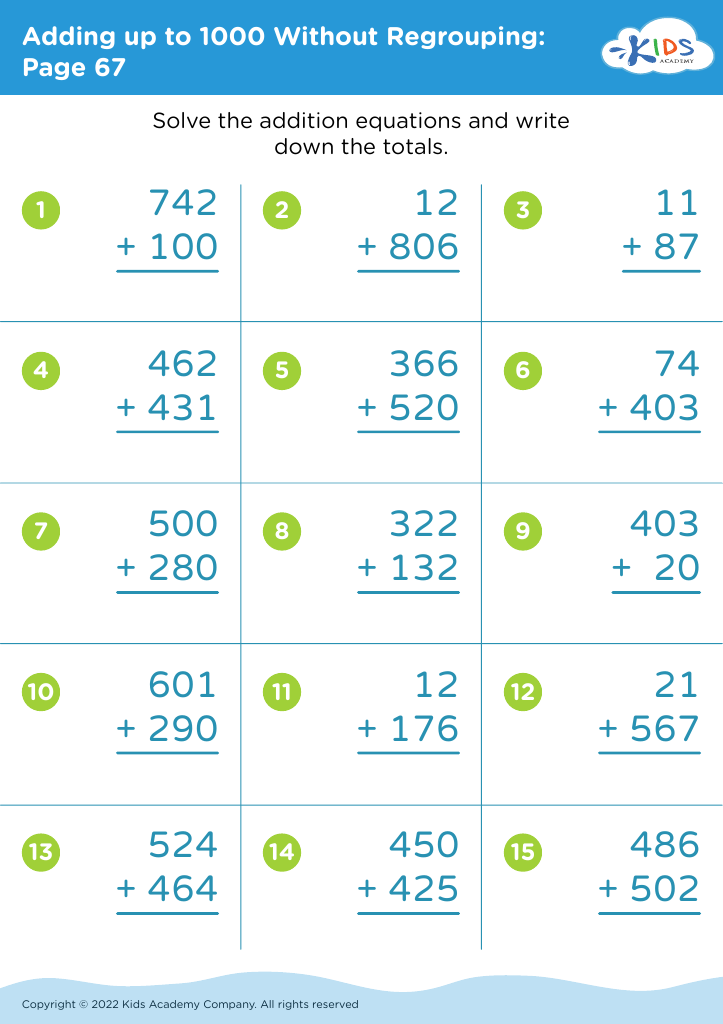
Adding up to 1000 Without Regrouping: Page 67
Worksheet
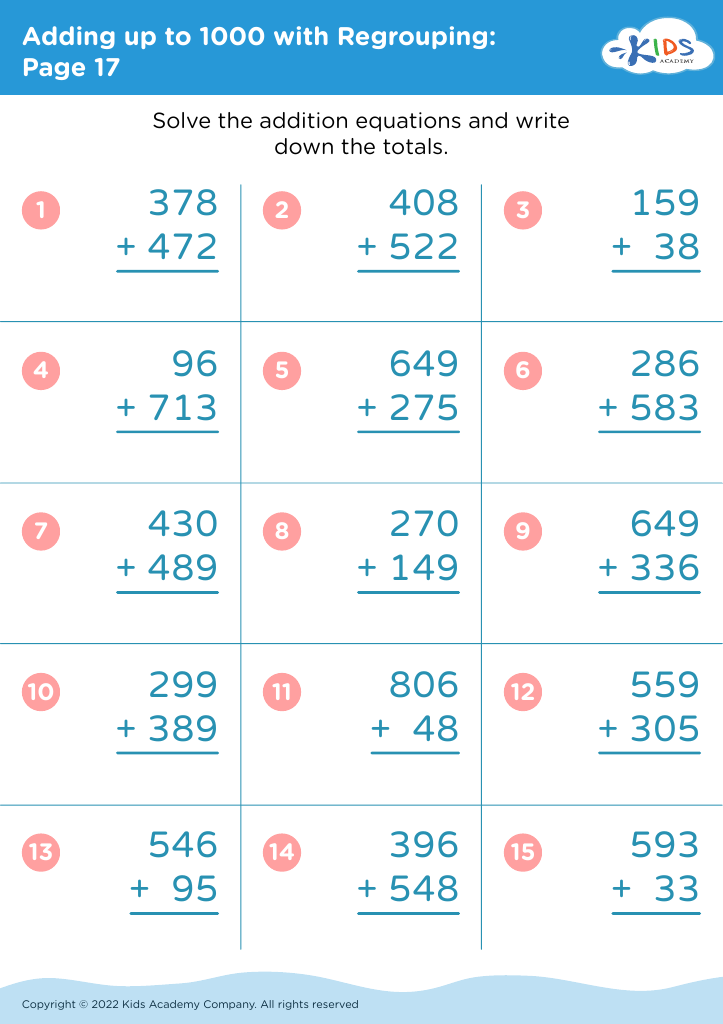
Adding up to 1000 with Regrouping: Page 17
Worksheet
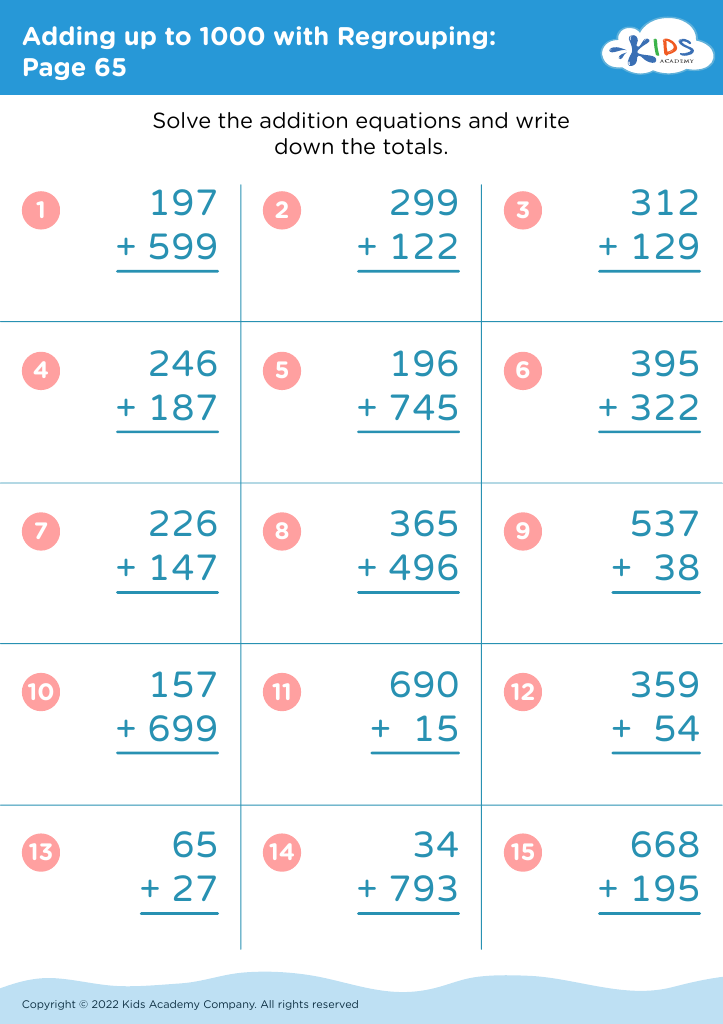
Adding up to 1000 with Regrouping: Page 65
Worksheet
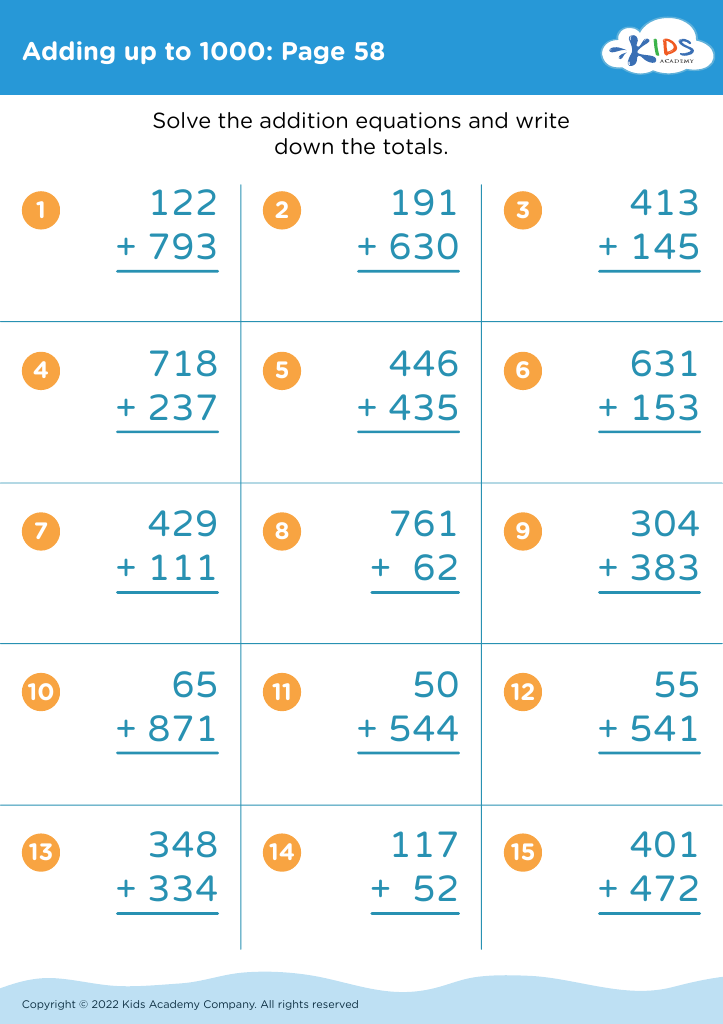
Adding up to 1000: Page 58

Adding up to 1000: Page 58

Adding up to 1000: Page 58
Worksheet
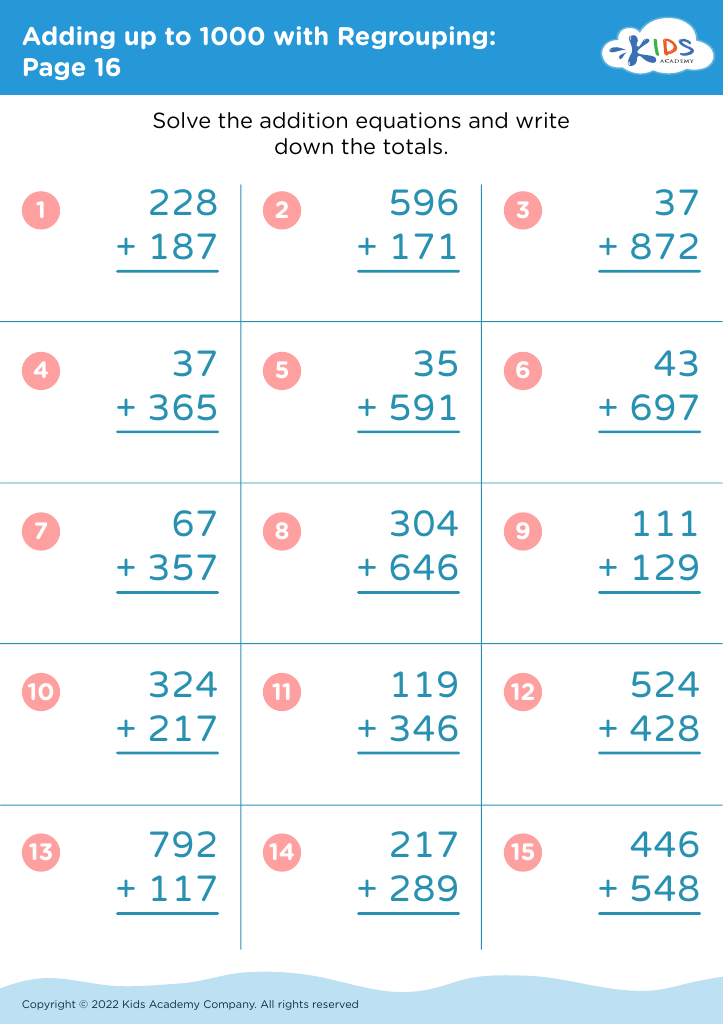
Adding up to 1000 with Regrouping: Page 16
Worksheet
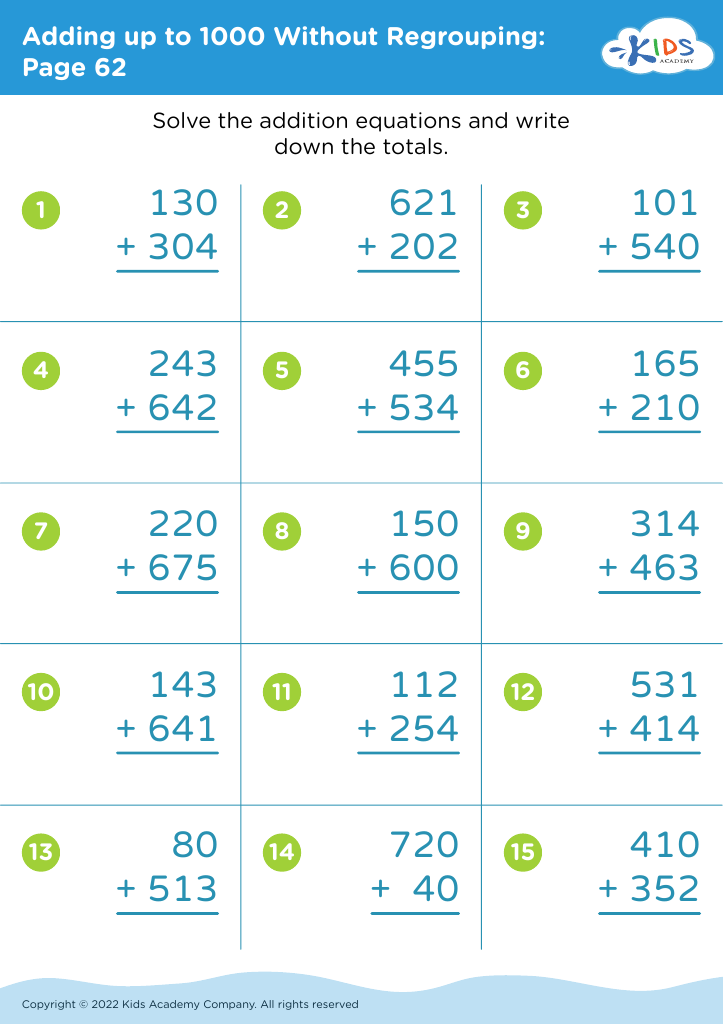
Adding up to 1000 Without Regrouping: Page 62
Worksheet


Introducing children aged 4-8 to the concept of fractions and ensuring they grasp the idea is vital, though technical fraction problems like "Comparing Fractions Adding up to 1000" might be complex for this age group. Nonetheless, parents and teachers should care about laying a strong mathematical foundation early on.

Learning to understand fractions at a young age enhances a child's number sense, providing essential skills necessary for everyday tasks such as measuring ingredients or dividing snacks fairly. This foundational knowledge in fractions builds the platform for more complex mathematical problem-solving and critical thinking skills required throughout their education.

Educational activities involving fractions should start with playful and engaging methods. Simple comparisons and hands-on activities with everyday objects—instead of abstract numbers like 1000—can make fractions relatable and understandable. Using visual aids and concrete manipulatives, like pie charts or fraction bars, can demystify fractions, making abstract concepts tactile and simplified.

Lastly, nurturing a positive attitude towards more complex future mathematical problems through these early introductions will foster confidence, paving the way for continued growth. Caring about these foundational skills ensures children develop into adept problem solvers, better equipped to tackle more advanced math, including higher-level fractions leading up to abstract mathematical values.