Filters

19 filtered results

Clear all filters
Favorites
With answer key
Interactive

19 filtered results

Difficulty Level

Grade


Boost your child's math skills with our engaging "Counting Practice: Adding Up to 1000" worksheets, designed specifically for ages 4-8. These worksheets provide a fun and interactive way for young learners to develop their counting abilities and understand the concept of addition. Each activity encourages practice in a variety of formats, keeping children motivated while building confidence in their math capabilities. With colorful illustrations and age-appropriate challenges, these worksheets make learning counting enjoyable and effective. Download now to give your child a head start in their mathematical journey and watch them thrive as they add up to 1000 with ease!
Check out this FREE Trial Lesson on Adding up to 1000 for age 4-8!

Match Objects that Fit Together

Favorites
With answer key
Interactive
  • 4-8
  • Counting practice
  • Adding up to 1000
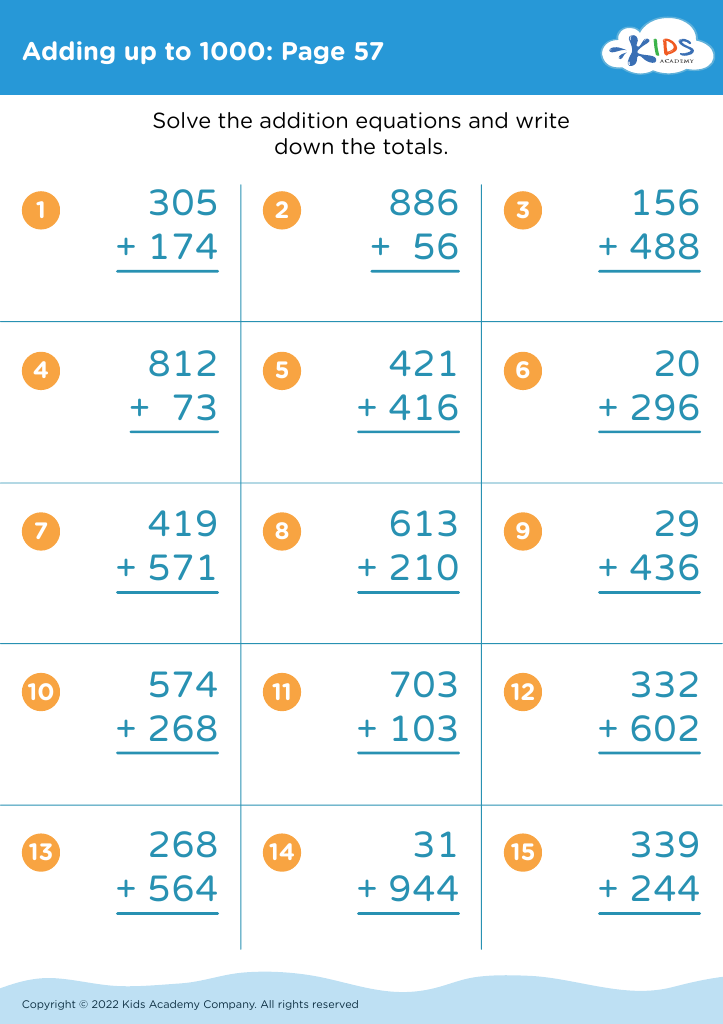
Adding up to 1000: Page 57

Adding up to 1000: Page 57

Adding up to 1000: Page 57
Worksheet
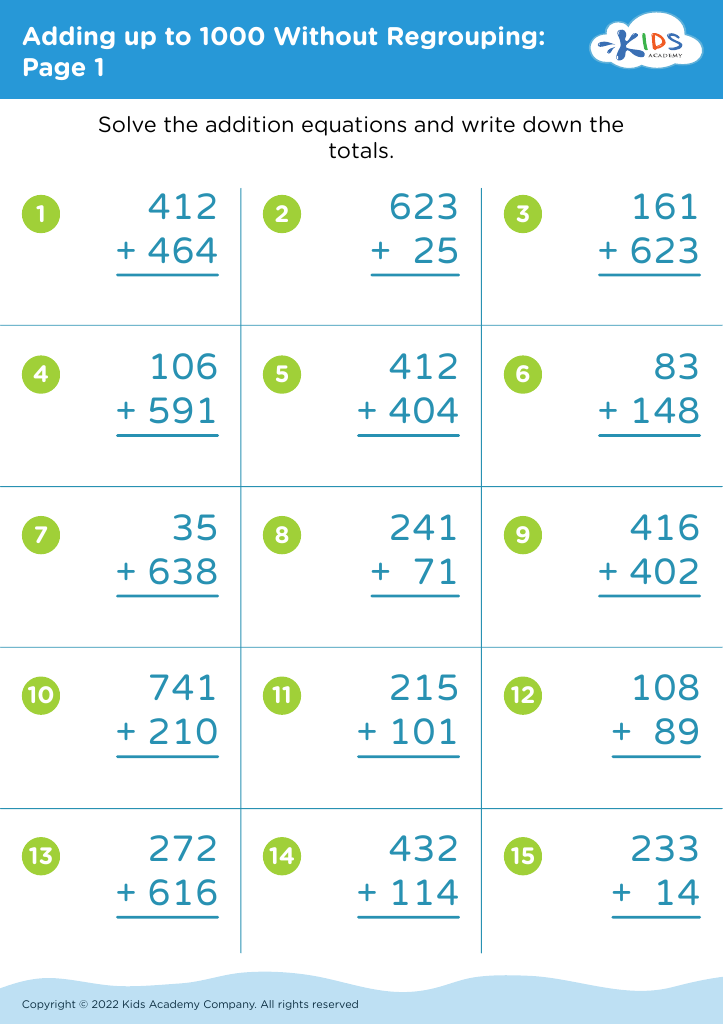
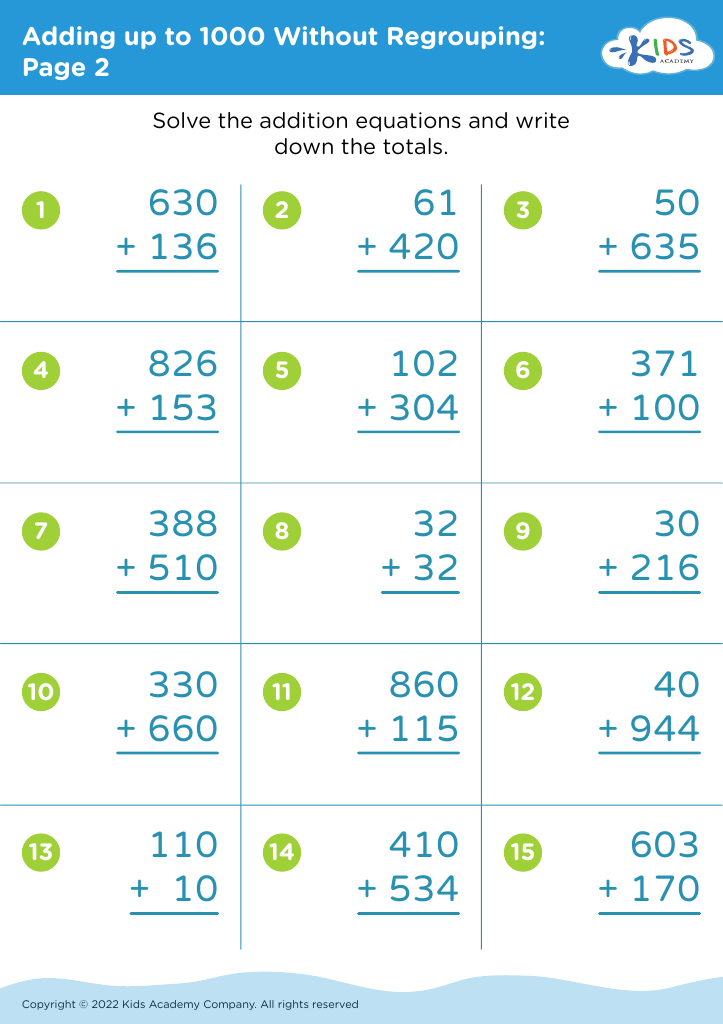
Adding up to 1000 Without Regrouping: Page 2
Worksheet
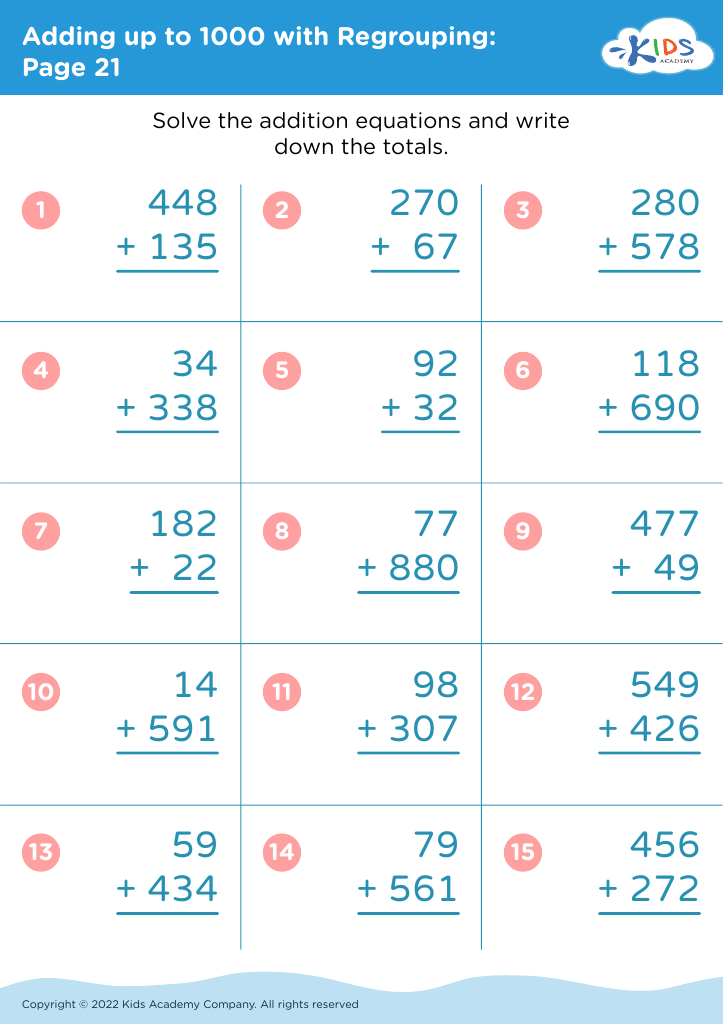
Adding up to 1000 with Regrouping: Page 21
Worksheet
Adding up to 1000 Without Regrouping: Page 1
Worksheet
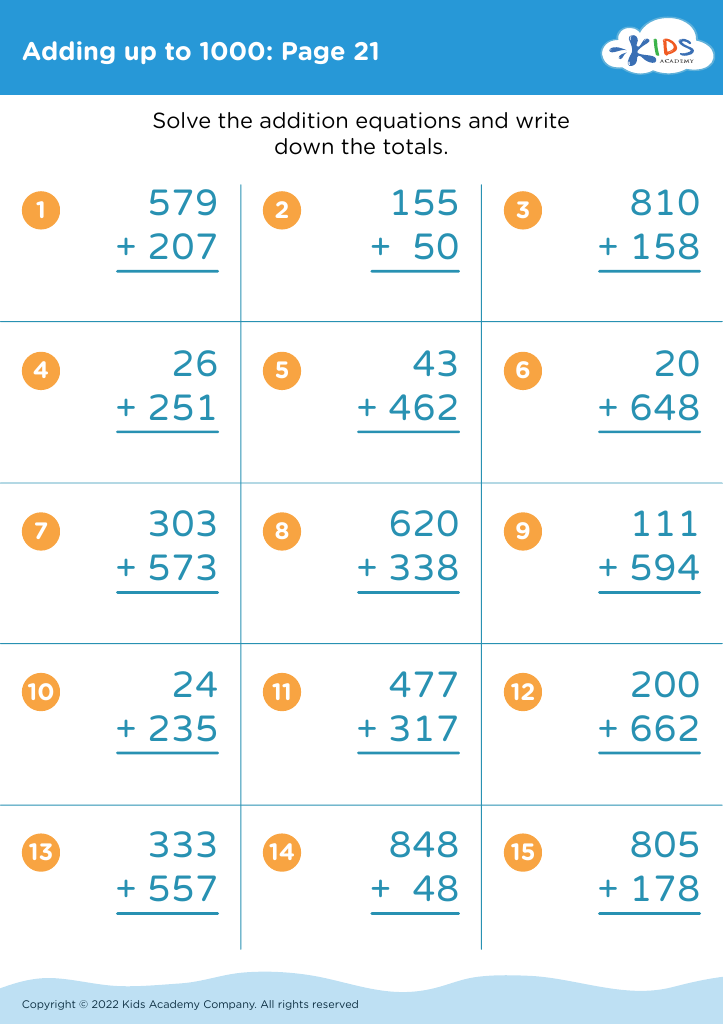
Adding up to 1000: Page 21

Adding up to 1000: Page 21

Adding up to 1000: Page 21
Worksheet
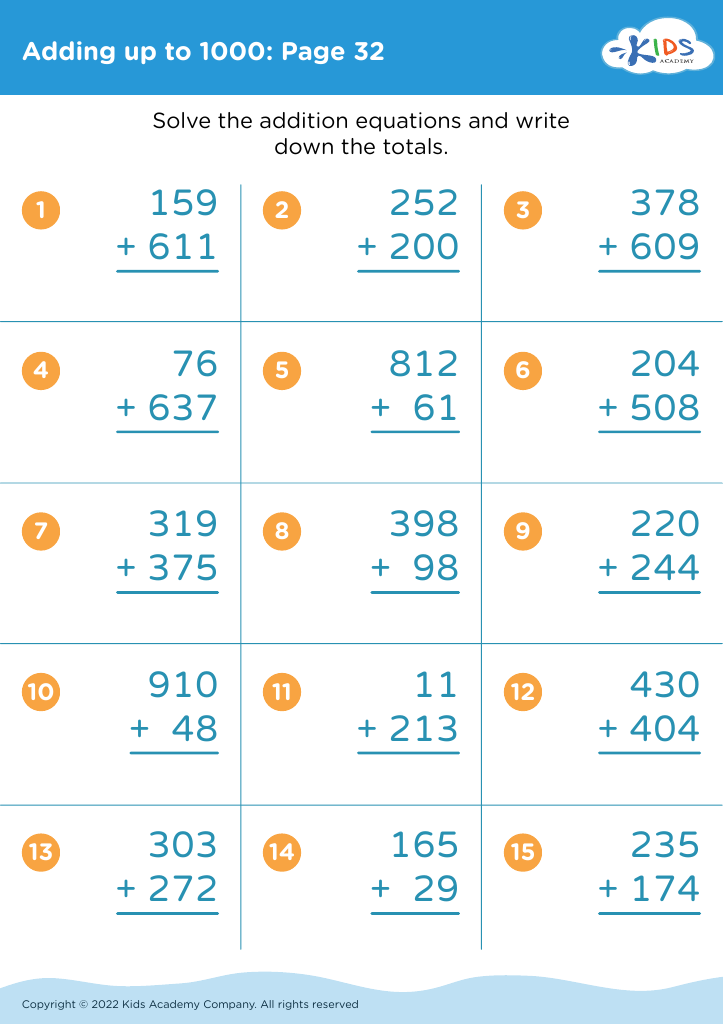
Adding up to 1000: Page 32

Adding up to 1000: Page 32

Adding up to 1000: Page 32
Worksheet
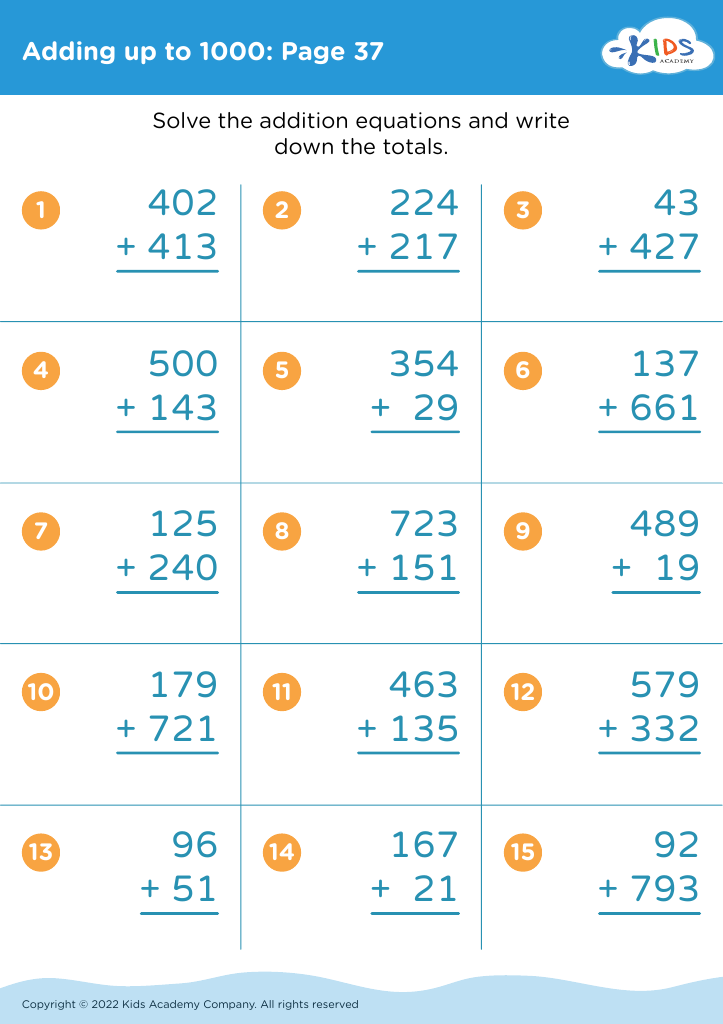
Adding up to 1000: Page 37

Adding up to 1000: Page 37

Adding up to 1000: Page 37
Worksheet
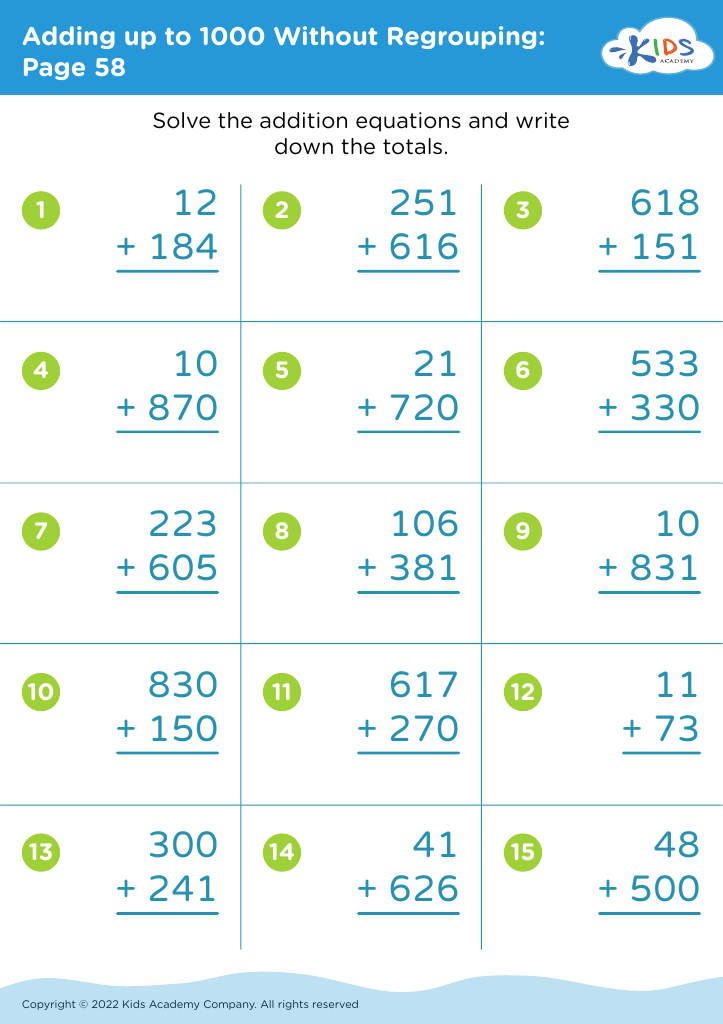
Adding up to 1000 Without Regrouping: Page 58
Worksheet
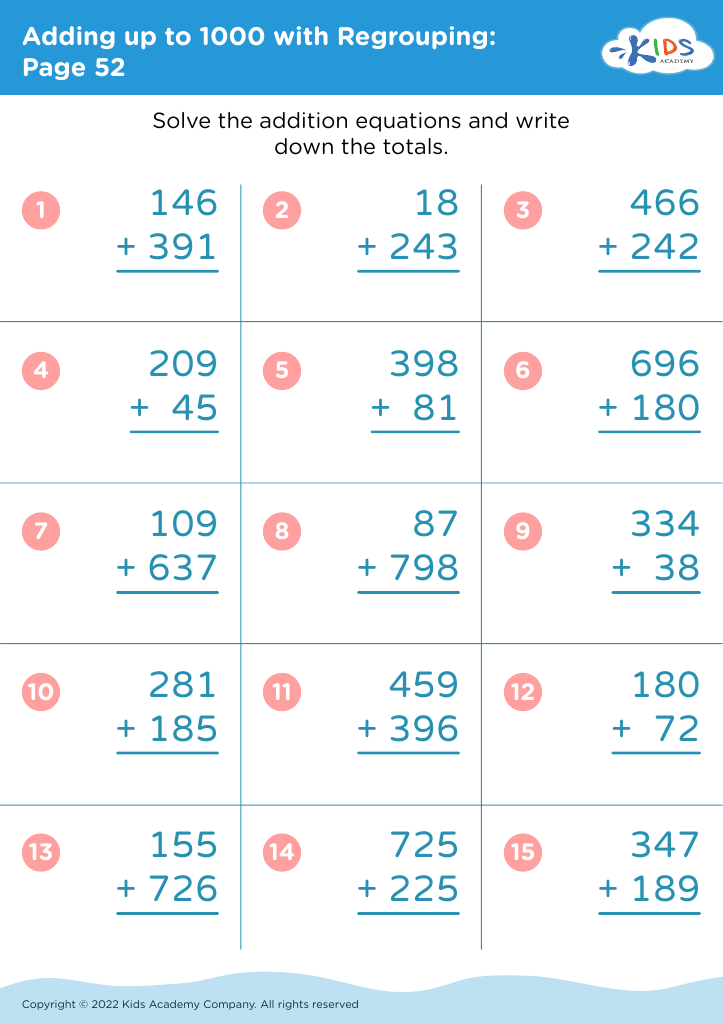
Adding up to 1000 with Regrouping: Page 52
Worksheet
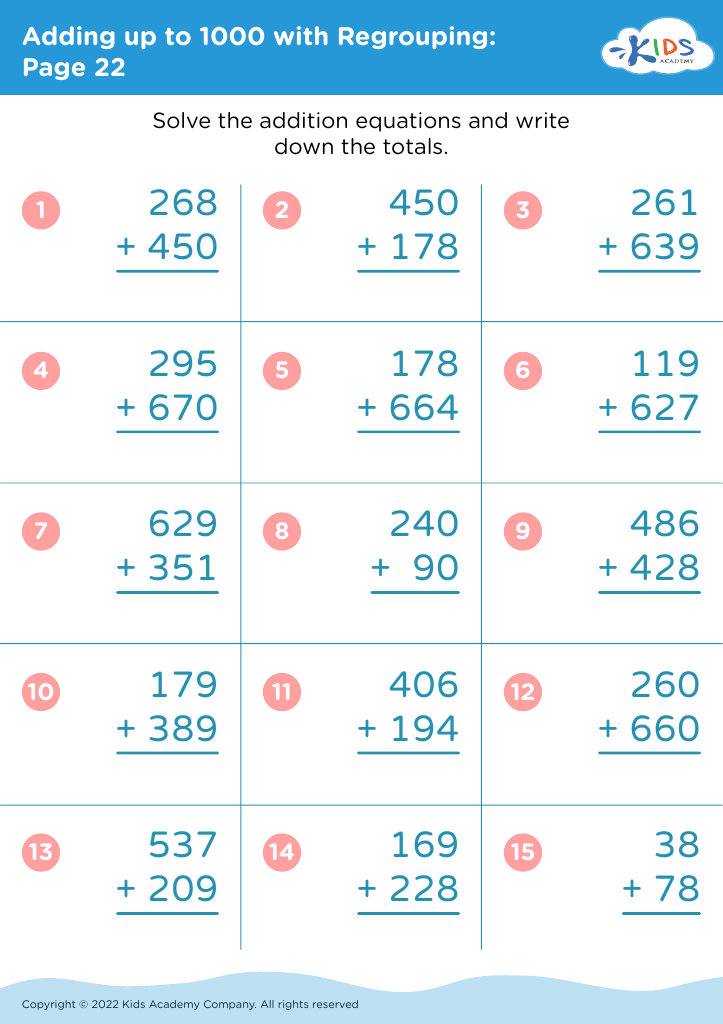
Adding up to 1000 with Regrouping: Page 22
Worksheet
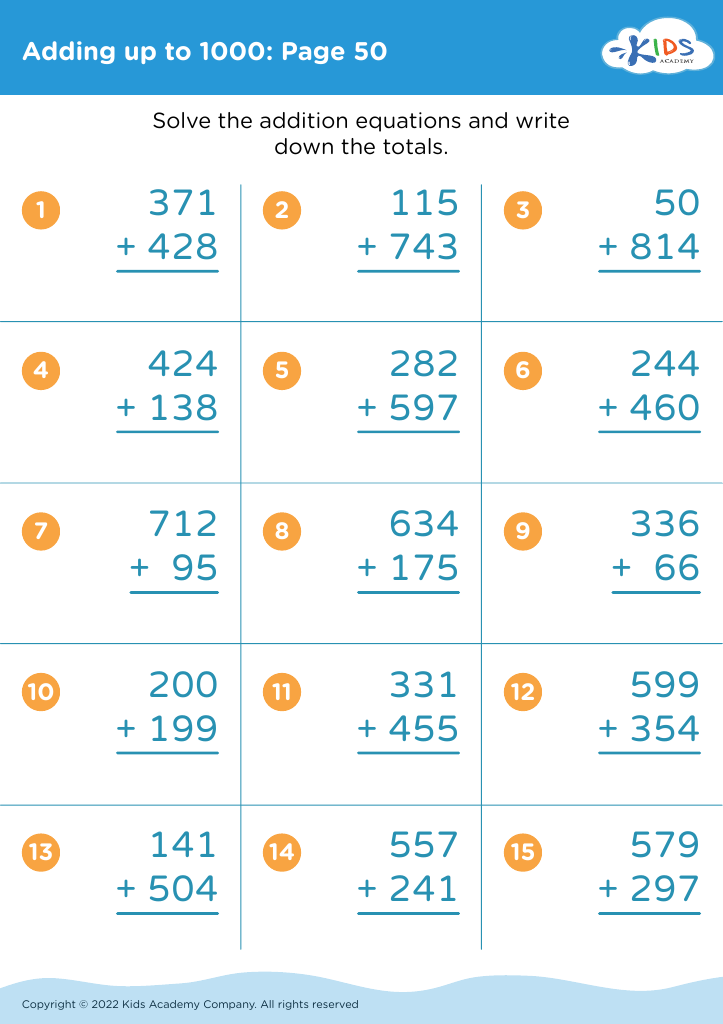
Adding up to 1000: Page 50

Adding up to 1000: Page 50

Adding up to 1000: Page 50
Worksheet
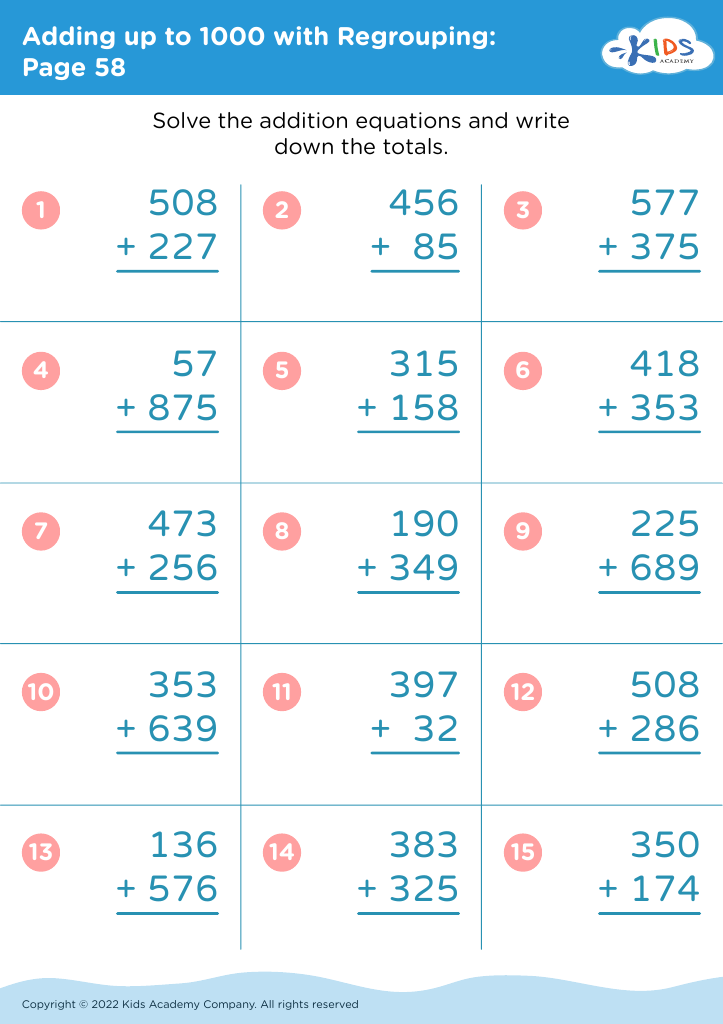
Adding up to 1000 with Regrouping: Page 58
Worksheet
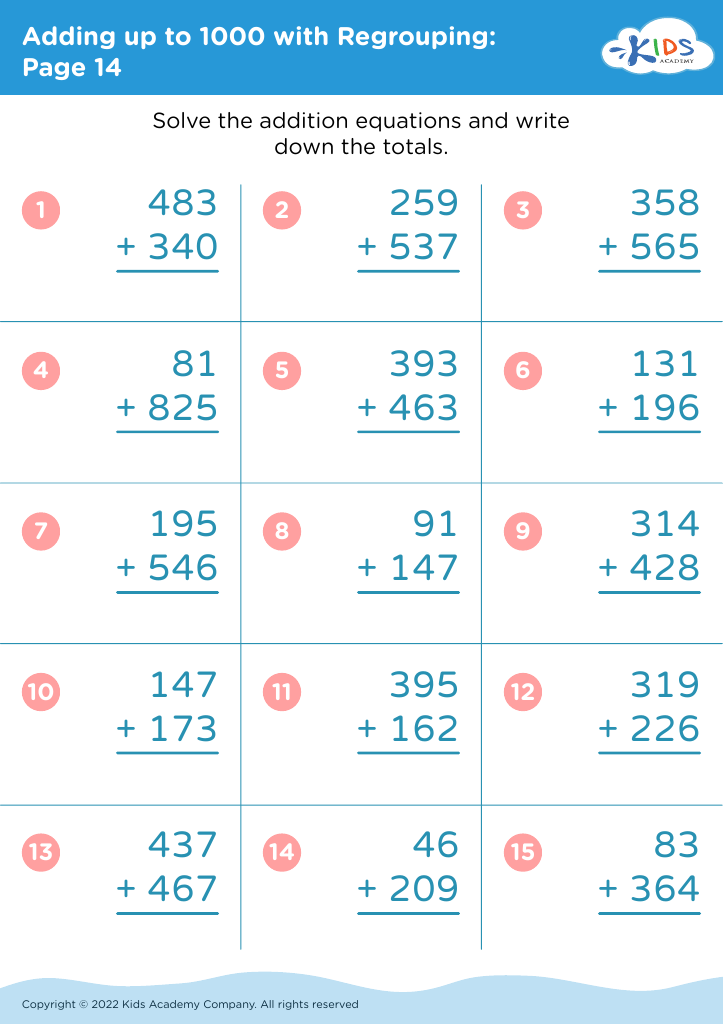
Adding up to 1000 with Regrouping: Page 14
Worksheet
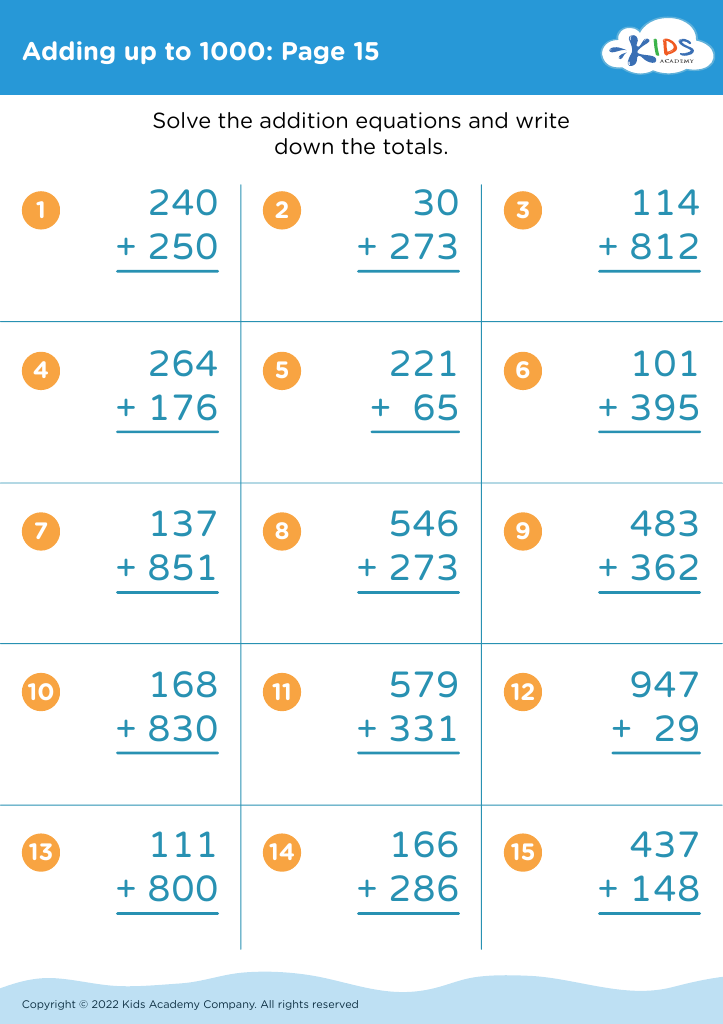
Adding up to 1000: Page 15

Adding up to 1000: Page 15

Adding up to 1000: Page 15
Worksheet
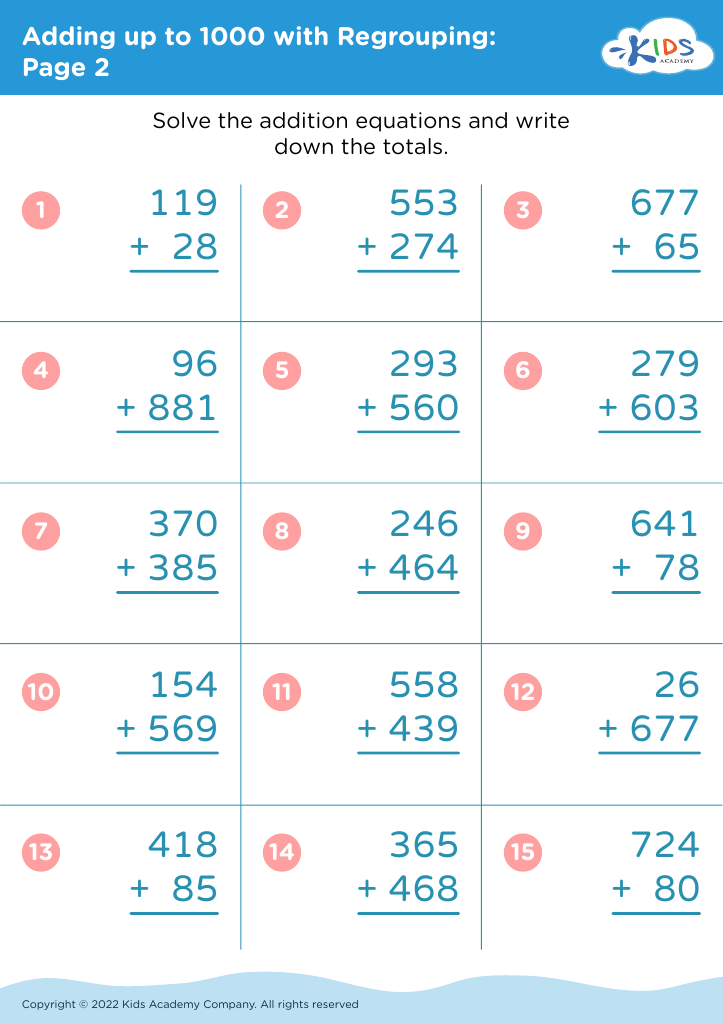
Adding up to 1000 with Regrouping: Page 2
Worksheet
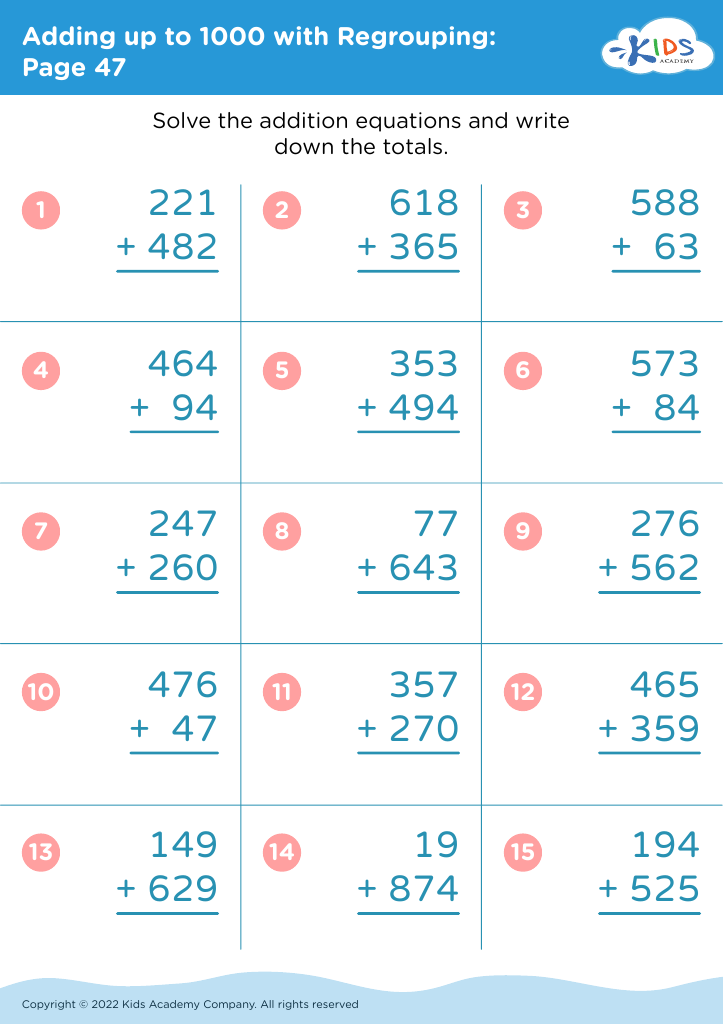
Adding up to 1000 with Regrouping: Page 47
Worksheet
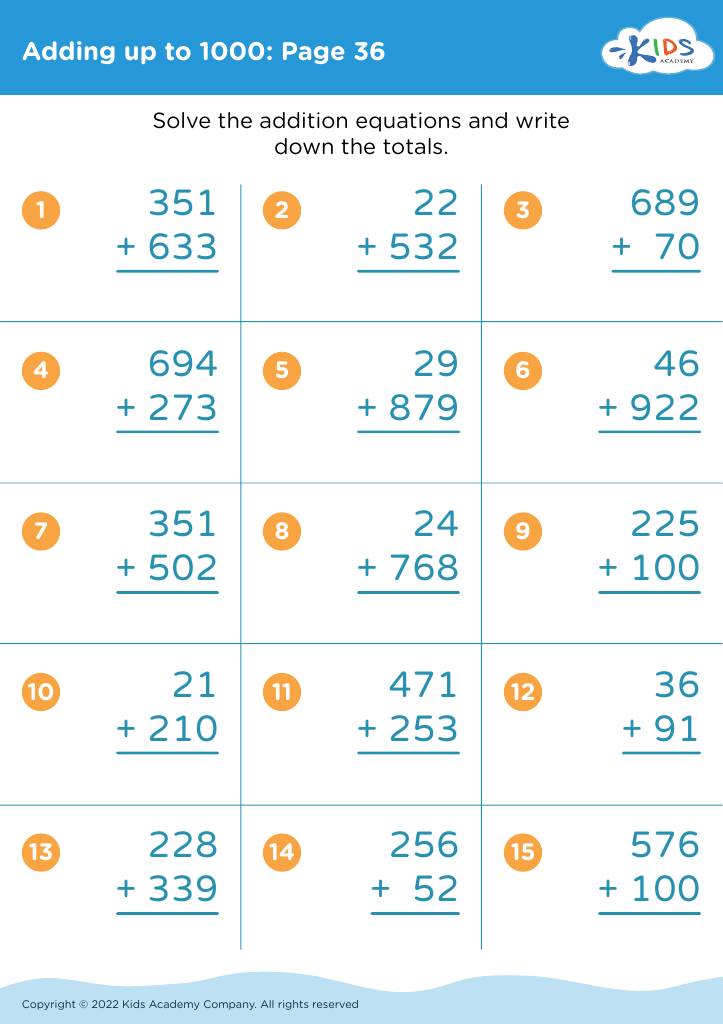
Adding up to 1000: Page 36

Adding up to 1000: Page 36

Adding up to 1000: Page 36
Worksheet
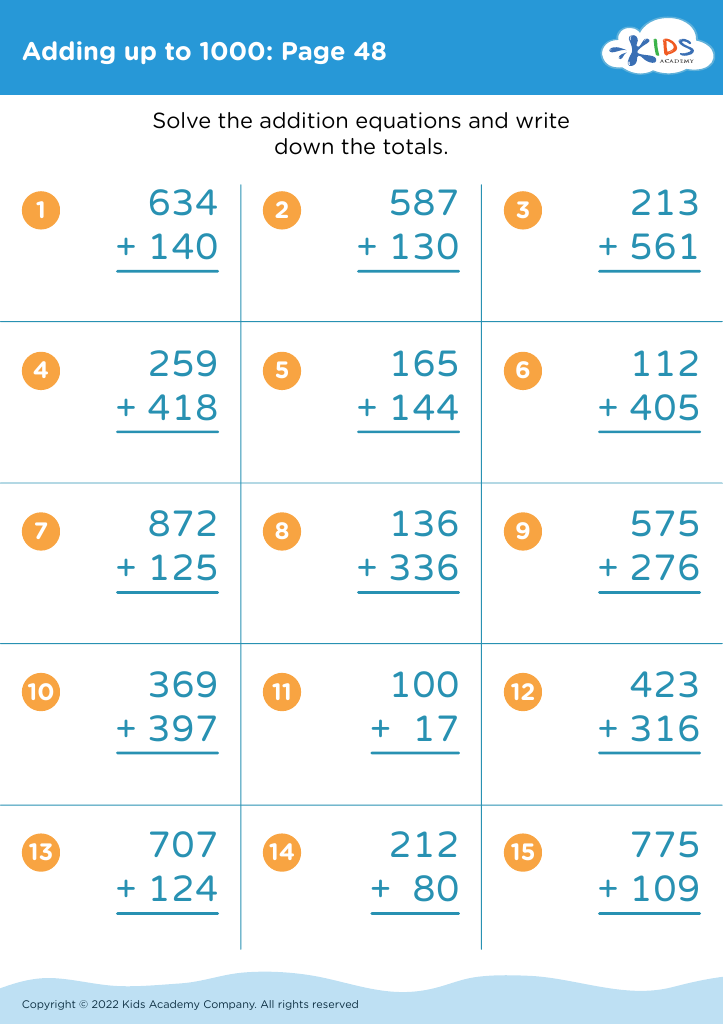
Adding up to 1000: Page 48

Adding up to 1000: Page 48

Adding up to 1000: Page 48
Worksheet
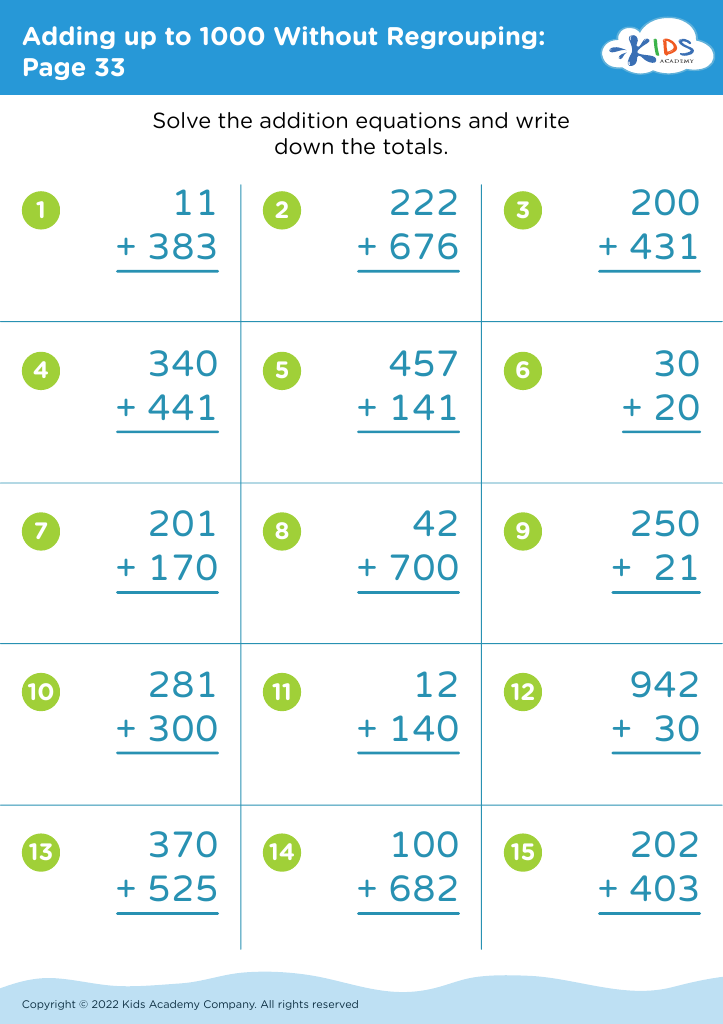
Adding up to 1000 Without Regrouping: Page 33
Worksheet


Counting practice, especially as children learn to add numbers up to 1000, is crucial for several reasons. For children aged 4 to 8, mastering counting skills serves as the foundation for more advanced mathematical concepts. At this stage, kids develop their understanding of numbers, sequences, and relationships, which are vital for critical thinking and problem-solving. Engaging in counting exercises helps improve their numerical fluency, allowing them to perform calculations with ease.

Moreover, fostering strong counting abilities at an early age builds confidence in a child’s math skills, reducing the anxiety often associated with mathematics later in life. It also aids in enhancing working memory and concentration, skills that are advantageous in the classroom setting and beyond. Regular counting practice introduces patterns in numbers, which is fundamental for grasping addition and subtraction, and lays the groundwork for understanding higher concepts like multiplication and division.

Furthermore, parental involvement in counting activities promotes a supportive learning environment. When parents and teachers prioritize counting practice, it reinforces the significance of education and encourages a lifelong love of learning. Ultimately, these early experiences shape a child's future academic success, fostering a solid mathematical foundation that extends throughout their educational journey.