Critical Thinking Adding up to 1000 Worksheets for Ages 4-8
5 filtered results
-
From - To
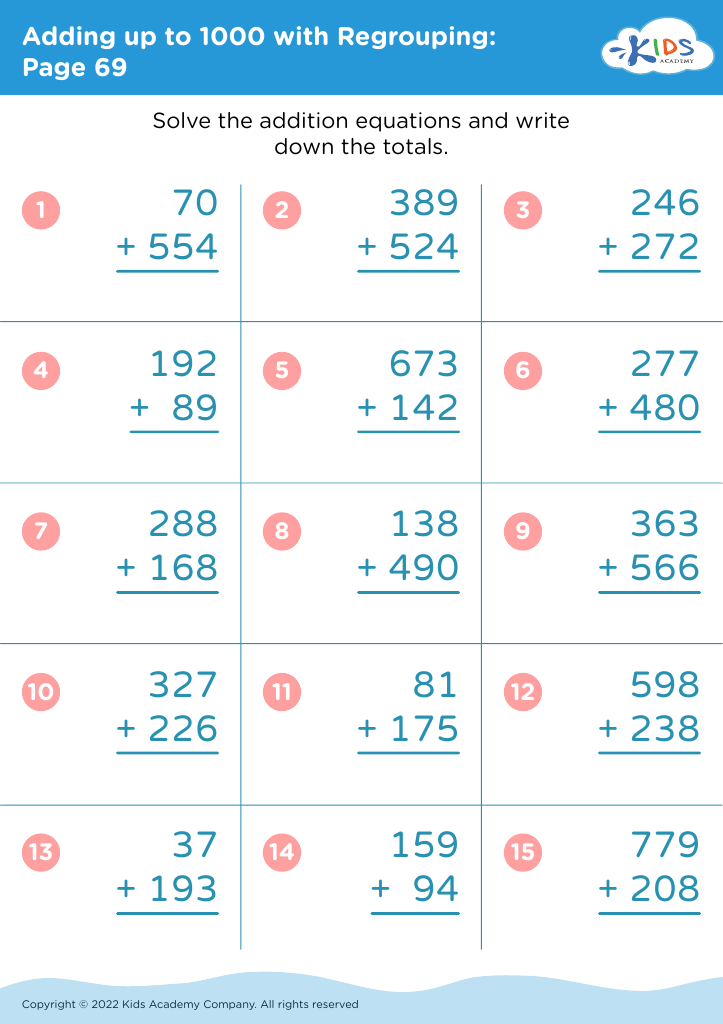
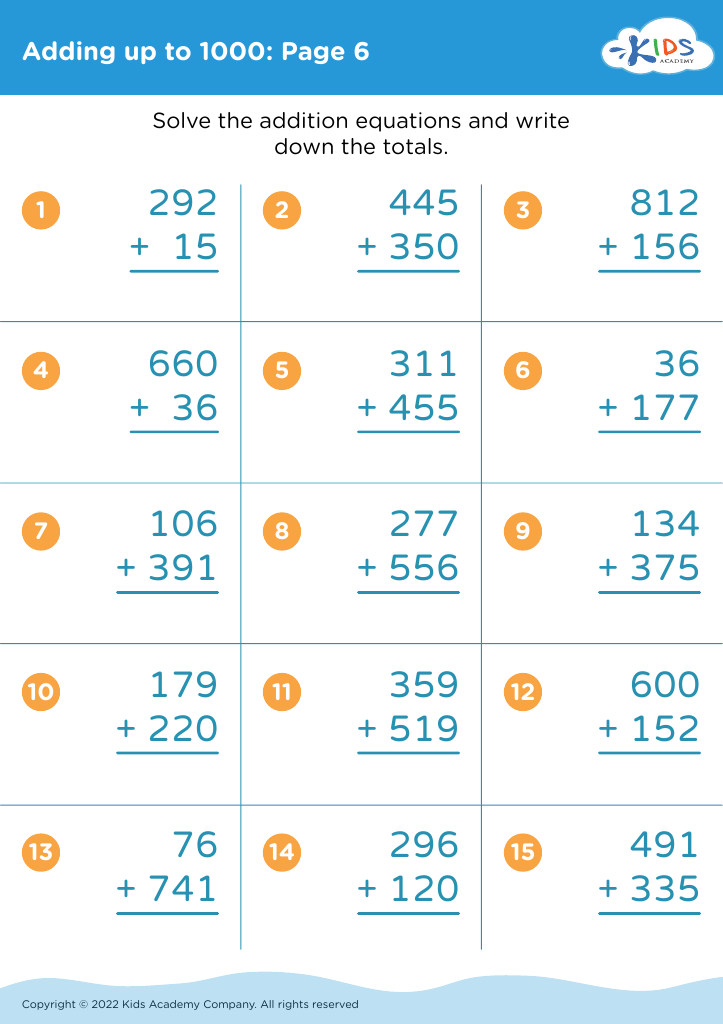
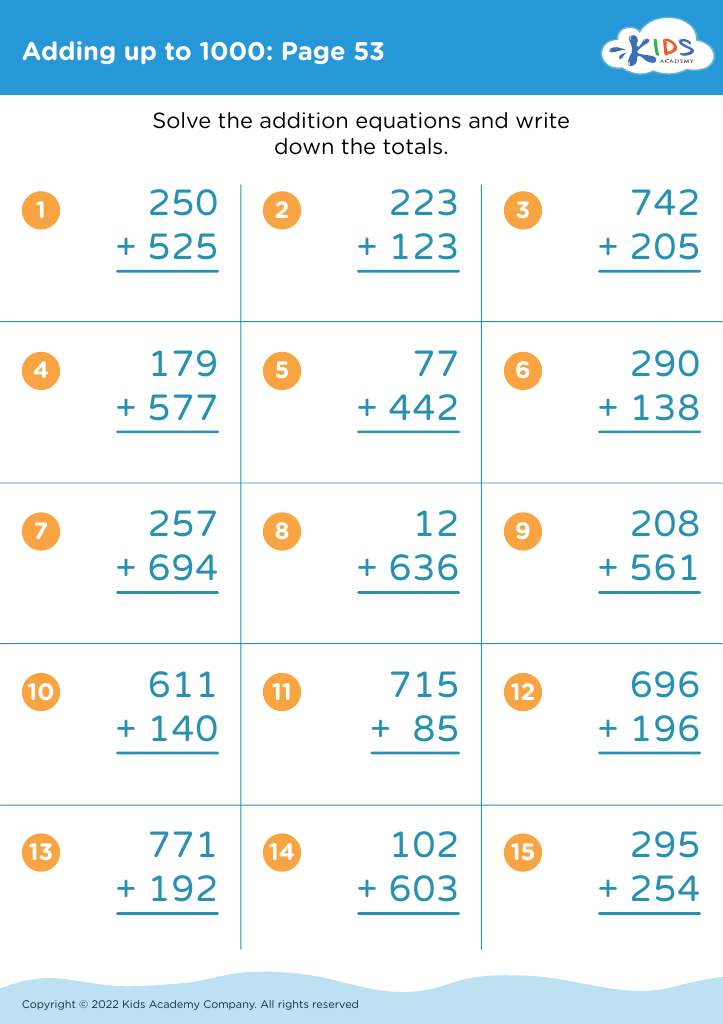
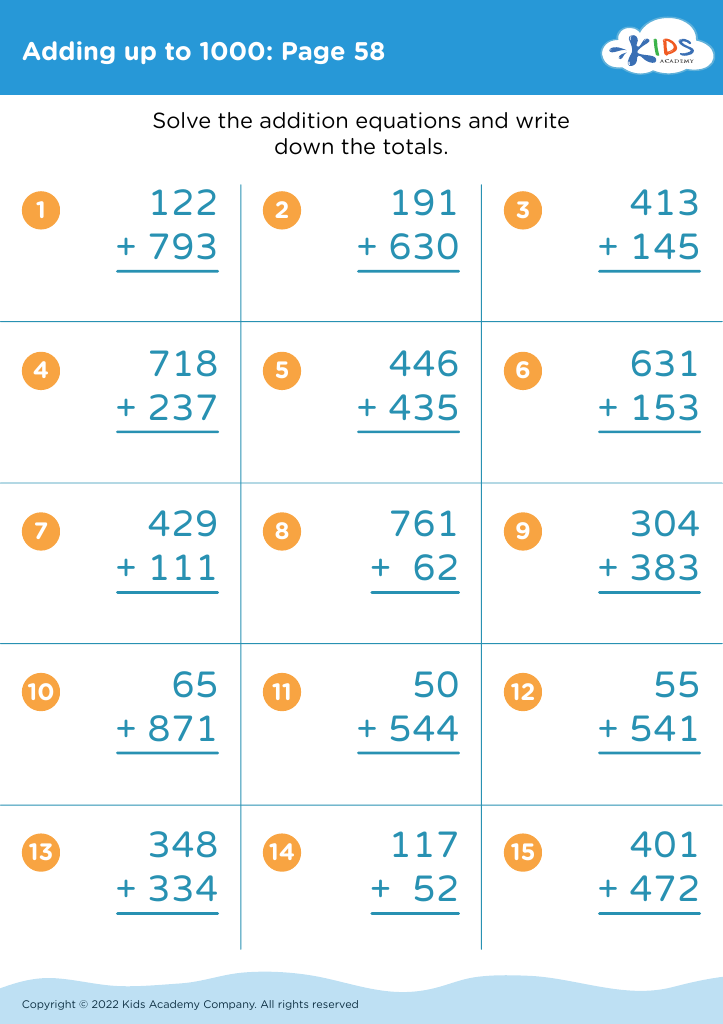
Discover our "Critical Thinking Adding Up to 1000 Worksheets," specially designed for children aged 4-8. These engaging worksheets promote essential math skills while fostering critical thinking abilities. Kids will joyfully explore addition concepts, enhance their problem-solving skills, and develop logical reasoning as they work towards mastering numbers up to 1000. Each activity is age-appropriate and crafted to make learning fun, helping young learners build a strong mathematical foundation. Perfect for classroom or home practice, these worksheets support early learners in gaining confidence and independence in math, setting them on a path to academic success. Unlock your child's potential today!
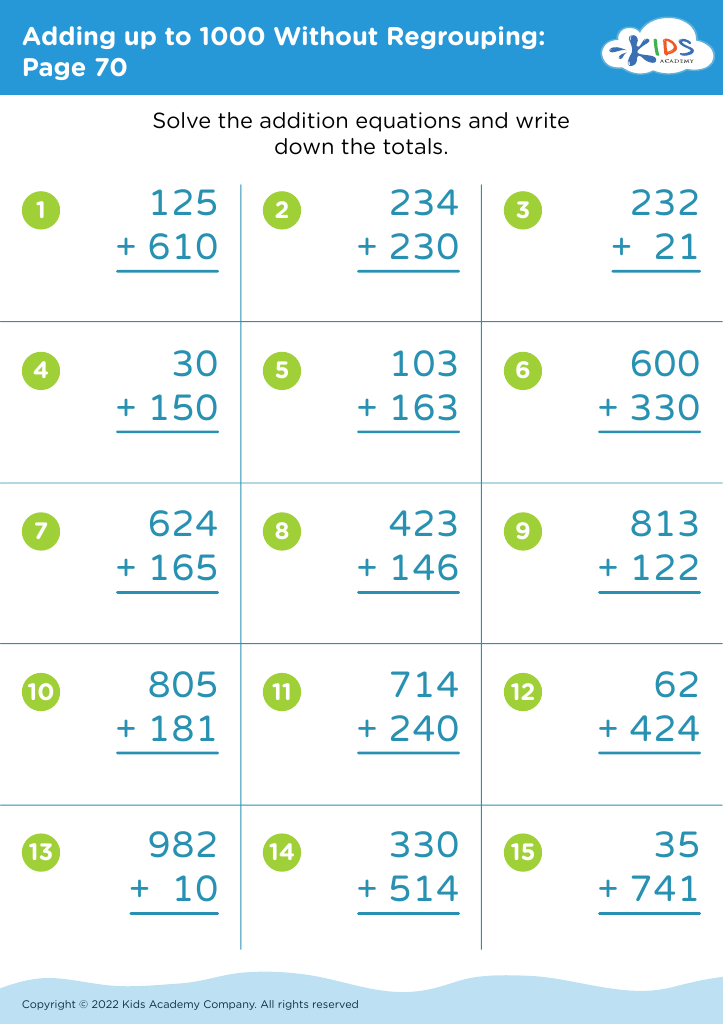



Critical thinking is crucial for children aged 4-8 as it forms the foundation for their future learning and decision-making. Parents and teachers should prioritize fostering critical thinking skills in young learners for several reasons.
First, early development of these skills enhances problem-solving abilities. Kids learn to analyze situations, consider different perspectives, and come up with effective solutions. This can lead to greater confidence and independence in their learning journey.
Second, critical thinking encourages creativity. When children are taught to think critically, they are more likely to approach challenges with innovative ideas. This fosters a love for learning and allows them to express themselves more freely.
Moreover, critical thinking helps improve communication skills. Children become better at articulating their thoughts, asking relevant questions, and engaging in meaningful discussions. This is essential for their social development and relationship-building skills.
Finally, in an increasingly complex world, critical thinking equips children to navigate everyday situations and challenges more effectively. It empowers them to make informed choices and develop a healthy skepticism and curiosity about the world around them.
Investing in critical thinking for ages 4-8 not only enhances academic success but also prepares children to be thoughtful, engaged, and responsible citizens in the future.








