Develop critical thinking Adding up to 1000 Worksheets for Ages 4-8
3 filtered results
-
From - To
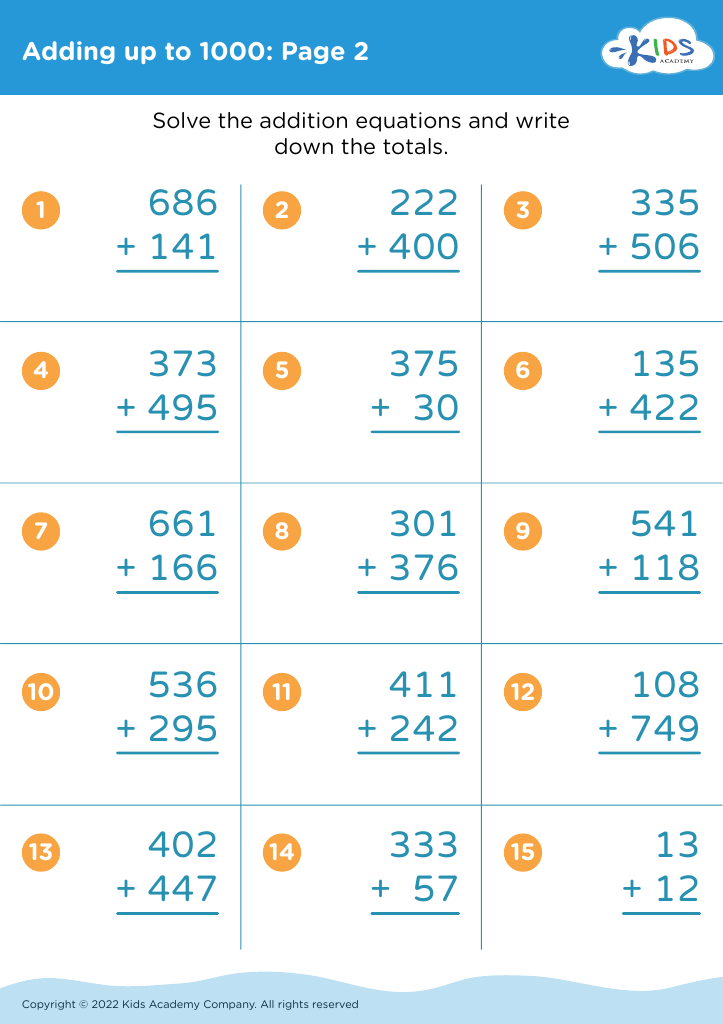
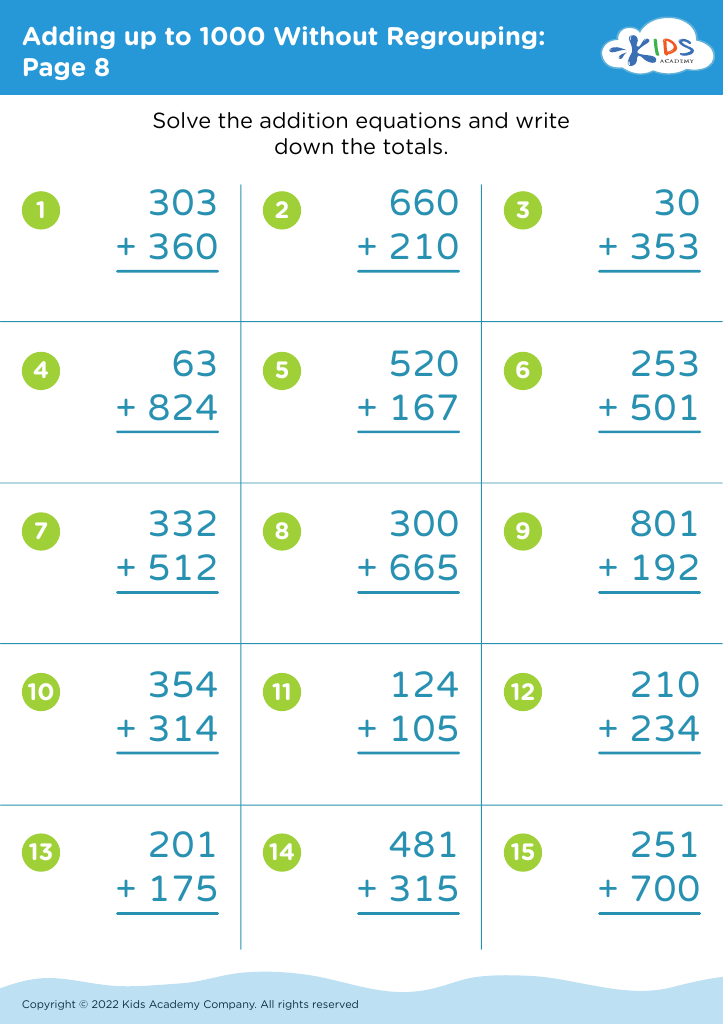
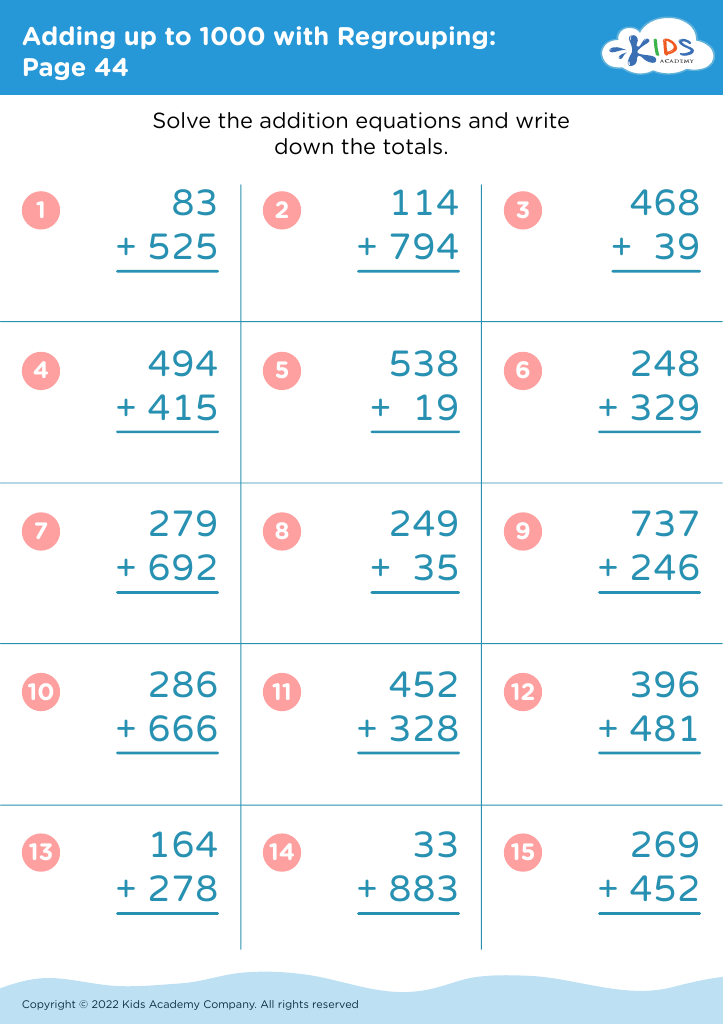
Unlock your child's potential with our "Develop Critical Thinking: Adding up to 1000 Worksheets" designed for ages 4-8! Our extensive collection of 1000 engaging worksheets fosters problem-solving skills and enhances logical reasoning through fun math exercises, all centered around addition. Kids will explore various strategies, promote their analytical thinking, and build confidence in their mathematical abilities. These worksheets are perfect for reinforcing classroom learning or for at-home practice. With vibrant designs and interactive activities, your child will enjoy hours of educational fun, setting a solid foundation for future success in math and beyond. Get started today and watch them thrive!



Parents and teachers should prioritize developing critical thinking skills in children aged 4-8 because these foundational years are crucial for cognitive growth. At this age, children are naturally curious and eager to explore their environment, making it an ideal time to encourage deep thinking. Critical thinking helps children learn to ask questions, analyze situations, and make informed decisions—skills that will serve them throughout their lives.
By fostering critical thinking, adults assist children in recognizing patterns, distinguishing between fact and opinion, and assessing information critically. This skill set is especially important in today's information-rich world, where children are bombarded with vast amounts of data, including media and technology.
Engaging children in discussions, problem-solving activities, and creative play can enhance their reasoning abilities. Such activities encourage children to think independently and collaboratively, building confidence in their ideas and decisions. Moreover, critical thinking promotes resilience and adaptability, essential traits in an ever-changing world.
Incorporating challenges and open-ended questions in everyday learning encourages young minds to explore, reason, and articulate their thoughts. By investing in these skills, parents and teachers equip children to succeed academically and in life, fostering a generation of thoughtful, inquisitive individuals.








