Fraction Addition Adding up to 1000 Worksheets for Ages 4-8
5 filtered results
-
From - To
Discover our engaging Fraction Addition Worksheets designed for children ages 4-8! These educational resources help young learners master the concept of adding fractions while working towards their math milestones. With a variety of interactive exercises, kids will practice blending whole numbers and fractions in fun, colorful formats that make learning enjoyable. Each worksheet is crafted to reinforce essential math skills, boost confidence, and encourage critical thinking. Perfect for classrooms or home learning, our Fraction Addition Worksheets are an invaluable tool in supporting your child’s math journey as they work towards mastering addition up to 1000. Explore and strengthen their skills today!
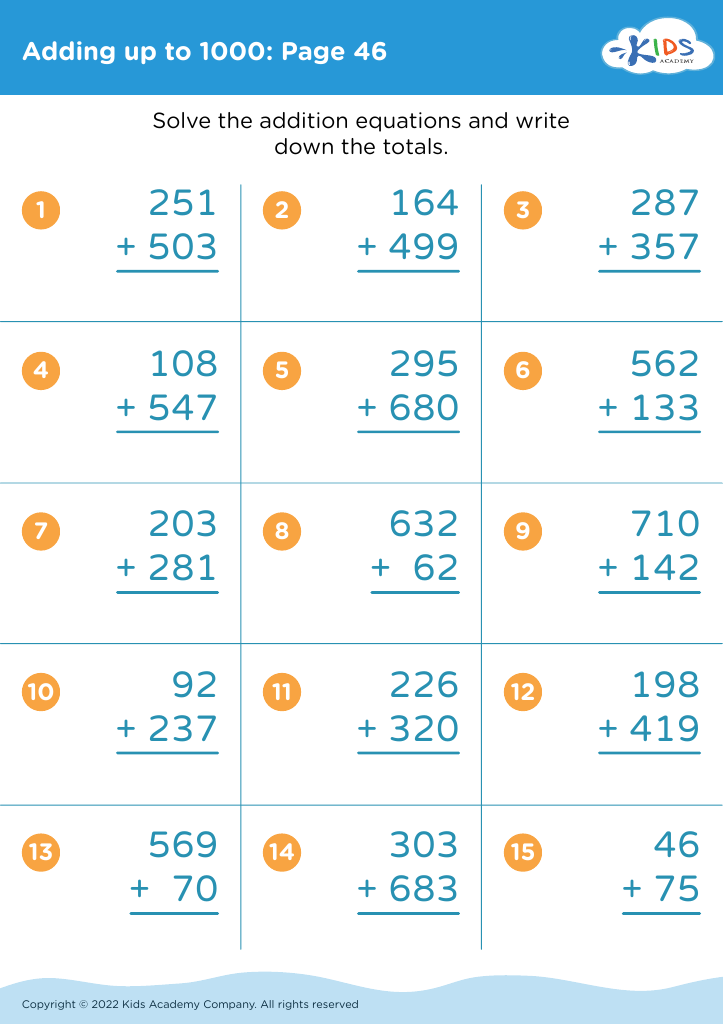
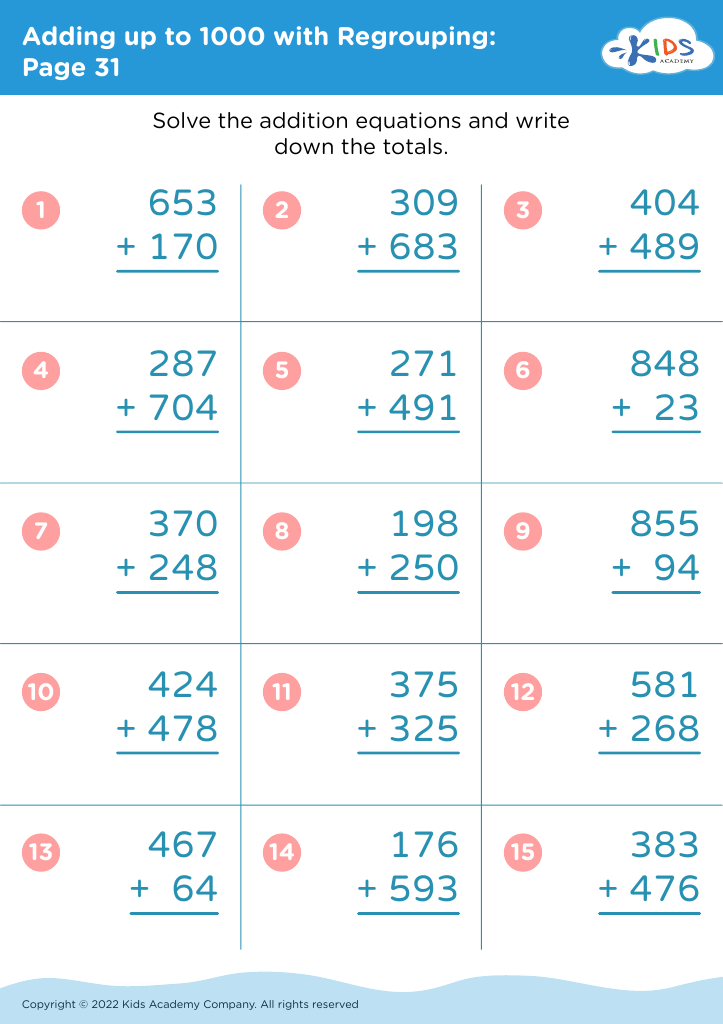
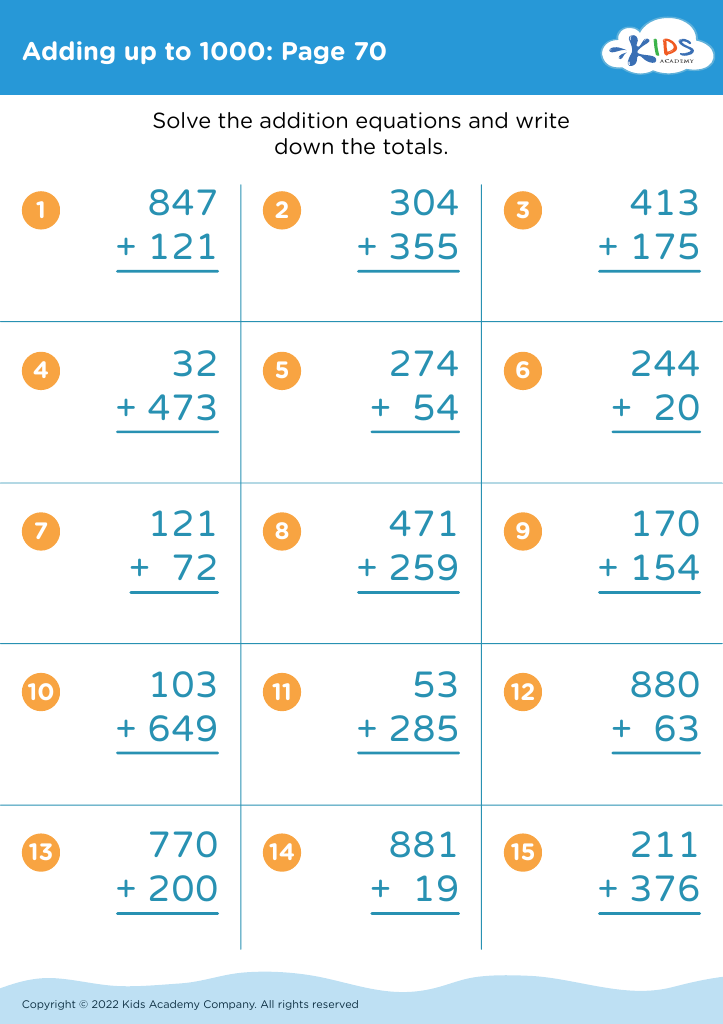
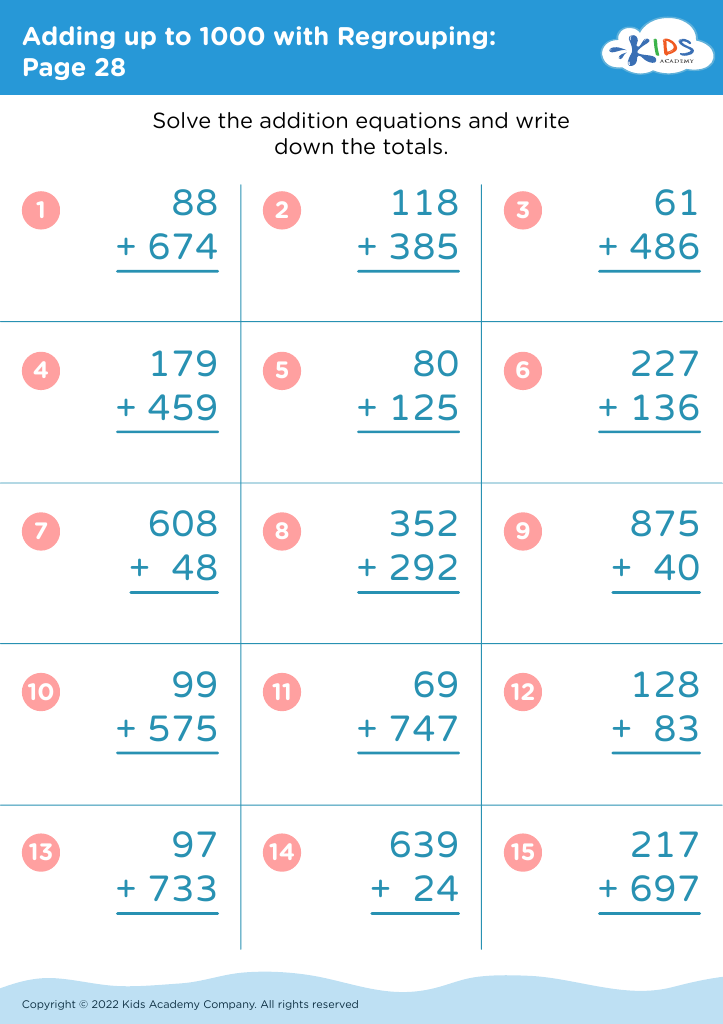
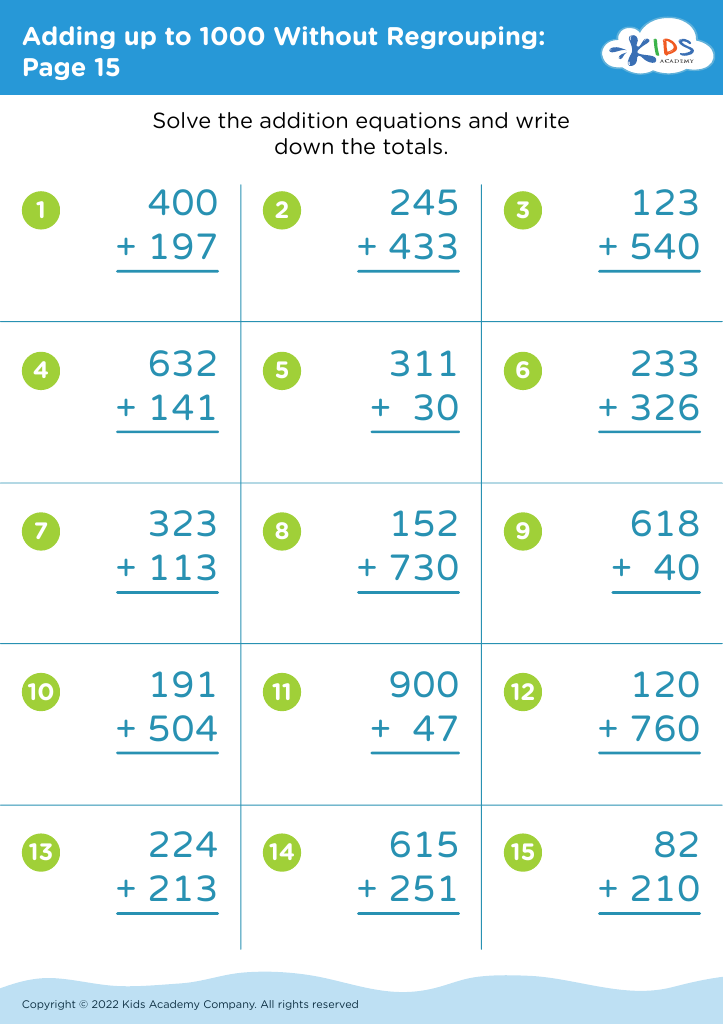



Parents and teachers play a crucial role in the development of children's mathematical skills, particularly when it comes to foundational concepts like fractions. Understanding fraction addition, especially concepts involving sums that add up to whole numbers such as 1 or extending to 1000, is essential for several reasons.
Firstly, fractions are a stepping stone to advanced mathematics. Grasping how to add fractions in a fun and engaging manner fosters a solid arithmetic foundation. As children ages 4-8 are naturally curious, introducing them to fractions through relatable, everyday contexts—like pizza slices or sharing snacks—makes learning enjoyable and relevant.
Secondly, mastering fraction addition promotes critical thinking and problem-solving skills. Children learn to break problems down and visualize relationships between parts and wholes. This cognitive development is transferrable across subjects, nurturing better overall academic performance.
Lastly, understanding decimals and percentages, which are integral in later grades, relies on a good grasp of fractions. By fostering an enthusiasm for fraction addition early on, parents and teachers prepare children for a positive mathematical journey, instilling confidence alongside independence in their learning processes. Ultimately, this mastery can significantly influence their attitudes towards math in their future education.








