Fraction simplification Adding up to 1000 Worksheets for Ages 4-8
7 filtered results
-
From - To
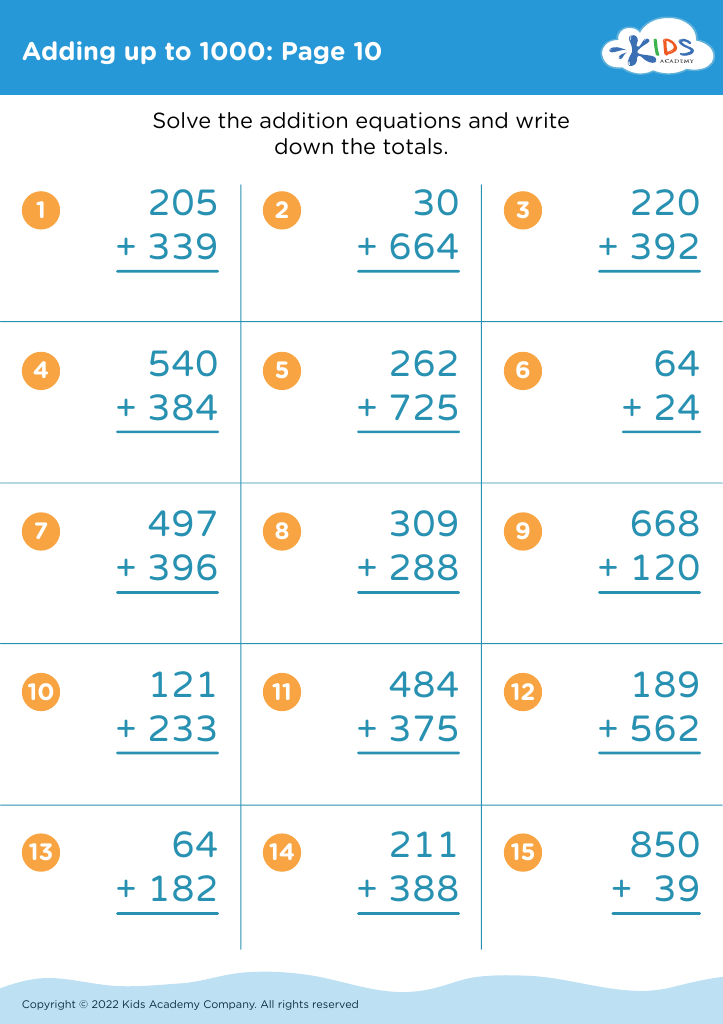
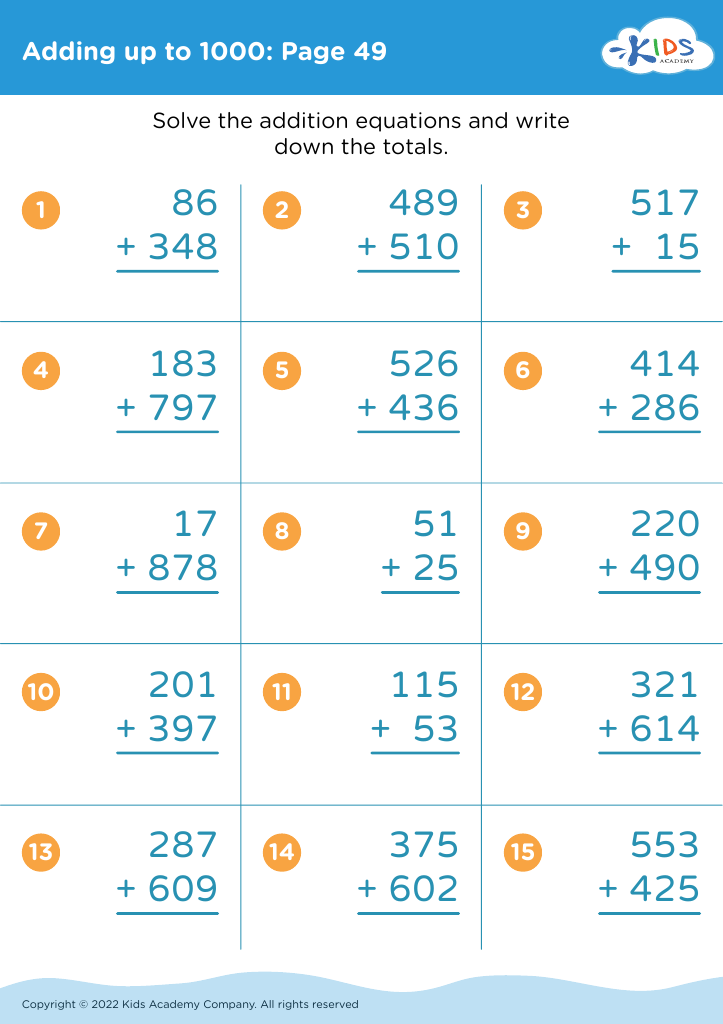
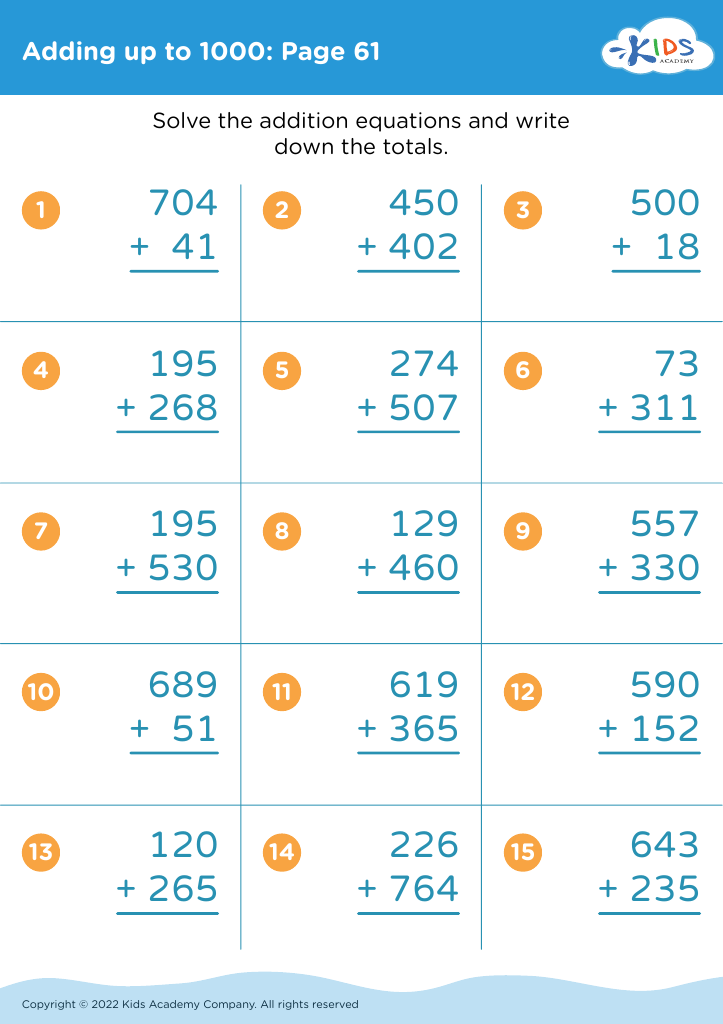
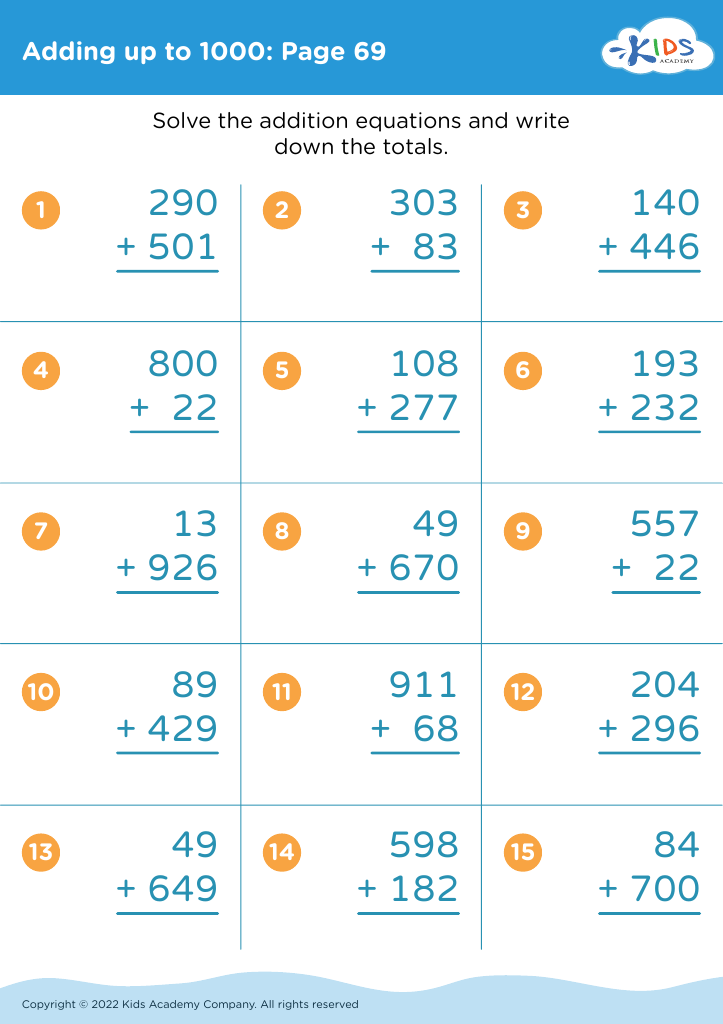
Enhance your child’s math skills with our Fraction Simplification Adding up to 1000 Worksheets designed specifically for ages 4-8. These engaging, hands-on worksheets help young learners grasp the basics of fractions and simplify them effectively. With vibrant illustrations and step-by-step instructions, kids can independently practice and understand the concept with ease. Tailored for young minds, each worksheet builds fundamental skills, fostering proficiency in math. Ideal for both classroom and home use, these worksheets nurture confidence and mastery in fraction simplification and addition. Access the perfect blend of education and fun to boost your child's numerical abilities today!
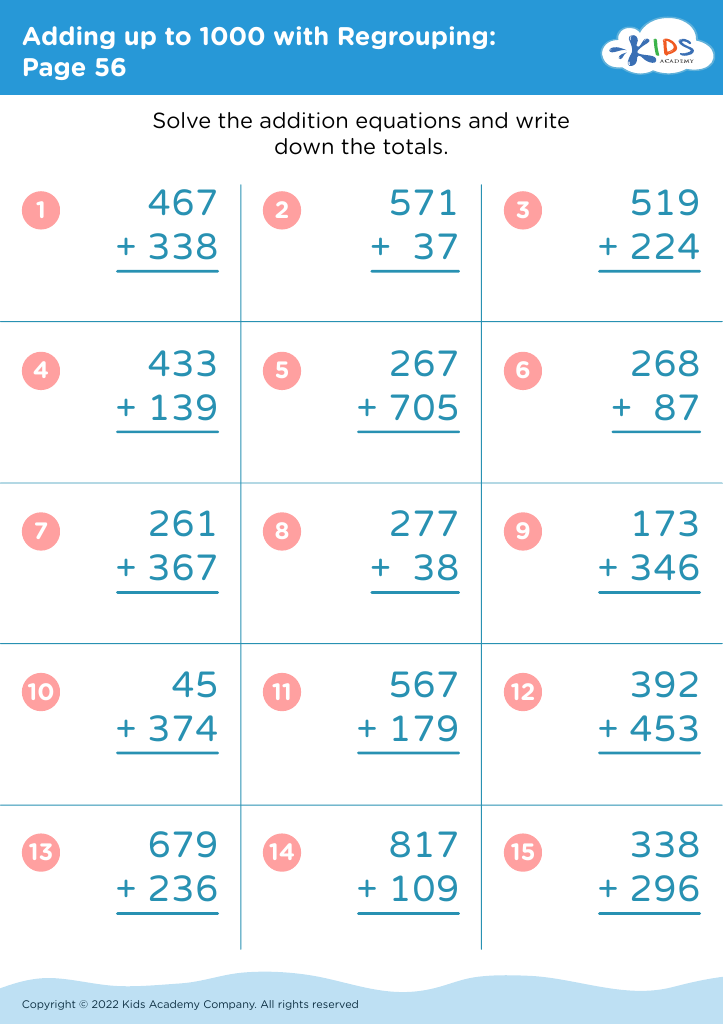
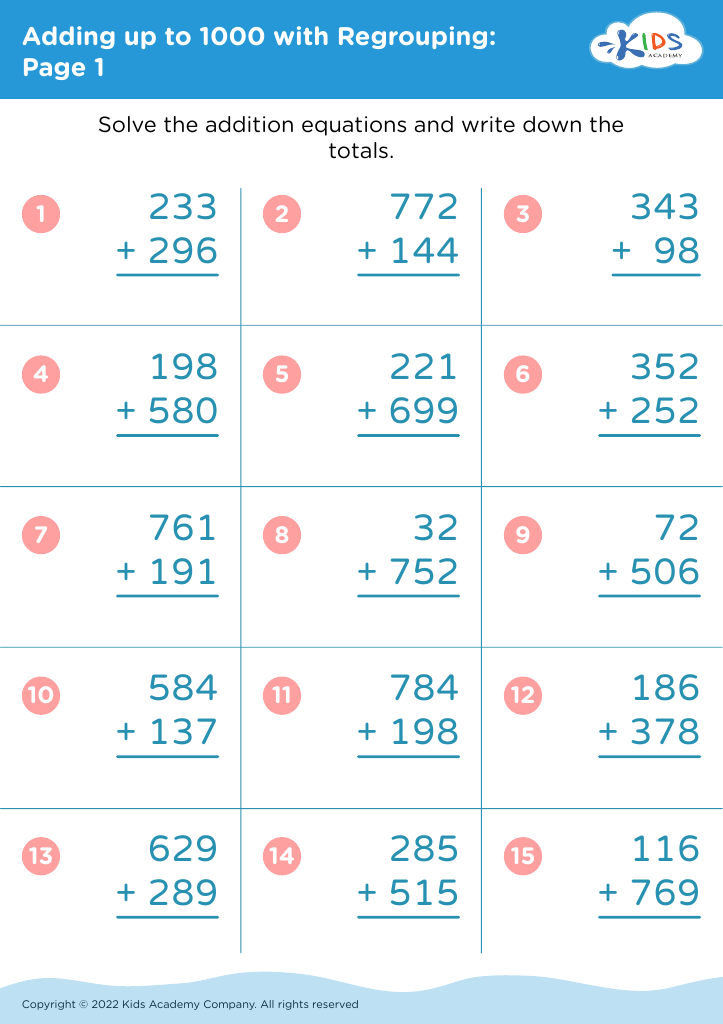
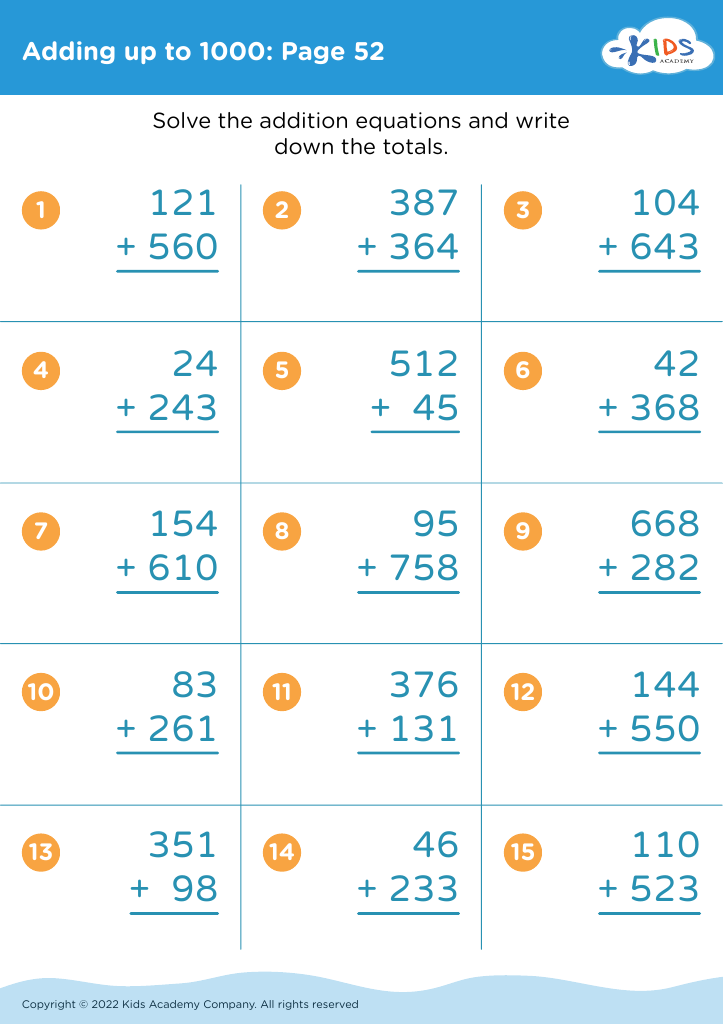



Parents and teachers play a crucial role in early childhood education, and one fundamental mathematical concept they should emphasize is fraction simplification. Introducing this concept to children ages 4-8 lays a strong foundation for their future math skills and overall cognitive development. Understanding fractions helps young learners grasp the idea of parts of a whole, reinforcing key concepts in division and proportionality, which are essential for more advanced math topics.
Moreover, practicing fraction simplification enhances a child's problem-solving skills and logical thinking. It encourages meticulous attention to detail and teaches them how to break complex problems into simpler parts, fostering critical analytical skills. For example, understanding that 1/2 and 2/4 are the same can make it easier for children to approach common mathematical problems confidently.
Adding up to 1000 serves to solidify their arithmetic skills. Mastering this concept at an early age promotes numerical confidence, fluency, and dexterity, which are vital for academic success and everyday life tasks. Combining these practices is essential to prepare them for more challenging concepts they'll encounter as they continue their education. Therefore, parents and teachers should view foundational math skills like fraction simplification and adding up to 1000 as critical to setting children on a path to lifelong academic success and problem-solving efficacy.








