Number Recognition Adding up to 1000 Worksheets for Ages 4-8 - Page 2
31 filtered results
-
From - To
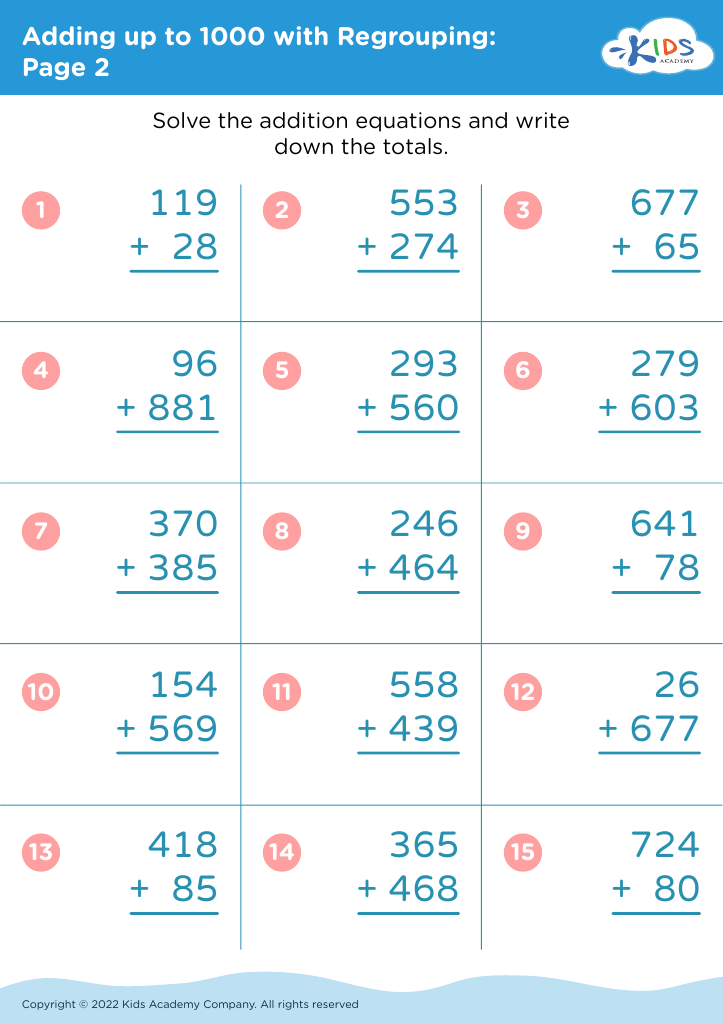
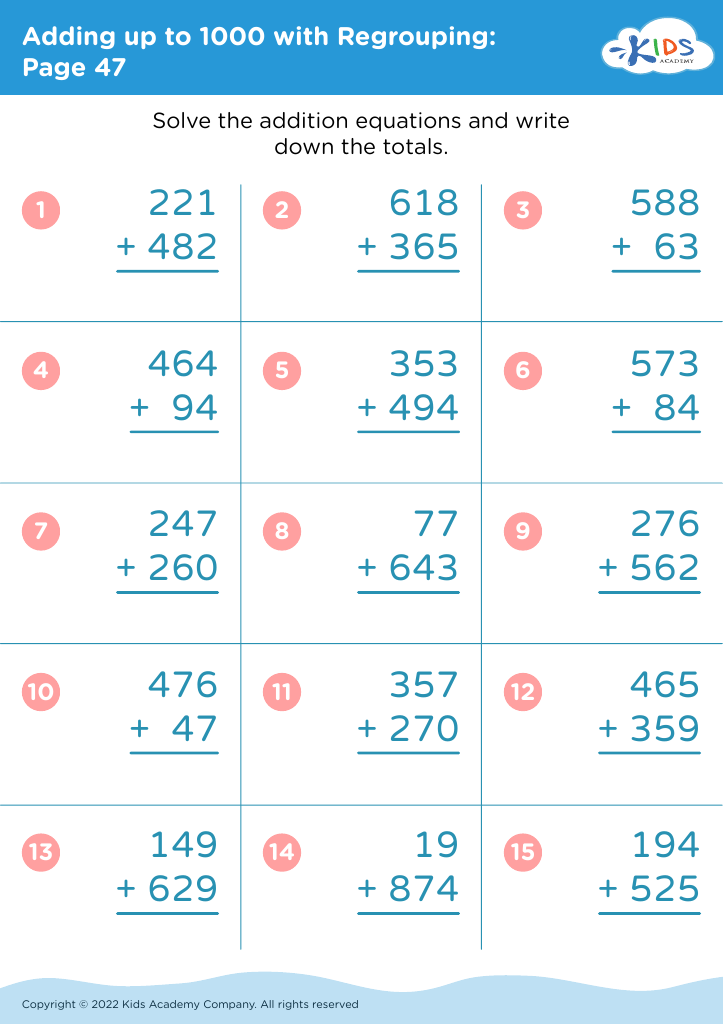
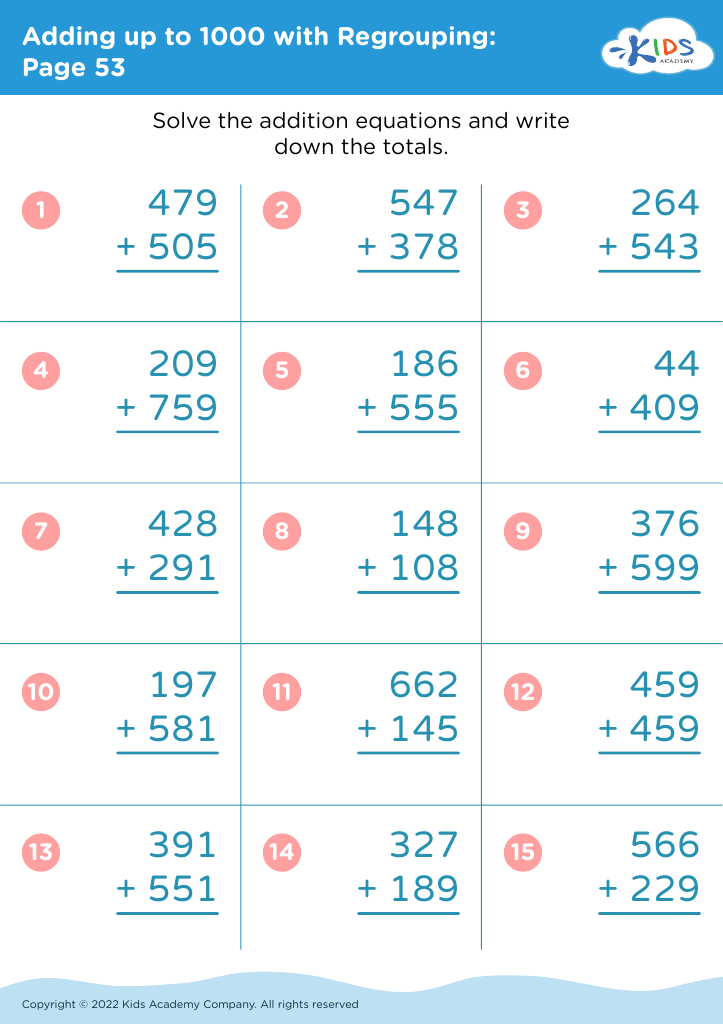
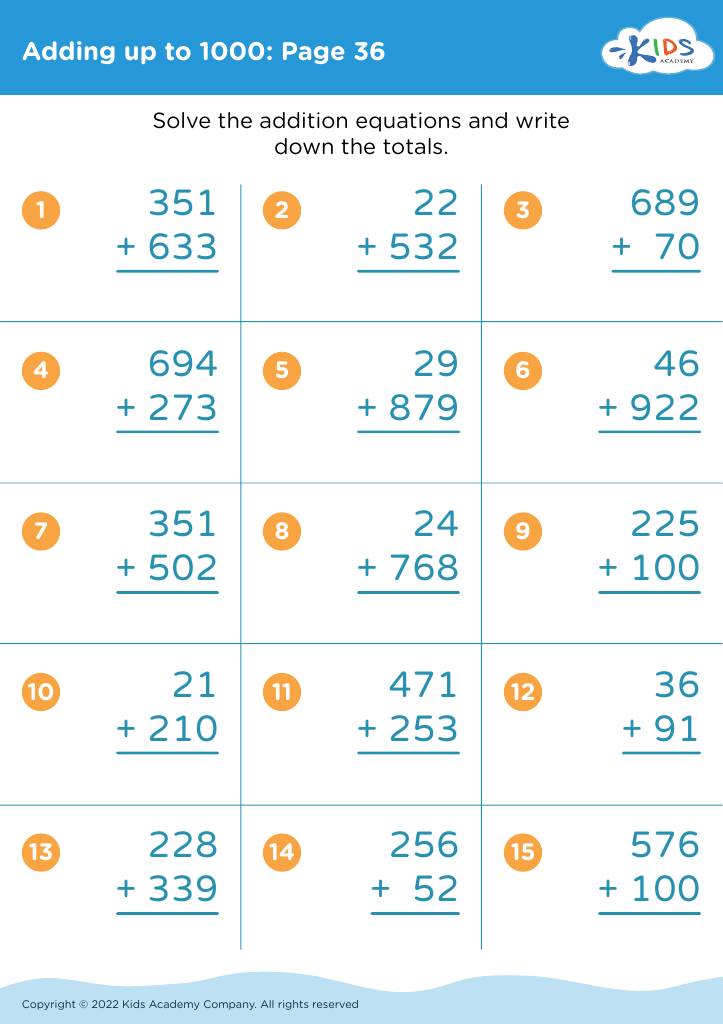
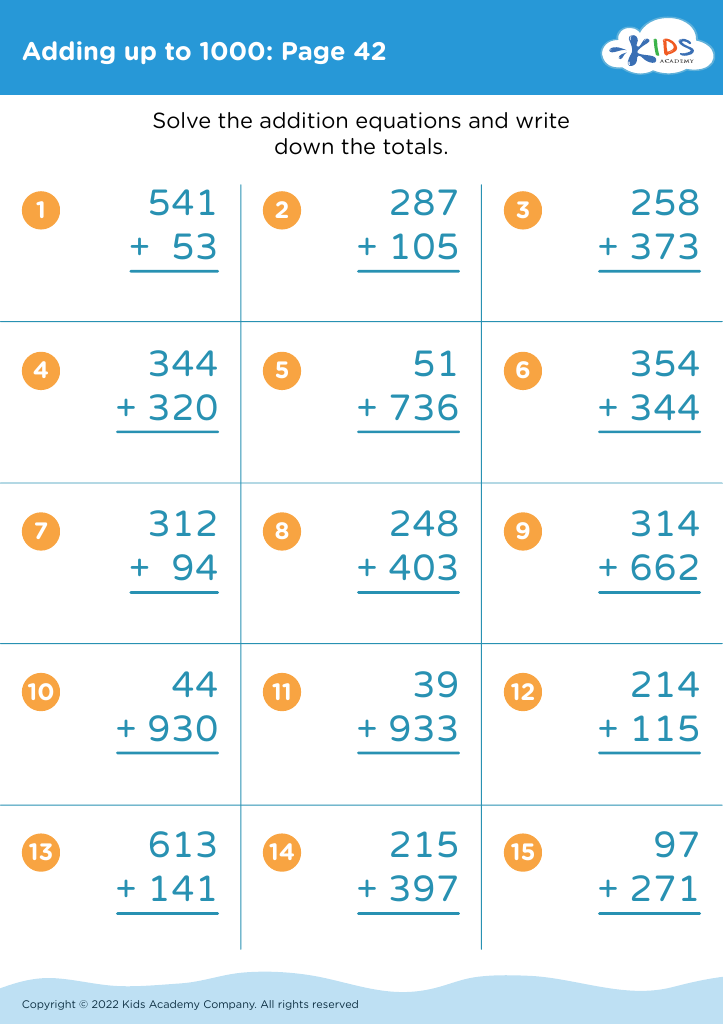
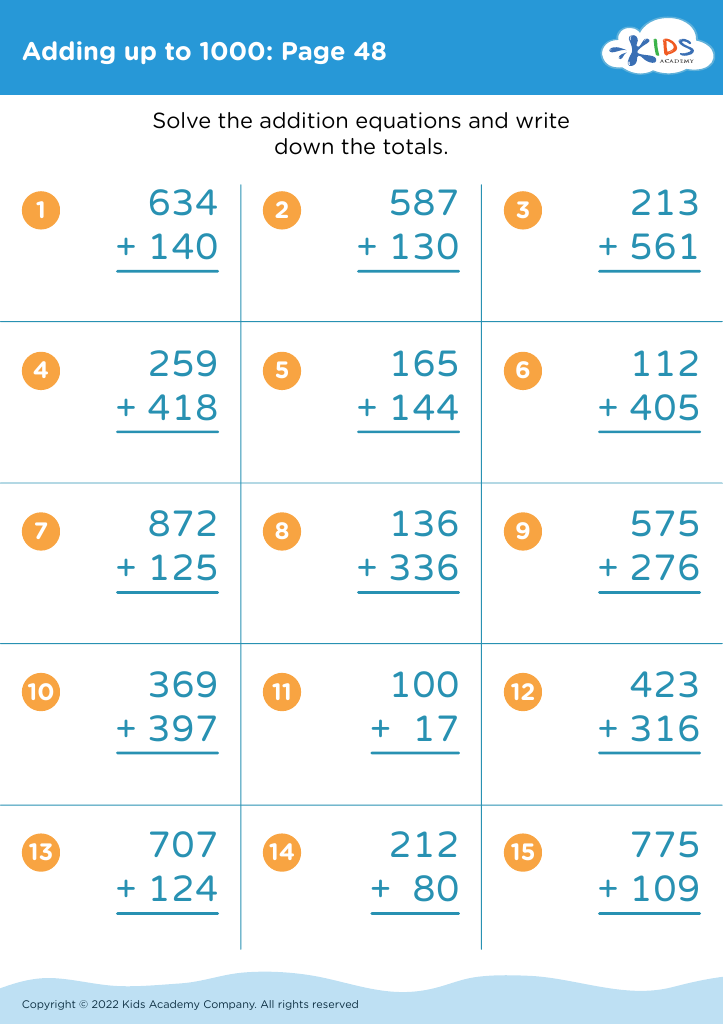
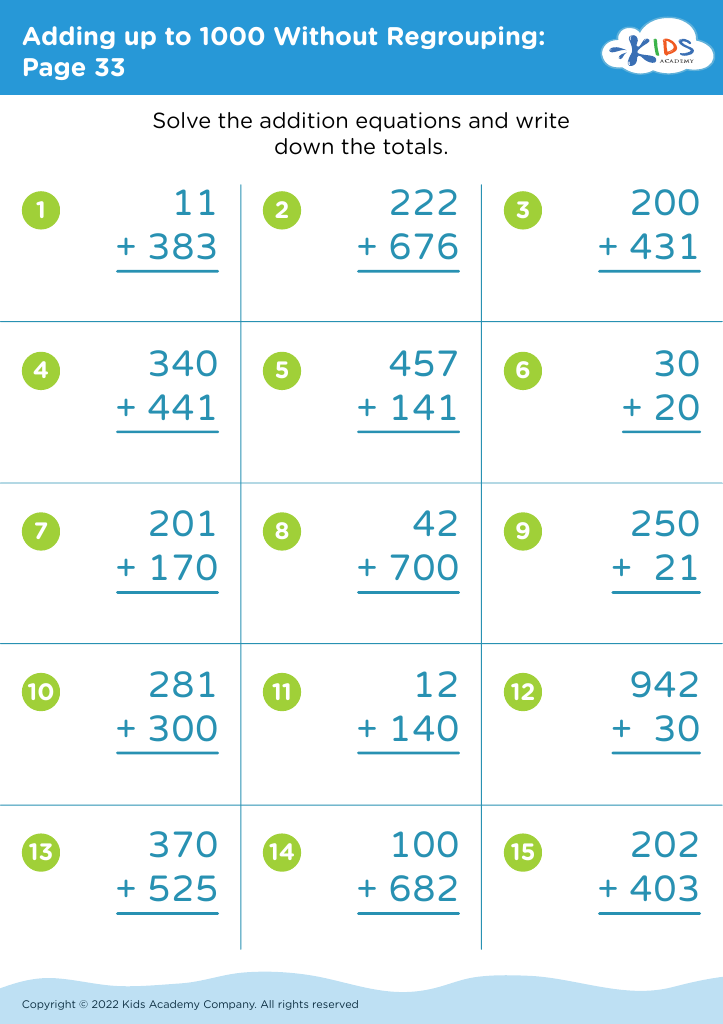




Number recognition and the ability to add up to 1000 are fundamental skills that form the cornerstone of early childhood mathematical learning. For children aged 4-8, mastering these concepts is crucial for several reasons.
Firstly, early number recognition fosters a child's overall cognitive development. It equips them with the necessary skills to understand more complex mathematical concepts later on. When children can effortlessly recognize and manipulate numbers up to 1000, they find it easier to grasp addition, subtraction, multiplication, and division as they progress in their education.
Secondly, developing these skills early enhances a child's confidence in their mathematical abilities. Confidence plays a critical role in a child's willingness to engage with and persevere in tackling mathematical problems. A strong foundation in number recognition and addition helps children approach more complicated tasks with a positive mindset.
Moreover, number recognition and adding skills provide practical, everyday benefits. They enable children to manage simple tasks such as reading prices, counting objects, and understanding measurements and distances. These skills foster independence and practical problem-solving abilities, which are valuable in daily life.
Lastly, prioritizing number recognition and addition up to 1000 ensures that children are well-prepared for the stringent academic demands of higher grades. Parents and teachers who emphasize these skills provide their children with a significant advantage, laying a solid groundwork for lifelong numeracy and academic success.








