Number Sequencing Adding up to 1000 Worksheets for Ages 4-8
5 filtered results
-
From - To
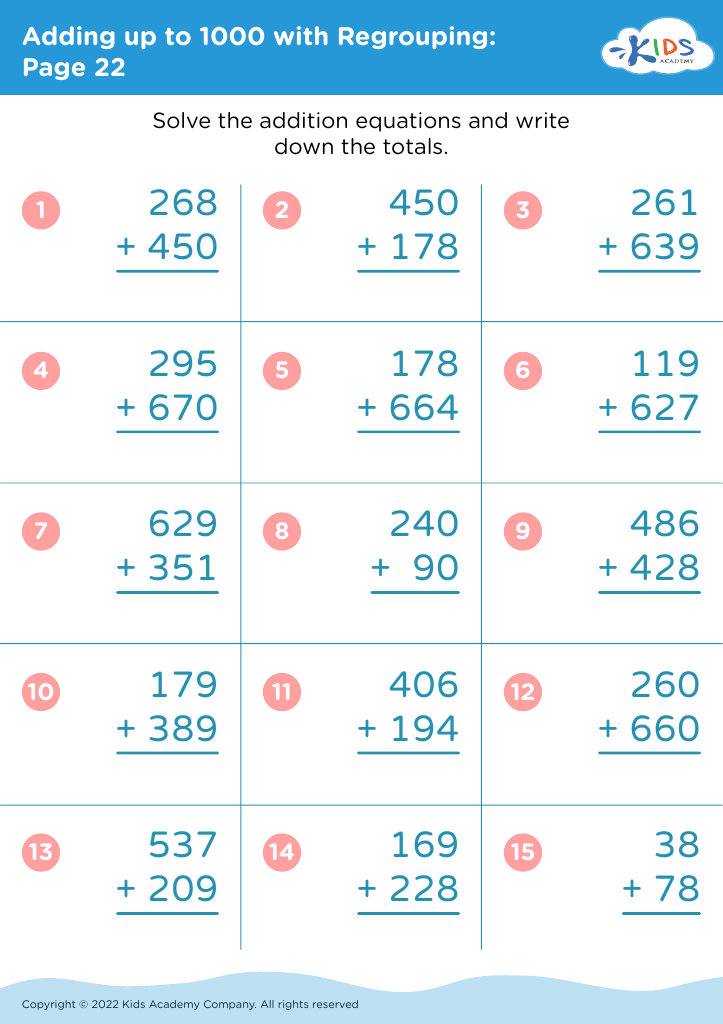
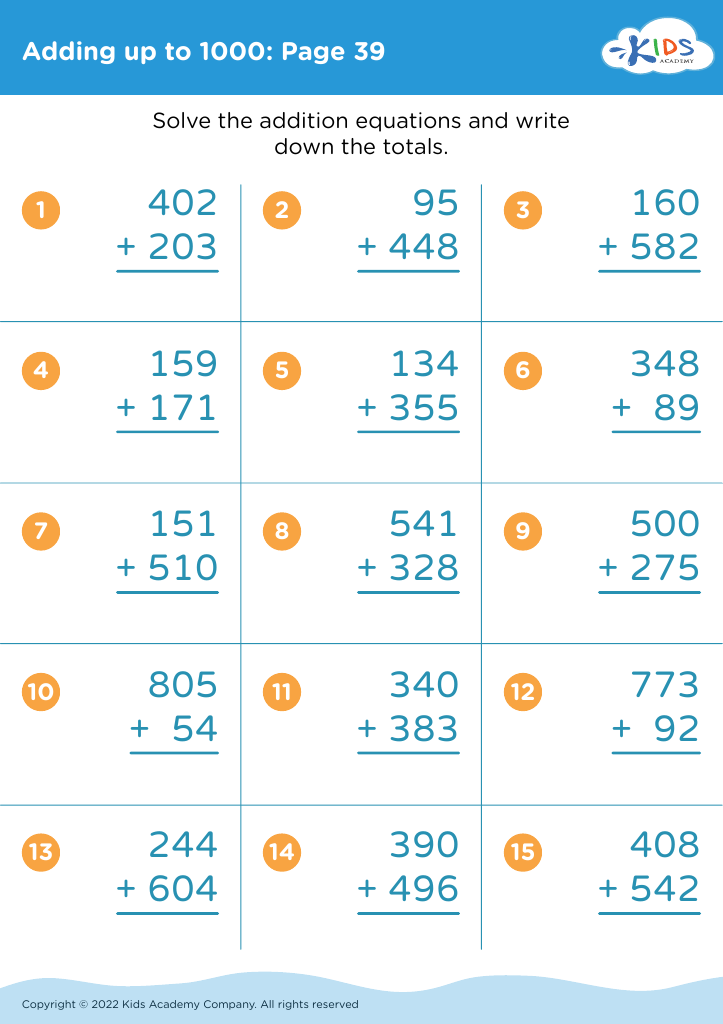
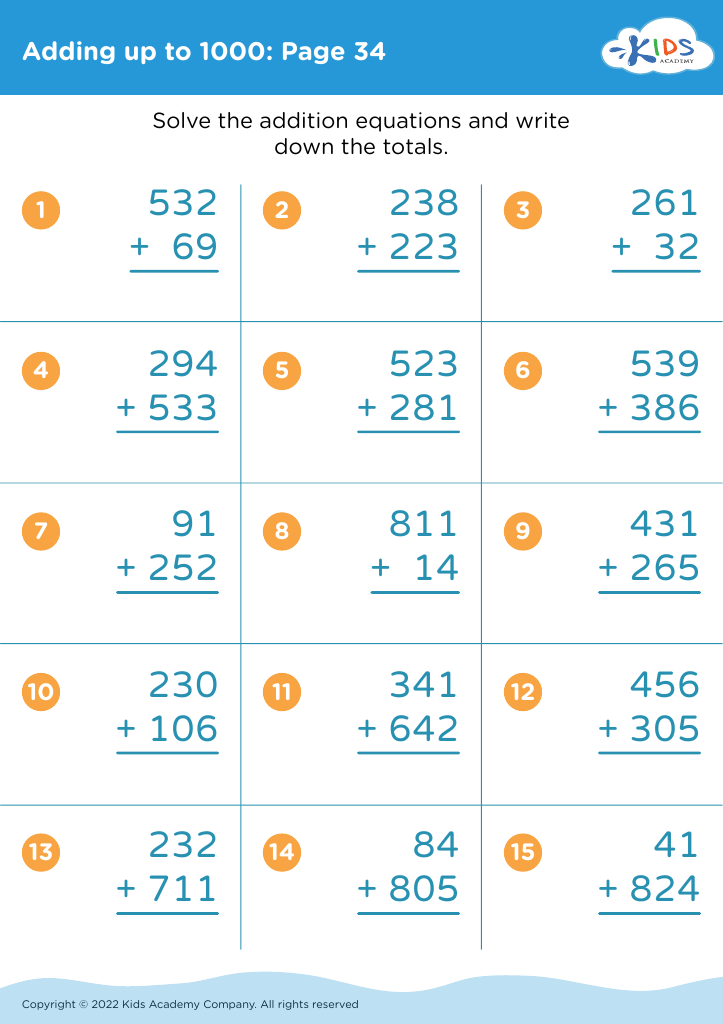
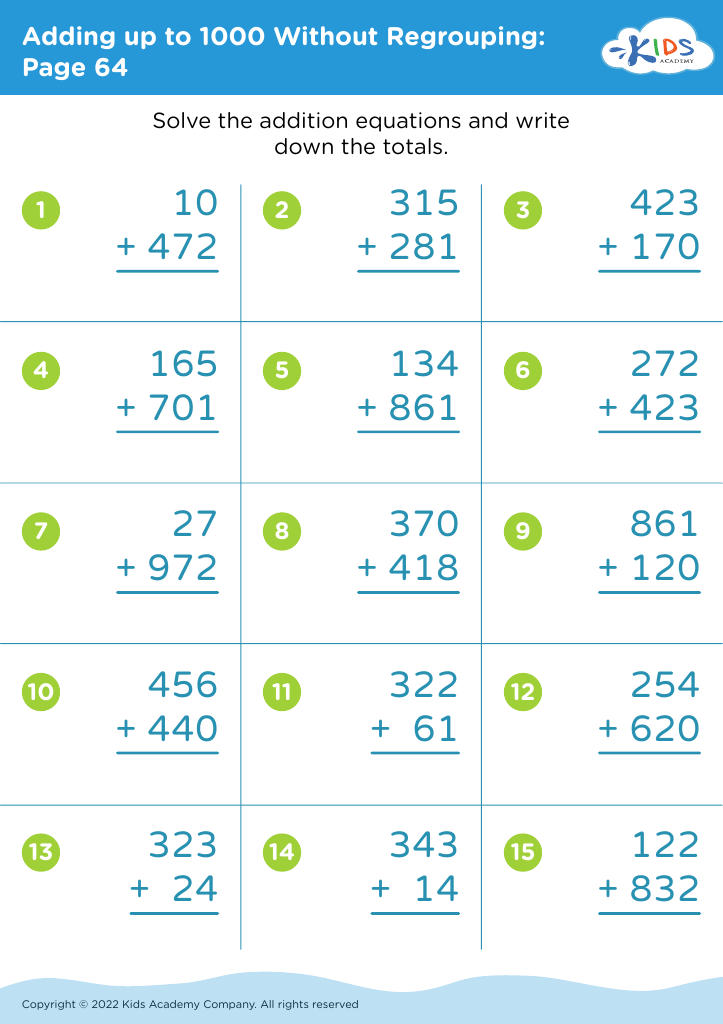
Unlock your child’s potential with our Number Sequencing Adding up to 1000 Worksheets, designed for ages 4-8. These engaging worksheets help young learners develop essential math skills, including counting, number recognition, and sequencing. With a focus on adding up to 1000, kids will gain confidence in their arithmetic abilities through fun, interactive exercises. Perfect for both classroom use and at-home practice, our worksheets are an excellent resource to support early math learning, ensuring your child excels as they progress. Join Kids Academy today and give your child a strong mathematical foundation with our expertly crafted worksheets.
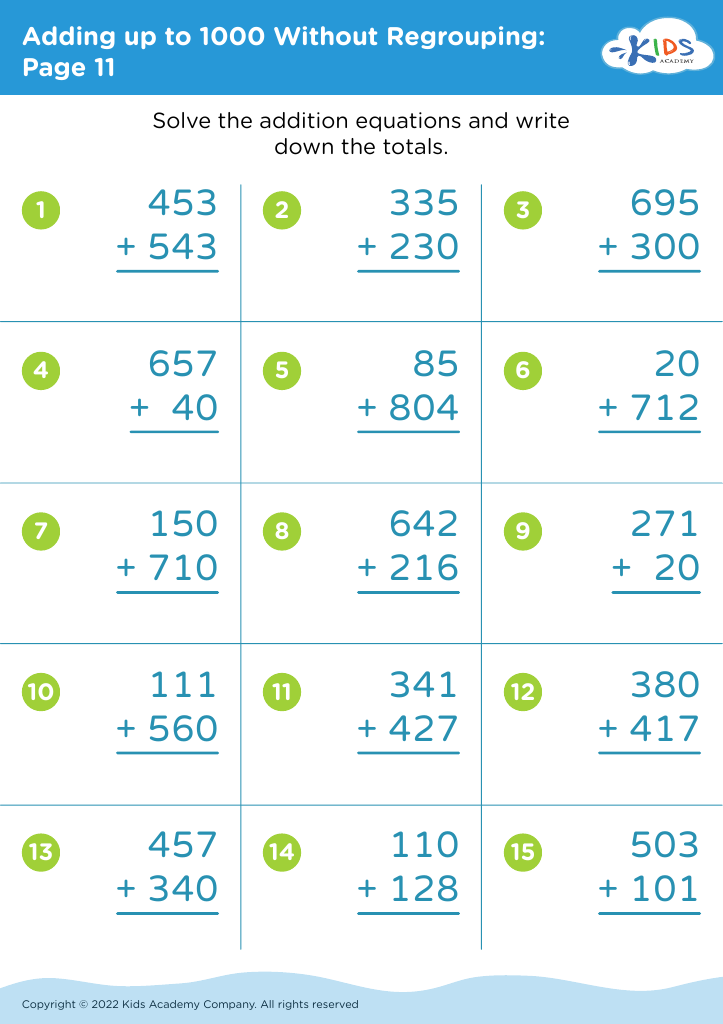



Parents and teachers should prioritize number sequencing and arithmetic skills for children ages 4-8 because these foundational competencies are critical for later mathematical success and cognitive development. Learning to sequence numbers and perform basic addition up to 1,000 not only strengthens number sense, but also enhances problem-solving and logical reasoning capabilities.
At this stage, children’s brains are highly adaptable and capable of absorbing new information rapidly. Introducing them to numbers and basic arithmetic through engaging and age-appropriate activities fosters a positive attitude towards math. When children understand number sequences, they can better grasp the relationships between numbers, anticipate patterns, and develop mental math strategies that will be pivotal in more complex mathematical tasks.
Moreover, embedding these skills early helps build confidence and reduces math anxiety. Activities that promote sequencing and addition, such as puzzles, counting games, and interactive lessons, also improve concentration, memory, and attention to detail, all of which are essential skills across all subjects.
Importantly, fluency in basic arithmetic is closely tied to everyday functionality, enabling children to make sense of the world around them and preparing them for independent problem-solving. For instance, understanding sequences helps with telling time, while addition is fundamental for tasks like shopping and playing games. Thus, foundational math skills support both academic and real-life applications, making it crucial for young children to master number sequencing and addition up to 1,000.








