Pattern recognition Adding up to 1000 Worksheets for Ages 4-8
3 filtered results
-
From - To
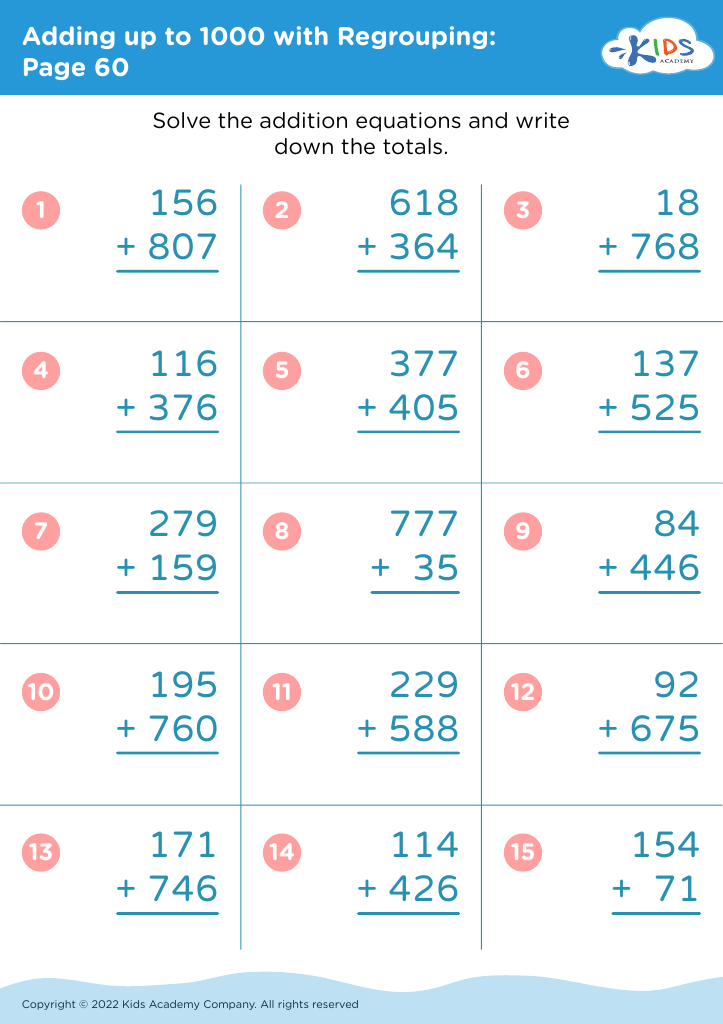
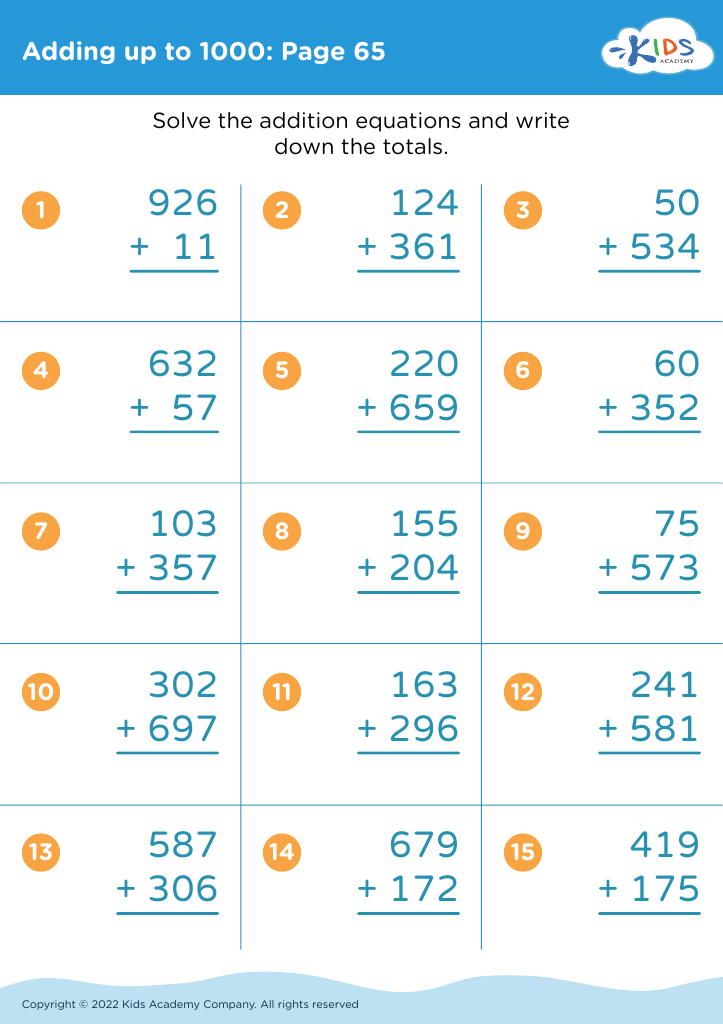
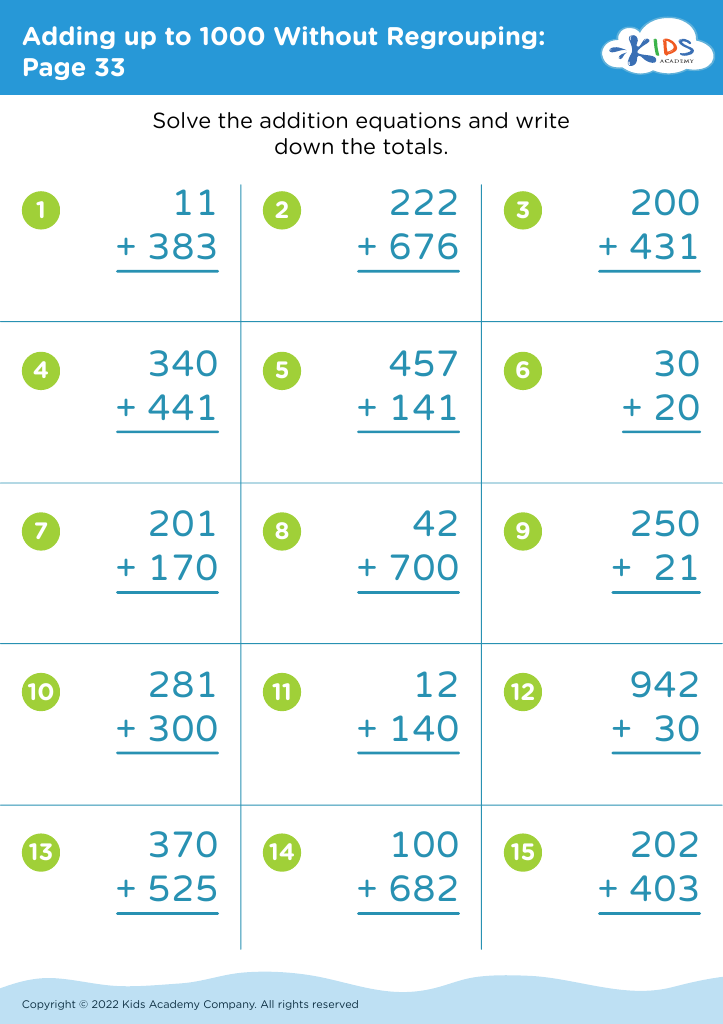
Welcome to our "Pattern Recognition Adding Up to 1000 Worksheets" for ages 4-8! These engaging worksheets are designed to enhance critical math skills by helping young learners identify and understand patterns while practicing addition up to 1000. Each worksheet features colorful designs and age-appropriate exercises that make learning enjoyable and effective. Perfect for at-home learning or classroom activities, these resources foster early mathematical thinking, promote problem-solving skills, and boost confidence in young minds. Download our worksheets today and give your child the tools they need to excel in math through fun and interactive pattern recognition activities!



Pattern recognition is a fundamental cognitive skill that helps young children develop critical thinking, problem-solving abilities, and mathematical understanding. For children aged 4 to 8, recognizing patterns is essential in learning how to add numbers proficiently, especially when working towards the goal of reaching sums up to 1000.
Parents and teachers should care about this skill because it lays the groundwork for more complex math concepts. Pattern recognition enhances a child’s ability to predict outcomes, identify relationships, and understand the structure of numbers. By learning to recognize sequences and patterns, children can develop strategies for mental arithmetic, making addition less daunting.
Additionally, engaging in pattern recognition activities can make learning fun and interactive. Games, visual aids, and hands-on exercises foster enthusiasm and curiosity towards math. This not only boosts confidence but also promotes a positive attitude towards learning.
Furthermore, early development of these skills can prevent future difficulties in math. As students prepare for advanced concepts, a strong foundation in understanding number patterns will facilitate smoother transitions into higher-level mathematics.
In conclusion, investing time in nurturing pattern recognition will benefit children's mathematical journey and overall cognitive development, setting them up for future academic success.








