Problem Solving Adding up to 1000 Worksheets for Ages 4-8
3 filtered results
-
From - To
Explore our engaging "Problem Solving Adding up to 1000 Worksheets" designed specifically for children ages 4-8! These innovative worksheets help young learners enhance their math skills while tackling real-world problems. With a focus on addition, kids will practice adding numbers up to 1000, encouraging critical thinking and boosting their confidence in math. Each worksheet includes fun scenarios and colorful illustrations to keep students motivated and engaged. Ideal for classroom use or at-home practice, these worksheets promote a hands-on approach to learning, ensuring a solid foundation in problem-solving skills. Start your child's math journey today with our carefully curated resources!
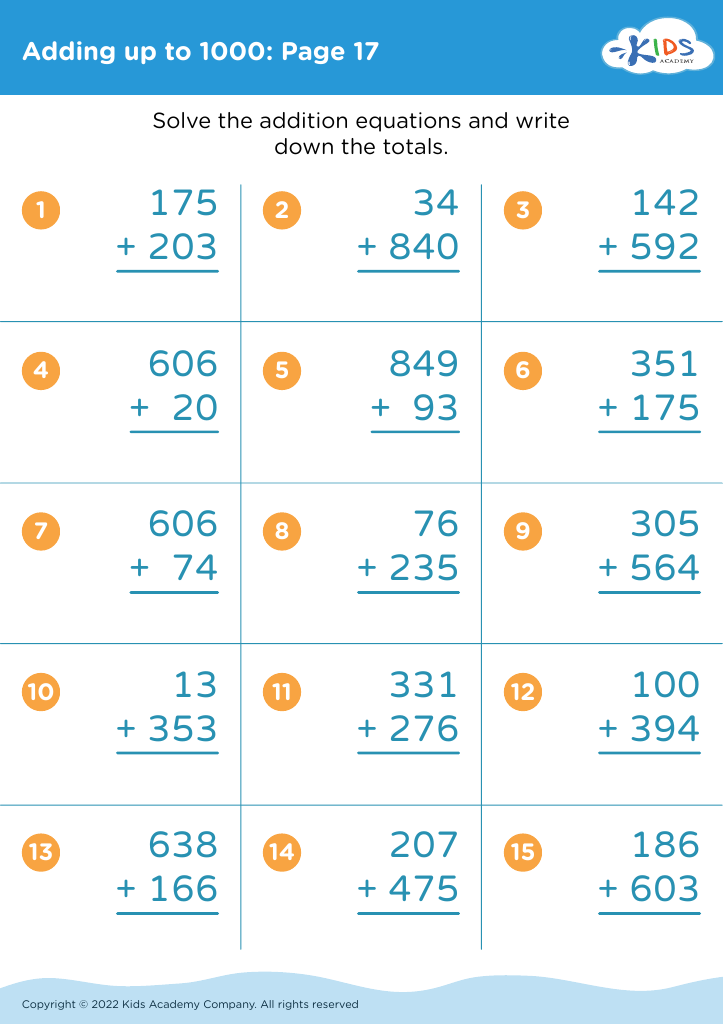
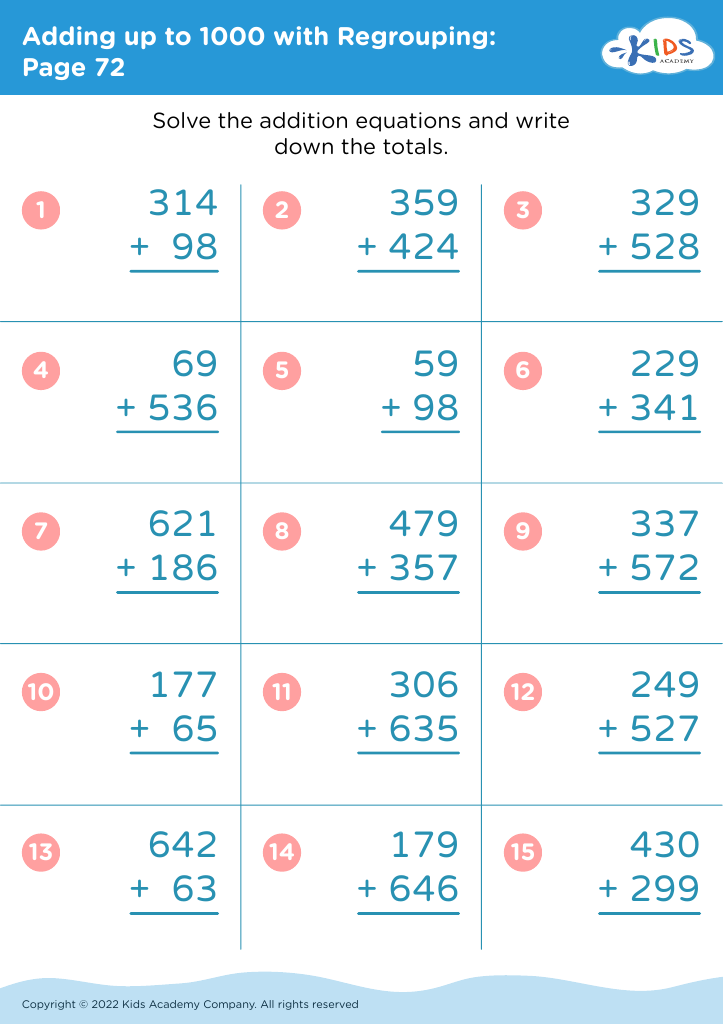
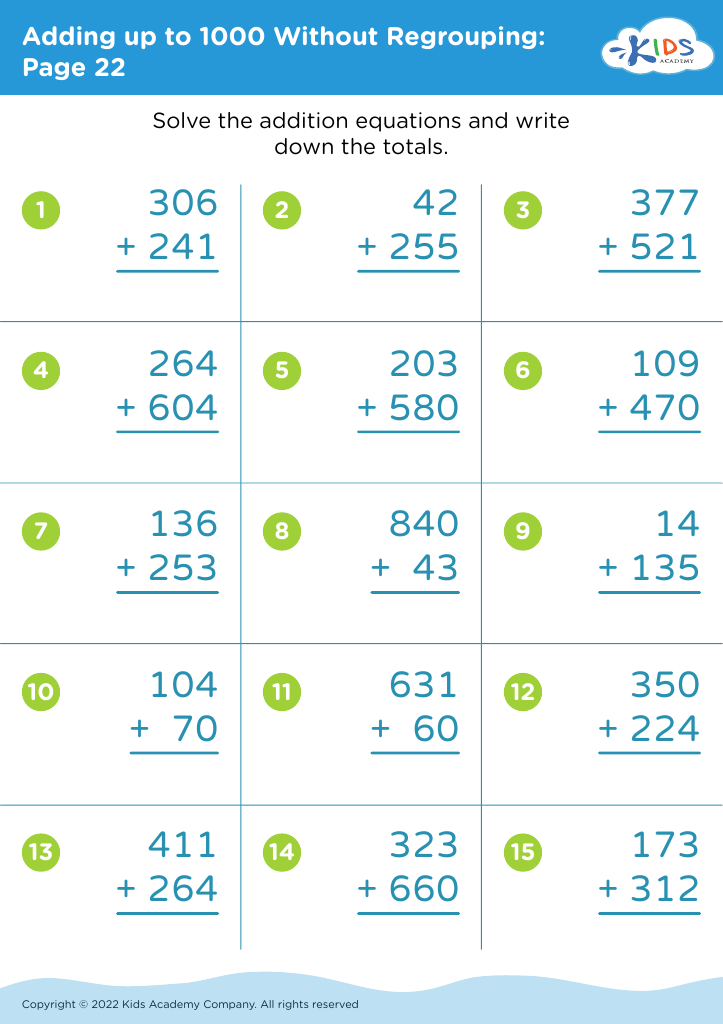



Parents and teachers should prioritize problem-solving skills, particularly involving addition up to 1000, for children aged 4-8 because these foundational abilities foster critical thinking and cognitive development. Mastering addition in this range not only aids in the understanding of larger numbers but also promotes a sequential thought process essential for tackling more complex mathematical concepts in the future.
Engaging young learners in problem-solving activities centered around addition prepares them for real-life situations that require quick thinking and decision-making. Activities that involve practical applications, such as budgeting or sharing, help children relate mathematics to their everyday experiences, making learning more meaningful and enjoyable.
Moreover, strengthening these mathematical skills at an early age builds confidence in children. They learn to approach challenges methodically and creatively, a mindset that will benefit them not just in mathematics but in academic endeavors across all subjects. As they successfully solve problems, they develop perseverance, and resilience, and a positive attitude towards learning, essential traits that contribute to lifelong success.
In summary, focusing on problem-solving strategies for addition up to 1000 lays a robust academic foundation, nurtures key life skills, and boosts the overall confidence of children, setting them up for future success.








