Problem-solving abilities Adding up to 1000 Worksheets for Ages 4-8
5 filtered results
-
From - To
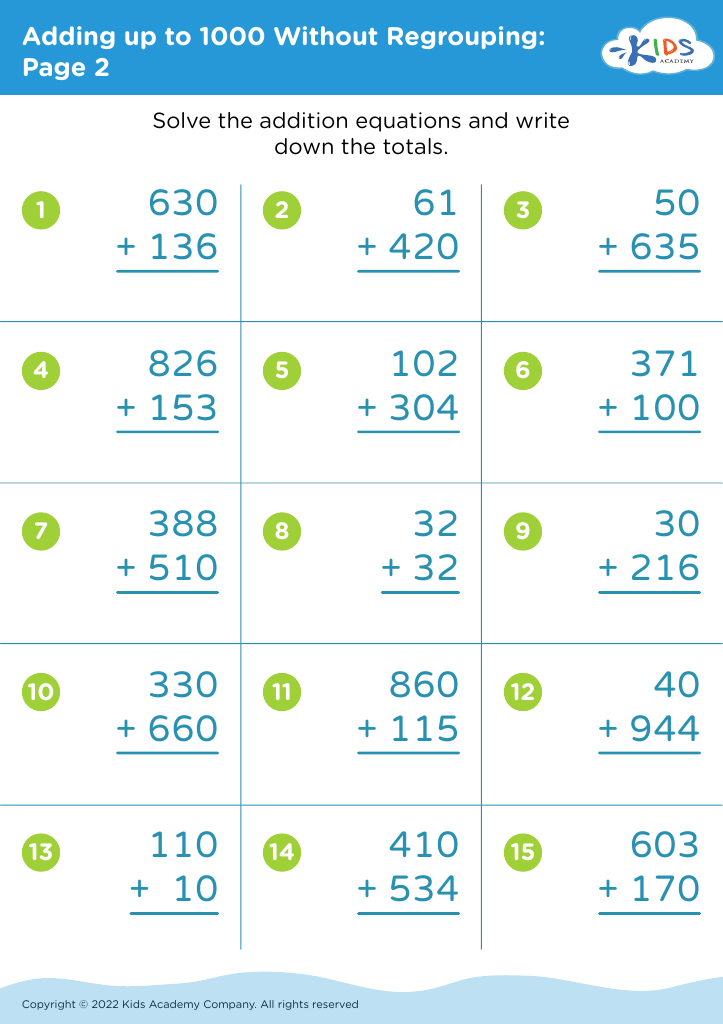
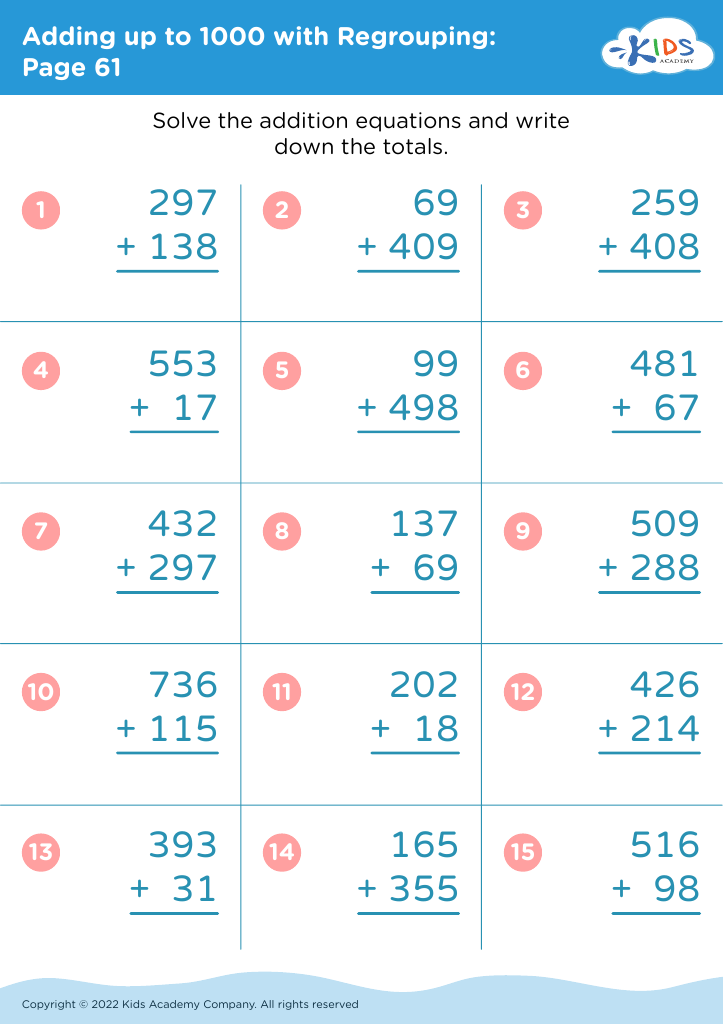
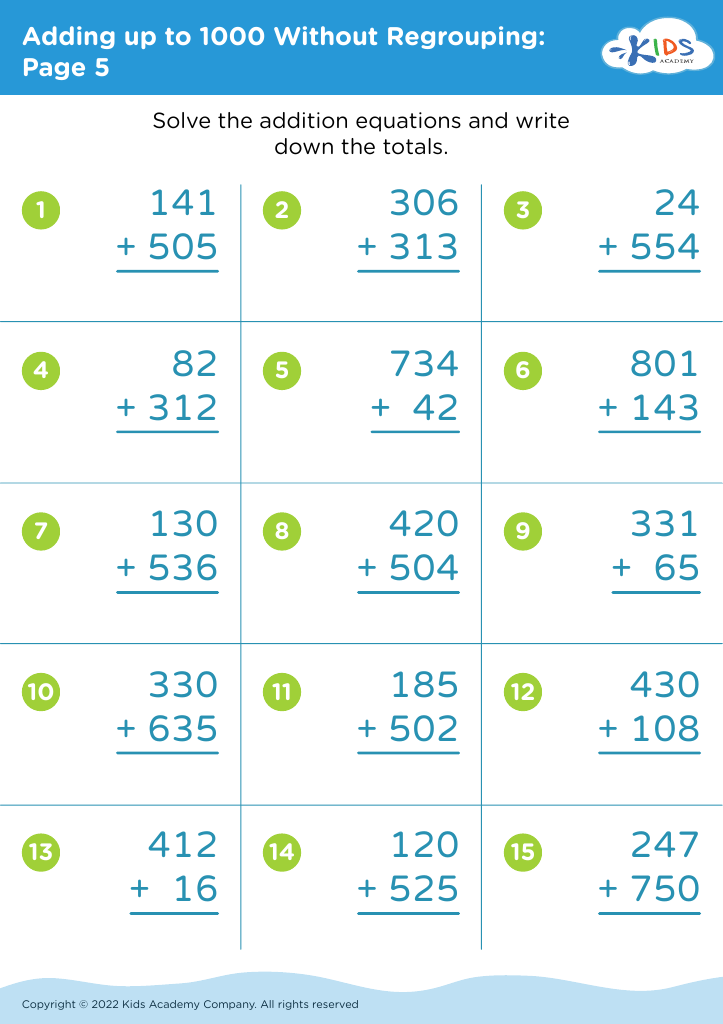
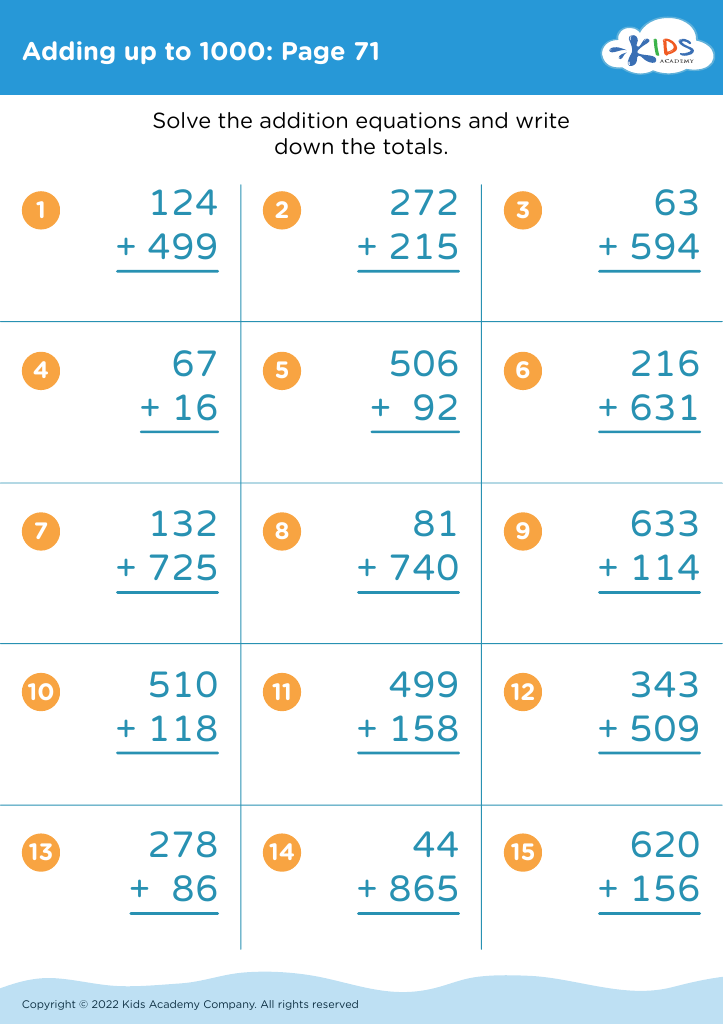
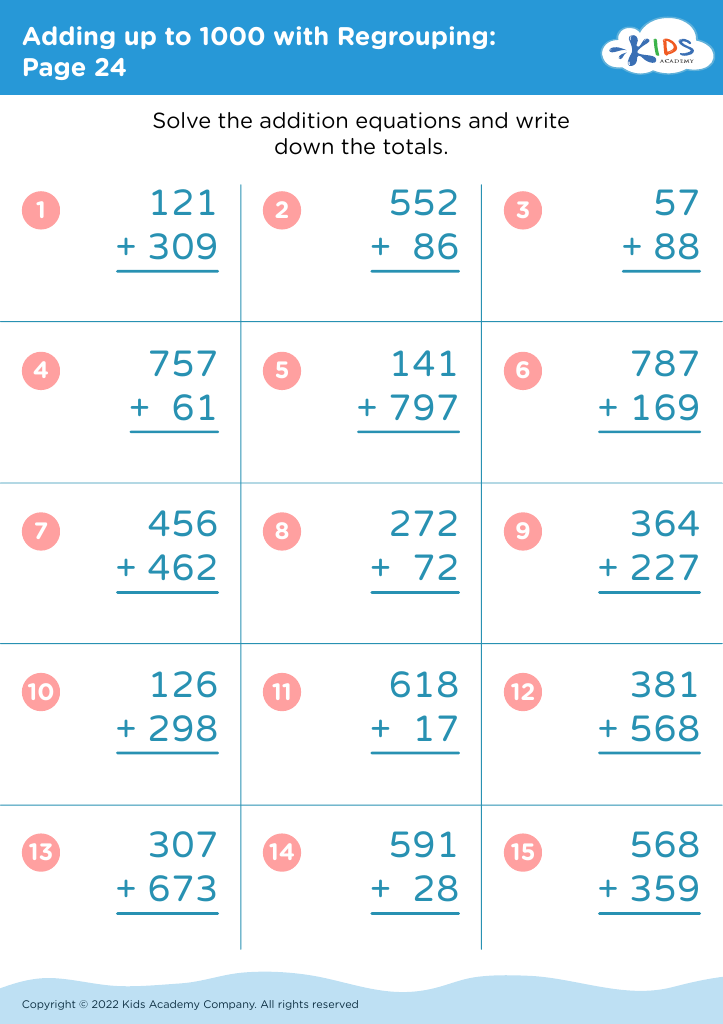
Enhance your child's problem-solving abilities with our engaging "Adding up to 1000" worksheets, designed specifically for ages 4-8. These interactive activities encourage critical thinking, fostering essential math skills in a fun and age-appropriate manner. With an extensive range of exercises, kids will practice addition, develop their number sense, and build confidence in arithmetic through captivating visuals and relatable scenarios. Each worksheet supports cognitive growth while promoting a strong sense of accomplishment as children overcome challenges. Perfect for home or classroom use, our worksheets are a valuable resource for any early-grade teacher or parent focused on enriching learning experiences. Explore today!



Developing problem-solving abilities in children aged 4-8 is crucial for their overall growth and future success. This age is foundational for cognitive development, and fostering skills around problem-solving equips children with the ability to think critically, make decisions, and navigate challenges effectively. Encouraging children to solve problems helps them understand cause-and-effect relationships, enhances their creativity, and promotes resilience.
When parents and teachers prioritize problem-solving, they inspire a love for learning and curiosity. Engaging children in activities that require this skill—like puzzles, simple math games, or scenario-based play—instills confidence in their ability to tackle obstacles. It fosters independence, as they learn to devise strategies rather than rely solely on adults for solutions.
Additionally, strong problem-solving abilities translate to improved social skills; children become better equipped to cooperate and communicate with peers, resolving conflicts and understanding varied perspectives. These competencies not only contribute to academic success but also prepare children for real-world situations beyond the classroom. By nurturing these abilities early, parents and teachers lay the groundwork for a generation of critical thinkers and innovative problem-solvers, essential for navigating an increasingly complex world.








