Reading analog clocks Adding up to 1000 Worksheets for Ages 4-8
3 filtered results
-
From - To
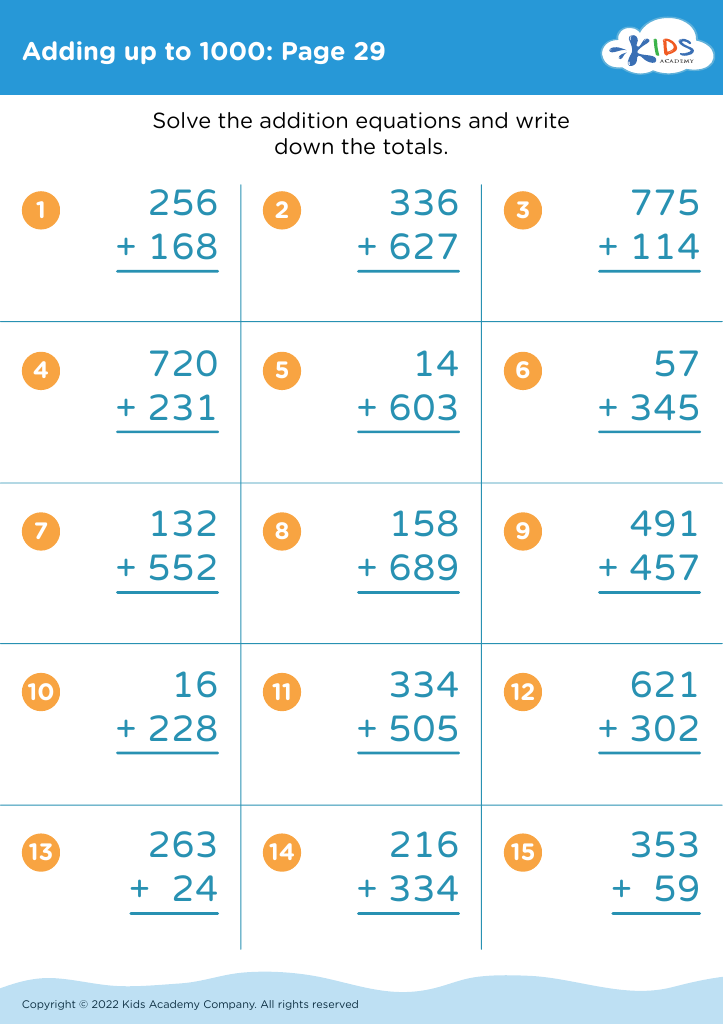
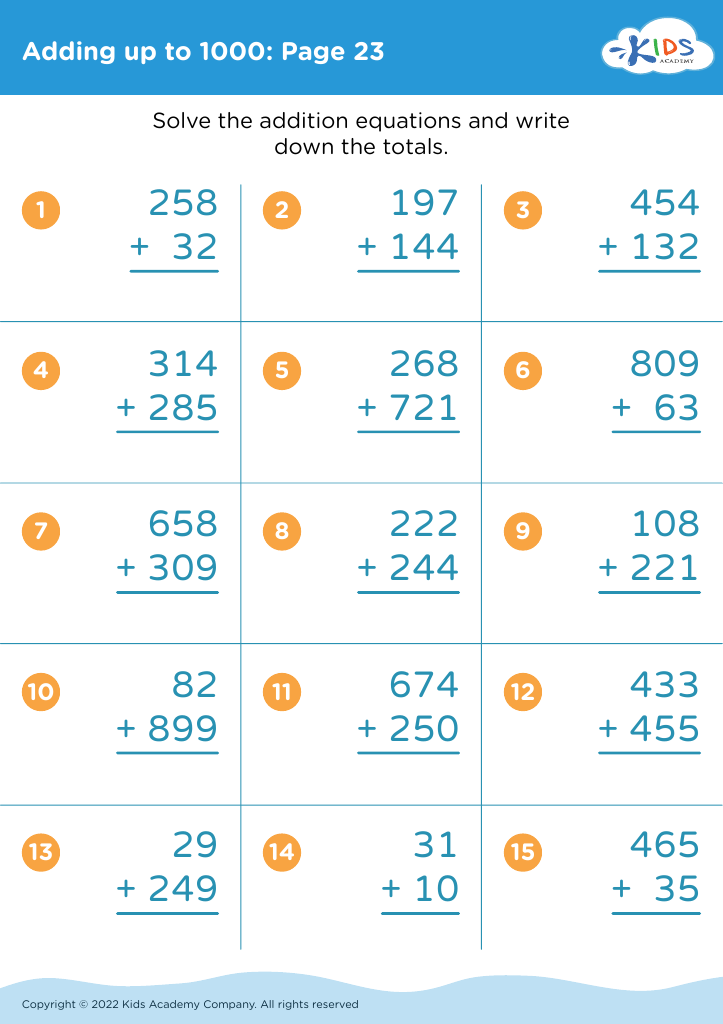
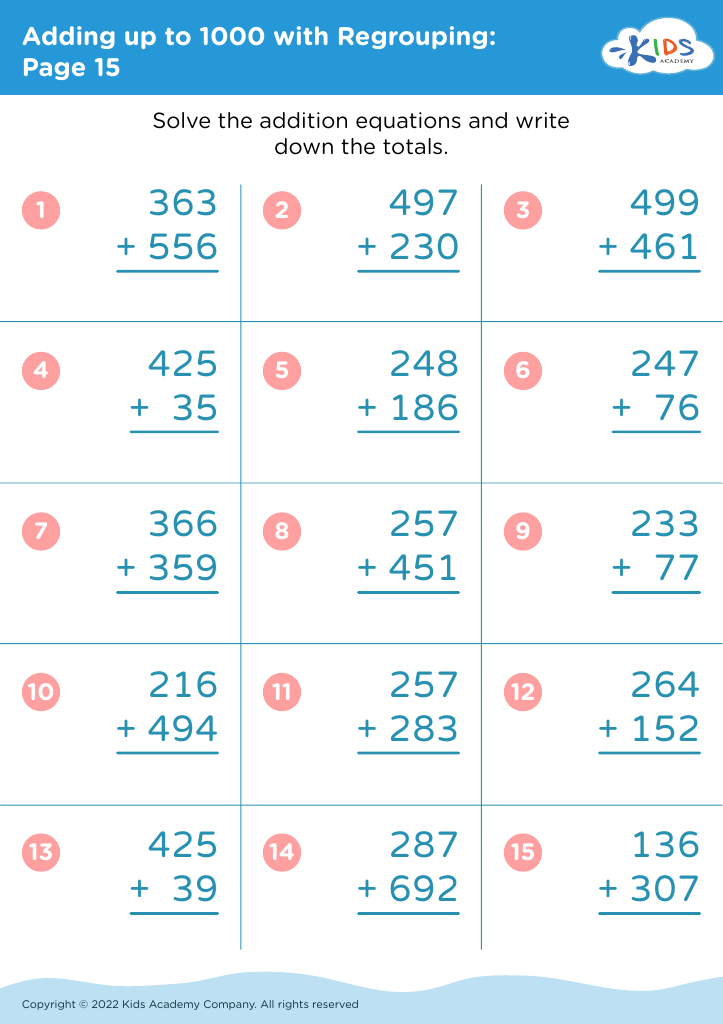
Welcome to our engaging "Reading Analog Clocks Adding Up to 1000 Worksheets" designed for children aged 4-8! These worksheets introduce the essential skill of reading analog clocks while incorporating math practice focused on addition. Your child will not only learn to tell time effectively but also reinforce their ability to add numbers up to 1000 in a fun and interactive way. With a variety of colorful and stimulating activities, these worksheets promote critical thinking and enhance numerical fluency. Make learning fun and enjoyable while setting the foundation for essential life skills. Download now and help your child master time and math!



Reading analog clocks is an essential skill for children aged 4-8 that can greatly enhance their understanding of time and improve their overall cognitive development. Parents and teachers should prioritize this skill for several reasons.
Firstly, learning to read analog clocks helps children develop critical thinking and problem-solving skills. Understanding the workings of an analog clock requires them to notice the position of the hour and minute hands, which boosts their spatial awareness and observational skills.
Secondly, mastering analog time-telling reinforces basic math concepts. Children learn to divide time into segments, helping them understand fractions as they work with the divisions on the clock face. This foundational concept progresses into more advanced math skills in later grades.
Moreover, being able to read an analog clock fosters a sense of independence in children. They become more accustomed to managing their own time, from knowing when to start homework to being punctual for activities.
Finally, analog clocks are still prevalent in daily life. While digital clocks are useful, an understanding of analog time helps children navigate various scenarios, from school to public transport. By investing in this skill, parents and teachers equip children with essential tools for personal and academic success.








