Understand subtraction Adding up to 1000 Worksheets for Ages 4-8
3 filtered results
-
From - To
Unlock the mystery of subtraction with our "Understand Subtraction: Adding up to 1000 Worksheets" specially designed for young minds aged 4-8. Perfectly crafted to build strong math foundations, these worksheets turn complex concepts into fun and engaging activities. Children will not only practice subtracting large numbers but also develop critical-thinking and problem-solving skills. With colorful visuals and step-by-step instructions, these worksheets transform learning into an exciting adventure. Ideal for parents and teachers aiming to make math less intimidating and more enjoyable. Visit Kids Academy to explore a wealth of resources tailored to inspire and educate young learners!
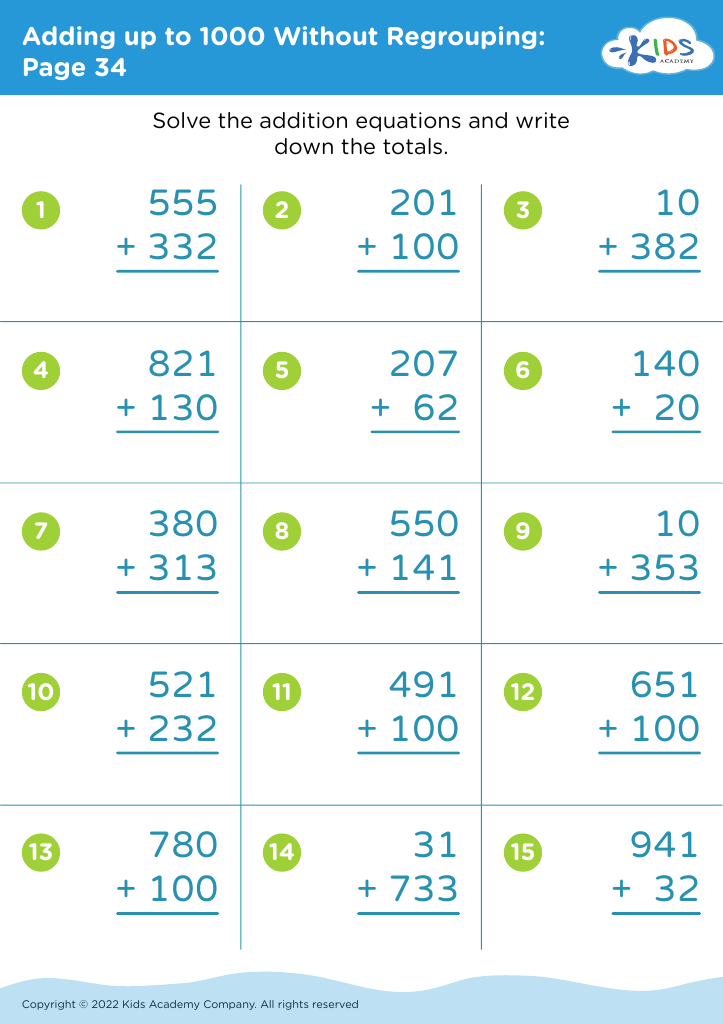
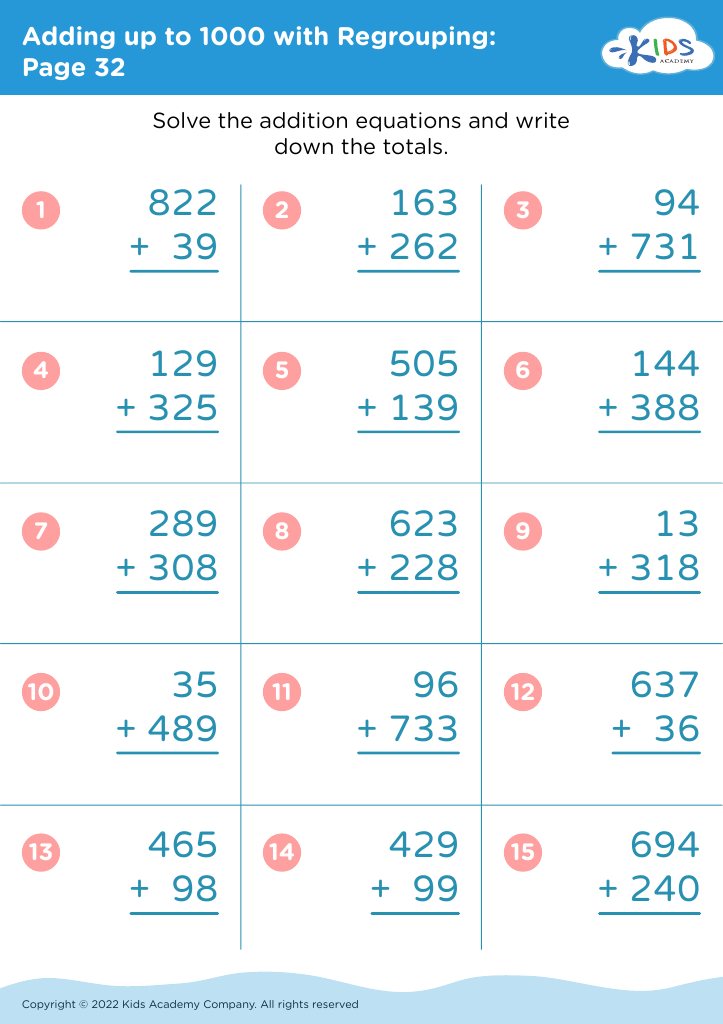
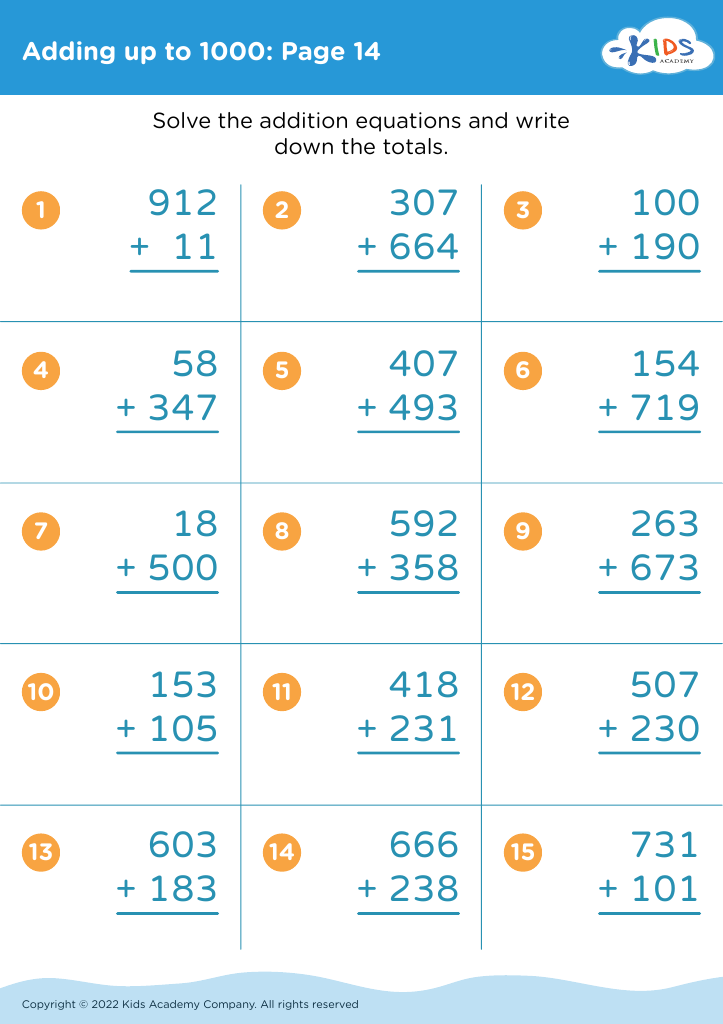



Understanding subtraction and being able to add up to 1000 at a young age is crucial for children's cognitive development, especially during the formative ages of 4-8. For parents and teachers, nurturing these skills early lays a strong mathematical foundation, fostering confidence and competence in numeracy that students will build upon throughout their education.
Subtraction and addition are fundamental arithmetic operations that need to be mastered for students to progress in more complex math topics. When children grasp these concepts, they begin to think more critically, solve problems efficiently, and develop logical reasoning skills. Learning to add and subtract also enhances memory and attention span, promoting overall cognitive development.
Additionally, understanding subtraction and addition beyond mere basic facts instills an appreciation for numbers and their relationships. This early engagement paves the way for positive attitudes toward more advanced mathematics in later years. Mastery in these areas at a young age often correlates with higher academic performance not just in math, but in other subjects that require analytical skills.
Parents and teachers who prioritize mastering these skills help ensure children can tackle everyday mathematical problems with confidence, supporting lifelong learning and success. It’s not just about arithmetic; it’s about developing critical thinkers prepared to navigate a numeric world.








