Understanding Sequences Adding up to 1000 Worksheets for Ages 4-8
6 filtered results
-
From - To
Explore our engaging "Understanding Sequences Adding up to 1000 Worksheets" designed specifically for children ages 4 to 8! These worksheets are crafted to enhance numerical understanding and sequence recognition through interactive exercises that promote critical thinking and problem-solving skills. Your little learners will enjoy fun activities that introduce them to the concept of sequences, helping them practice addition while building confidence in their math abilities. Perfect for at-home learning or classroom use, these resources support early childhood education by making math enjoyable and accessible. Dive into the world of sequences and watch your child thrive in their mathematical journey!
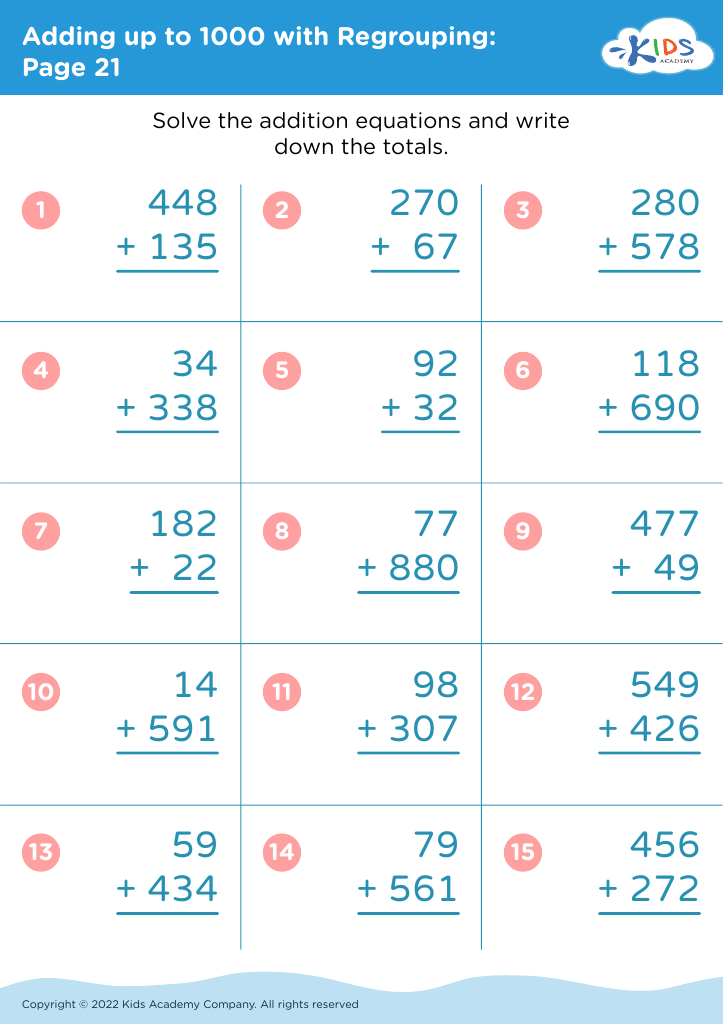
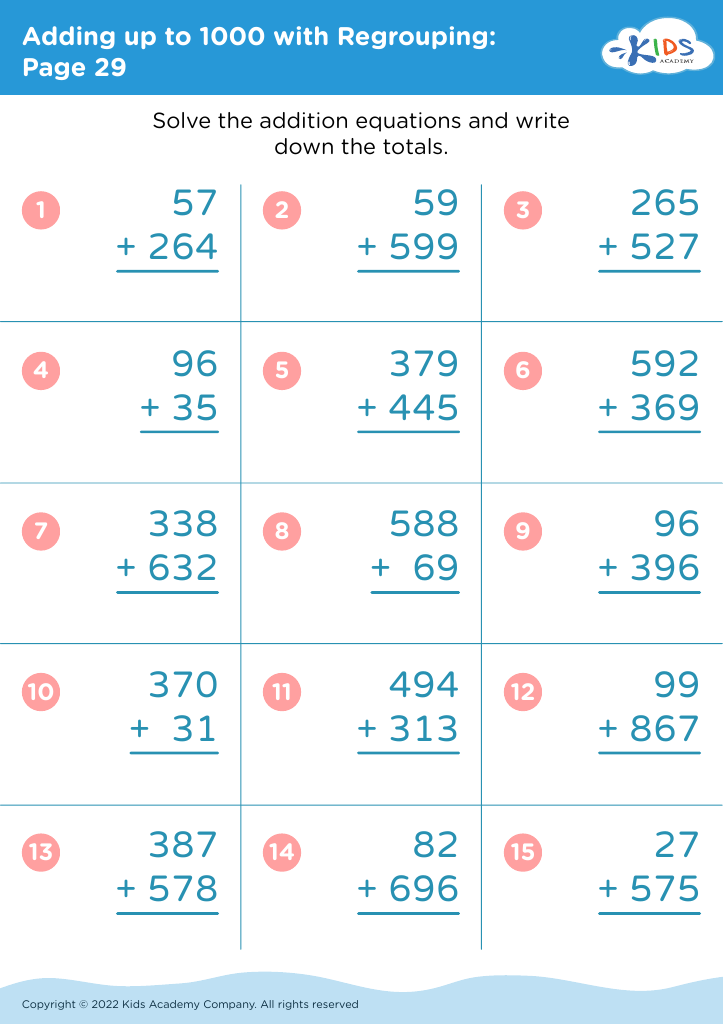
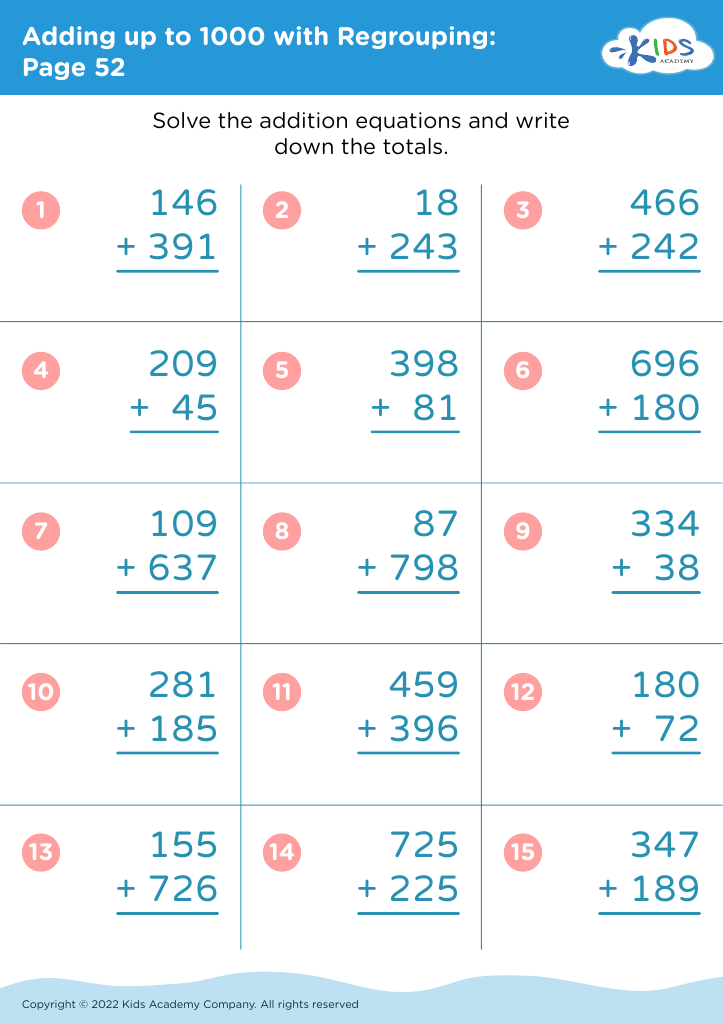
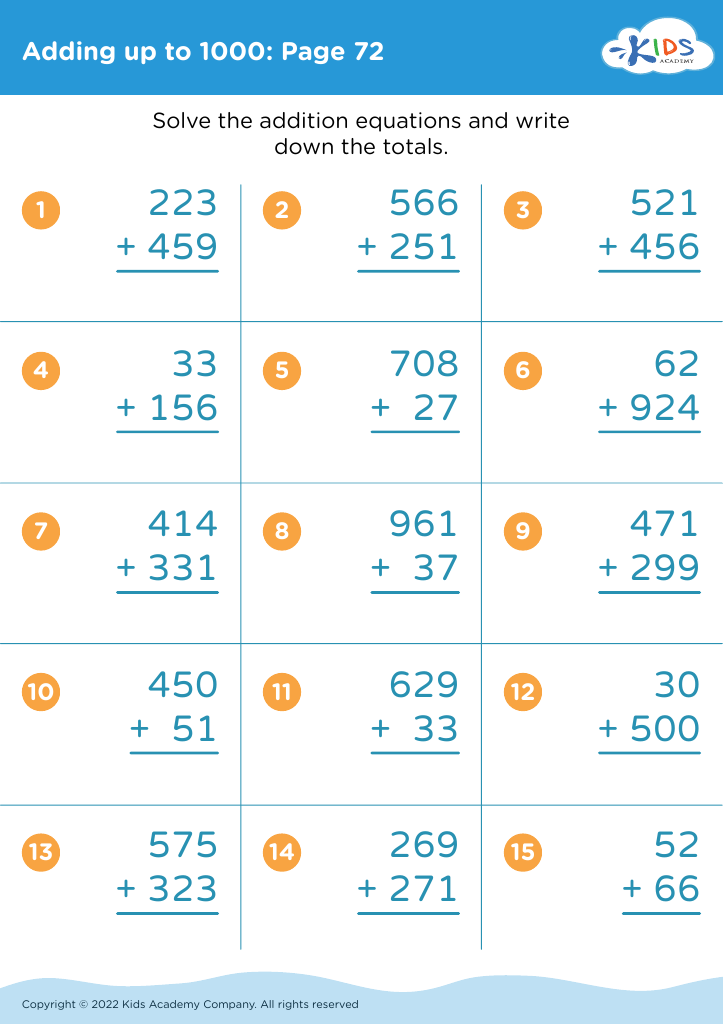
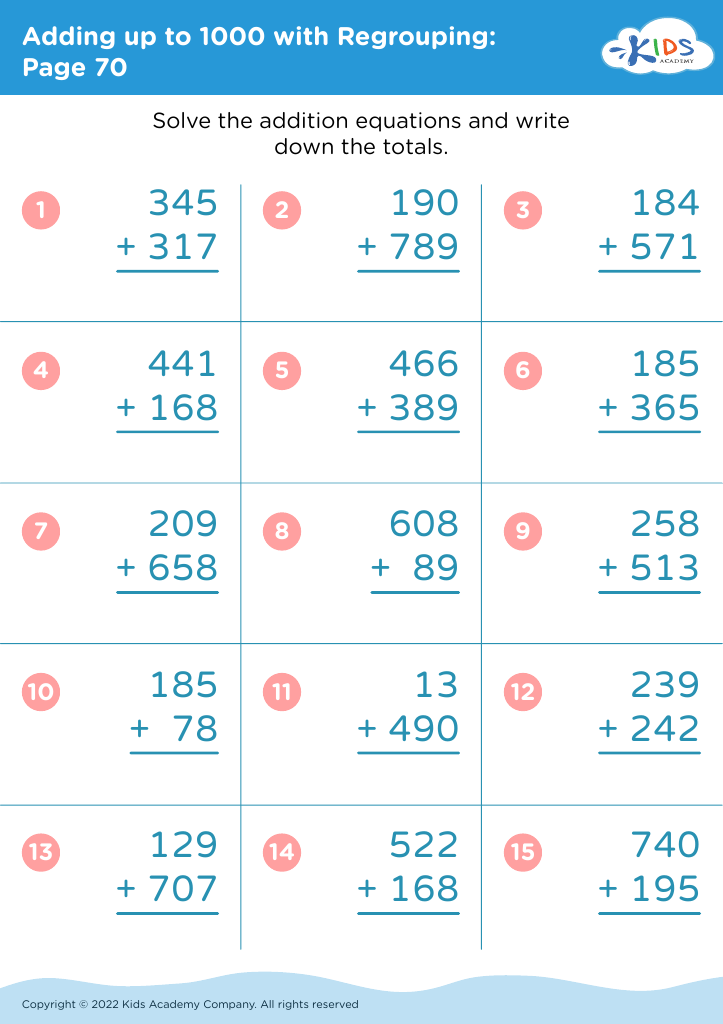
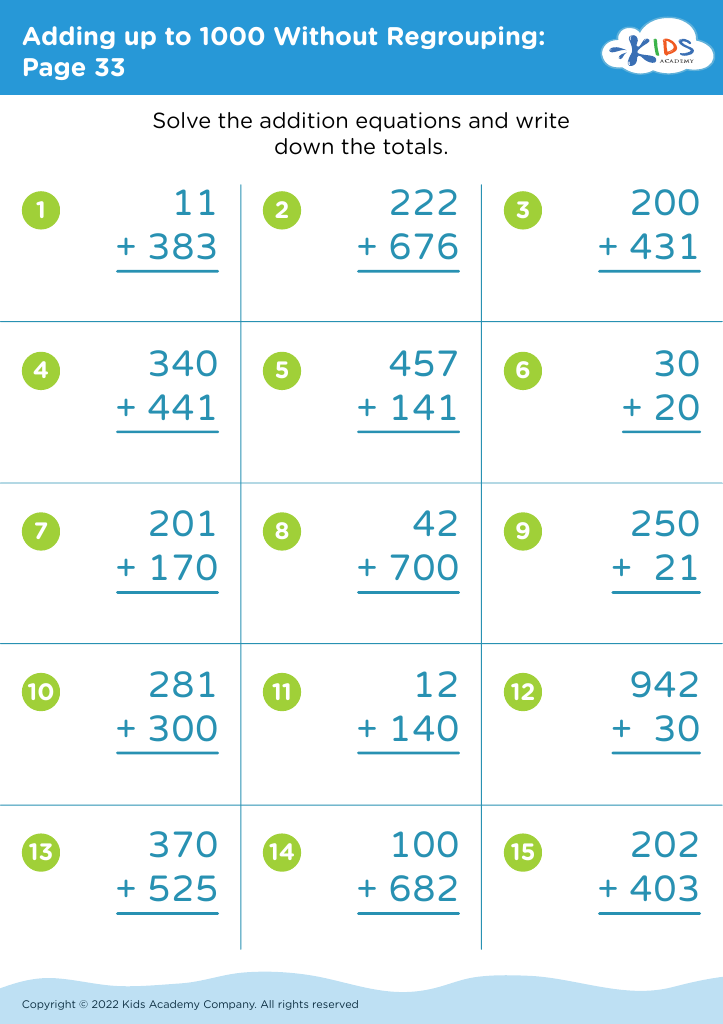



Understanding sequences, particularly when they add up to 1000, is crucial for young learners aged 4-8 as it lays the foundational skills for more complex mathematical concepts. This age group is at a formative stage, where developing number sense and the ability to recognize patterns can significantly influence future learning.
Children engaging with sequences help them grasp the notion of order and relationships between numbers. For instance, learning to recognize that certain numbers, when added together, reach a total of 1000 instills skills like addition, subtraction, and even basic multiplication. These concepts correlate closely with real-life scenarios, enhancing their problem-solving abilities.
Moreover, understanding sequences nurtures cognitive skills, as children learn to anticipate outcomes and create logical connections between numerical values. This is essential for their academic growth, serving as a bridge to advanced mathematics.
Additionally, fostering a mathematical mindset early on can boost confidence and curiosity about learning. Parents and teachers who embrace this concept not only support skill acquisition but also encourage a positive attitude toward mathematics in general, promoting lifelong learning. Investing time in this foundational knowledge can yield significant benefits in their academic journeys and overall development.








