Understanding sequencing Adding up to 1000 Worksheets for Ages 4-8
3 filtered results
-
From - To
Unlock the power of numbers with our "Understanding Sequencing Adding up to 1000 Worksheets for Ages 4-8". Specially designed to engage young minds, these worksheets promote essential math skills such as sequencing and addition. Tailored for early learners, each activity is playful yet educational, making complex concepts easy to grasp. With colorful illustrations and interactive tasks, children will build confidence and competence in adding up to 1000 while reinforcing their knowledge of numerical order. Enhance your child's mathematical foundation and turn learning into an adventure with these thoughtfully crafted printables. Start their journey towards numerical mastery today!
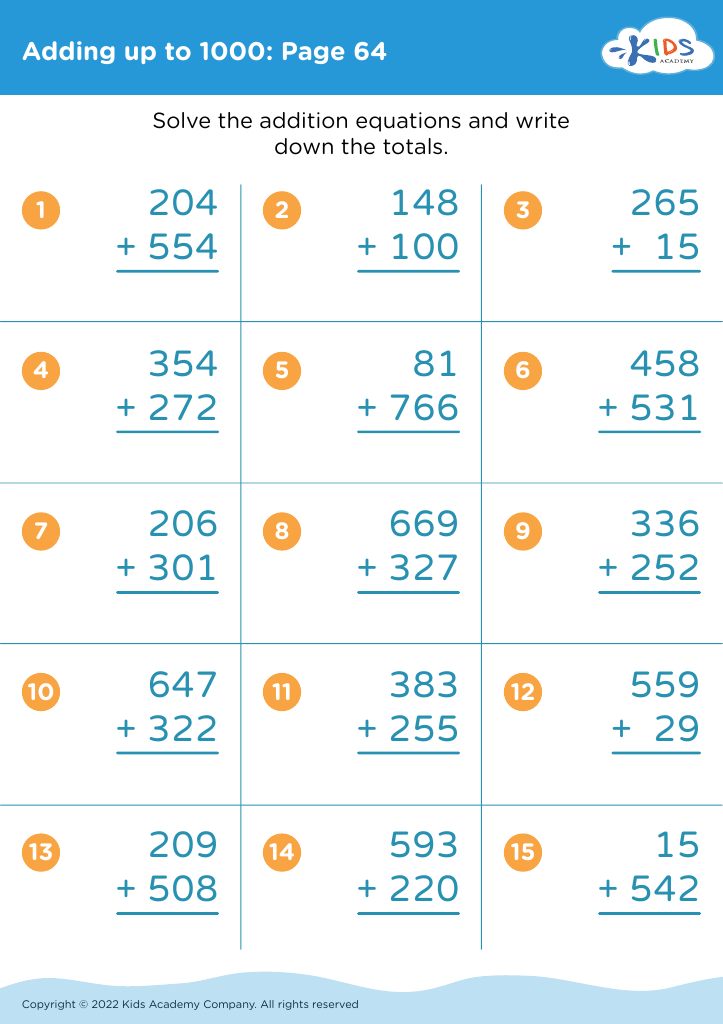
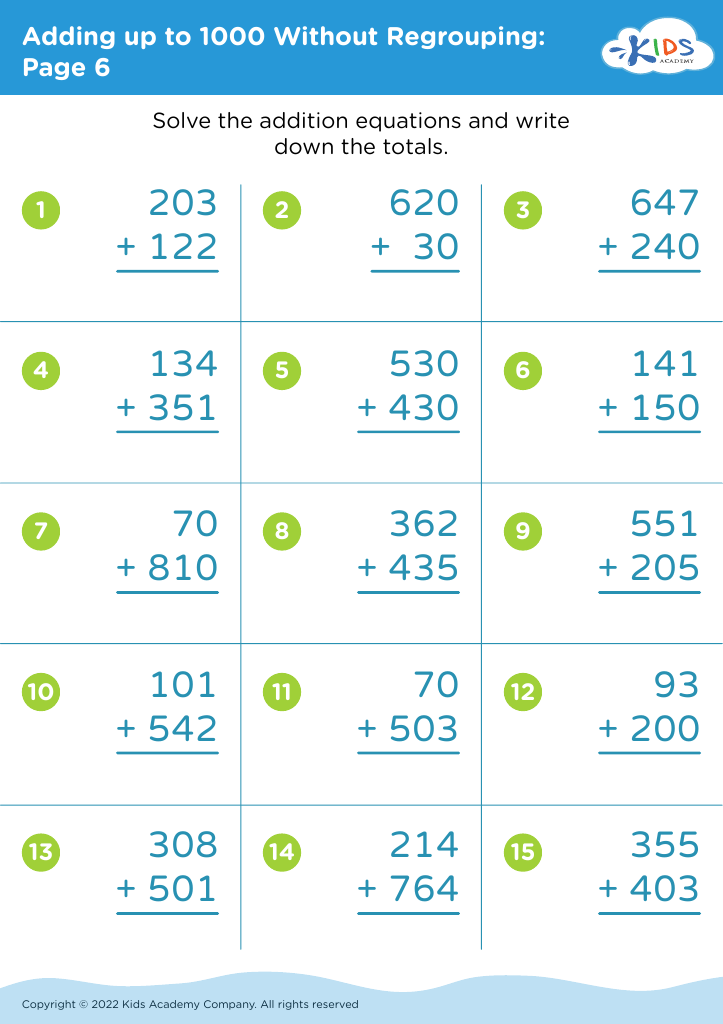
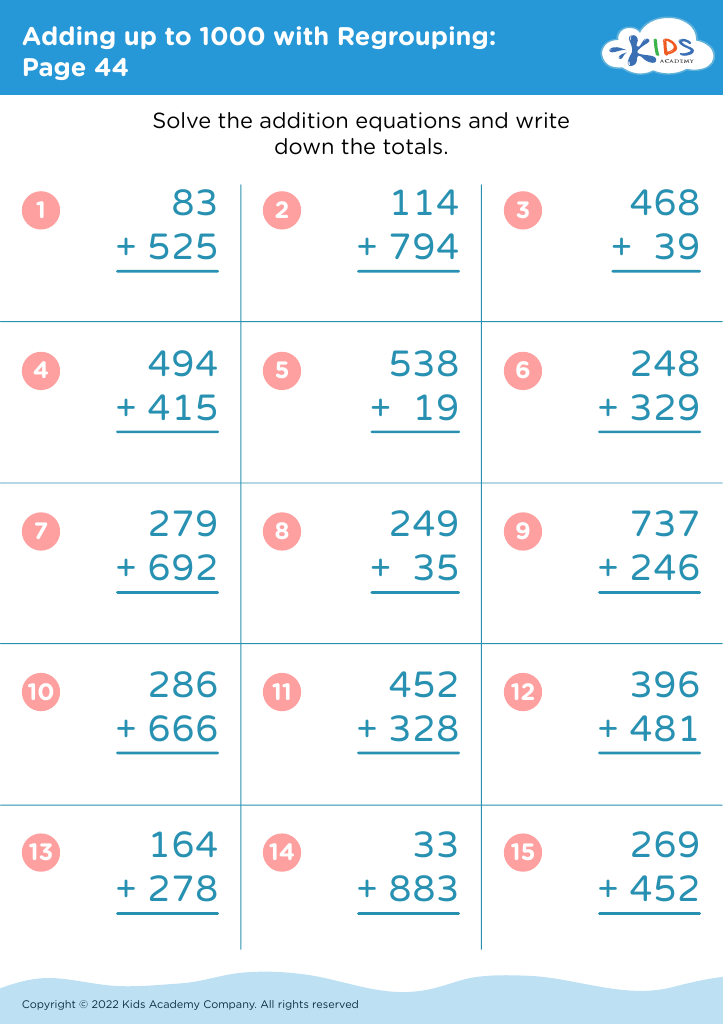



Understanding sequencing and adding up to 1000 at an early age lays the groundwork for essential math and cognitive skills. For children ages 4-8, these abilities are crucial as they help in developing logical thinking, problem-solving, and organizational abilities which are vital for their academic growth.
Sequencing teaches children the order of events and how things follow a set pattern. This fundamental skill trickles down into reading comprehension, as understanding the sequence of events in a story helps in grasping the full meaning. In math, sequencing enables them to understand the order of operations and patterns within numbers.
Adding up to 1000 introduces children to larger numbers early on, boosting their confidence with arithmetic operations. It also strengthens their understanding of number concepts such as place value, which is fundamental for more complex math topics they'll encounter later. Practicing addition exercises their memory, attention, and counting skills.
Moreover, mastering these skills can enhance self-esteem and eagerness to learn, given their ability to solve problems independently. For parents and teachers, supporting children in these areas during their formative years fosters a positive attitude towards learning and critical thinking skills, setting a solid foundation for future academic success.








