Understanding symmetry Adding up to 1000 Worksheets for Ages 4-8
4 filtered results
-
From - To
Discover our "Understanding Symmetry: Adding Up to 1000 Worksheets" designed for children aged 4-8! These engaging worksheets combine the concept of symmetry with the fundamental skill of addition, helping young learners grasp mathematical principles while refining their observational skills. Each activity encourages kids to identify symmetric shapes, visualize patterns, and practice addition up to 1000, fostering both creativity and critical thinking. Our thoughtfully designed exercises not only make learning fun but also reinforce essential math concepts in an interactive way. Perfect for use at home or in the classroom, these worksheets will captivate and educate young minds!
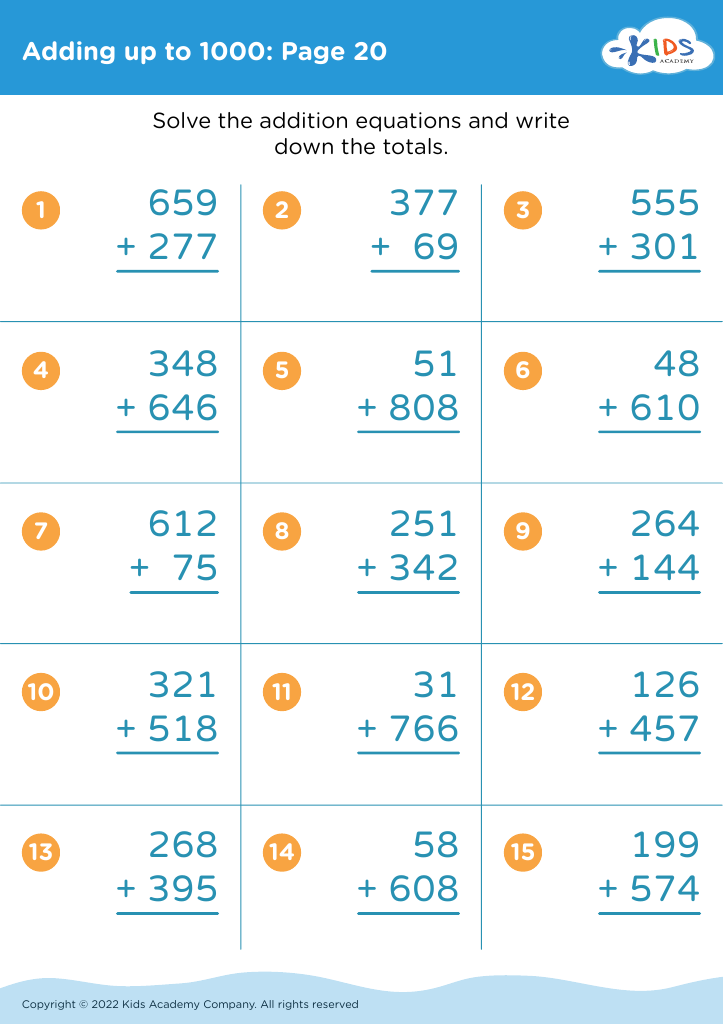
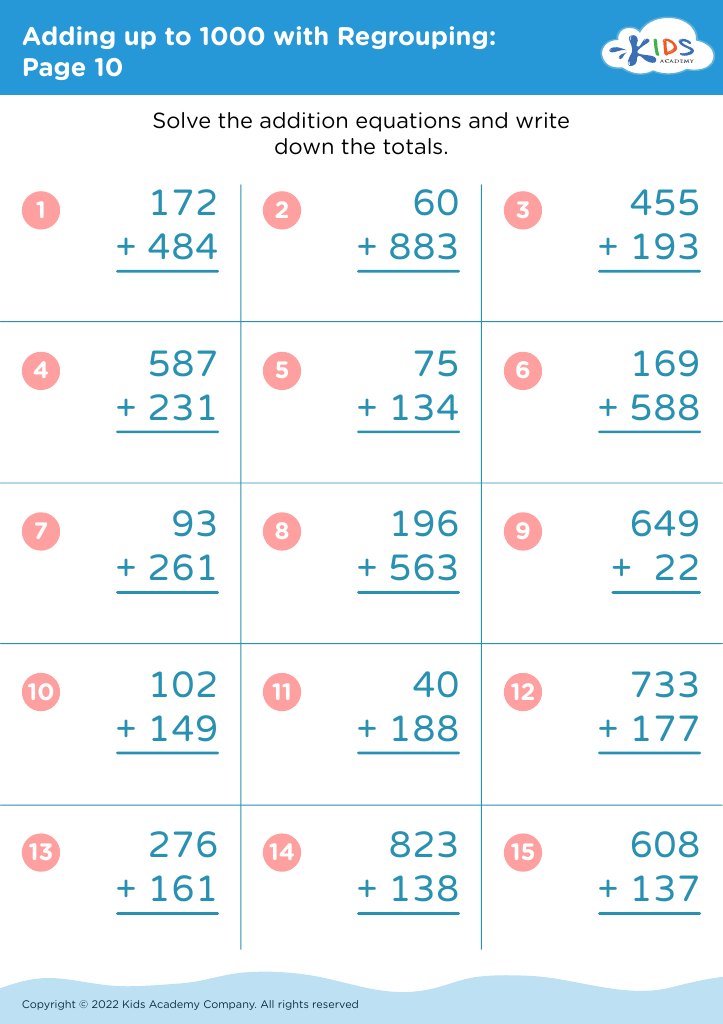
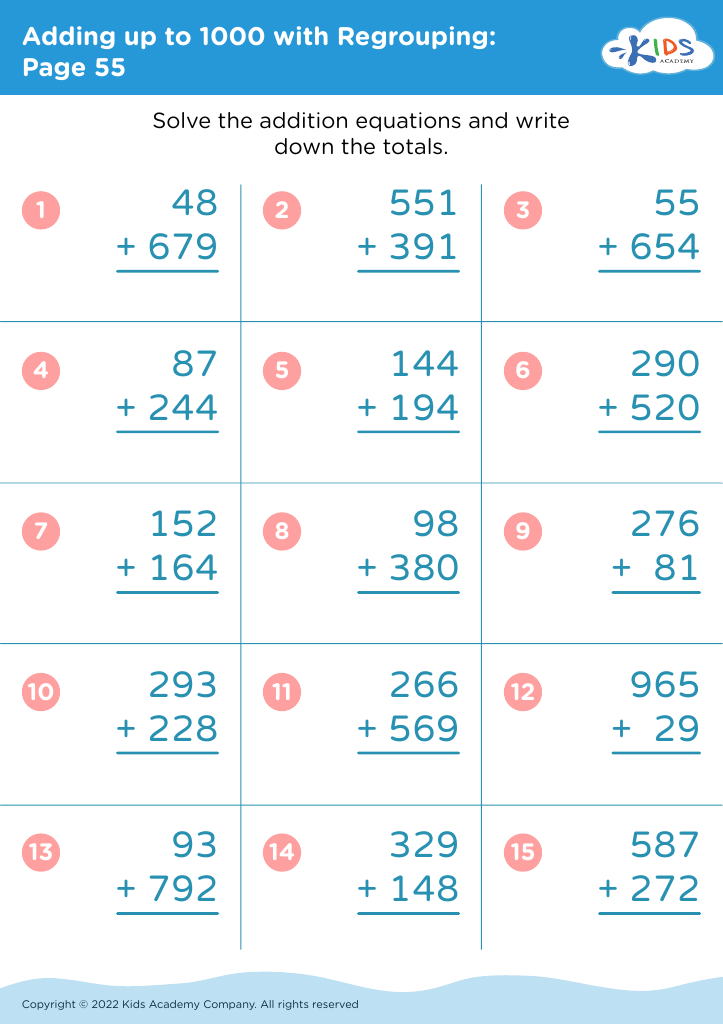
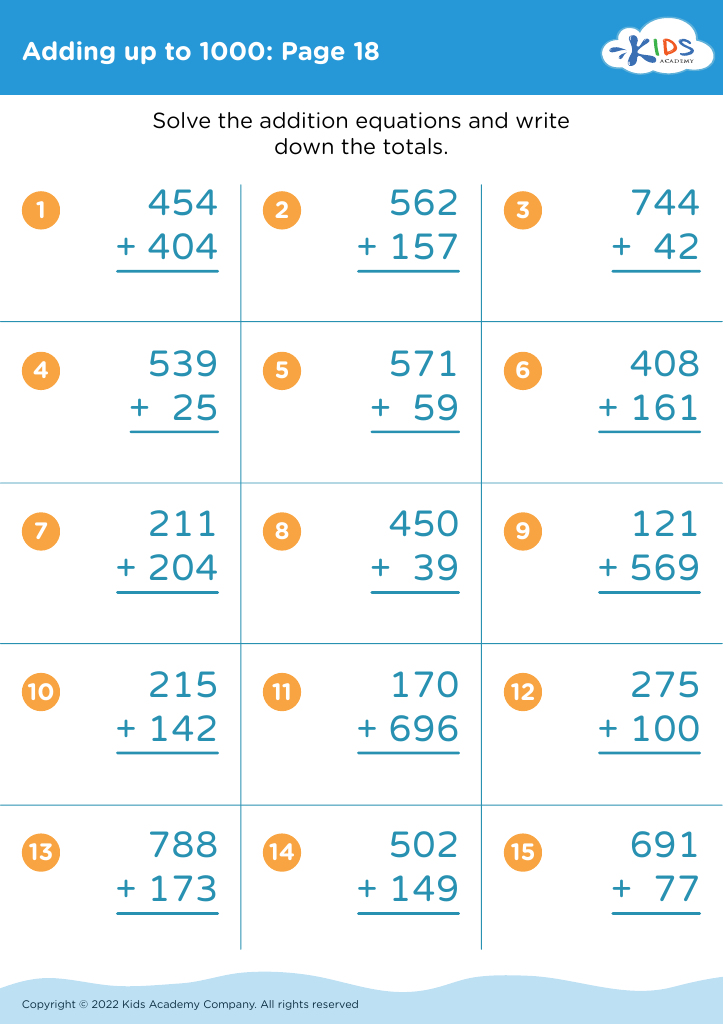



Understanding symmetry and learning to add up to 1000 are crucial skills for children aged 4-8, serving multiple developmental purposes.
Firstly, symmetry offers foundational concepts in math and art. Recognizing symmetrical patterns helps children develop spatial awareness, critical thinking, and observational skills. These skills are essential for problem-solving in more complex math topics later in life. The beauty of symmetry also cultivates appreciation for aesthetics, influencing creativity in daily life.
On the other hand, adding up to 1000 lays the groundwork for numerical literacy. Mastery of basic addition promotes confidence in handling larger numbers and strengthens overall calculation skills. It prepares children for more advanced topics in math and algebra, ensuring a solid mathematical foundation.
Moreover, learning these concepts can foster cooperative learning through collaborative games and activities designed around symmetry and addition. Engaging in such playful interactions helps build social skills and a love for learning, crucial during these formative years.
In a world increasingly reliant on quantitative and aesthetic literacy, fostering these skills in children ensures they are better equipped to face future challenges. Thus, parents and teachers should actively support the exploration of symmetry and addition to 1000, as it profoundly impacts children's cognitive and emotional growth.








