Animal identification Adding Up to 5 Worksheets for Ages 4-8 - Page 2
27 filtered results
-
From - To
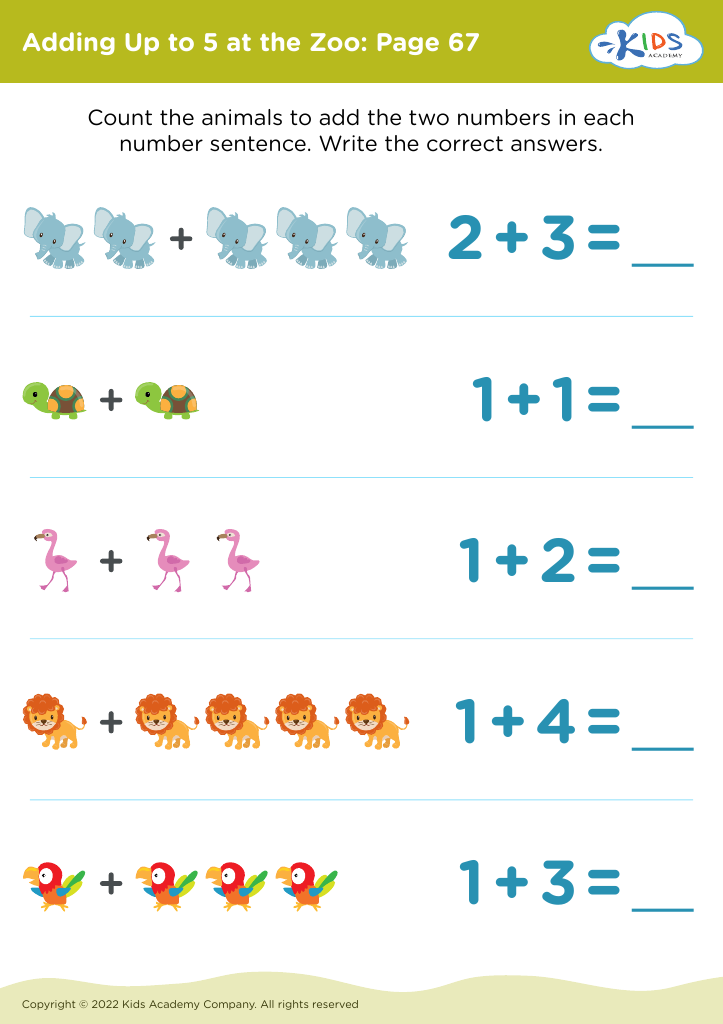
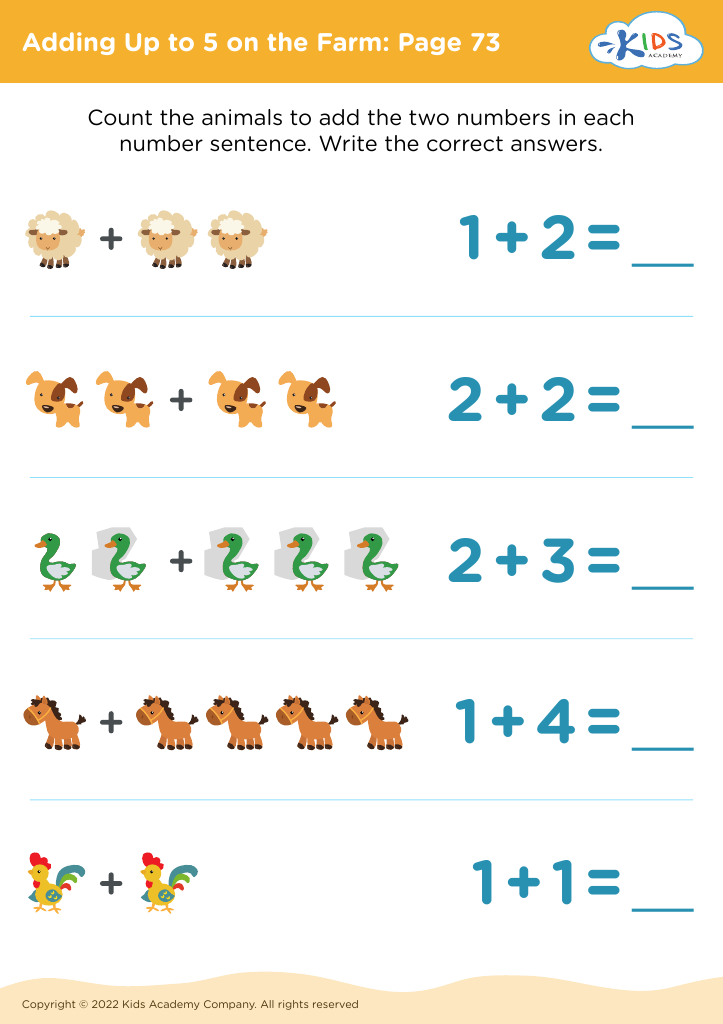
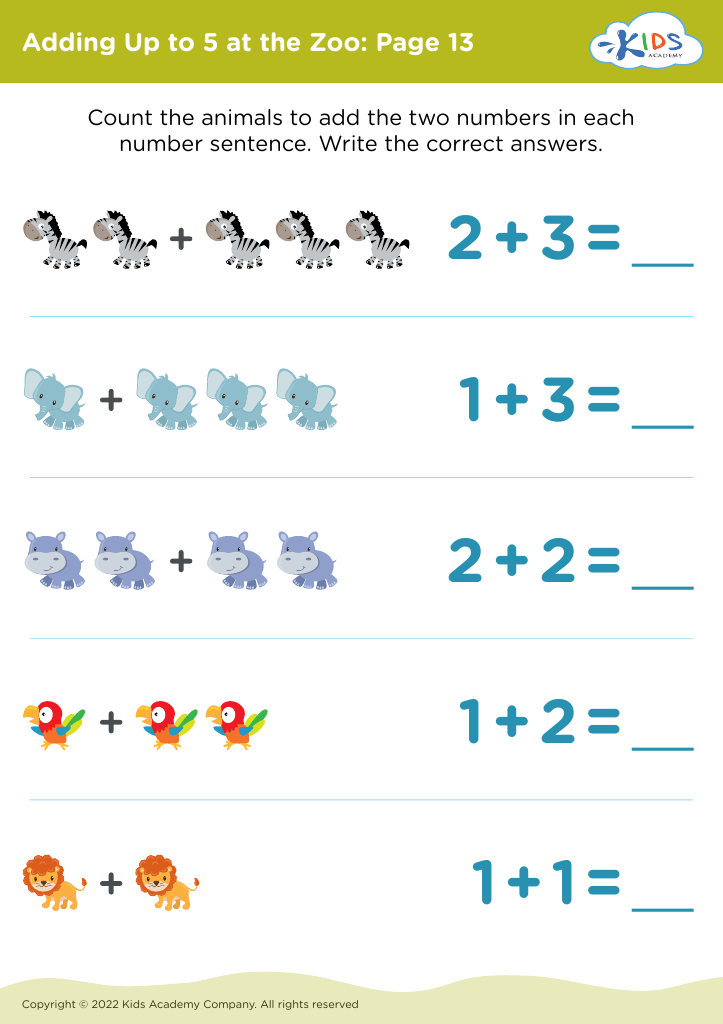








Animal identification is an essential concept for children aged 4-8, and both parents and teachers should prioritize it for several reasons. Firstly, learning to identify animals enhances children's observational skills, fostering a sense of curiosity about the natural world. This can lead to a deeper appreciation of biodiversity, helping children understand the importance of animals in our environment.
Secondly, as children practice identifying various animals, they engage in early mathematical concepts, such as counting. For instance, counting the number of legs on different animals helps develop number sense and introduces the idea of adding up. For example, noticing that a dog has 4 legs and an insect has 6 legs reinforces the concept that 4 plus 6 equals 10, providing a practical application of math in their day-to-day lives.
Moreover, animal examples can serve as storytelling tools that capture children's imaginations, making learning exciting and memorable. Educational activities centered around identifying animals also promote critical thinking and enhance language skills as children describe characteristics and habitats.
Ultimately, supporting animal identification enriches young learners' educational experience, nurturing well-rounded, empathetic individuals who understand and appreciate the animal kingdom while building vital foundational skills.








