





.jpg)
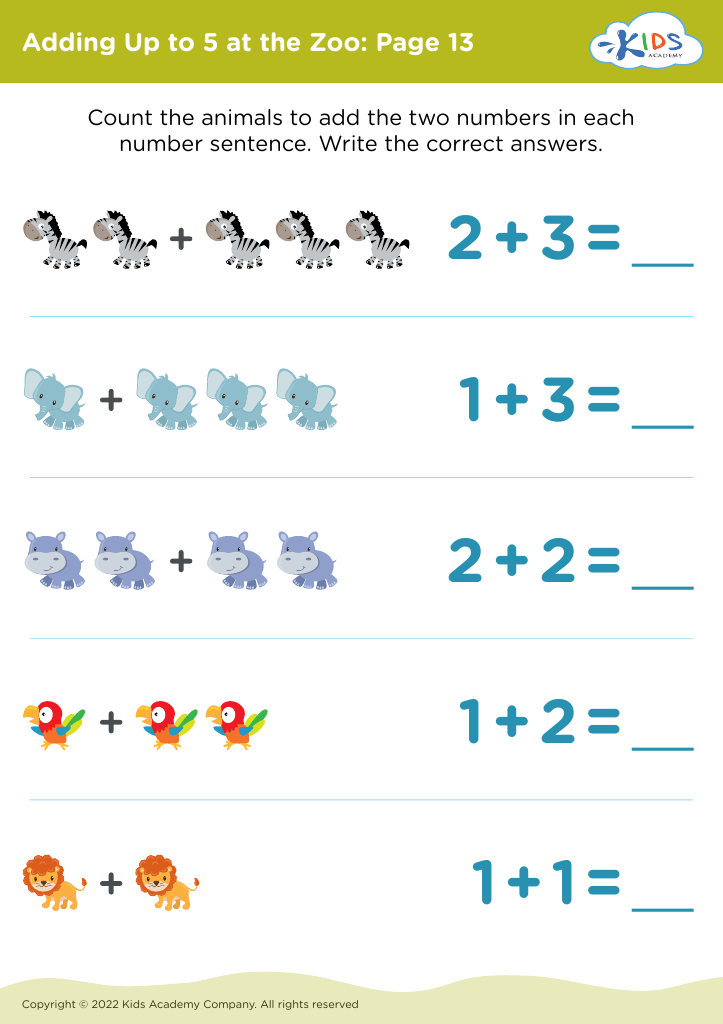
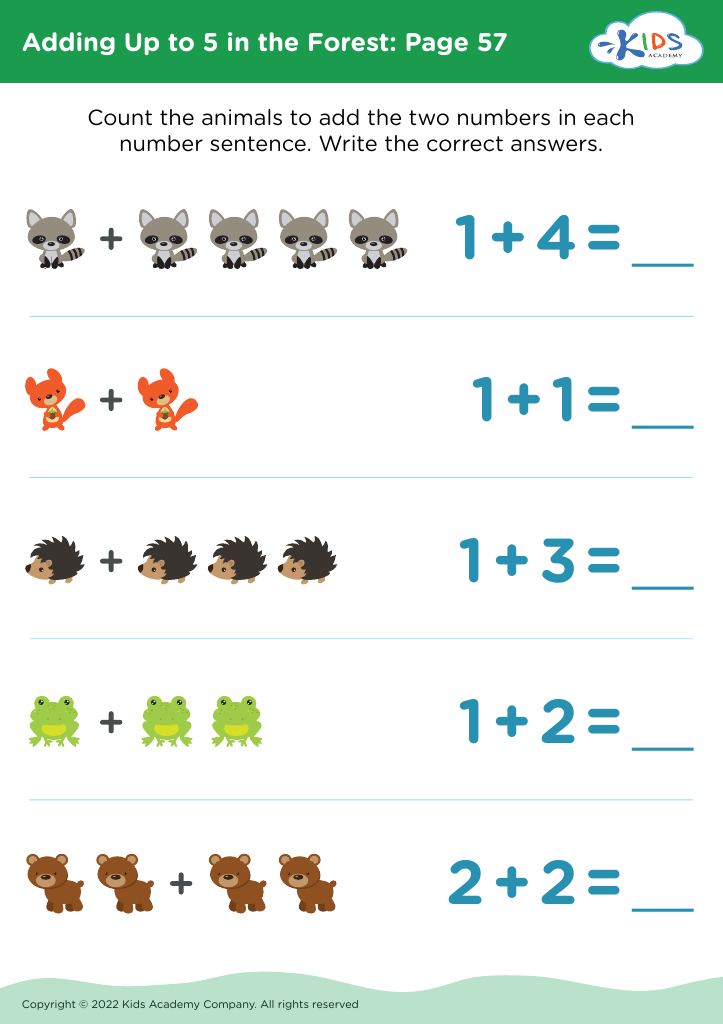
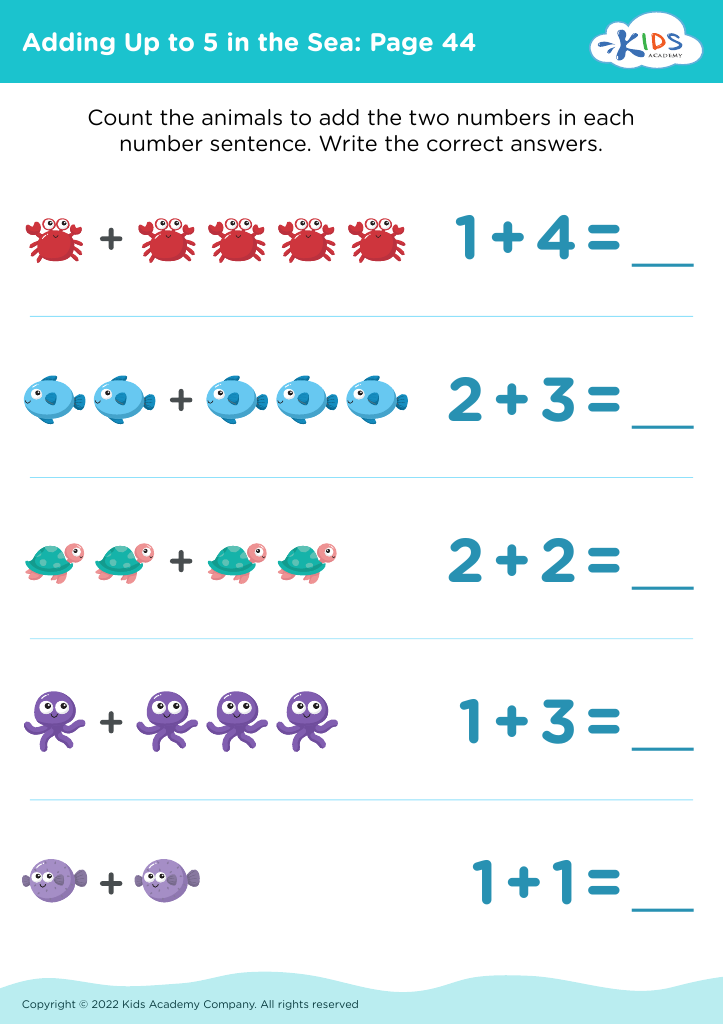
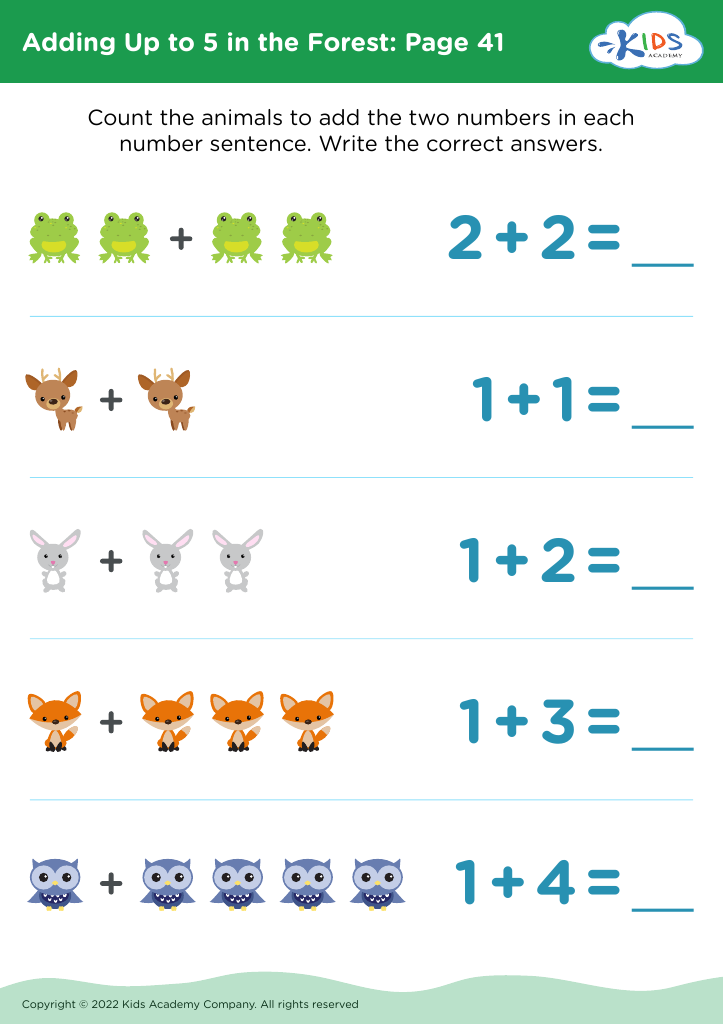
Basic addition skills, particularly the ability to add numbers up to 5, serve as fundamental blocks in a child's mathematical development. For children ages 4-8, mastering these early addition skills fosters number sense, which is crucial for understanding more complex mathematical concepts later on. By developing a solid comprehension of simple addition, children gain confidence in their abilities and build a foundation for problem-solving skills.
Parents and teachers should prioritize this skill as it significantly impacts overall academic success and fosters a positive attitude towards mathematics. Engaging young learners in fun, interactive activities—like counting objects or using visual aids—makes learning enjoyable and relatable. Additionally, these skills enhance cognitive development by encouraging logical reasoning and critical thinking.
Moreover, early proficiency in addition positively influences a child's ability to tackle more advanced topics in math, such as subtraction, multiplication, and even basic algebra. Addressing any struggles at this stage can prevent substantive challenges in later years. Ultimately, reinforcing basic addition skills not only equips children with essential tools for their future education but also instills a lifelong appreciation for mathematics, cultivating a sense of achievement that supports their overall growth and development.








