Filters

21 filtered results

Clear all filters
Favorites
With answer key
Interactive

21 filtered results

Difficulty Level

Grade


Build a strong math foundation for your child with our "Basic Math Skills Adding Up to 5 Worksheets for Ages 4-8". These engaging, printable activities are designed to instill essential addition skills in young learners. Each worksheet uses fun and relatable themes to help kids practice adding numbers up to five, ensuring they gain confidence and accuracy in their calculations. Suitable for children aged 4 to 8, these resources support kindergarten and early elementary math curriculum requirements. Perfect for both classroom and home use, they will turn learning into a joyful and rewarding experience!
Check out this FREE Trial Lesson on Adding Up to 5 for age 4-8!

P

Favorites
With answer key
Interactive
  • 4-8
  • Basic Math Skills
  • Adding Up to 5
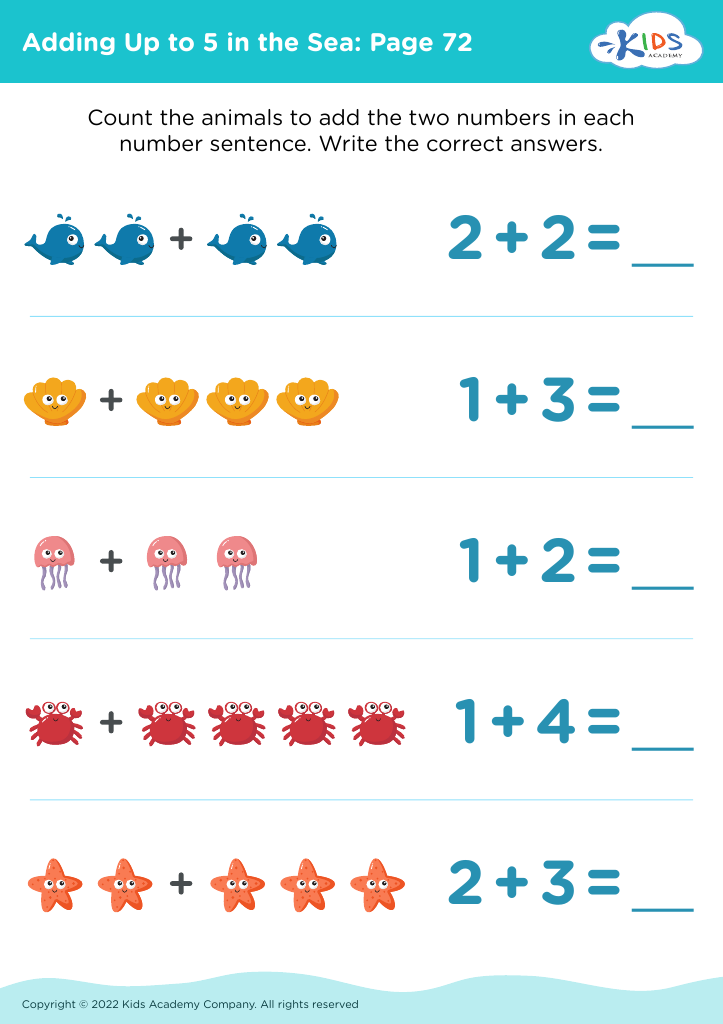
Adding Up to 5 in the Sea: Page 72
Worksheet
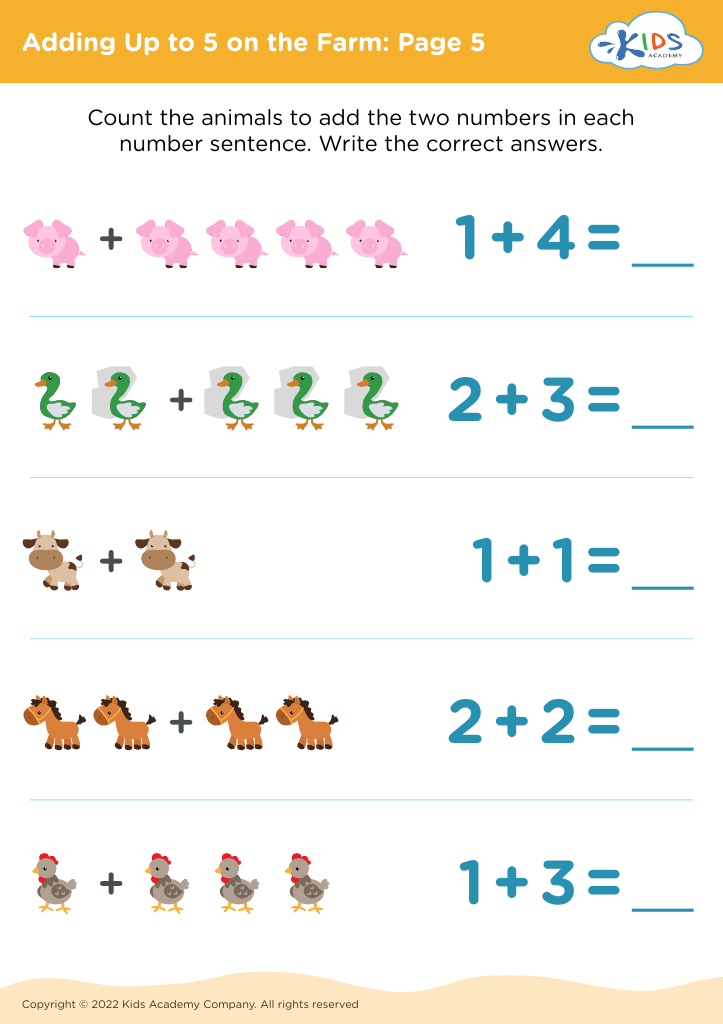
Adding Up to 5 on the Farm: Page 5
Worksheet
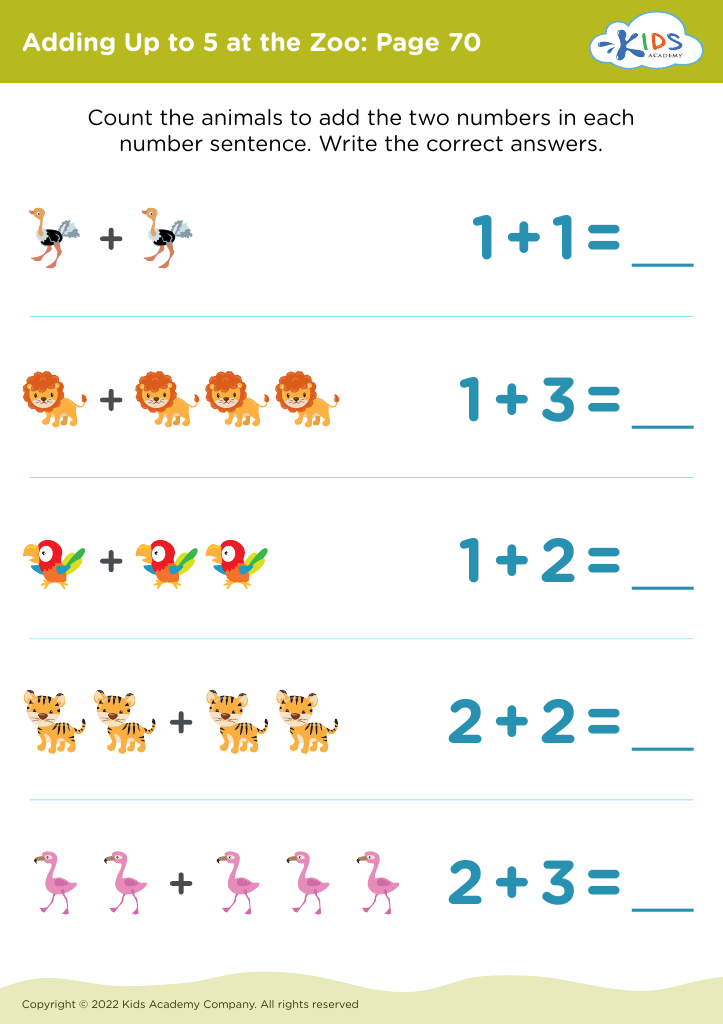
Adding Up to 5 at the Zoo: Page 70
Worksheet
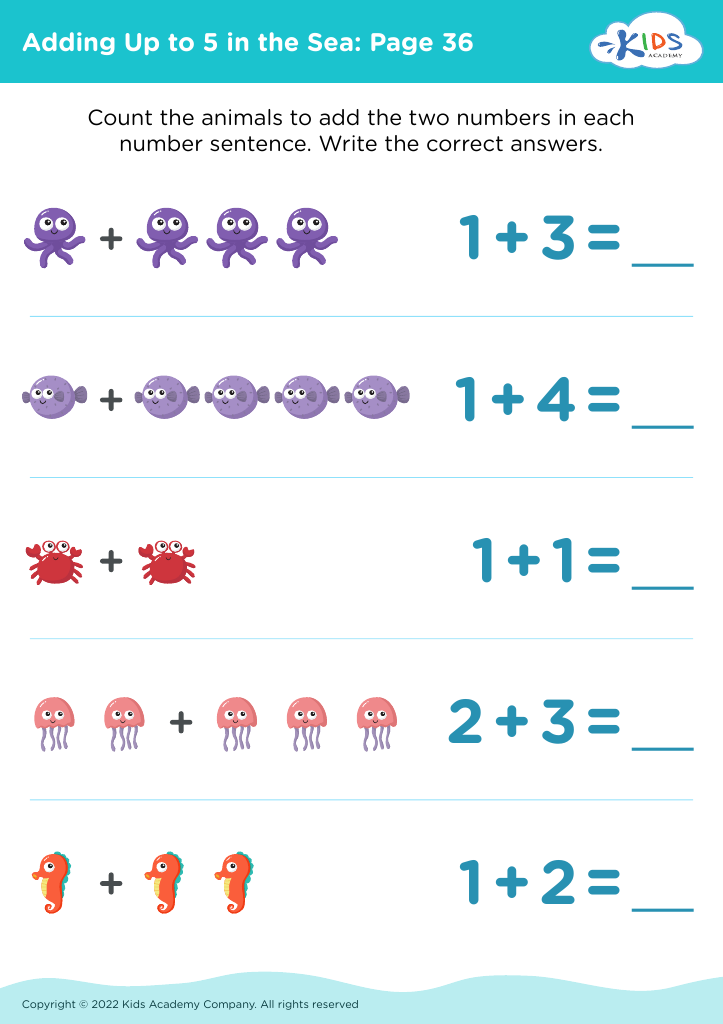
Adding Up to 5 in the Sea: Page 36
Worksheet
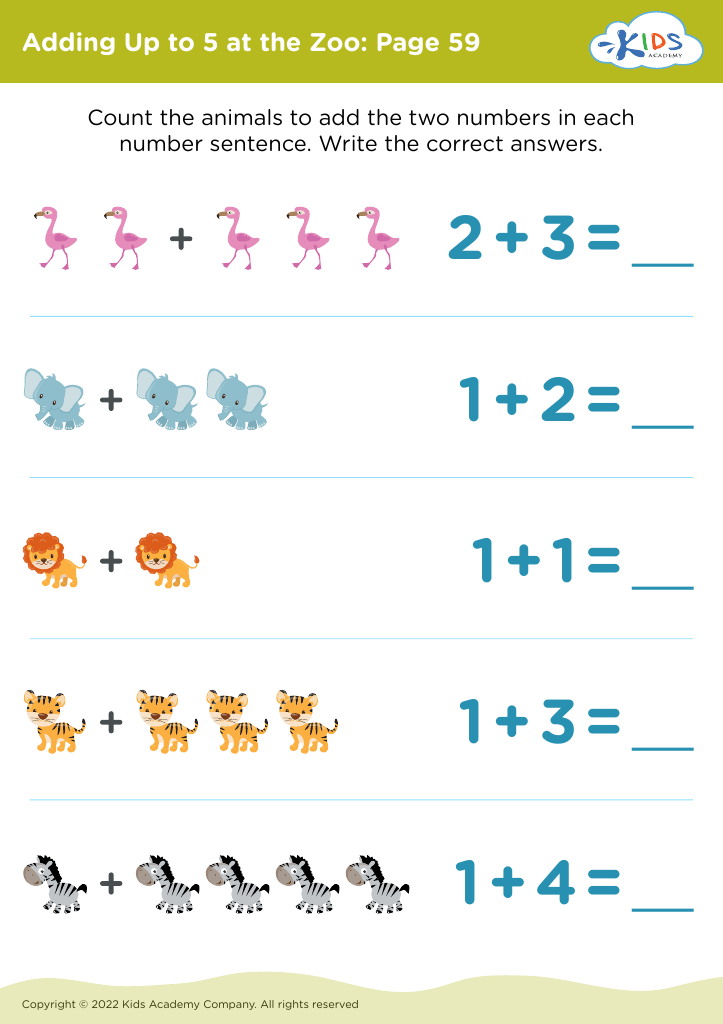
Adding Up to 5 at the Zoo: Page 59
Worksheet
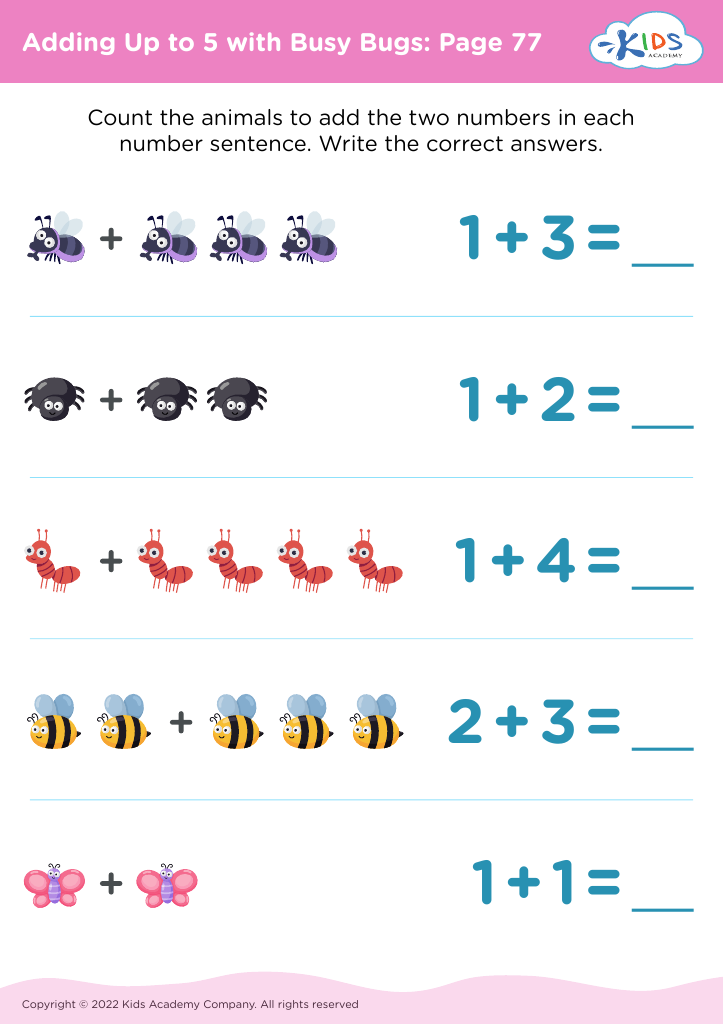
Adding Up to 5 with Busy Bugs: Page 77
Worksheet
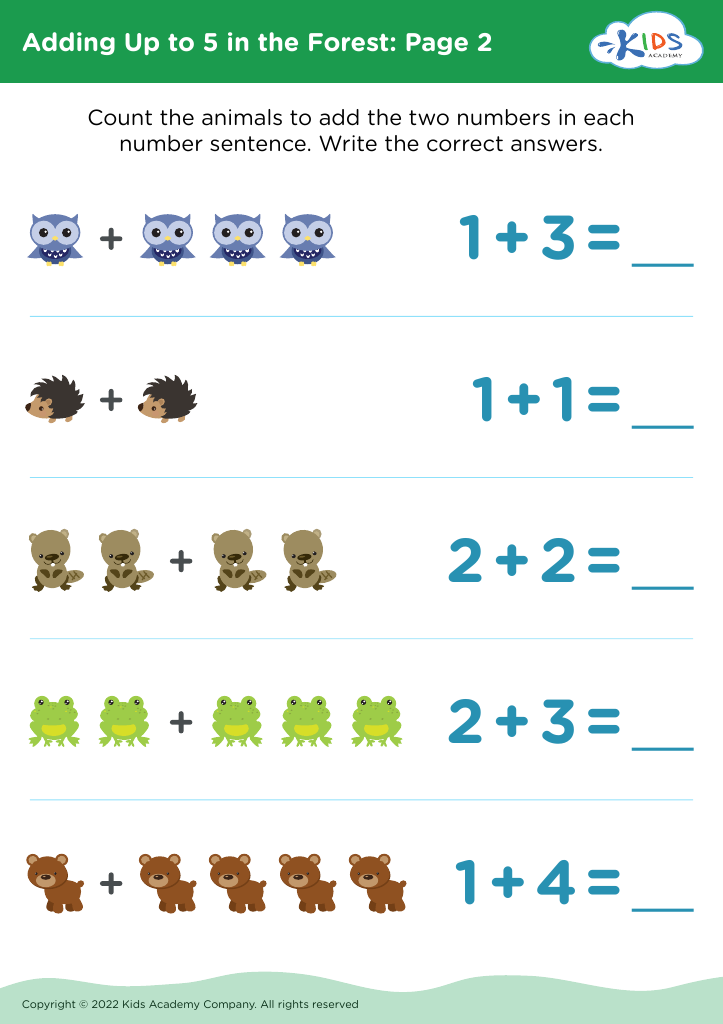
Adding Up to 5 in the Forest: Page 2
Worksheet
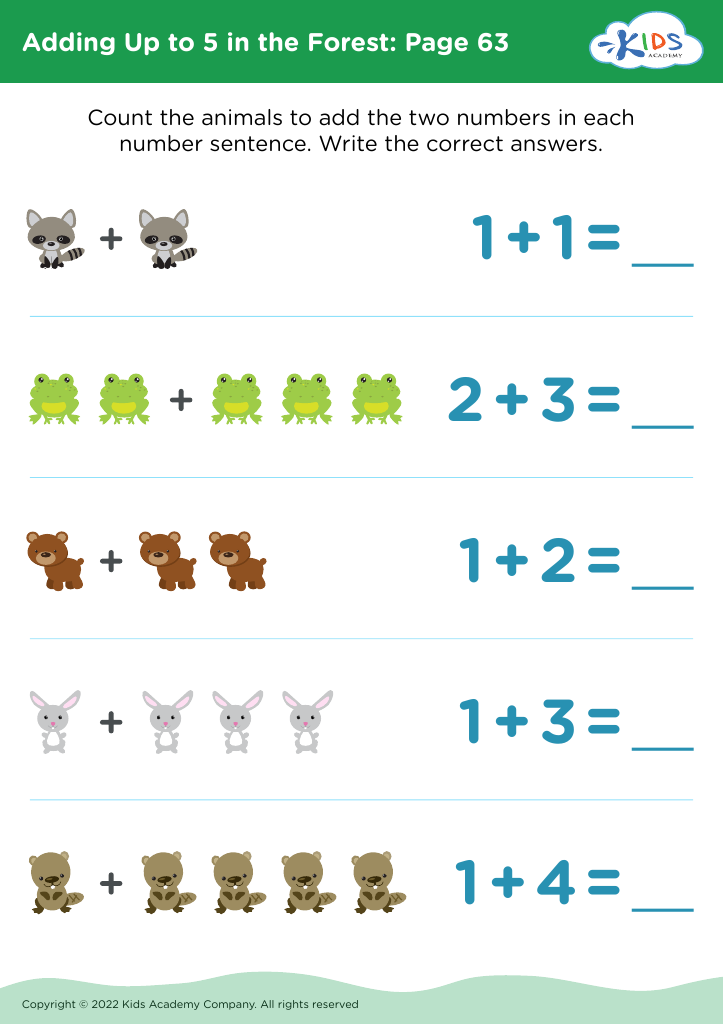
Adding Up to 5 in the Forest: Page 63
Worksheet
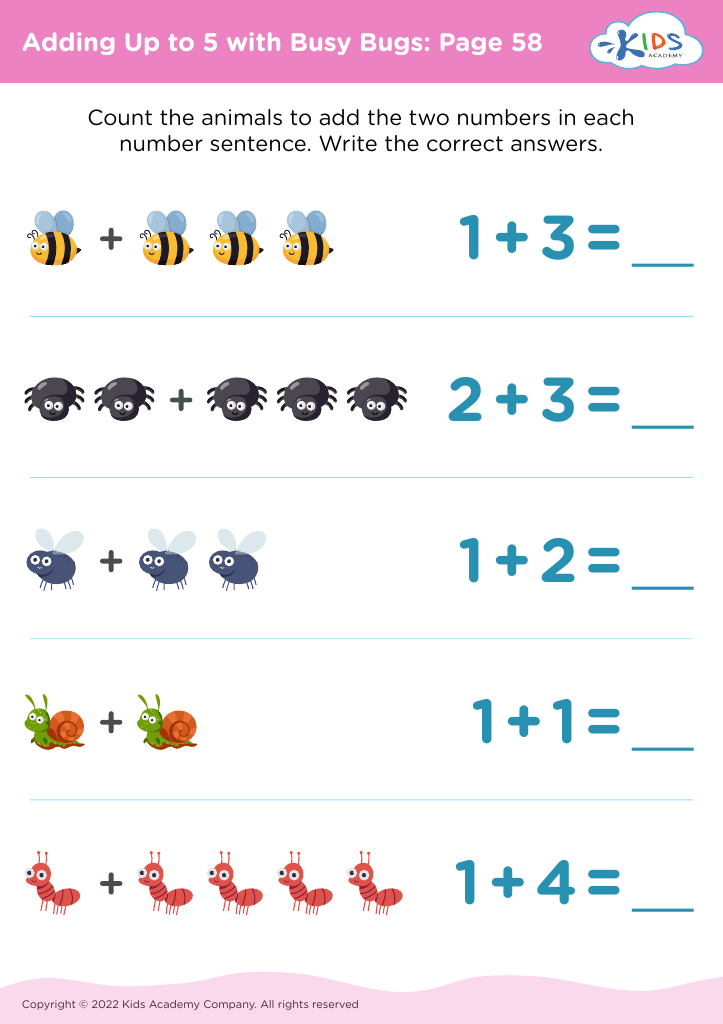
Adding Up to 5 with Busy Bugs: Page 58
Worksheet
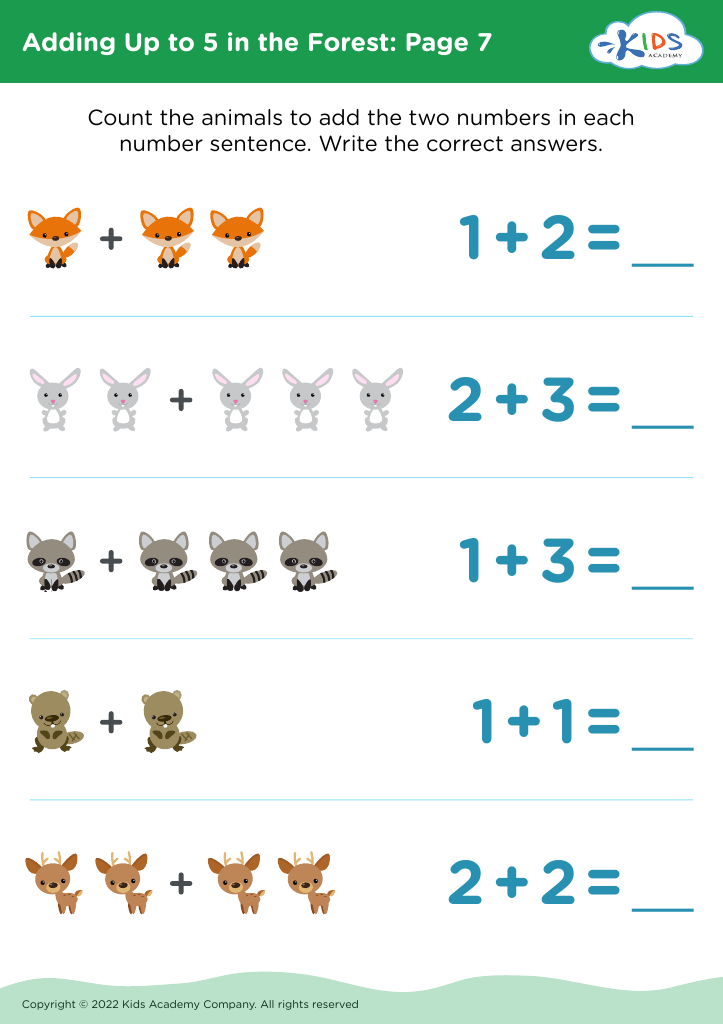
Adding Up to 5 in the Forest: Page 7
Worksheet
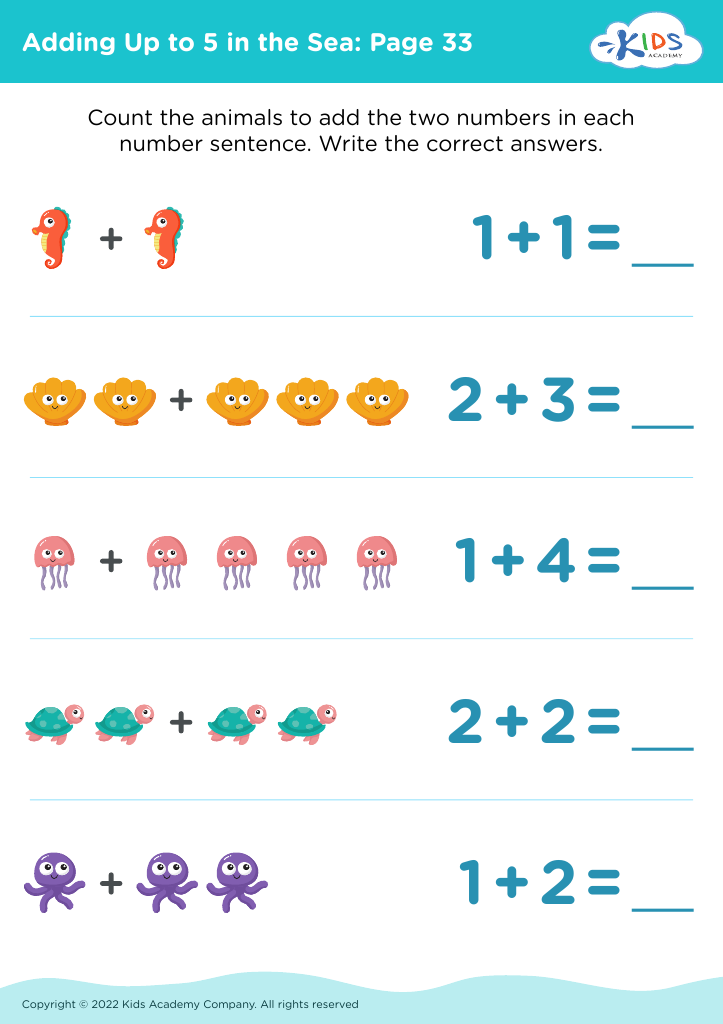
Adding Up to 5 in the Sea: Page 33
Worksheet
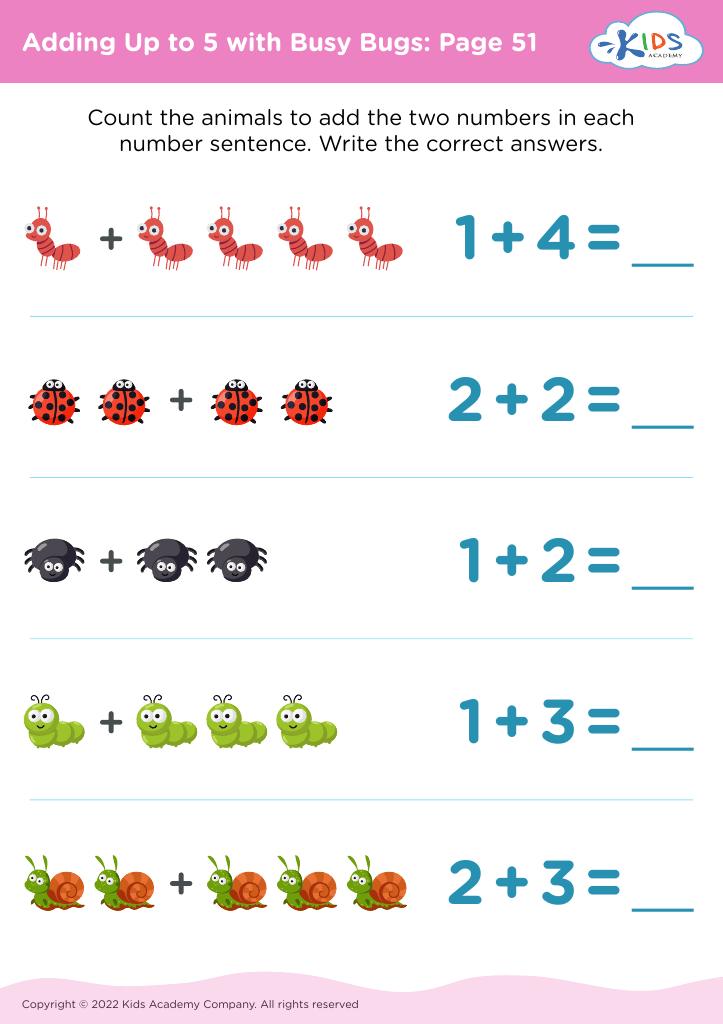
Adding Up to 5 with Busy Bugs: Page 51
Worksheet
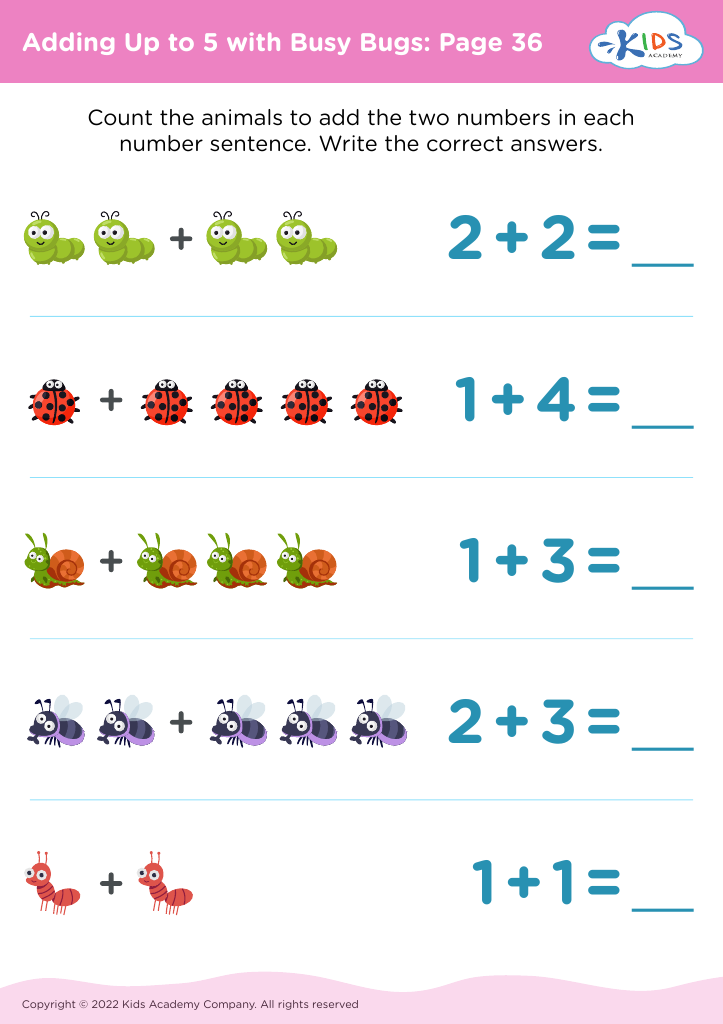
Adding Up to 5 with Busy Bugs: Page 36
Worksheet
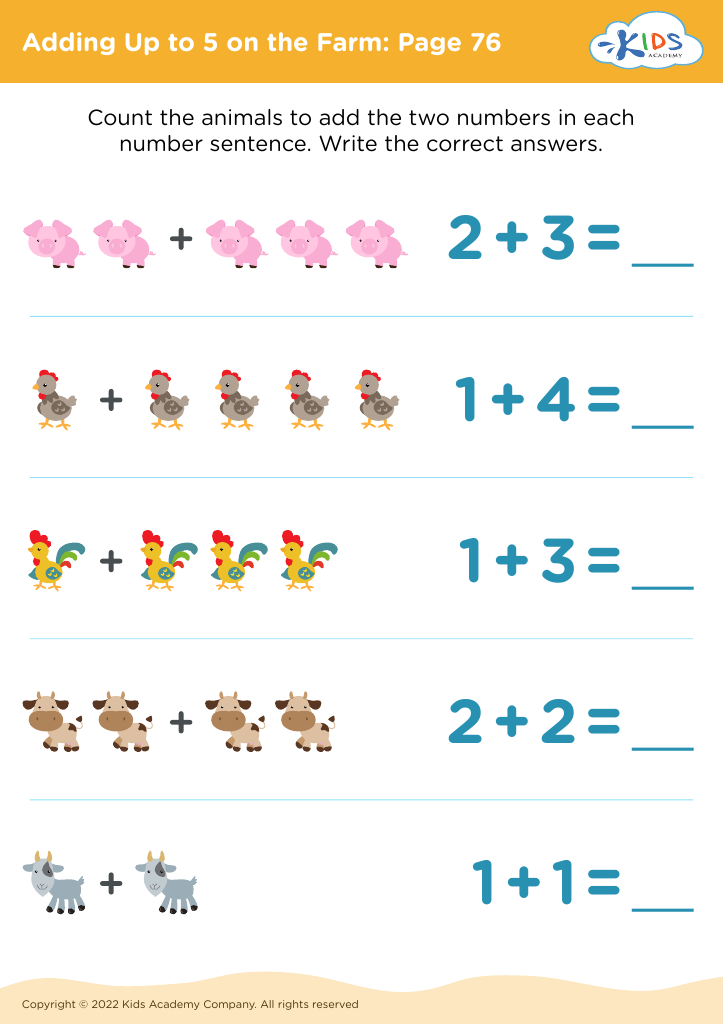
Adding Up to 5 on the Farm: Page 76
Worksheet
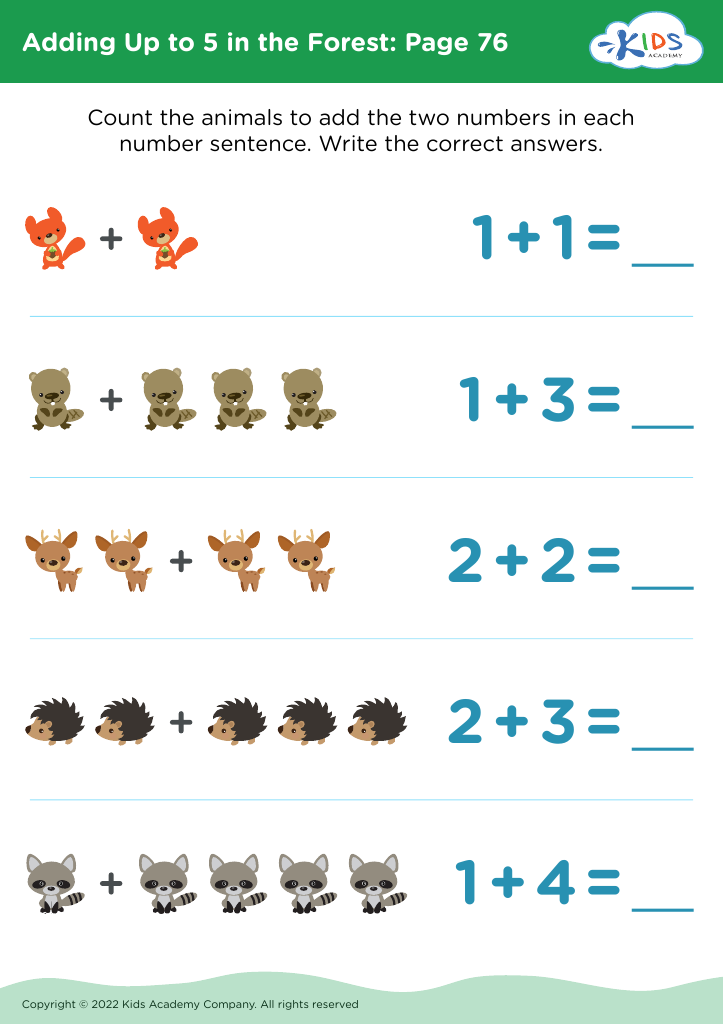
Adding Up to 5 in the Forest: Page 76
Worksheet
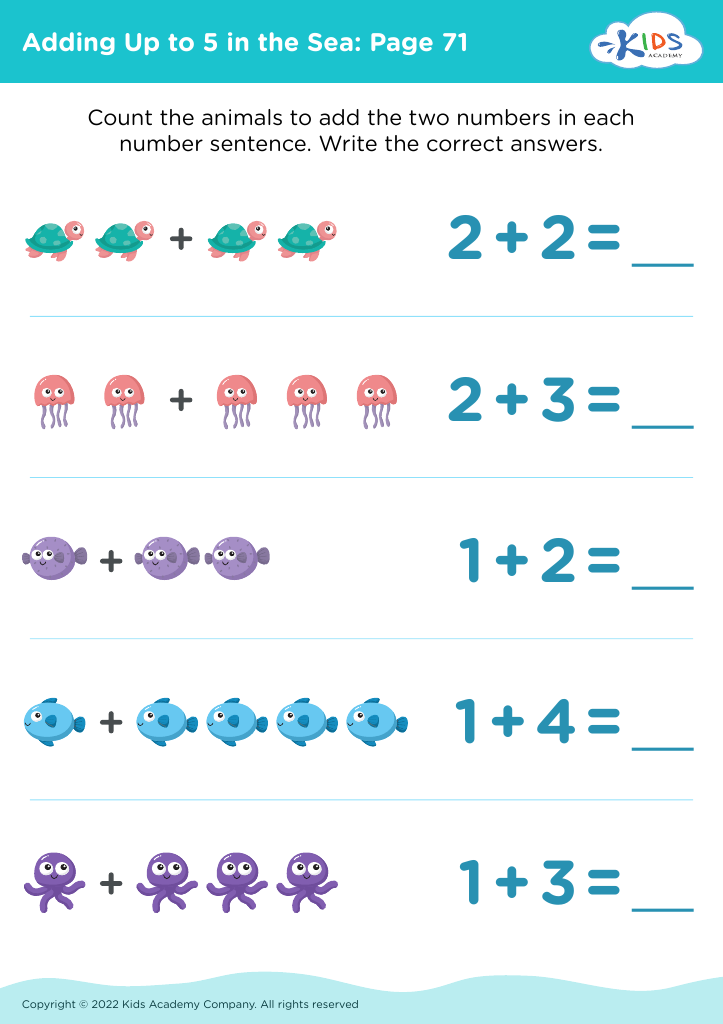
Adding Up to 5 in the Sea: Page 71
Worksheet
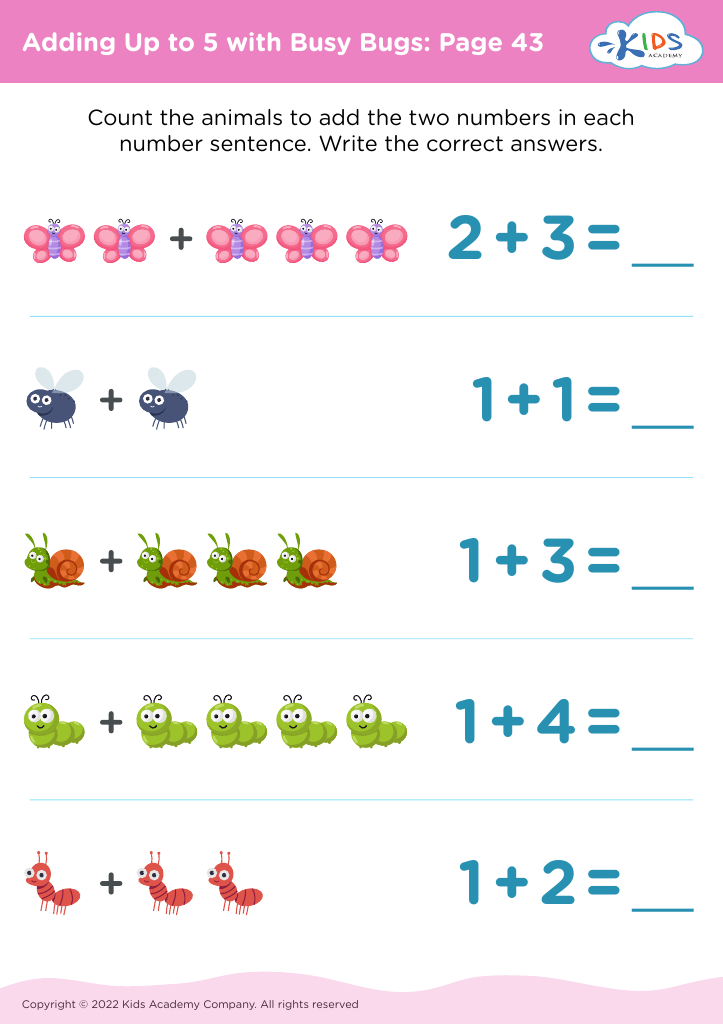
Adding Up to 5 with Busy Bugs: Page 43
Worksheet
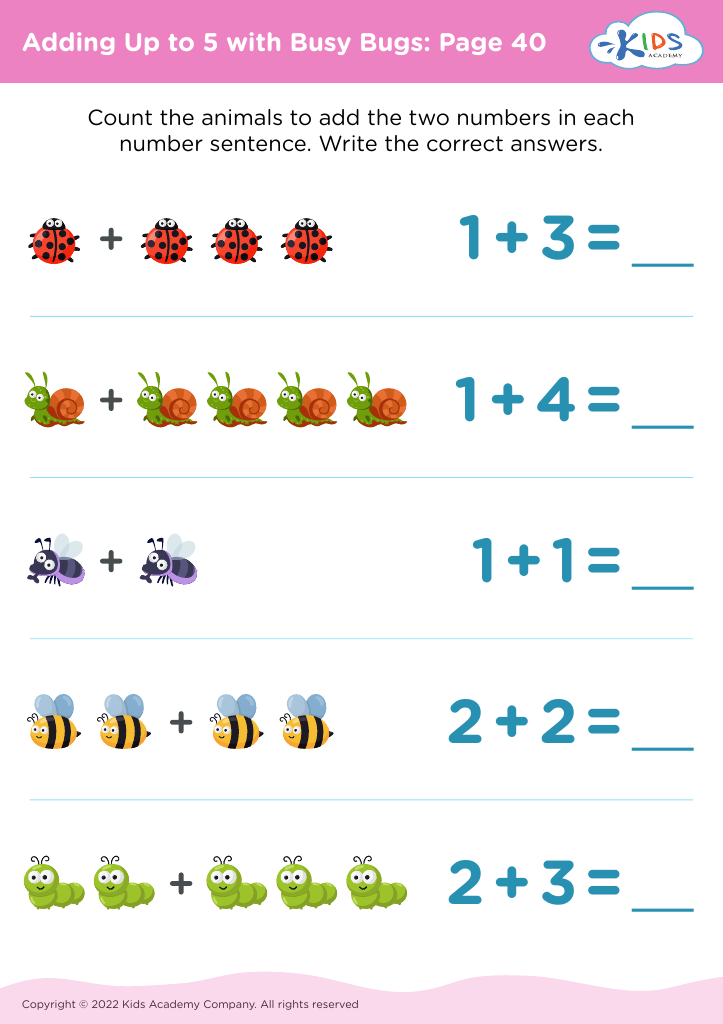
Adding Up to 5 with Busy Bugs: Page 40
Worksheet
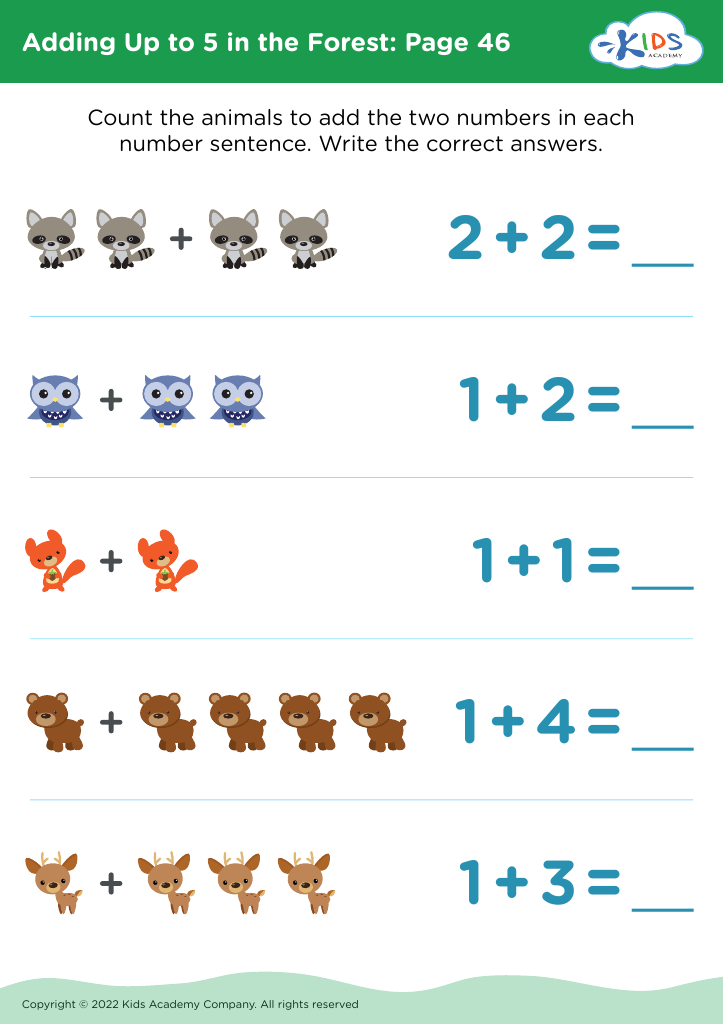
Adding Up to 5 in the Forest: Page 46
Worksheet
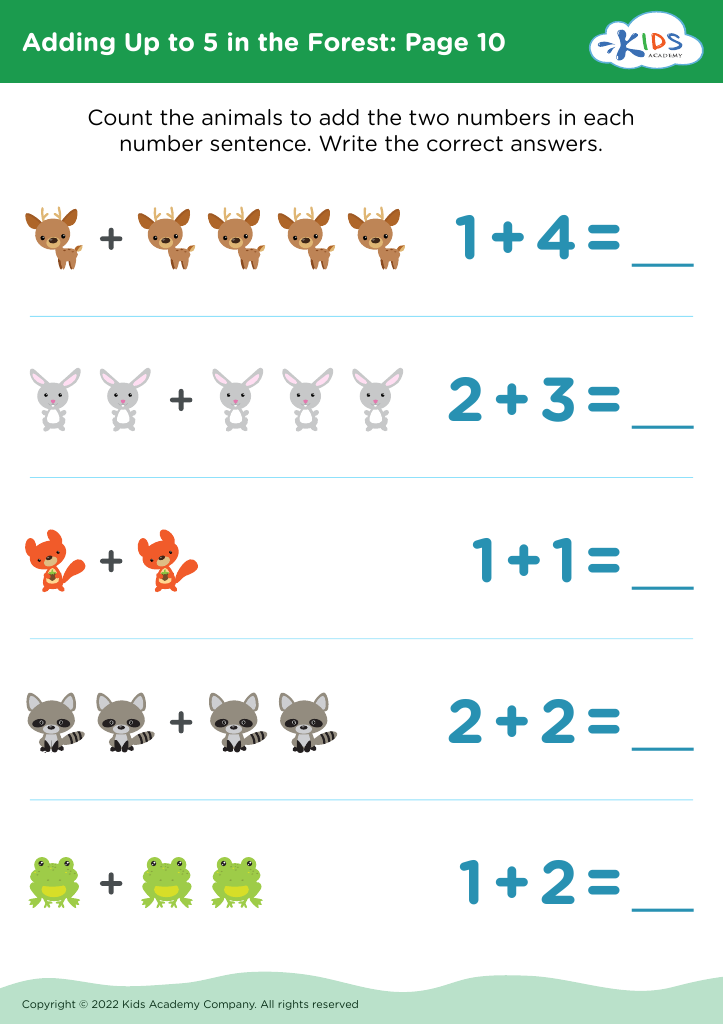
Adding Up to 5 in the Forest: Page 10
Worksheet
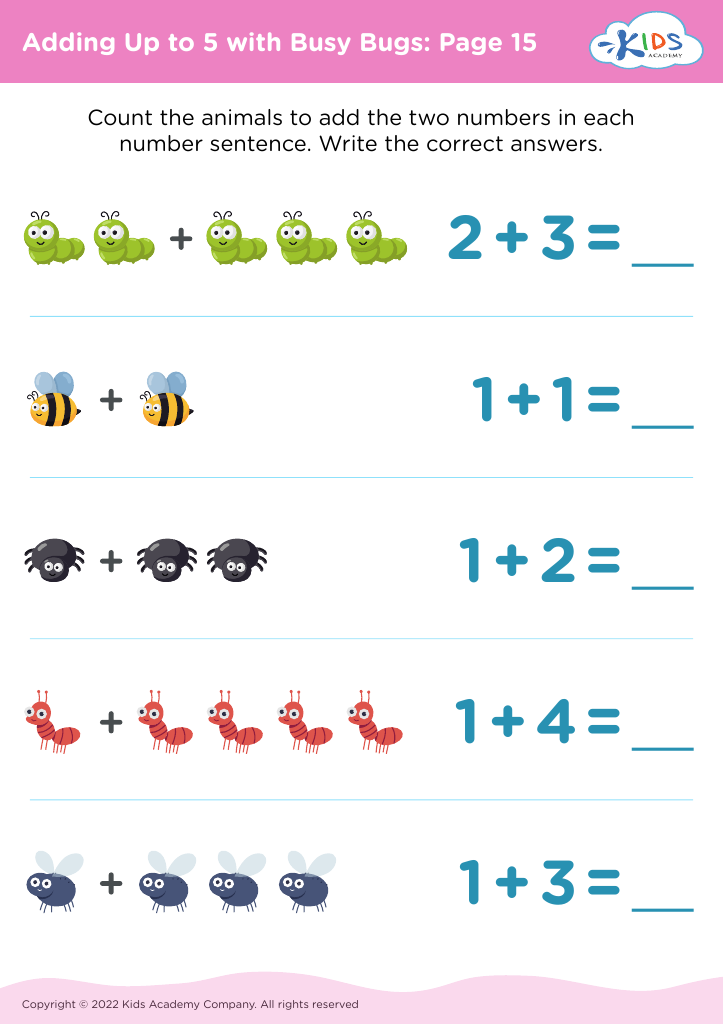
Adding Up to 5 with Busy Bugs: Page 15
Worksheet


Basic math skills, such as adding up to 5 for ages 4-8, form the foundation for more complex mathematical concepts and problem-solving abilities that children will develop later in their education. Parents and teachers should be invested in nurturing these early skills because they are crucial for cognitive development and foster a positive attitude towards learning.

Around the ages of 4 to 8, children's brains are particularly receptive to learning new skills. By understanding and mastering basic addition, children develop essential skills such as number recognition, pattern recognition, counting, and logical thinking. These fundamental abilities promote confidence and enhance a child's success in more advanced subjects.

Moreover, learning addition within this range of numbers is often more intuitive and manageable for young children, making the learning process enjoyable. This can ignite curiosity and a love for mathematics, reducing anxiety or fear associated with the subject as they progress in their education.

Furthermore, these math skills support everyday problem-solving and decision-making tasks, which are essential for independent functioning. Simple arithmetic helps children to understand concepts such as time management, money, and basic measurement, directly applicable to real-life situations.

Therefore, building a strong foundation in early math promotes lifelong learning, confidence, and practical application, ensuring academic and personal growth.