
Following instructions Adding Up to 5 Worksheets for Ages 4-8
3 filtered results
Difficulty Level
Grade
Age
-
From - To
Subject
Activity
Standards
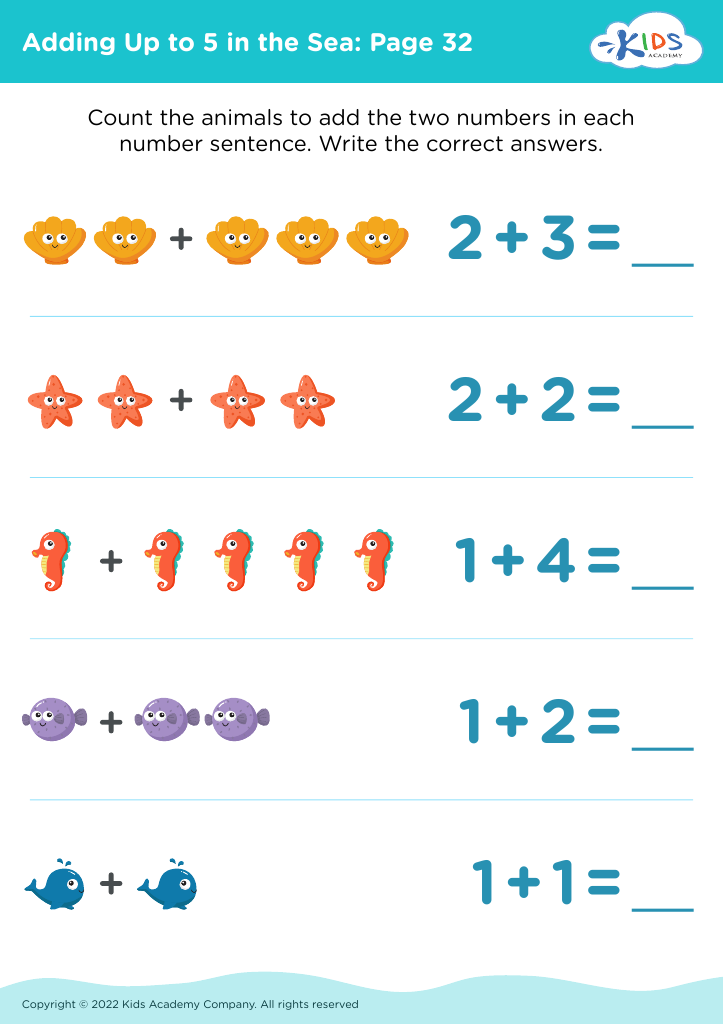
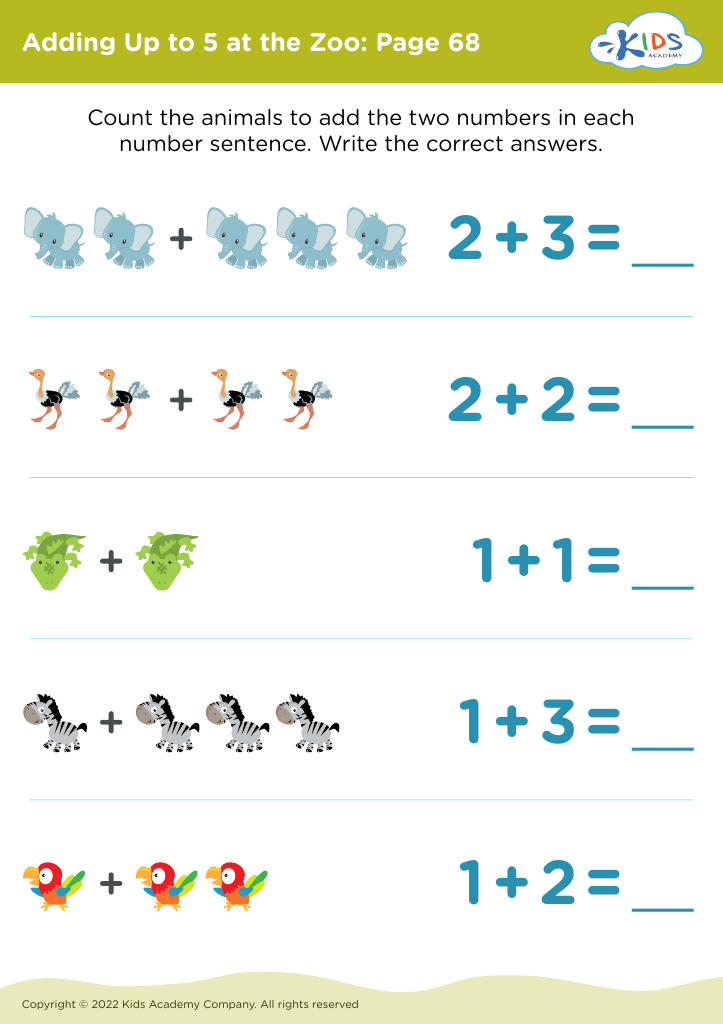
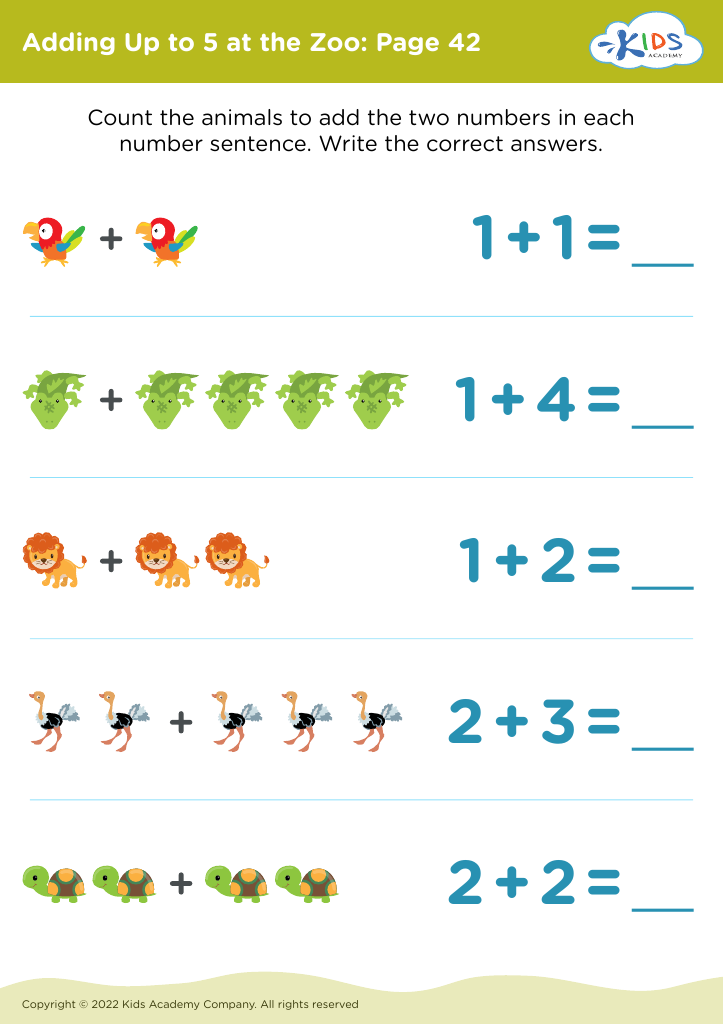
Enhance your child's math skills with our "Following Instructions: Adding Up to 5 Worksheets" designed for ages 4-8! These engaging worksheets not only introduce basic addition concepts but also focus on developing crucial listening and comprehension skills. Children will learn to follow simple instructions as they solve fun math problems, fostering both their confidence and enthusiasm for learning. Each worksheet encourages critical thinking and helps children understand the relationship between numbers in a playful manner. Perfect for classroom activities or at-home learning, these resources provide an interactive approach to mastering addition while following directions effectively. Start your math adventure today!
Favorites
With answer key
Interactive
Join Kids Academy for Free
Who is primarily going to use this learning content?




.jpg)



Following instructions is a crucial skill for children aged 4-8, especially in the context of adding up to 5. For parents and teachers, fostering this skill is essential for several reasons.
Firstly, the ability to follow instructions enhances cognitive development. It teaches children to process information, assess tasks step-by-step, and understand complex concepts in mathematics. When children learn to add up to 5 by following a series of instructions, they improve their ability to focus and concentrate, which are skills that have far-reaching benefits in all subjects.
Secondly, this practice builds independence and self-confidence. When children successfully execute steps in math tasks, it empowers them to tackle more challenging problems, which is important in lifelong learning.
Moreover, following instructions can enhance social skills. Group activities involving math allow children to collaborate and communicate effectively, fostering teamwork.
Lastly, mastering basic arithmetic builds a strong foundation for future academic subjects, as math skills are critical for various fields. Parents and teachers should prioritize this skill not just for academic reasons, but to help shape well-rounded, capable individuals ready to face more significant challenges ahead.








