Understanding number relationships Adding Up to 5 Worksheets for Ages 4-8
3 filtered results
-
From - To
Discover engaging "Understanding Number Relationships: Adding Up to 5 Worksheets" designed for children ages 4-8. These worksheets help young learners grasp essential math concepts as they build number sense through fun activities. By working with these engaging exercises, kids will explore how different combinations add up to 5, fostering their understanding of addition and the relationships between numbers. Perfect for parents and teachers, these worksheets enhance mathematical skills while encouraging critical thinking. Support your child's early math journey with these creative resources that make learning both effective and enjoyable. Unlock the world of numbers today!
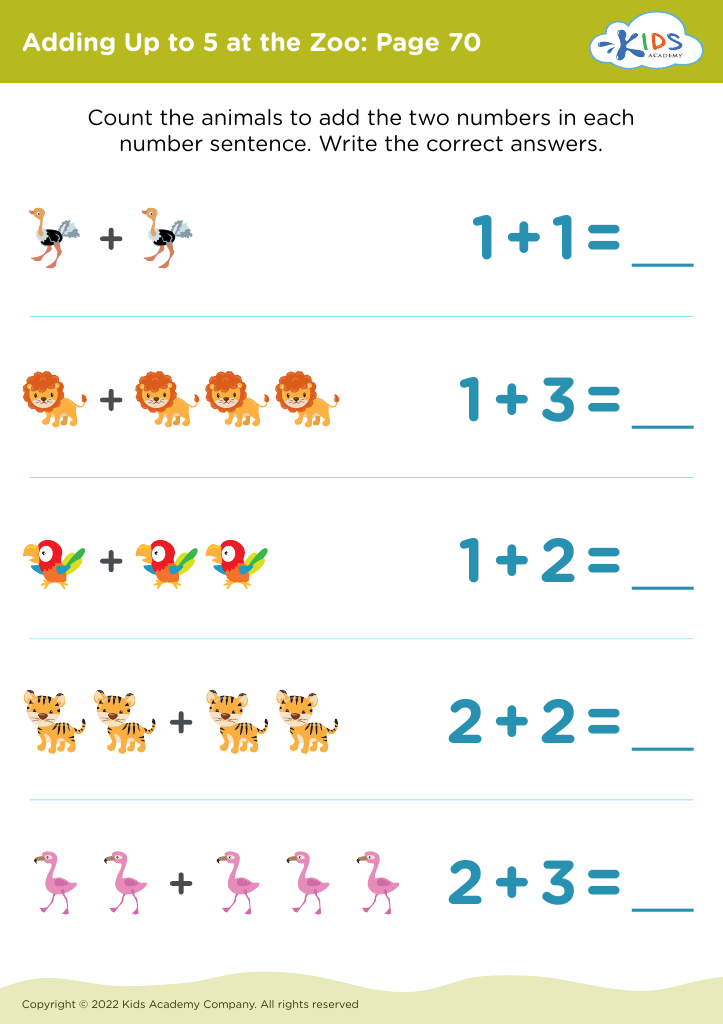
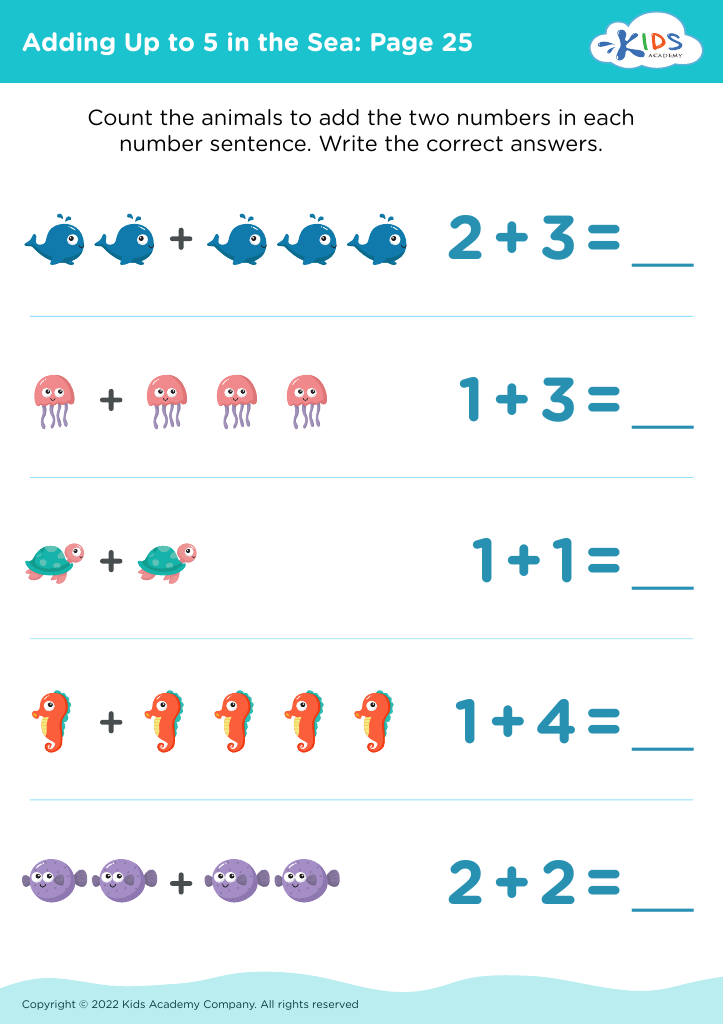
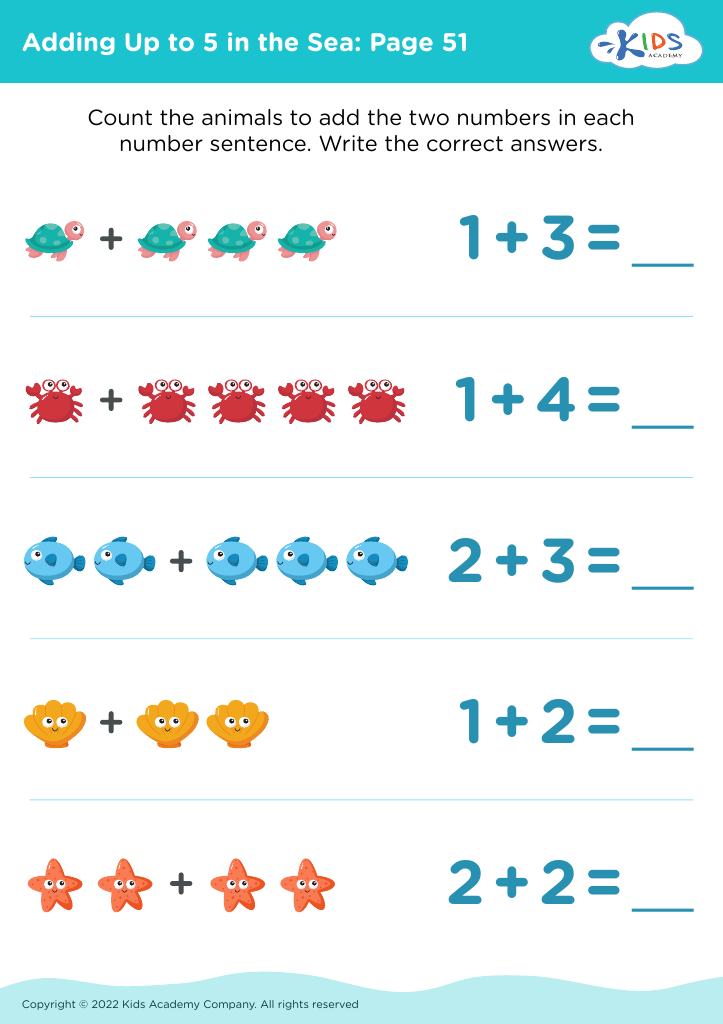


.jpg)





Understanding number relationships, particularly adding up to 5, is fundamental for children aged 4-8 as it lays the groundwork for their mathematical development. During this critical stage, children begin to develop number sense, which is essential for problem-solving and reasoning skills. Recognizing how numbers work together to create sums fosters a deeper understanding of mathematics beyond mere recall of facts.
When children grasp the concept of adding up to 5, they can engage with fundamental operations, creating a more solid foundation for more complex arithmetic in subsequent years. This understanding helps them identify patterns, recognize combinations, and develop strategies for mental math, which will enhance their confidence in math-related tasks.
Moreover, mastering number relationships empowers children to make connections between addition and subtraction, promoting flexibility with numbers. For parents and teachers, fostering this early comprehension is crucial as it impacts a child's overall attitude toward math and learning. A positive experience with early math concepts leads to a willingness to engage more deeply in future learning. Ultimately, focusing on adding up to 5 supports children in becoming proficient, confident mathematicians as they progress through their education.








