Understanding numeracy Adding Up to 5 Worksheets for Ages 4-8
4 filtered results
-
From - To
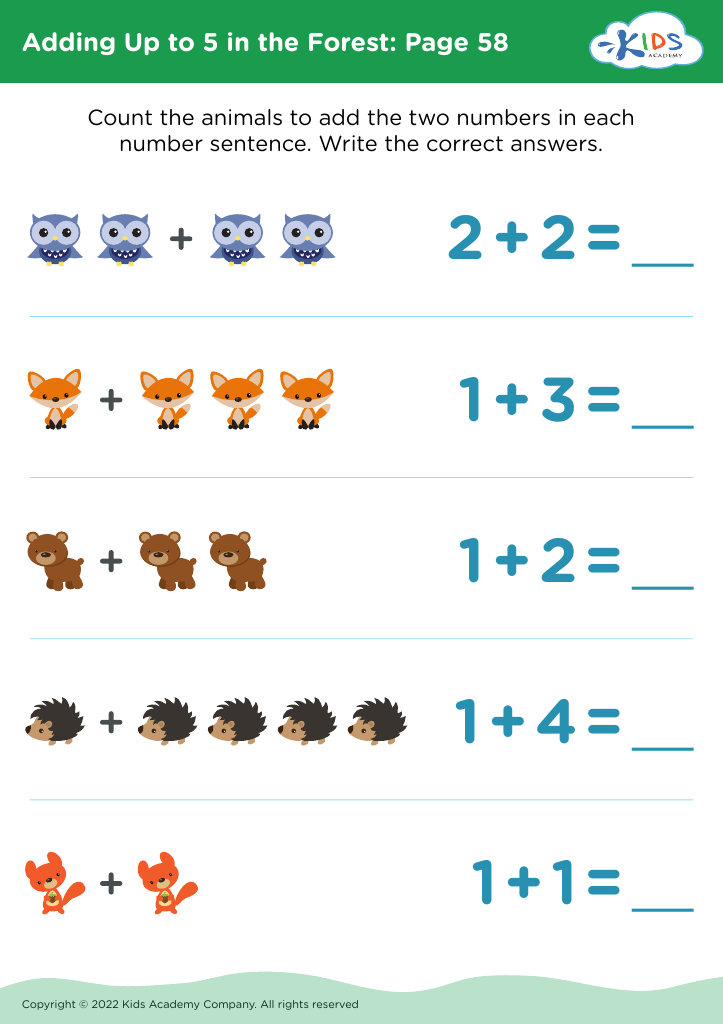
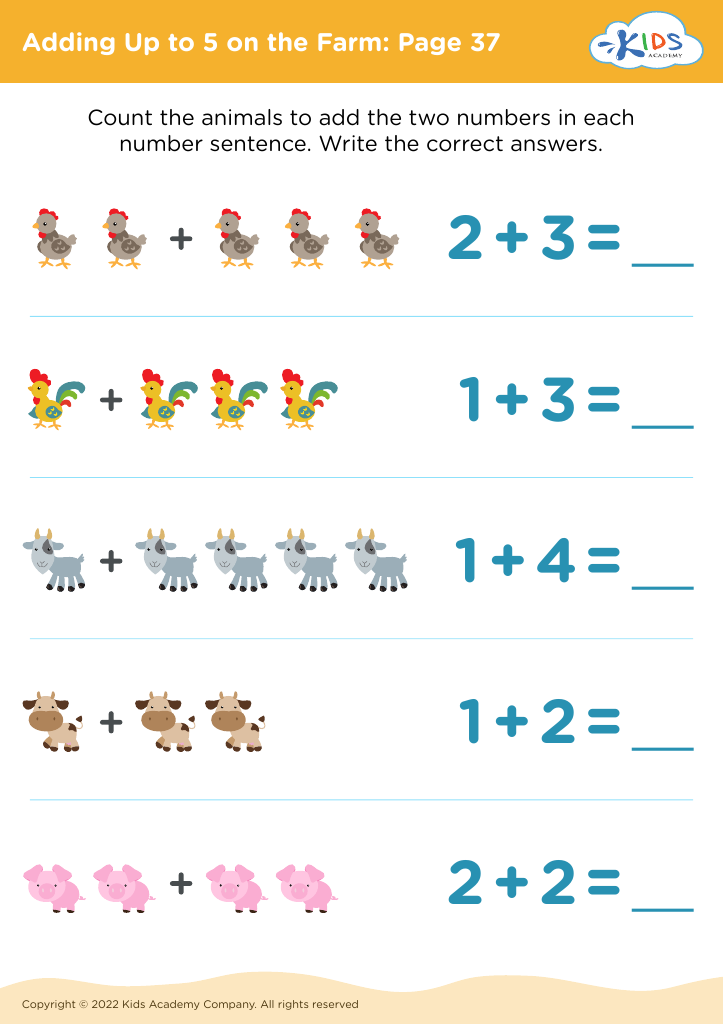
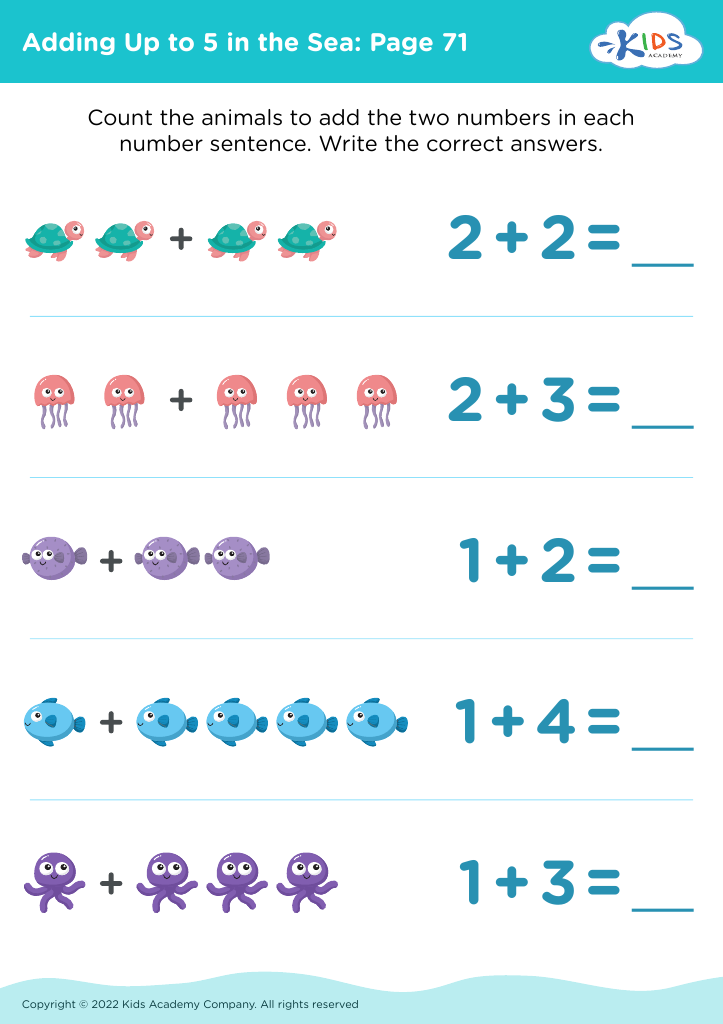
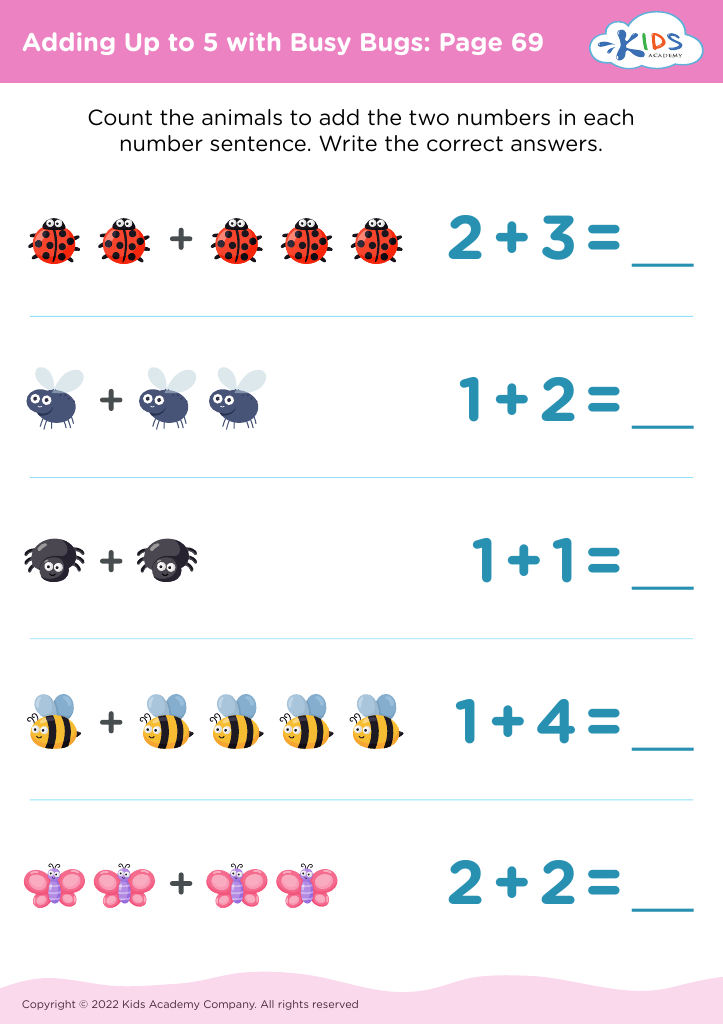
Explore our "Understanding Numeracy: Adding Up to 5 Worksheets" designed specifically for children aged 4-8! These engaging worksheets help young learners develop crucial early math skills as they practice adding numbers to reach a sum of 5. With colorful visuals and interactive activities, these resources make numeracy fun and accessible. Children will enjoy hands-on learning through counting exercises, number recognition, and simple addition problems. Perfect for home or classroom use, these worksheets not only foster foundational math skills but also promote critical thinking and problem-solving abilities. Begin your child's journey to numeracy success today!


%20(1).jpg)





Understanding numeracy, particularly the concept of adding up to 5, is crucial for children aged 4-8 for several reasons. First, early math skills lay the foundation for future academic success. Grasping addition within this range fosters a belief in their mathematical abilities, promoting a positive attitude toward learning math. This foundational knowledge helps children develop problem-solving skills, nurturing critical thinking essential for everyday life.
Moreover, numeracy comprehension aids in cognitive development. When children practice adding up to 5, they engage with patterns, quantities, and basic number relationships, enhancing their logical reasoning and analytical thinking. By using manipulatives or visual aids, students can see math in action—leading to deeper understanding and retention of concepts.
Furthermore, these early lessons promote not only mathematical skills but also social-emotional development. Group activities involving counting and adding can improve collaboration and communication among peers, fostering key interpersonal skills. Lastly, parents and teachers serve as role models in the learning process; demonstrating enthusiasm for numeracy inspires children to embrace learning. Thus, focusing on adding up to 5 equips young learners with vital skills, encouraging a lifelong engagement with mathematics and problem-solving.








