Improving math skills Adding up to 50 Misc Worksheets for Ages 4-8
5 filtered results
-
From - To
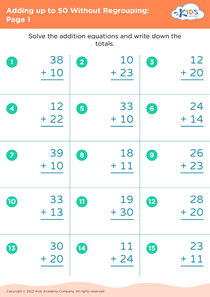
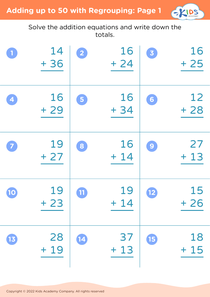
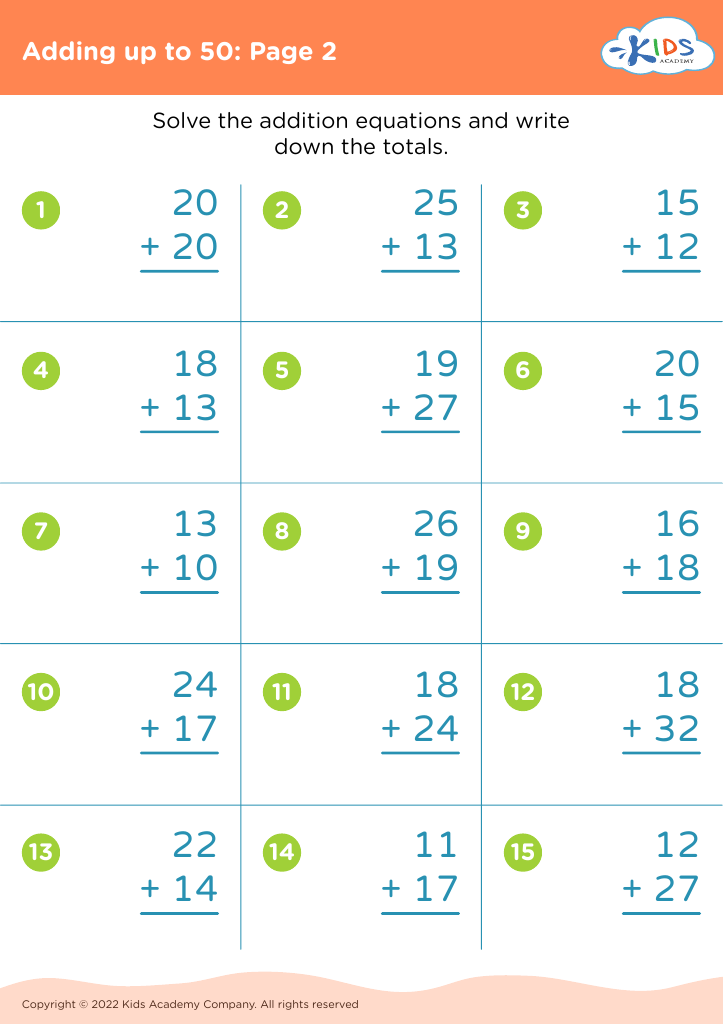
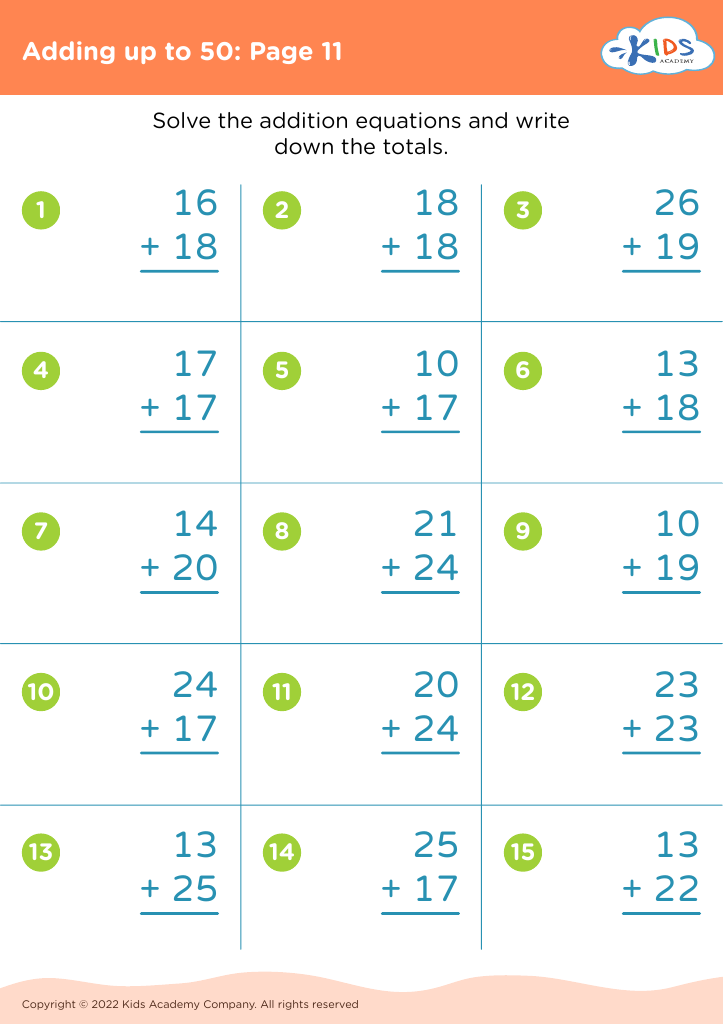
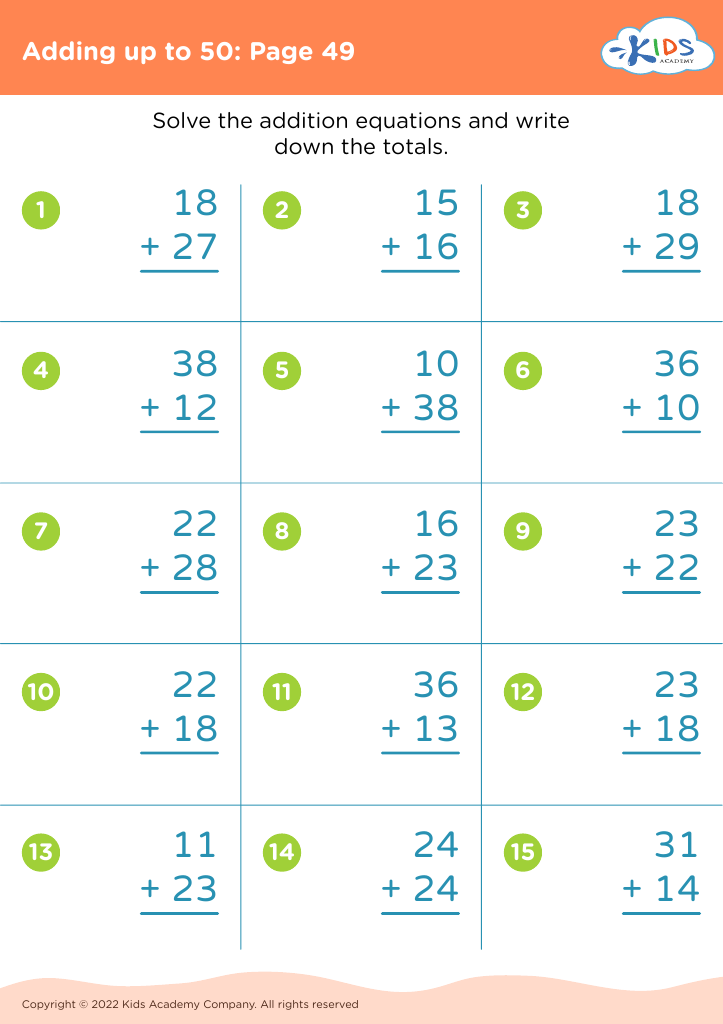
Boost your child's math confidence with our "Improving Math Skills: Adding up to 50" worksheets designed for ages 4-8. Our diverse collection offers engaging exercises that enhance addition abilities, fostering a strong numerical foundation. Perfect for kindergarten to second grade, these printable worksheets align with school curriculum standards. They provide fun-filled drills and problem-solving activities tailored to make learning addition easy and enjoyable. Encourage independent practice or support classroom learning with sheets that blend education with play. Assist your young mathematicians in mastering addition up to 50 with these dynamic, carefully crafted resources today!
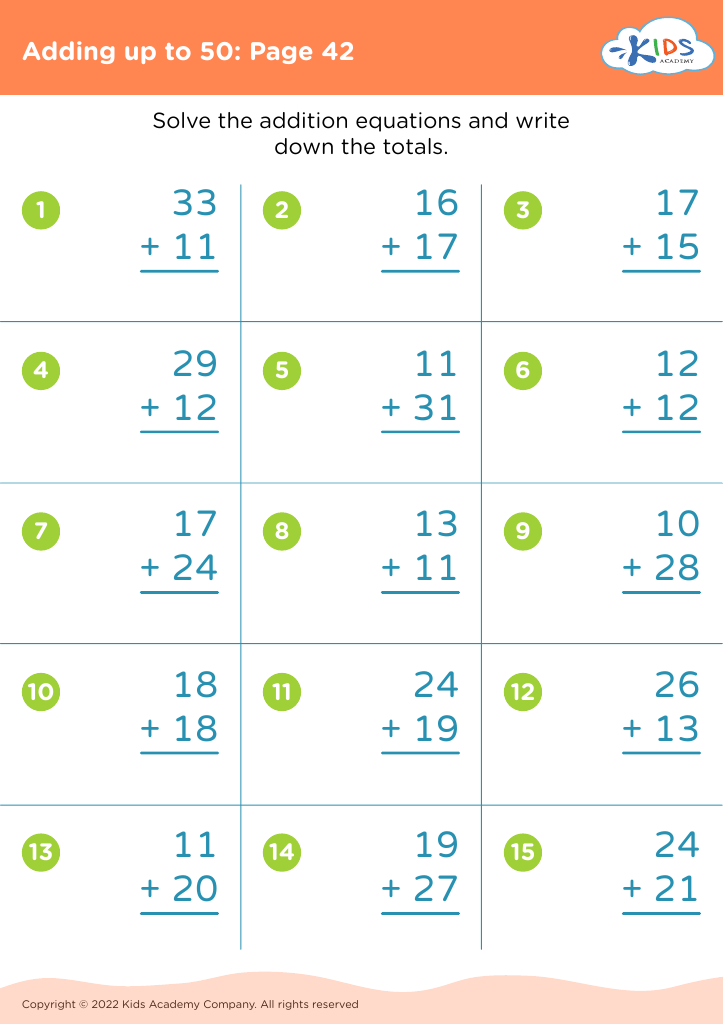
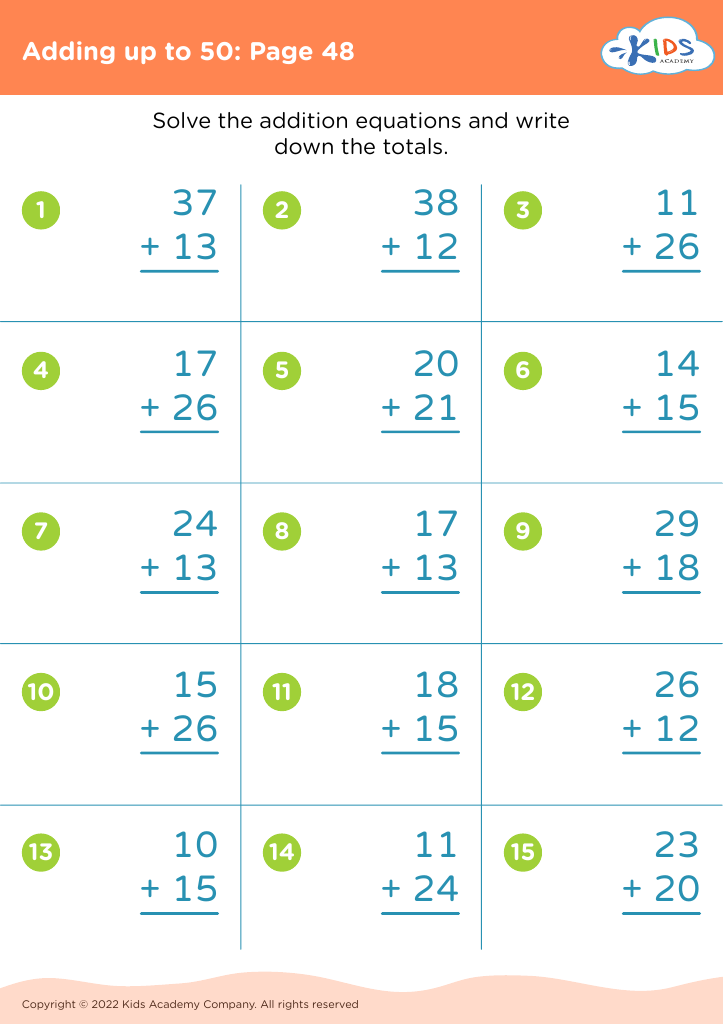


Improving math skills, specifically addition up to 50, for ages 4-8 is crucial for several reasons. First, early mathematical proficiency sets a strong foundation for future learning. When children grasp basic addition, it boosts their confidence and prepares them for more complex math concepts introduced in later grades. This foundational skill also enhances problem-solving abilities as kids learn to break down tasks and approach them methodically.
Secondly, math skills intersect with various aspects of daily life, including time management, money handling, and even in playing games or sports. Cultivating these skills early on helps children to become more functionally independent and capable in real-world scenarios.
Moreover, brain development research suggests that engaging in mathematical activities can enhance cognitive skills such as memory, attention, and logical thinking. Therefore, when children are encouraged to practice and improve their math skills, it facilitates overall academic and personal growth.
Additionally, fostering early math skills can create a positive attitude towards the subject, reducing math anxiety and promoting an enduring interest in STEM fields. Encouraging math proficiency at a young age can therefore open a multitude of future academic and career opportunities, making it an essential focus for parents and teachers.