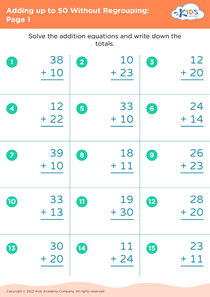
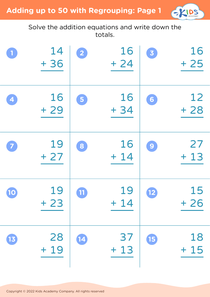
Understand fractions Adding up to 50 Misc Worksheets for Ages 4-8
3 filtered results
-
From - To
Explore our "Understand Fractions: Adding Up to 50 Misc Worksheets" designed specifically for children aged 4-8. These engaging worksheets introduce young learners to the fundamentals of fractions in a clear, interactive way. Through a variety of fun exercises, kids will get hands-on practice in identifying, comparing, and adding fractions, all while boosting their confidence in math. Our resources are tailored to align with educational standards and enhance critical thinking skills. Perfect for teachers and parents alike, these worksheets support early learning, ensuring that children develop a solid foundation in mathematical concepts. Start your child’s learning journey today!
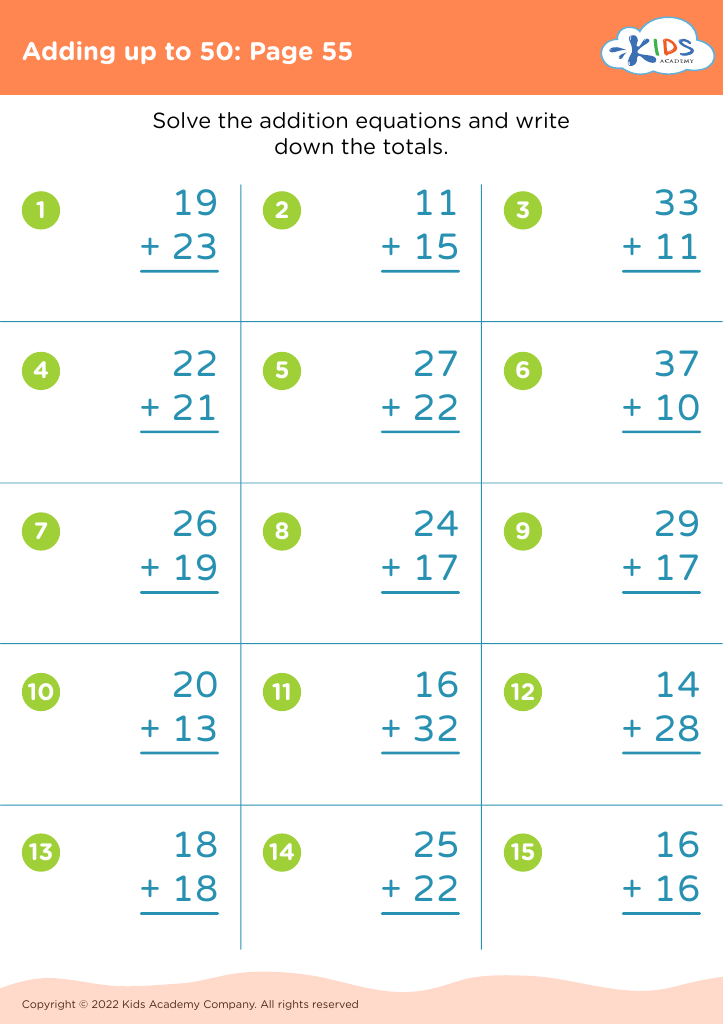
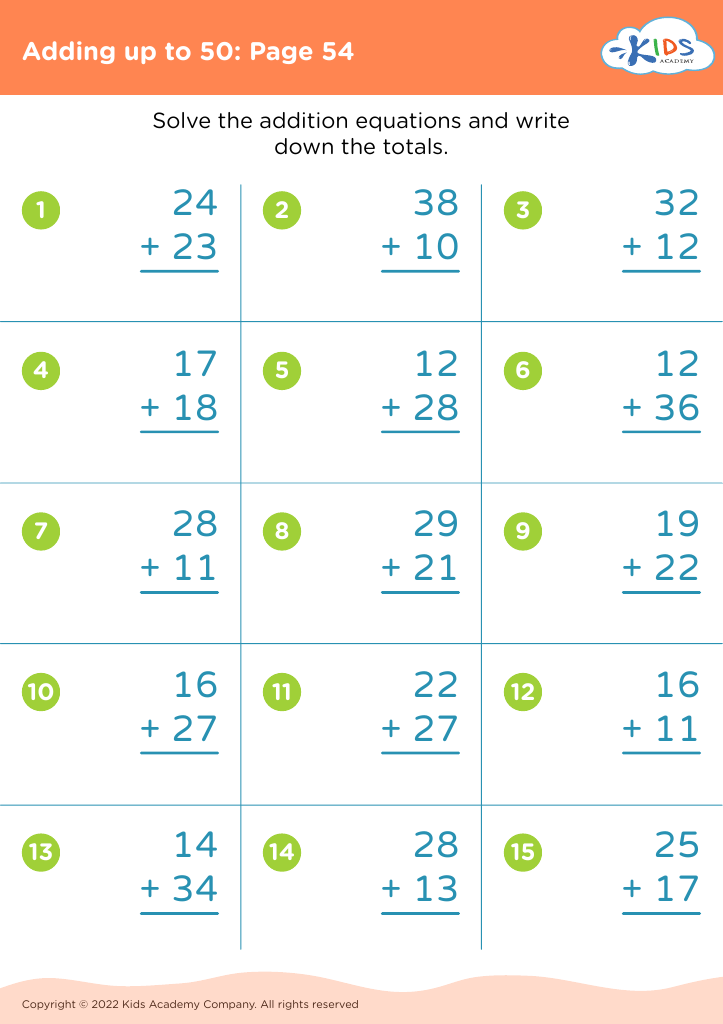
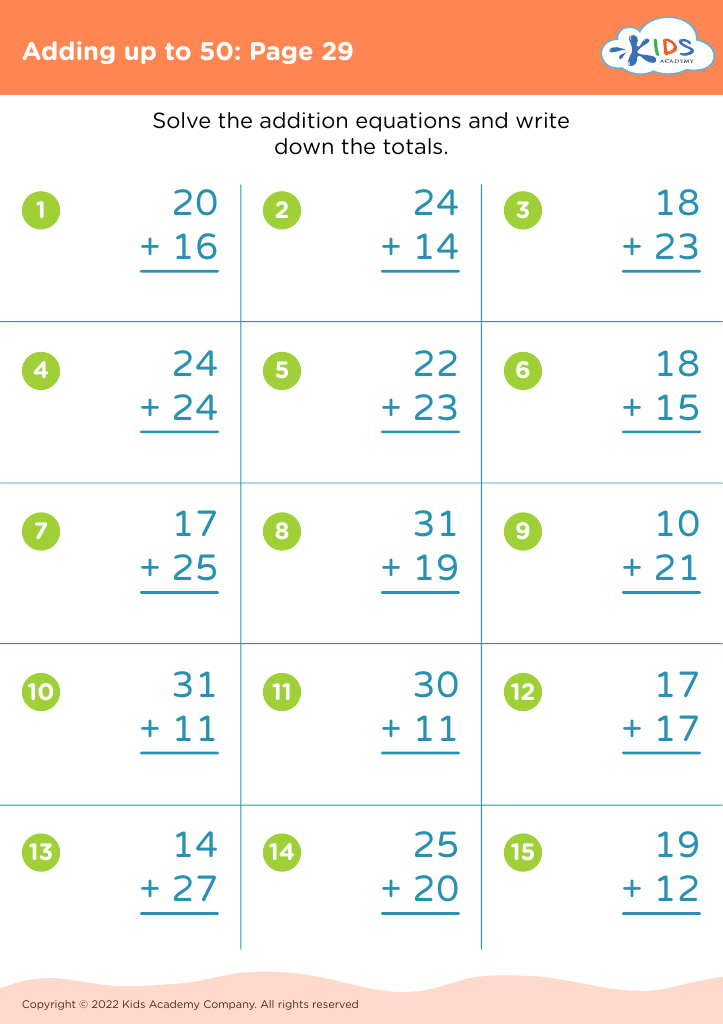


Understanding fractions is a fundamental skill that lays the groundwork for more advanced mathematical concepts. For children ages 4 to 8, grasping the basics of fractions, such as adding up to 50, plays a crucial role in their overall cognitive development. Fractions are encountered in various real-life situations—whether it's sharing snacks, dividing toys, or understanding measurements in cooking. By fostering a solid comprehension of fractions early on, parents and teachers help children develop critical thinking and problem-solving skills.
In the context of adding fractions that sum to 50, students learn to recognize parts of a whole, enhancing their numerical literacy. This foundational knowledge boosts confidence as they tackle more complex math problems later in school. Moreover, understanding fractions supports their ability to compare quantities, measure objects, and recognize patterns—skills instrumental in building a well-rounded mathematical foundation.
Parents and teachers should prioritize teaching fractions because these concepts influence future academic success. Additionally, engaging children with fun activities around fractions (like cooking or arts and crafts) makes the learning experience enjoyable and memorable, fostering a positive attitude toward mathematics and lifelong learning. Investing time in these early math skills pays dividends in students’ future educational journeys.